"All good books are alike in that they are truer than if they had really happened
and after you are finished reading one you will feel that all that happened to you
and afterwards it all belongs to you; the good and the bad, the ecstasy, the remorse,
and sorrow, the people and the places and how the weather was."
Ernest Hemingway
Showing posts with label England. Show all posts

Monday, December 4, 2017

Jane Steele: Revisited

31851019
G.P. Putnam's Sons
Jane Steele
Lyndsay Faye
2016

The Summary
"A sensitive orphan, Jane Steele suffers first at the hands of her spiteful aunt and predatory cousin, then at a grim school where she fights for her very life until escaping to London, leaving the corpses of her tormentors behind her. After years of hiding from the law while penning macabre “last confessions” of the recently hanged, Jane thrills at discovering an advertisement. Her aunt has died and her childhood home has a new master: Mr. Charles Thornfield, who seeks a governess.

"Burning to know whether she is in fact the rightful heir, Jane takes the position incognito and learns that Highgate House is full of marvelously strange new residents--the fascinating but caustic Mr. Thornfield, an army doctor returned from the Sikh Wars, and the gracious Sikh butler Mr. Sardar Singh, whose history with Mr. Thornfield appears far deeper and darker than they pretend. As Jane catches ominous glimpses of the pair’s violent history and falls in love with the gruffly tragic Mr. Thornfield, she faces a terrible dilemma: Can she possess him--body, soul, and secrets--without revealing her own murderous past? 


"A satirical romance about identity, guilt, goodness, and the nature of lies, by a writer who Matthew Pearl calls 'superstar-caliber' and whose previous works Gillian Flynn declared 'spectacular,' Jane Steele is a brilliant and deeply absorbing book inspired by Charlotte Brontë’s classic Jane Eyre."


The Good
Not so very long ago, I actually picked up the advanced readers copy of Jane Steele and read it within a couple of days.  More recently, I found the audiobook of Lyndsay Faye's novel and, I have to say, I wasn't disappointed.  I enjoyed rereading Jane Steele and I found I liked the story just as much the second time around.

Susie Riddell does a pretty great job as narrator.  I liked the way she told Jane's story, the cadence and tone of her voice that created a character who felt real.  It was enjoyable, and I found myself finding new facets of the story to appreciate and admire.

Overall, it's a great audiobook.  Short and, while it's definitely not sweet, fun, Jane Steele is an excellent choice for any reader seeking an off-kilter romance or a deeply twisted take on a classic.  However, I will say I enjoyed reading the book more than listening to the audiobook.  For some reason, I just appreciated the feeling of the book in my hands than the earbuds in my ears as I listened to Jane's story.

But that's more personal preference than anything.

The Bad
Honestly, I had a few moments where I became annoyed by the accents.  Don't get me wrong, Susie Riddell does a great job of reading Jane Steele; however, I was always a little annoyed by Thornfield's voice.  It wasn't awful, but it did take me a little longer to acclimate to his character than usual.

Likewise, I never did warm up to Rebecca's voice.  She had a softness to her voice, a sort of whiny sound that I just didn't like.  Confidentially, I was glad when I moved beyond her story and found myself strictly accompanying Jane.

The Ugly
Blood and gore.

Jane, as she warns readers in the first pages of her "memoir," is a murderess.  She's not a gentle, tame individual like the Jane we know from Jane Eyre; rather, she's a rambunctious, foul-mouthed young woman who knows her way around a knife.  She's deadly and she can prove it, too.

Tuesday, June 27, 2017

The Highwayman

The Highwayman
Kerrigan Byrne
2015

The Summary
"Dorian Blackwell, the Blackheart of Ben More, is a ruthless villain.  Scarred and hard-hearted, Dorian is one of Victorian London's wealthiest, most influential men who will stop at nothing to wreak vengeance on those who've wronged him...and will fight to the death to seize what he wants.  The lovely, still innocent widow Farah Leigh Mackenzie is no exception--and soon Dorian whisks the beautiful lass away to his sanctuary in the wild Highlands...

"But Farah is no one's puppet.  She possesses a powerful secret, one that threatens her very life.  When being held captive by Dorian proves to be the only way to keep Farah safe from those who would see her dead, Dorian makes Farah a scandalous proposition:  marry him for protection in exchange for using her secret to help him exact revenge on his enemies.  But what the Blackheart of Ben More never could have imagined is that Farah has terms of her own, igniting a tempestuous desire that consumes them both.  Could it be that the woman he captured is the only one who can touch the black heart he'd long thought dead?"

The Good
I can only think of one word for this book:  scandalous.

It's interesting, but it's very scandalous and, for the most part, I enjoyed the scandal.  It's a dark, thrilling ride through the seamy underbelly of London, and I rather liked it.  However, I'll be honest, I think I was mostly hooked on finding out the identity of Dorian.  He's not quite who he says he is, and I wanted to find out if my suspicions were correct.

The Bad
While I mostly enjoyed The Highwayman, I was really bothered by Dorian and Farah's relationship (if it can even be called that).  Here's the thing:  he's a violent, damaged man--and he lives in fear of hurting those about whom he cares, Farah being first and foremost on his list.  Farah is his fairy, and he'd do anything to protect.  And yet he compels her to marry him?

Don't get me wrong, I can see how he can offer her protection that no other man can.  He has wealth and power, not just physical strength (although he apparently has that in abundance, as well), and he has an intimate knowledge of human misdeeds.  He knows how the darker side of human nature operates and he knows exactly what to do to stop anyone who would try to do harm to Farah.

However, I don't think forcing her into an unwanted marriage is how to best do that.

Let's just be honest, it doesn't make sense.  Their whole relationship doesn't make sense; in particular, his logic doesn't make sense.  Then again, for a guy who spent years in some of the most brutal prisons in England, I suppose he's not that bad.

The Ugly
This book is so explicit--and I'm not just talking about the more intimate moments between Dorian and Farah.  Dorian endures a lot of bad things, traumatic things that have shaped him and changed him, not necessarily for the better.  It really hurts to think about all the terrible wounds inflicted on him, especially when he goes into some detail about it.

The Highwayman is not a book for the faint of heart.

Thursday, June 15, 2017

Talk Sweetly to Me

23000024Talk Sweetly to Me
Courtney Milan
2014

The Summary
"Nobody knows who Miss Rose Sweetly is, and she prefers it that way.  She's a shy, mathematically-minded shopkeeper's daughter who dreams of the stars.  Women like her only ever come to attention through scandal.  She'll take obscurity, thank you very much.

"All of England knows who Stephen Shaughnessy is.  He's an infamous advice columnist and a known rake.  When he moves into the house next door to Rose, she discovers that he's also wickedly funny, devilishly flirtatious, and heart-stoppingly handsome.  But when he takes an interest in her mathematical work, she realizes that Mr. Shaughnessy isn't just a scandal waiting to happen.  He's waiting to happen to her...and if she's not careful, she'll give in to certain ruination."

The Good
Talk Sweetly to Me is short and sweet and very cute.  It's a nice little end cap to Courtney Milan's Brothers Sinister series.  I loved the way Stephen treated Rose, how he showed his affection by encouraging her interests and going the extra mile simply to make her happy.  It was heart-warming, and I know I sighed happily when I finished reading.

Likewise, I was fascinated by Rose and by the history Milan incorporated into her novella.  Personally, I would have liked to have learned a little more about Rose and her family.  I would have liked to have known a little more about how her brother-in-law became the first black doctor in England, how her family arrived in London, how she became a "computer" and started calculating huge sums in her head.

However, I was very impressed by the work the author put into make the work historically accurate.  Milan made a point of incorporating scientific discoveries specific to that time and she even based Rose on a real person:  Shakuntala Devi.

According to the author's note:
"Shakuntala Devi...was known as the human computer for her ability to calculate complex cube roots in her head in a matter of seconds.  Her roots were modest--her father was a circus performer--but not only was she a mathematical genius, she also wrote cookbooks, nonfiction on homosexuality, nonfiction on learning mathematics, and novels (many of these are available as ebooks today).  She even ran for office."
I was fascinated, so, of course, I had to read more about Shakuntala Devi and discover what an amazing woman she was.  Truthfully, I'm always a little surprised by the historical accuracy of Courtney Milan's books and I always come away learning something new, some new fact or piece of history I never knew.  It's always worth reading the author's note in the Brothers Sinister series for this reason alone.

The Bad
Although I love the series as a whole and I enjoyed reading Talk Sweetly to Me, I didn't have as much fun with this one as the others.  Like The Suffragette Scandal, Talk Sweetly to Me felt a little more rushed, like it was wrapping up some final details, and I personally didn't feel as connected to characters.

Rose Sweetly was an intriguing character, and I would have loved to have learned more about her and her life; however, I'd met Stephen Shaughnessy in the last novel and I wasn't as attached to him as I was to Minerva and Robert (The Duchess War) or Violet and Sebastian (The Countess Conspiracy).  It's a sweet, little novella, and it's worth reading to round out the series, but, honestly, it wasn't a necessary thing for me.

I didn't have to read it.  In fact, if I'd never read it, I don't think I would have suffered much.

The Ugly
Explicit material.

However, I was more offended by the way Rose and her sister--her pregnant sister--were treated by the the local doctor.  I realize his attitudes were a product of the time, but I was irritated with him and his cavalier attitude toward his patient's health.  I mean, he really didn't care--and it was all because of the color of their skin.

Tuesday, June 13, 2017

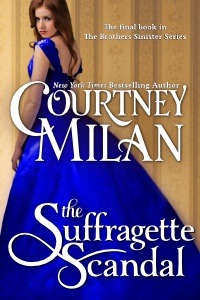
The Suffragette Scandal

17343236
Courtney Milan
The Suffragette Scandal
Courtney Milan
2014

The Summary
"Miss Frederica "Free" Marshall has put her heart and soul into her newspaper, known for its outspoken support of women's rights.  Naturally, her enemies are intent on destroying her business and silencing her for good.  Free refuses to be at the end of her rope...but she needs more rope, and she needs it now.

"Edward Clark's aristocratic family abandoned him to die in a war-torn land, so he survived the only way he could:  by becoming a rogue and a first-class forger.  When the same family that left him for dead vows to ruin Miss Marshall, he offers his help.  So what if he has to lie to her?  She's only a pawn to use in his revenge.

"But the irrepressible Miss Marshall soon enchants Edward.  By the time he realizes that his cynical heart is hers, it's too late.  The only way to thwart her enemies is to reveal his scandalous past...and once the woman he loves realizes how much he's lied to her, he'll lose her forever."

The Good
Free is independent, intelligent, and impetuous.  She won't take no for an answer, and she won't back down from a challenge.  Edward, on the other hand, is the tall, dark and handsome cliche personified.  He's dangerous, more so than anyone realizes, and yet he harbors a genuine affection for Free--and he's willing to risk everything to protect her.

Overall, it's a good story.  Free has a lovely sense of humor, and I loved the dynamic between her and Edward.  They're misfits in society, who have managed to find one another and do the impossible:  fall in love.

It's sweet and amusing, and it does a decent job of rounding out the series to which I've dedicated so much time.  Moreover, I was rather excited to see all the characters that I'd come to know and love throughout the series.  It was nice seeing everyone again, including Hugo and Serena.

The Bad
I have two complaints about The Suffragette Scandal:  one, I didn't like the portrayal of Oliver, Free's brother; two, I didn't like the way that this novel felt like it was tacked on to the end of the series.

Throughout the Brothers Sinister series by Courtney Milan, I've had a certain amount of respect for the male characters.  In a way, they have managed to conquer their personal demons and they have made successful lives for themselves, including Oliver.  Granted, I know Free has always had a blatant disregard for her brother's reputation and attitudes; however, I was a little bothered by the way Oliver--as well as Sebastian and Robert--were portrayed.

Free seems to think they're all stuffy and archaic, which they might be given her more radical (for the time) tendencies, but Edward just seems to kick them down a notch.  Oliver, for instance, seems too stiff and practical in comparison.  More to the point, Edward seems to openly mock the camaraderie of the men involved in the "Brothers Sinister."

That is, I've grown to view the "brothers" as a sort of family.  They build their relationships out of necessity, attempting to balance out the more damaging influences in their lives.  They--Sebastian, Robert, Violet, and Oliver--are all very close for it.  I appreciated their humor and I appreciated the lightness their club seemed to provide.

Edward just kind of destroys that feeling, which I really didn't like.

Moreover, I felt like The Suffragette Scandal was just tacked on to the end to give the series some semblance of a conclusion.  It brings together a few narrative threads, drawing in all the characters I'd met in the past, but, in my opinion, it doesn't feel quite right.  I liked the novel, but I don't think it ended the series on the right note.

Part of this could be that I wasn't as attached to Free as I was, say, Violet or Minerva or even Sebastian.  Another aspect is that I was a little bothered by the way this books seems to skip so far into the future, going from 1863 in the The Duchess War to 1877 in The Suffragette Scandal.  It seems so far outside the first three novels, almost feeling like a completely different generation.

I think I might have had a bit of a problem reconciling the knowledge that every character I'd grown to know was suddenly growing older...and their stories had officially come to an end.

The Ugly
Edward's past.

It's more than a little painful.

Friday, June 9, 2017

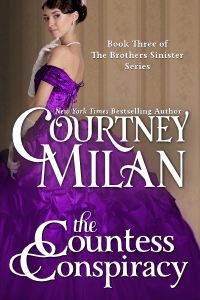
The Countess Conspiracy

13489925
Courtney Milan
The Countess Conspiracy
Courtney Milan
2013

The Summary
"Sebastian Malheur is the most dangerous sort of rake:  an educated one.  When he's not scandalizing ladies in the bedchamber, he's outraging proper society with his scientific theories.  He's desired, reviled, acclaimed, and despised--and he laughs through it all.

"Violet Waterfield, the widowed Countess of Cambury, on the other hand, is entirely respectable, and she'd like to stay that way.  But Violet has a secret that is beyond ruinous, one that ties her irrevocably to England's most infamous scoundrel:  Sebastian's theories aren't his.  They're hers.

"So when Sebastian threatens to dissolve their years-long conspiracy, she'll do anything to save their partnership...even if it means opening her vulnerable heart to the rake who could destroy it for good."

The Good
After the cataclysmic rupturing of their friendship in The Heiress Effect, I really didn't expect to read a romance novel about Sebastian and Violet.  I mean, I loved them in The Duchess War and I liked them in The Heiress Effect.  But would they really make good romantic material?

Answer:  yes.

Sebastian and Violet have been friends for many years and they have hatched plots for just as many.  Together, they made mischief as children and, as adults, they made the most scandalous scientific discoveries to date.  They made a great team and they shared a sense of humor, a witty intelligence that made them seem inseparable.

While I was bothered by Sebastian's violent reaction to Violet in the previous novel, I grew to love the guy.  Violet is intelligent, head-strong, and witty, which I appreciated.  I love strong, smart heroines, especially when no one expects them to be; however, I think I appreciated Sebastian for his complete and utter loyalty to Violet more than anything.

Sebastian is a goof.  He's the Regency equivalent of a class clown, and he doesn't really grow out of it.  And yet he's probably the most stable relationship that Violet has ever had in her life.  She's dealt with the death of her father and then her husband; she's a woman of science in a world that scoffs at intelligent women; she's endured a tumultuous childhood under her chilly, reserved mother.

And Sebastian has always been there.

He's like the other piece of her heart and mind, even if she doesn't realize it.  When she's consumed by her experiments, focused so keenly on planting the next seed and documenting her latest discoveries, he's by side handing her a ceramic pot filled with soil.  Don't ask me why, but I found that to be one of the most romantic things I've witnessed.

He's memorized her routines; he knows what she needs, even without her asking; he understands and encourages her to explore, to experiment, to be whoever she wills herself to be.  Their relationship is far from perfect, I know, but I just love how Sebastian is always there.  He makes her laugh, encourages, he supports, and he appreciates her--and I absolutely loved that about him.

The Bad
No complaints.  I enjoyed The Countess Conspiracy almost as much as I enjoyed reading The Duchess War.

The Ugly
Violet is damaged.

Not only was she hurt by her father's unexpected death, she endured a terrible relationship with her husband before he died.  Abuse is ugly, no matter the circumstances, and it was rather distressing to read about what she faced.  It makes her chilly, reserved manner and her inability to connect in intimate relationships more understandable.

Wednesday, June 7, 2017

The Heiress Effect

The Heiress Effect (The Brothers Sinister Book 2) by [Milan, Courtney]
Courtney Milan
The Heiress Effect
Courtney Milan
2013

The Summary
"Miss Jane Fairfield can't do anything right.  When she's in company, she always says the wrong thing--and rather too much of it.  No matter how costly they are, her gowns fall on the unfortunate side of fashion.  Even her immense dowry can't save her from being an object of derision.

"And that's precisely what she wants.  She'll do anything, even risk humiliation, if it means she can stay unmarried and keep her sister safe.

"Mr. Oliver Marshall has to do everything right.  He's the bastard son of a duke, raised in humble circumstances--and he intends to give voice and power to the common people.  If he makes one false step, he'll never get the chance to accomplish anything.  He doesn't need to come to the rescue of the wrong woman.  He certainly doesn't need to fall in love with her.  But there's something about the lovely, courageous Jane that he can't resist....even though it could mean the ruin of them both."

The Good
Like Courtney Milan's previous novel, The Heiress Effect is a delightful little romance novel filled with many of the same humorous characters I enjoyed the first time and packed with unconventional heroines.  And, speaking of unconventional heroines, I loved Jane Fairfield precisely for her ability to say and do the wrong things.

Although she's a walking fashion faux pas, Jane is a witty and intelligent young woman.  She's unexpectedly crafty, and she's calculating.  Jane doesn't simply step on everyone's toes because she doesn't know any better; rather, she does it with the knowledge that she will offend.  That's her goal:  to keep everyone at arm's length and protect her sister.

She's startlingly selfless and she's resilient, which makes her a force to be reckoned with.

I liked Oliver, too.

He's smart and, like Jane, he's calculating the repercussions of every step.  He's a quiet observer of human nature; however, rather than using it to offend, he pounces on every opportunity to gain traction for his ideals in Parliament.  More to the point, he's kind to Jane even when the rest of society is openly mocking her--even when she doesn't exactly attempt to be polite to him.

Plus, he makes the attempt to fix his mistakes.  For instance, when he breaks Jane's heart, he doesn't just tell her he loves her; rather, he makes a huge gesture to win her back.  He makes a point of showing her that he loves her more than his career, and he always will.  It's an incident that's guaranteed to give you all the warm and fuzzy feelings.

The Bad
Admittedly, I didn't like The Heiress Effect as much as I liked The Duchess War.  I think I might have been more attached to Robert and Minerva, simply because read their story first; however, I think it might be because this novel was also setting up for the next in the series.

You have a little bit of that in The Duchess War with the introduction of Lydia and Jonas (from A Kiss for Midwinter), but you have more of it in The Heiress Effect with Violet and Sebastian, Emily (Jane's sister), and more.  I found there was a little bit too much going on with this novel, which dimmed the central story a little.

It's still a great book, don't get me wrong, but it's not quite as good as The Duchess War.

The Ugly
The Marquess of Bradenton.

Monday, June 5, 2017

A Kiss for Midwinter

16116470
Courtney Milan
A Kiss for Midwinter
Courtney Milan
2012

The Summary
"Miss Lydia Charingford is always cheerful, and never more so than at Christmas time.  But no matter how hard she smiles, she can't forget the youthful mistake that could have ruined her reputation.  Even though the worst of her indiscretion was kept secret, one other person knows the truth of those dark days:  the sarcastic Doctor Jonas Grantham.  She wants nothing to do with him...or the butterflies that take flight in her stomach every time he looks her way.

"Jonas Grantham has a secret, too:  He's been in love with Lydia for more than a year.  This winter, he's determined to conquer her dislike and win her for his own.  It all starts with a wager and a kiss..."

The Good
A Kiss for Midwinter answers a very important question I had at the end of The Duchess War:  who did Lydia Charingford marry?

After the very loud, very public implosion of Lydia's engagement midway through The Duchess War, I was surprised to learn she had a husband in the epilogue.  Lydia was a rather lovely character--happy, optimistic, caring, kind--and a wonderful friend to Minnie, so, of course, I was intrigued to see who won her heart.

It was Jonas, which I didn't expect.

Given the animosity she harbors for him and the apparent distaste he carries for her, it seemed like such an odd coupling.  I decided to find out what happened, and I'm pretty glad I did.  I mean, I wasn't thrilled with A Kiss for Midwinter, but it wasn't a bad novella.  I liked it, because it has a sweet little story that culminates in a wonderful relationship--and I definitely liked the author's note.

The Bad
Jonas is a bit of an ass.

The Ugly
My heart went out to Lydia for what she suffered.

I knew a little bit about her predicament from The Duchess War, but directly hearing what she endured, knowing how she suffered so terribly at the hands of her lover and then her doctor, it was heart-wrenching.  I mean, you can really see why she distrusted Jonas so much:  he was another pompous male in her life, he was a doctor, and he knew her darkest secret.

No wonder she hated him at the outset.

Thursday, June 1, 2017

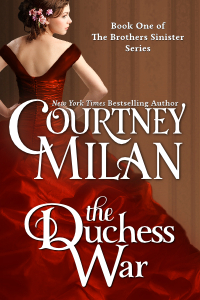
The Duchess War

13489919
Courtney Milan
The Duchess War
Courtney Milan
2012

The Summary
"Miss Minerva Lane is a quiet, bespectacled wallflower, and she wants to keep it that way.  After all, the last time she was the center of attention, it ended badly--so badly that she changed her name to escape her scandalous past.  Wallflowers may not be the prettiest blooms, but at least they don't get trampled.  So when a handsome duke comes to town, the last thing she wants is his attention.

"But that is precisely what she gets.

"Because Robert Blaisdell, the Duke of Clermont, is not fooled.  When Minnie figures out what he's up to, he realizes there is more to her than her spectacles and her quiet ways.  And he's determined to lay her every secret bare before she can discover his.  But this time, one shy miss may prove to be more than his match..."

The Good
I thoroughly enjoyed reading The Duchess War.  This actually makes the second time I've read it, and I enjoyed reacquainting myself with the story and the characters.  It's a surprisingly complex story:  not your generic boy meets girl, but rather boy meets girl and girl, who has already had a tough history and wants none of the attention a duke can bring on her, immediately decides to wage a quiet war against said boy to keep him at arm's length.

That's a gravely simplified plot, but it's fairly accurate.  You see, Minnie--I much prefer her name Minerva to Whilhelmina--harbors a dangerous secret and she's not about to let anyone else exploit her.  She's a wallflower now, and she's content (or wants to feel content) with simply slipping into the background.  She doesn't want to be the center of attention, anyone's attention, including Robert's.

And she'll be damned if she lets Robert outsmart her in any regard.

I suppose that's why I enjoyed this novel so much.  Minerva is quiet, unobtrusive, but she's incredibly intelligent.  She's always thinking ten steps ahead of anyone else, in order to protect herself and those she loves.  Even when odds are stacked against her, she manages to pull the rug out from any opponent.  It's thrilling to watch.

Plus, I really like Robert.

Personally, I thought he was probably one of the best romantic heroes I've come across.  He has his flaws--I mean, who wouldn't after the childhood he suffered?--but he's willing to admit his mistakes and he's willing to change.  He cares deeply about his friends and family; he loves Minerva, even if he isn't quite sure how to say it.

I think that's what I liked best about this novel:  Minerva and Robert are both badly damaged by their upbringing.  Minerva acquired a phobia of crowded rooms and a distrust of men; Robert distrusted affection and saw relationships as tumultuous, harmful, and dangerous.  They don't immediately meet and fall in love; in fact, Minerva wants nothing to do with him, and Robert can't see her in any other light than a mouse spinster.

However, as they get to know one another, they slowly grow in the other's esteem.  Minerva learns that not all men merit distrust and she finds that, sometimes, it's okay to make decisions for love and affection; Robert discovers that marriage doesn't have to be quiet, cold and hostile, and he learns that some people are worth risking everything.

I know how corny it sounds to say they learned to love again, but, in a way, they did.  Their relationship was built on mutual respect and a budding trust in the other.  They didn't simply jump into marriage and hope for the best; rather, it grew from Robert's appreciation of Minerva's intelligence and, eventually, her ability to trust him with her heart and well-being.

The Duchess War has believable relationship development.  That is, you can visibly see how Minerva and Robert are drawn together.  Their love isn't spontaneous; it takes time and effort and more than a few bumps and bruises.  I loved that aspect of Courtney Milan's novel, and I honestly couldn't wait to read more from her.

The Bad
Admittedly, The Duchess War does get a little explicit.  If that's not your cup of tea, it's pretty easy to just skim over.

The Ugly
I'll admit, it's kind of hard to read about Robert's childhood under his abusive and controlling father, and Minerva's betrayal at the hands of the father she loved most in the world.  I mean, they were both screwed over by the people who were supposed to care for them--and it's kind of heart-wrenching to watch.

Tuesday, May 30, 2017

The Governess Affair

13190596
Courtney Milan
The Governess Affair
Courtney Milan
2012

The Summary
"She will not give up...

"Three months ago, governess Serena Barton was let go from her position.  Unable to find new work, she's demanding compensation from the man who got her sacked:  a petty, selfish, swinish duke.  But it's not the duke she fears.  It's his merciless man of business--the man known as the Wolf of Clermont.  The formidable former pugilist has a black reputation for handling all the duke's dirty business, and when the duke turns her case over to him, she doesn't stand a chance.  But she can't stop trying--not with her entire future at stake.

"He cannot give in...

"Hugo Marshall is a man of ruthless ambition--a characteristic that has served him well, elevating the coal miner's son to the right hand man of a duke.  When his employer orders him to get rid of the pestering governess by fair means or foul, it's just another day at the office.  Unfortunately, fair means don't work on Serena, and as he comes to know her, he discovers that he can't bear to use foul ones.  But everything he has worked for depends upon seeing her gone.  He'll have to choose between the life that he needs, and the woman he is coming to love..."

The Good
After hearing so much about Hugo Marshall and Serena in following novels, I felt like I needed to go back and visit their story--and I'm glad I did.  I absolutely loved reading The Governess Affair.  On the one hand, I enjoyed filling in the gaps of my knowledge; on the other, I found The Governess Affair to be a supremely satisfying romance.

Plus, I loved the humor and heart.  I loved how Serena was able to go toe-to-toe with Hugo, who was one of the most feared men in the Duke of Clermont's employ; I loved how Hugo treated her gently, after her ordeal with the Duke of Clermont, and how he was able to gain her trust with even the smallest actions.

And I liked the way that Serena and Hugo's relationship developed.  I mean, at first, he treats her like he would treat any problem; however, as time goes on, he begins to see her as the indisputably tough, incredibly intelligent, and unexpectedly resilient woman she is.  When he grows to admire her--and when she learns to trust him in return--it's so supremely satisfying.

I loved it.  I loved the whole thing.

It's short, yes, but it's incredibly sweet and it's certainly worth reading.

The Bad
No complaints.

The Ugly
The Duke of Clermont.

I hate him.  I knew I would hate him, because I'd read of his exploits in both The Duchess War and The Heiress Effect.  However, the reality is that I hated him even more after reading The Governess Affair.  He deserves every terrible thing to befall him.

Monday, May 22, 2017

The Skystone

2399668
Tor
The Skystone
Jack Whyte
1992

The Summary
"We all know the story--how Arthur pulled the sword from the stone, how Camelot came to be, and the power struggles that ultimately destroyed Arthur's dreams.  But what of the time before Arthur?  What were the forces that helped create him?

"And how did the legend come to pass?

"Before the time of Arthur and Camelot, Britain had become a dark and deadly place, savaged by the warring factions of Picts, Celts, and invading Saxons.  The Roman citizens who had lived there for generations were suddenly faced with a deadly choice.  Should they leave and take up residence in a Roman world that was corrupt and utterly foreign?  Or stay and face the madness that would surely ensue when the Roman legions--Britain's last bastion of safety for the civilized--leave?  For two Romans, Publius Varrus and his friend Caius Britannicus, there can be only one answer.  They will stay, try to preserve what is best of Roman life, and create a new culture out of the wreckage.  In doing so, they will plant the seeds of the legend.

"For these two men are Arthur's great-grandfathers and their actions will shape a nation...and forge a sword known as Excalibur."

The Good
I actually picked The Skystone up at my local library.  It, along with several over books in the series, were available for only fifty cents a piece.  Of course, I couldn't simply pass up buying the whole thing and diving into the series.  It was a random purchase that, under normal circumstances, I probably wouldn't have made if I hadn't been prowling through the books one day.

And I'm pretty glad that I picked it up.

I love history.  I've always been a little fascinated by Roman history, and I've always been a fan of British history; however, much of my knowledge was sequestered to a handful of emperors and incidents in Rome.  I knew virtually nothing about England during the fourth and fifth centuries, so The Skystone was as informative as it was fascinating.

I learned a lot about British and Roman history, culture, and everyday life.  Not that I can remember any of it now, of course, but I feel like I learned quite a bit and I enjoyed a pretty great story in the process.  Personally, I really liked listening to Publius Varrus' story.  He was an interesting, capable character who took unexpected adventures that seemed to lead him from one place to another.

I thought he was unexpectedly eloquent for a soldier, but that's probably why I liked him.  He was pretty relatable.  I mean, he was basically just another person trying to survive in a world that (quite literally) wanted him dead; he's just your average soldier in the Roman Empire.  And yet his story was an adventure, and he did a wonderful job of telling me everything that happened.

Granted, I may not have liked his temper--and I certainly didn't like where it eventually led him--but I loved how his story involved a host of historical figures and culminated with the Lady of the Lake.  While there's no magic involved and, honestly, I pretty much expect magic in anything that stems from Arthurian legend, I was enchanted by how Arthur's legacy begins in The Skystone.

Jack Whyte's novel grounds Arthur and Excalibur in reality.  Like I said, there isn't any magic involved, but the way that Whyte carefully crafts a realistic world in which the magic of Arthur can grow--the way he so craftily plants the seeds for the legend throughout his story--is captivating.  I loved it.  I loved being able to find those subtle clues, and I can't wait to learn more about Arthur's heritage.

The Bad
It took me a very long time to get through this book.  Varrus is a thoughtful and engaging narrator, and I found his story fascinating.  I loved learning about the culture and history of Britain during the time of the Roman Empire; I loved the detail and depth of the story; I loved the intricately described places and characters.

However, I often lost myself to other things.  While I liked Varrus, he did have a habit of droning on and on.  More to the point, his story is a long one--and this book is only a tiny piece of his life.  He's writing at the end of his lifetime, but he's only telling us a part of his story from his time as a Roman soldier to the eventual creation of the Colony.  (I don't think I'm ruining anything by saying that; rather, I think it's pretty obvious what happens from reading the cover.)

It's maybe half of his life, and it feels like it takes ages to get through his story.  Like I said, it's a great book, but it does take a while to get through it.  I often found myself distracted by other books and different projects, so it took me many months to finish this book when it probably should have only taken a couple of weeks.

The Ugly
I have to admit, The Skystone is a bit graphic and slightly explicit.  If it's not local Picts and Celts slaughtering invading Roman soldiers, it's some disease or another wiping out a community; if it's not Publius Varrus' memories of war, it's his more tender moments with his lovers, and then his wife.  It's a hard look at what real life might have been like in a particularly tumultuous time in Britain's history.

It's a fascinating and engaging novel, but it might not be for everyone.

Wednesday, May 17, 2017

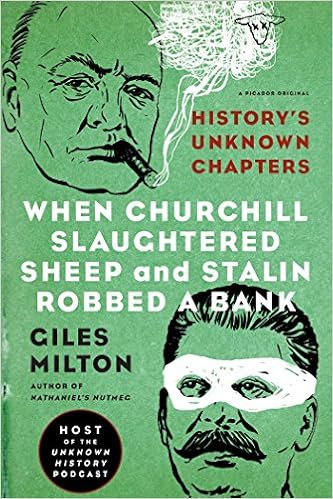
When Churchill Slaughtered Sheep and Stalin Robbed a Bank

Picador
When Churchill Slaughtered Sheep and Stalin Robbed a Bank
Giles Milton
2016

The Summary
"More addictive and mind-blowing true tales from history, told by Giles Milton--one of today's most entertaining and accessible yet always intelligent and illuminating historians.

"In the second installment of his outrageously entertaining series, History's Unknown Chapters, Giles Milton shows his customary historical flair as he delves into the little-known stories from history, including when Stalin was actually assassinated with poison by one of his inner circle; the Russian scientist, dubbed the "Red Frankenstein," who attempted to produce a human-ape hybrid through ethically dubious means; the family who survived thirty-eight days at sea with almost no water or supplies after their ship was destroyed by a killer whale; or the plot that served as a template for 9/11, in which four Algerian terrorists attempted to hijack a plane and fly it into the Eiffel Tower."

The Good
Giles Milton's work is as entertaining as always in this latest addition to his series, History's Unknown Chapters.  Personally, I loved learning new things about history that I didn't know, like the rehearsal for D-Day that saw more than 900 casualties.  Or the spy who broke into Auscwitz.  Or the man who broke into Buckingham Palace and decided to hang out in the Queen's chambers.  Or Guy Gabaldon, who captured several hundred Japanese soldiers without even firing a bullet.

When Churchill Slaughtered Sheep and Stalin Robbed a Bank is pared down into manageable, bite-size sections, which makes Mileton's book both easy-to-read and accessible.  Don't want to hear about how Charlie Chaplain's grave was robbed?  Skip it!  Don't care to hear about Stalin's assassination?  Then move on to the next chapter.

This book is great if you like random facts, if you like history, or if you like learning about weird, quirky people and strange happenings across the globe.  It's highly entertaining and it's accessible, which I--and I'm sure other readers--appreciate.

The Bad
As I discovered with When Hitler Took Cocaine and Lenin Lost His Brain, When Churchill Slaughtered Sheep and Stalin Robbed a Bank is a book to be read at short intervals.  I loved the random facts, the quick anecdotes that taught me something new; however, I mostly read it in between other books or when I was waiting--like waiting for an oil change, or waiting for a seat at a restaurant, or waiting for my boyfriend to pick me up.

It's more of a short, entertaining read to be taken up at short intervals, rather than consumed in one large gulp.

The Ugly
Reality truly is stranger than fiction.

Friday, April 7, 2017

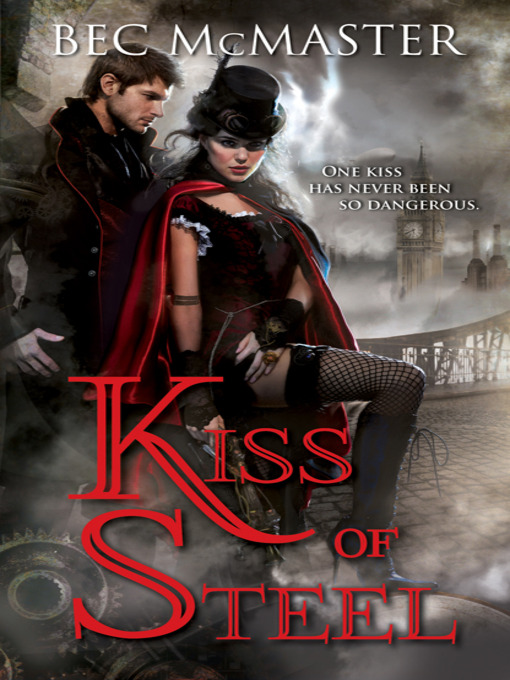
Kiss of Steel

Title details for Kiss of Steel by Bec McMaster - Available
Sourcebooks Casablanca
Kiss of Steel
Bec McMaster
2012

The Summary
"When nowhere is safe….

"Most people avoid the dreaded Whitechapel district.  For Honoria Todd, it’s the last safe haven.  But at what price?

"Blade is known as the master of the rookeries--no one dares cross him.  It’s been said he faced down the Echelon’s army single-handedly, that ever since being infected by the blood-craving he’s been quicker, stronger, almost immortal.

"When Honoria shows up at his door, his tenuous control comes close to snapping.  She’s so…innocent.  He doesn’t see her backbone of steel--or that she could be the very salvation he’s been seeking."

The Good
I was intrigued by this novel and, starting out, I fell in love with the unusual, complex world of verwulfen, blue bloods, vampires, and mechanical creatures.  There’s an unexpected depth to this story.  You have the blue bloods--not quite vampires, not quite human--who basically run society from their Ivory Tower, trailed by human consorts and blood thralls; and then you have verwulfen (werewolves), humans, and others who live outside the blue blood’s pristine city, living on the very fringes of "respectable" society.

Except it's not that clear cut.

Blade rules the rookeries of Whitechapel, and even the Dukes of the Ivory Tower are hesitant to cross him.  Honoria is one of the many humans caught in between, but she's also the daughter of an Institute scientist and a chemist in her own right.  Humans, blue bloods, verwulfen, and more living together in one city, but it’s a tenuous relationship at best.  A variety of variables come into play:  blood taxes, drainers, humanity first insurgents, house rivalries, Slasher gangs and turf wars, and Queen Alexandra, thrall of the Prince Consort.  It all hinges on how far one wants to push the boundaries, because anything could tip the balance and bring London--and Britain--crashing to its knees.

I found all the detail fascinating and, honestly, I wish I could have had more.  Like I was curious to hear about France, which endured a different Reign of Terror in which the blue blood aristocracy was put the guillotine; Spain suffered another Inquisition, in which blue bloods were hunted rather than witches or religious dissidents; Germany didn’t have so much a blue blood ruling class as a massive verwulfen population; China saw the initial outbreak of the craving disease, the first symptoms of vampirism; and America is still a colony to the British Empire.

It's a curious reworking of historical events that I found fascinating.  And that's not even including a close look at the precarious situation of the Fade and the course of the craving disease.  Blue bloods are vampires, as we traditionally view them; however, it's different in Kiss of Steel.  Blue bloods are in control of their hunger (for the most part), but as they age they come closer and closer to the Fade, in which they slowly lose all human aspects and slip closer to an unstoppable, insatiable hunger for blood.  They essentially begin to rot, losing all traces of the person they were previously and they become monsters--they become vampires.

I found it a fascinating concept.

Overall, I enjoyed reading Kiss of Steel.  It's a blending of science fiction, paranormal, steampunk, horror, and fantasy, and it develops an intriguing story--an intriguing world--that kept me captivated.  Once I was hooked, I found there was no going back.  I had to find out what happened with Honoria and Blade--would she be captured by Vickers, Duke of Lannister, and killed?  Would she find a cure that her father had so desperately sought?  Would Blade, who lurked on the fringes of the Fade, finally succumb?

I had to have an answer and, more or less, I was satisfied with the conclusion.  Granted, it's only the first of a series--book one of five (Heart of Iron, follows next, and then My Lady Quicksilver, Forged by Desire, and Of Silk and Steam)--so I have quite a bit more to read if I want to shore up the story and delve a little deeper into this steam-powered world of dangerous creatures.

The Bad
Okay, let me start off by saying, I really enjoyed this book.  The world building was absolutely fantastic, and I loved the political and social complexity that quivered just beneath the immediate surface--beneath Blade and Honoria’s story.

However--and saying this pains me a little--it could have been better.  Like so much better.

I love a little romance mixed in with my adventure stories, but I like to have more of a balance.  That is, I don't like romantic entanglements to overshadow the rest of the novel.  I've slowly become a romance novel fiend over the last year (if that's not already apparent), but I do like my stories to have a little more to them than sultry, steamy moments and gratuitous amounts of sex.

Like with Blade and Honoria.

Sure, yeah, I understand that it's bound to happen considering how desperately they crave each other.  Their relationship is practically incendiary.  However--you're probably going to get tired of me saying this--I would have liked to learn a little more about Honoria's father, her time among the blue bloods, and their shared experiments.  Honoria is a smart girl; in fact, she's frighteningly smart in some respects--and I would have loved seeing her flaunt that intelligence a little more.  I would have enjoyed seeing her continue her father's research, seeing her find, if not a cure, a way to stop the progression of the craving disease.

Don't get me wrong, she's a pretty great character.  She's smart, she's determined, she's handy with a pistol, plus--and this is a big one--she's not some shrinking violet, damsel-in-distress type when faced with danger.  I mean, before the end of the story, she'll face down a vampire not once, not twice, not even three--but four times.  She may not be as swift and skilled as Blade, and she may not be as strong as his verwulfen companion, Will, but that's not to say she’s not powerful in her own right.

I just had this little, lingering wish that she could have done more.  I know that sounds funny, considering she does quite a lot in regards to protecting her brother and sister, and she even saves Blade’s life on a couple of occasions.  I just wish she could have been featured more prominently in the search for a cure or, at least, a treatment; I wish I could have learned more about it and a little more about her.

Maybe, just maybe, the next book will expound upon her discoveries--or potential discoveries.

The Ugly
People get torn apart.

Literally.

Friday, March 31, 2017

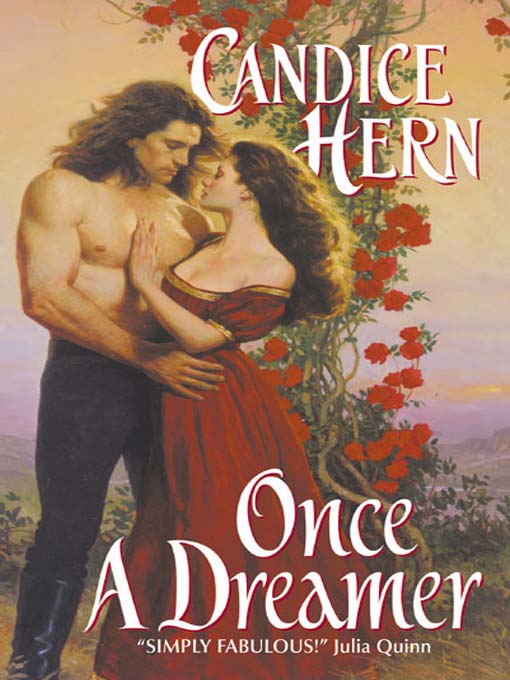
Once a Dreamer

Title details for Once a Dreamer by Candice Hern - Available
Harper Collins
Once a Dreamer
Candice Hern
2003

The Summary
"When Eleanor Tennant was called to look after her niece Belinda, she swore she'd help her find the perfect suitor.  Unfortunately, Belinda prefers the attentions of Geoffrey Barkwith, a handsome, notorious rake with an unsavory reputation.  In a letter to an advice columnist for The Ladies' Fashionable Cabinet, Belinda asks the woman - should she go after her heart's desire; her response is yes!

"Eleanor, furious with this advice, goes in search of the mysterious Busybody.  She finds out that the wretched woman giving such public encouragement is not a woman at all, but a man!"

The Good
After reading Once a Gentleman and Once a Scoundrel, I was excited to begin reading Once a Dreamer.  While I didn't enjoy this novel as much as the previous two I read, I did enjoy my time reading the first novel in the Ladies' Fashionable Cabinet series.  It's fun and funny and, of course, it's filled with incredibly sweet moments that warmed my heart.

Although Simon is more of a romantic than I would normally like (I think I am like Eleanor in that regard), I loved the way he was constantly falling in love with Eleanor.  Simon is hasty to fall in love, he's quick to jump in with both feet if his heart is behind the move; however, I found his affection for Eleanor to be more subtle.  He adored her, blemishes and all, and he lost himself to her a little piece at a time as they traveled together.

I liked how completely smitten he was with her, and I felt my heart melting as Eleanor slowly and surely began to return his affections.  Granted, his ode to her upper lip was a bit much, but his heart was in the right place.

Overall, Once a Dreamer is a cute, whimsical romance that will pluck at your heartstrings.  While it's by no means my favorite in the series, it's fun and light-hearted and certainly worth reading if you'd like to see more of the characters you love.

The Bad
This novel, more than either Once a Scoundrel or Once a Gentleman, had my disapproval for its unexpectedly dramatic moments and its achingly embarrassing scenes.  Honestly, I hated feeling so embarrassed for these characters.  For instance, I was mortified by Simon's actions at any given time, because he was so often taken by flights of fancy.  And, as for Eleanor, her gut reactions are equally painful.

I had several moments I had to stop reading and step away from the story.  I couldn't handle Simon's overwhelming romanticism; I couldn't deal with Eleanor's chilly, outwardly venomous retorts.  They're a sweet couple, don't get me wrong, but they seem to go through a gauntlet of embarrassing situations that just left me squirming.

Like I said, I don't like feeling embarrassed for characters.  It's too easy for me to see the experience from my perspective.

The Ugly
When I first heard of Eleanor's history, I was heartbroken.  She endured so much grief and heartache from her lover, from her parents, from her so-called friends, from her husband--from the people who were supposed to care for her.  I'm not surprised she was cold and prickly and, in a word, unapproachable.

Personally, I would be too if I'd been subjected to the same things.

Wednesday, March 29, 2017

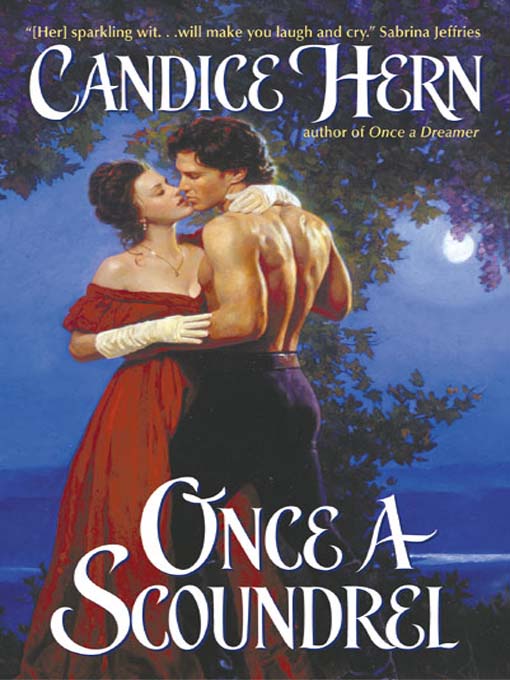
Once a Scoundrel

Title details for Once a Scoundrel by Candice Hern - Available
Harper Collins
Once a Scoundrel
Candice Hern
2003

The Summary
"When Anthony Morehouse wins The Ladies' Fashionable in a card game, he thinks it's a piece of furniture.  But he soon learns that it is actually a women's magazine.  He plans to sell it to the editor, but when he see the beautiful Edwina Parrish behind the desk, he changes his mind.  Edwina was his childhood Nemesis, besting him in many competitions and winning from him a family heirloom.  He's never forgotten it and so proposes another wager:  if she wins, he'll give her the magazine; if he wins, he keeps the magazine and gets his heirloom back."

The Good
After reading Once a Gentleman, I decided to look into the rest of the Ladies Fashionable Cabinet series by Candice Hern and, honestly, I can't say I was disappointed.  While I didn't feel the same connection to Edwina and Anthony as I did with Prudence and Nick, I enjoyed reading their story.

I love the way Candice Hern writes.  I like the realism and the attention to detail she affords all of her novels, and I fall in love with the story every time.  I always get that warm, fuzzy feeling when hero and heroine meet, realize they can't live without the other, and make the inevitable plunge into a real, lasting relationship.

Don't get me wrong, it has the predictability of most romance novels.  (I've mentioned this argument in the past, so I won't go into detail.)  However, I was always pleasantly surprised by how real the falling out between Anthony and Edwina felt.  Their argument is heart-wrenching, full of all the ugly and hateful things we are wont to say when our pride is stinging, when we want to lash out and bruise someone else's heart.

They react as anyone might when they're hurt by the person they love, which gives them a level of realism and depth that I find appealing.  Moreover, they're just enjoyable characters:  Edwina is a thoughtful, brave and outspoken woman with a mind of her own; Anthony is, at his core, an intelligent and kind fellow with a heart of gold.

They're good people, and I liked getting to know them.

The Bad
I enjoyed reading Once a Scoundrel.  I liked the characters, I liked the plot, I liked the historical details; however, I didn't like the unending competitions between Edwina and Anthony.  I mean, I understand they're competitive by nature.  They are, of course, going to clash over the various challenges they attempt to set for one another.

But I was quickly wearied by how Anthony made everything a competition.  He makes bets on everything:  racing horses, card games, boxing matches, and anything else that can bring a thrill to his gambler's heart.  He's especially intent on winning matches with Edwina, which, at first, is cute; however, as time goes on, I found myself annoyed by his inexhaustible betting.

The Ugly
Heartbreak.