"All good books are alike in that they are truer than if they had really happened
and after you are finished reading one you will feel that all that happened to you
and afterwards it all belongs to you; the good and the bad, the ecstasy, the remorse,
and sorrow, the people and the places and how the weather was."
Ernest Hemingway
Showing posts with label Suspense. Show all posts

Tuesday, December 12, 2017

Crooked Letter, Crooked Letter

William Morrow
Crooked Letter, Crooked Letter
Tom Franklin
2010

The Summary
"In the 1970s, Larry Ott and Silas "32" Jones were boyhood pals in a small town in rural Mississippi.  Their worlds were as different as night and day:  Larry was the child of lower middle-class parents, and Silas, the son of a poor, black single mother.  But then Larry took a girl to a drive-in movie and she was never seen or heard from again.  He never confessed...and was never charged.

"More than twenty years have passed.  Larry lives a solitary, shunned existence, never able to rise above the whispers of suspicion.  Silas has become the town constable.  And now another girl has disappeared, forcing two men who once called each other "friend" to confront a past they've buried for decades."

The Good
I enjoyed this book so much.

I typically do not read mysteries, especially mysteries that showcase dark secrets and some of the more unsavory aspects of small-town life.  (I live in a small Southern town, so it's a bit unnerving to see similarities between my hometown and the one pictured in Crooked Letter, Crooked Letter.)  However, I was hooked by Tom Franklin's novel almost from the start.

The pace is excellent, as it doesn't dwell for long moments and it doesn't fly through the story; the tone it sets feels distinctly Southern, it feels like it's set in the heart of Mississippi; and the writing is excellent, so easy to read and yet descriptive enough to keep me interested.

While it does get a little too descriptive, particularly in respects to describing murder scenes, I found I enjoyed Crooked Letter, Crooked Letter for it's ability to conjure a setting.  When I was reading, I could really imagine Larry and Silas's town.  I could see the kudzu, envision the dirt roads and the mosquitoes swarming around the swamps, feel the stifling summer heat.  It was exciting to read a book that felt so real, that held such a visceral impact.

The Bad
No complaints.  It reads well and I enjoyed it immensely.

The Ugly
I felt so bad for Larry.

I mean, here's this smart, sweet, and socially awkward young man who's blamed for a murder he didn't commit and then he spends the rest of his life suffering under that dark shadow.  It's heart-breaking, especially as new light is shed on the case and you realize that Larry has been shunned by his entire community simply because he was different.

It's a bit sickening.

Oh, and fair warning, there's a number of murders and attempted murders in this book.  It's not for the faint of heart and it's doesn't shy away from the ugly topics of racism, infidelity, and abuse.  It's jarring how many dark secrets lurk under the facade of one, small Southern town.

Friday, January 13, 2017

Behind Closed Doors

29437949
St. Martin's Press
Behind Closed Doors
B.A. Paris
2016

The Summary
"Everyone knows a couple like Jack and Grace.

"He has looks and wealth; she has charm and elegance.  He's a dedicated attorney who has never lost a case; she's a flawless homemaker and a masterful gardener and cook, and she dotes on her disabled younger sister.  Though they're still newlyweds, they seem to have it all.  You might not want to like them, but you do.  You're hopelessly charmed by the ease and comfort of their home, by the graciousness of the dinner parties they throw.  You'd like to get to know Grace better.

"But it's difficult, because you realize Jack and Grace are inseparable.

"Some might call this true love.  Others might wonder why Grace never answers the phone.  Or why she can never meet for coffee, even though she doesn't work.  How she can cook such elaborate meals but remain so slim.  Or why she never seems to take anything with her when she leaves the house, not even a pen.  Or why there are such high-security metal shutters on all the downstairs windows.

"Some might wonder what's really going on once the dinner parties are over and the front door has closed."

The Good
Behind Closed Doors crossed my desk purely by accident when I glanced through a stack of newly cataloged books--and I was hooked by the first page.  Honestly, I was probably caught a little earlier than that when I skimmed the jacket cover and read:  "The perfect marriage?  Or the perfect lie?"

Moreover, I read this little gem on the back cover that came from Publishers Weekly, which read:
"Appearances can be deceiving[.]  Terror is contagious...and impending peril creates a ticking clock that propels this claustrophobic cat-and-mouse tale toward its grisly, gratifying conclusion."
It sounded slightly scandalous, and more than a little terrifying.  I couldn't wait to dive in.

The plot is simple, straightforward affair.  At its core, Behind Closed Doors is a survival story; however, it hinges upon the suspense which the author builds as she slowly peels back the layers of Grace's story and reveals the monster behind Jack's angelic facade.  (See what I did there, huh?)  It's a psychological thriller and an abuse survivor story rolled all into one--and it will take your breath away.

It was a wonderful book, and I enjoyed reading Grace's narrative.  She's an eloquent narrator who evokes quick emotional responses, because it feels like she could be anyone--a mother, a daughter, a sister, a friend.  Literally, anyone.  And it's so easy to get wrapped up in her story, to feel her gut-wrenching desperation and her dwindling feelings of hope.

And I found it so very, very easy to enjoy the ending.  I don't want to ruin anything, so I won't go into detail, but the conclusion was incredibly gratifying--one would almost say liberating.

The Bad
I like that Paris flashes back to the past, and I like that she gives her readers insight into Jack and Grace's relationship (such as it is).  It helps to flesh out the story, which I really appreciated; however, I couldn't help skimming these chapters for the simple fact that I wanted, more than anything, to find out what happens to Grace.

Yeah, sure, I liked the detail.  It told me a little more about Jack and his psychosis; it told me a little about Grace and her beloved sister.  But I knew Jack was a maniac right out of the gate.  I didn't need more detail telling me what I already knew; instead, I wanted to know if Grace could rescue herself and save her sister.

More importantly, I wanted to know if Jack suffered.

Priorities, you know?

The Ugly
This book made me feel a lot of emotions--and very few of them were good.

If it isn't obvious from the novel summary, Grace's husband, Jack, is not a good person; in fact, he's a horrible person and I despised him from the very beginning.  Even in the first chapter, in which Grace seems to be intentionally vague about her relationship with Jack, you get the feeling that all is not well.  There are red flags that make you perk up, like a dog hearing a whistle, and you can't help thinking, "Something isn't right here."

Well, something wasn't right.

As the story progressed, things went from bad to worse.  Listening to Grace's story, watching with appalled fascination as her terrible ordeal unfolded, I couldn't help feeling very strongly that Jack needed to be stabbed.  Repeatedly.  Possibly drowned for good measure.  As I got to know Grace and her sister, Millie, I couldn't feeling very strongly that Jack needed to die.

Honestly, Behind Closed Doors made me feel very violent, like abnormally violent.  I couldn't stand Jack--and it's all because of an incident with a dog.  I mean, don't get me wrong, I felt so bad for Grace and Millie and the psychological terror they must have endured; however, I was absolutely heartbroken for the dog.

I realize something of this nature had to happen.  It was just one more way of convincing the reader that Jack is horrible and depraved and, in a word, evil.  But I just couldn't handle it.  I can't stand when animals are hurt or killed in books.  My little heart just can't take it.  Besides which, I realize I am not a nice person when something happens to a dog.

I wished all manner of terrible things on Jack.  I even had to skip to the end of the book and find out the ending, so I could reassure myself that I wasn't setting myself up for complete and utter devastation.  Luckily, as one of the book blurbs attests, it has a grisly but oh, so satisfying ending.

That's the only thing that kept me going.

Thursday, December 29, 2016

Beloved Poison

28943757
Pegasus Books
Beloved Poison
E.S. Thomson
2016

The Summary
"Set in a crumbling 1850s London infirmary, a richly atmospheric Victorian crime novel where murder is the price to be paid for secrets kept.

"Ramshackle and crumbling, trapped in the past and resisting the future, St. Saviour's Infirmary awaits demolition.  Within its stinking wards and cramped corridors, the doctors bicker and backstab.  Ambition, jealousy, and loathing seethe beneath the veneer of professional courtesy.  Always an outsider, and with a secret of her own to hide, apothecary Jem Flockhart observes everything but says nothing.

"And then six tiny coffins are uncovered, inside each a handful of dried flowers and a bundle of mouldering rags.  When Jem comes across these strange relics hidden inside the infirmary's old chapel, her quest to understand their meaning prises open a long-forgotten past--with fatal consequences.

"In a trail that leads from the bloody world of the operating room and the dissecting table to the notorious squalor of Newgate Prison and the gallows, Jem's adversary proves to be both powerful and ruthless.  As St. Saviour's destruction draws near, the dead are unearthed from their graves while the living are forced to make impossible choices.  And murder is the price to be paid for secrets kept."

The Good
When I picked up Beloved Poison, I read the blurb on the back of the book written by Janet Ellis, author of The Butcher's Hook.  It said:
"Beloved Poison is a marvellous, vivid book with a thoughtful, engaging protagonist at its center--and a fascinating story to tell.  It's immaculately researched and breathtakingly dark.  Elain Thomson's descriptive powers are so great that I was surprised to see twenty-first century London rather than grimy, smelly St. Savior's around me when I--eventually--looked up from its pages."
I felt a familiar jolt of recognition that told me this would be a good book--nay, a great book.  And I was right.

Richly atmospheric, as the book jacket promises, Beloved Poison is a wonderfully descriptive novel that plumbs the depths of London's dark heart.  It sheds light on a horrifyingly brutal series of murders that will rock the denizens of St. Saviour's to their core, tearing back the veil on the social conditions of the poor and highlighting the grim realities of 19th century medical science.  Secrets, lies, and murder will abound.  It's all very horrible.

And yet I enjoyed it.  I enjoyed it very much.

Jem is one of the more intriguing characters I've read.  She's daughter to St. Saviour's apothecary, but she's been raised as his son--and no one, except a very few who may have their suspicions, knows of her identity.  She keeps her hair cut short, she walks and speaks as a man might, she wears clothes as a man would wear.  She's been given a startling taste of independence and, yet, she knows she would be condemned for her abnormal behavior.

Jem is a thoughtful, insightful narrator.  She's conflicted, she's intelligent, and she's unique for her ability to understand the minds of both women and men--as she has lived as both in her lifetime.  She's absolutely fascinating, and I was eager to learn more about her.  In my own way, I grew to love her and her story.  I couldn't wait to read more.

Although her investigation takes center stage, I found myself just as curious about her and her world as the identity of the killers.  Jem, like the coffins she discovers in the old chapel, is a puzzle.  She's complicated, yes, but I liked that Jem had so many layers to her character.  I liked that she was so continuously conflicted by her identity and her struggles as she straddled the world of both men and women.

As you read, you discover she must keep her gender a secret:  she hides behind her marvelously dark birthmark and a caustic wit, she masks any touch of femininity in her character, she learns to act as a man might and treat others as a man would.  She grapples daily with her own doubts and fears, facing the somber reality of Victorian social expectations and her unconventional upbringing.  She's often left wondering whether she's been ruined for her "unnatural" habits--or has she been given an unexpected taste of independence?

I loved it.  I loved the whole book.

The Bad
No complaints.

The Ugly
Although I loved this book, I did not love the violence or carnage or gore.  Or the sexual abuse and exploitation.  Or the callous disregard for human life.  Or, you know, the general uncleanliness practiced by medical professionals of the day.

Moreover, it's quite distressing to read about a man having his leg amputated without any anesthetic or hearing, in detail, about a necropsy. Or, and here's a familiar scene, watching a man inject himself with syphilis.  I remember witnessing something similar in The Anatomist's Apprentice by Tessa Harris and, you'd think, I'd be used to it by now.

But, no, it's no less jarring in Beloved Poison.

Saturday, December 3, 2016

Unfinished, Six

905887
Bantam
I didn't get very far with Them Bones by Carolyn Haines.  I picked it up as an ebook and started reading it on my tablet, but I couldn't stay with the story.  It intrigued me, I won't deny, but I couldn't seem to invest myself in the plot or even enjoy the characters.  For some reason, it just didn't seem right for me and, honestly, I didn't feel like trying to force myself to fall for a book that obviously wasn't for me.

I don't think I even managed to make it past the first chapter, so I don't have much to say about it.

-

I am an avid reader of Jana DeLeon.  I've read almost everything written in the Miss Fortune Mystery series (which includes Louisiana Longshot, Lethal Bayou Beauty, Swamp Sniper, Swamp Team 3, Gator Bait, Soldiers of Fortune, and Hurricane Force) and a handful of other novels; however, I think I'm finished with Fortune Redding.  At least, for the time being.

29915419
Jana DeLeon
I tried to read Fortune Hunter, but after binge reading the Miss Fortune Mystery series, I can't say I was excited to return.  Fortune Hunter, like it's predecessors, is good, mindless fun.  It's a thrill-a-minute joy ride that takes you across the bayous of Louisiana at breakneck speed and it doesn't stop.  It's hilarious, it's fun, and it's packed with interesting--I'm being diplomatic here--characters.

Honestly, I had fun with Louisiana Longshot and I really enjoyed Gator Bait (it's probably my favorite), but I just can't take more of the sheer absurdity.  It's fun and it's funny, but, after a certain point, I just need a break from the insanity of Gertie, Ida Belle, and danger-prone Fortune Redding.

I might come back to the series one day.  For now, I just need some distance--and, maybe, an infusion of something more series.  Like Tolkien.  Or Tolstoy.

-

9591398
Feiwel & Friends
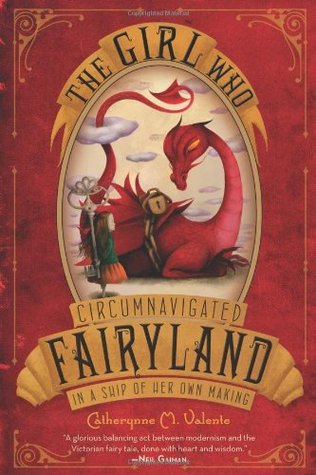
The Girl Who Circumnavigated Fairyland in a Ship of Her Own Making by Catherynne Valente was an interesting book.  September, a very ordinary girl living in Omaha, Nebraska, finds herself transported to a mythical fairy world and throw into a not-so-ordinary adventure.  As I read the book jacket, it struck me as a fascinating story, especially when I heard about the villainous Marquess and the book-loving Wyvern and an array of strange, delightful creatures and characters, like the Green Wind.  I was uncommonly excited to read Valente's novel.

And then, suddenly, I wasn't.

I don't know if it just wasn't the right time for me to read The Girl Who Circumnavigated Fairyland in a Ship of Her Own Making or if I was simply distracted by all the other novels I had in my TBR.  Regardless, I couldn't disappear into the world of Fairy, like September does, and I didn't find myself enchanted by the wondrous things she saw.  I couldn't stay committed to the story, so I simply put it aside to read another day.

-

I started Perfume:  The Story of a Murderer by Patrick Süskind with every intention of finishing it; however, it turned into a bit of a nonstarter, like Them Bones.  I didn't get very deep into Perfume, before I put it aside, but, honestly, I don't know why I did.  I mean, yes, it's a bit grisly at the beginning (and I don't imagine it gets any better), but, for some reason, I thought it had the most beautiful language.

That is, the most beautiful language considering it's about the makings of a homicidal maniac.

343
Penguin
If I hadn't had such a massive TBR (and another book on the back burner that I really wanted to finish) and if I hadn't had a due date, I might have spent a little more time getting to know Perfume.  Something about it enchanted me, something about the language and the dismal streets of eighteenth century Paris that had me hooked; however, I made the mistake of putting it down...and I didn't pick it back up.

It's a bit like Game of Thrones in that respect.  It's wonderfully detailed, it's fascinating, it's well-written, but I just can't seem to keep my attention focused on more than one book at a time.  One always ends up suffering.  In this case, it was Perfume.

I will note that I have every intention of finding Süskind's novel once more, after I finish reading I Am Malala and Julie and Julia and My Grandmother Asked Me to Tell You She's Sorry...among others.

Saturday, May 7, 2016

Read Harder Challenge (Part Three)

I've discovered some more books as part of my commitment to the Read Harder Challenge of 2016, and I've discovered some great stories in my explorations.  I have managed to:
  1. Read a horror book.
  2. Read the first book in a series by a person of color.
  3. Read a play.
HarperTeen
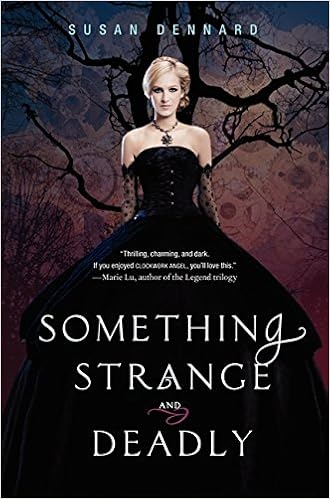
Usually, I don't read horror novels.  Dracula and Frankenstein are about it for me, but I have managed to read Stephen King's The Shining and The Strange Case of Dr. Jekyll and Mr. Hyde by Robert Louis Stevenson, among a handful of other novels that are considered good and scary.  And so, in order to satisfy my challenge criterion and read a horror story, I read Something Strange and Deadly by Susan Dennard.

Although I didn't initially lump Dennard's novel into the horror genre, I reconsidered my stance after necromancy and ritualized violence became involved.  The novel is pretty mild, all things considered--I mean, I certainly wouldn't put it at the level of The Walking Dead or Stephen King, or even Dracula--but it's still rather gory and riddled with a tough kind of suspense that leaves you hanging on the edge of your seat, hoping for more answers.  However, I think it's the zombies that pushed it over the edge and helped me give it a final designation as a horror novel.

I wouldn't call Something Strange and Deadly one of my favorites, but it isn't a bad book; in fact, I initially enjoyed it.  I liked the creepy atmosphere of it coupled with the turn of the century setting, and I even liked the story:  a wicked necromancer comes back from the dead to terrorize Eleanor Fitt, while the Dead continue to rise from their graves across Philadelphia.  It's an intriguing adventure, to say the least; however, I wasn't entirely thrilled with the story when I examined it in retrospect.  The phrase "shut pan" annoyed me to no end.  (Part of me began to think the author found a new, novel phrase and decided to run with it.)

Harper Voyager
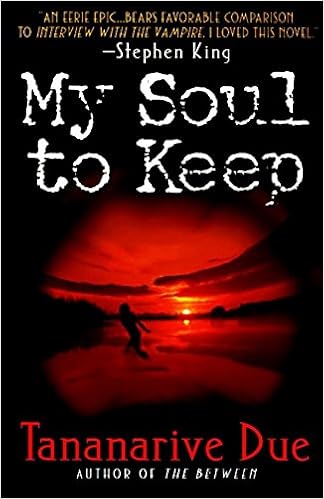
Next, in reading the first book in a series by a person of color, I picked up My Soul to Keep by Tananarive Due.  As the first book in the African Immortals series, My Soul to Keep fit the bill perfectly to fulfill this challenge and check it off my list.  I stumbled across it purely by accident, finding it in audiobook form from my local library's website--and I was immediately hooked.

I was intrigued by the premise:  an Ethiopian warrior stumbles across the secret to immortality and spends the rest of his eternal life alternating between identities, enduring a number of years as a slave on a Southern plantation, before becoming a Civil War soldier, a jazz singer, and, finally, a college professor and author.  His story is one of sorrow and loss, desperation in trying to hold tight to the ones he loves.  I was riveted from the first word, from the first moment the narrator spoke and started to weave a complex, beautiful story about Dawit--David--and his wife, Jessica.

At just over eighteen hours long, it took me a number of weeks whittling away at the story to complete it, but I have to say I was thrilled.  It's detailed and strongly written (and narrated by Peter Francis James, who has an amazing voice by the way), and it's absolutely riveting.  The story packs a punch, pulling together a myriad of religions, myths, cultures, and countries to create a flawless tapestry of history and suspense, beauty and sorrow.  I became emotionally invested in Dawit and Jessica's story, and I found myself hoping for the best outcome--and crying (just a little) when tragedy strikes.  I highly recommend picking up My Soul to Keep and reading it for yourself.

Dover Publications
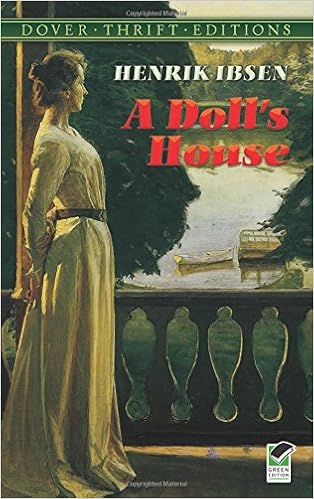
Last, I worked on Henrik Ibsen's A Doll's House.  Having read a portion of the play during a theater history class in college, I was intrigued about the prospect of reading the entire play this time around.  It was just my good fortune that I found a copy of the play for a dollar at my local used bookstore.  It's almost as if it was fated to be.

A Doll's House is an interesting play, not action-packed or suspenseful (like either of the two entries listed above).  For the time period, it's thought-provoking and, even now, it raises a lot of questions about women as spouses and mothers--and what are the typical roles of women in society.  It's a play designed to make you think, rather than thrill you.

Personally, I thought it was fascinating to see how Nora managed to flaunt convention, managed to get what she wanted despite the restrictive constraints of her time that were placed upon her gender, and, more importantly, proved she was capable of making her own decisions.  It's a bit slow, but I think it's worth reading at least once, especially if you're interested in theater.

Tuesday, April 26, 2016

My Soul to Keep

Harper Voyager
My Soul to Keep
Tananarive Due
1997

The Summary
"Jessica is an African-American journalist as ambitious as she is bright.  She is chasing the biggest story of her life, a story that strikes closer to home than she knows.

"Dawit is an immortal, whose ancient thirst for wisdom leads him to break the first commandment of his kind:  not to fall in love.

"Together they are about to pay the ultimate price for their ambition...and their desire."

The Good
Tananarive Due creates a fascinating and inventive novel in My Soul to Keep.  She pulls from religion and myth, drawing from a myriad of cultures and countries and continents, extracting fascinating bits of history to create an intricately woven story of loss and love, life and death and immortality--and all of its terrible implications.  My Soul to Keep is beautifully executed, crafting an exquisite story that's one part tragedy and one part family epic that tosses together a number of people (immortal and otherwise) into a tangled web.

Let me say this, I loved this story.  I stumbled across it purely by accident when I was scrolling through the audiobooks on my local library website and, when I realized it conformed to one of my Read Harder Challenge categories, I jumped at the chance to read it.  Not only was I impressed by depth of the novel, which explores the human heart and the effect of immortality on man, I fell in love with the history Due included in her novel.

My Soul to Keep delves into a particularly dark part of American history, setting a portion of her novel in the Louisiana shortly before the Civil War.  She confronts the reality of slavery, the violence and loss that so many people faced on a daily basis, and she does a spectacular job of illustrating what someone like Dawit might have experienced during those tumultuous times.

Due also draws upon many different parts of history:  Chicago during the Jazz Age, Miami in the bustling modern world, Spain during the Inquisition, and even Ethiopia from Dawit's childhood, four hundred years before the story begins.  She weaves together an enchanting, sometimes terrifying story, that encapsulates a variety of human experience--a tapestry of history that reflects the beliefs, the culture, the language of each and every age she visits in her novel.

My Soul to Keep is exceptional in that regard.

But I really enjoyed the story, too.  It has a complexity that's thrilling, an undercurrent of suspense and menace that leaves the reader on the edge of their seat.  Although it sometimes seems to develop slowly--that is, it took a little longer than I expected for me to put together some of the pieces--I was pleased with how the narrative evolved, how Jessica changed when she learned Dawit's secrets, Dawit's actions in trying to protect his family and his flashbacks to his not-so-immediate past.

Since I listened to Due's novel as an audiobook, I have to say I was particularly pleased with the narration.  Peter Francis James does a stellar job of reading My Soul to Keep, melding flawless narration with an exceptional story.  His voice brought life to the characters, gave them a singularly unique voice and an emotional impact that left me nearly breathless at each chapter.

I loved My Soul to Keep.  It's just a good book all around, and it's probably one of my favorite this year.

The Bad
No complaints.

Seriously, none.  At just over eighteen hours, My Soul to Keep was a bit lengthy for my usual tastes, but I enjoyed it, nonetheless.  It took me about two weeks to finish the story, since I could only listen to it a couple of hours a day when I walked my dog or drove my car, or when I worked early in the morning before opening.  But if you're interested in it, I certainly wouldn't let the time present an obstacle.

Due's novel is worth reading, and I highly recommend it.

The Ugly
There were a few moments during which I had to stop the tape and take a minute to process what had happened.  Sometimes, it was difficult to proceed with the story, because it hurt to see how everything was starting to fall apart for Jessica and Dawit.  My heart was breaking for them as their lives took a turn for the worse.

Saturday, August 8, 2015

Moriarty

Harper
Moriarty
Anthony Horowitz
2014

The Summary
"[Moriarty]...plunges us back into the dark and complex world of Detective Sherlock Holmes and Professor James Moriarty - dubbed "the Napoleon of crime" - in the aftermath of their fateful struggle at the Reichenbach Falls.

"Days after Holmes and Moriarty disappear into the waterfall's churning depths, Frederick Chase, a senior investigator at New York's infamous Pinkerton Detective Agency, arrives in Switzerland.  Chase brings with him a dire warning:  Moriarty's death has left a convenient vacancy in London's criminal underworld.  There is no shortage of candidates to take his place - including one particularly fiendish criminal mastermind.

"Chase is assisted by Inspector Athelney Jones, a Scotland Yard detective and devoted student of Holmes methods of deduction, whom Conan Doyle introduced in The Sign of Four.  The two men join forces and fight their way through the sinuous streets of Victorian London - from the elegant squares of Mayfair to the shadowy wharfs and alleyways of the Docks - in pursuit of a sinister figure, a man much feared by seldom seen, who is determined to stake his claim as Moriarty's successor."

The Good
Moriarty opens at the close of Sherlock Holmes' last case, "The Final Problem" at Reichenbach Falls.  Horowitz basically picks up where Sir Arthur Conan Doyle left off; however, he takes a surprising turn by adding new characters (i.e. Frederick Chase) - and, more importantly, a new villain, a man who rivals James Moriarty in his duplicity and his invisibility.

Naturally, I was intrigued by the premise and, when I discovered that Horowitz had recycled characters from Conan Doyle's original mysteries (such as Athelney Jones and Inspector Lestrade), I was justifiably excited.  Jones, in particular, appears to take the place of our beloved Sherlock.  As an ardent student of Holmes' methods, Jones takes center stage, pinpointing unexpected clues, making great leaps in logic with inexplicable ease, and cornering criminals.

Jones makes an intriguing character and, possibly, a fine detective (or, at the very least, he does his very best).

Frederick Chase also makes a fine narrator.  Like Dr. John Watson, he documents events surrounding the case, providing a candid account ad detailed insight for his reader.  I find I liked Detective Chase for his candor and his ability to pen a pretty riveting story; however, I found I was a little alarmed by his allusions to the future - and for very good reasons.

Overall, Moriarty is a decent novel.  I liked it well enough to muddle through and, honestly, I was pleasantly surprised by the ending.  Devastated, admittedly, but pleasantly surprised by the novels real villain.

The Bad
My one complaint about Horowitz's novel is pace.

Although Chase and Inspector Jones consistently find themselves wedged in a spot of trouble, stumbling into dangerous situations and bizarre adventures that should surely keep a reader intrigued, I would sometimes lose interest in the development of the story.  With so many unanswered questions, so many plot twists that seem to develop into nothing (that is, before you reach the end of the story), I was not the most dedicated reader and I frequently took breaks between chapters.

The final two chapters are great - they are, without a doubt, the most exciting chapters in the entire novel - but the others were much less so.

The Ugly
The final two chapters of Moriarty see the entire plot unraveling, reaching a climax that I certainly didn't expect.  I mean, the conclusion of Horowitz's novel was like a punch in the stomach.  Although the narrator alludes to future events, to the potential for tragedy, I didn't expect events to unfold as they did.  In concluding his novel as he did, Horowitz creates a truly brilliant - and truly terrifying - villain.

Monday, August 6, 2012

And Then There Were None

Image courtesy of
www.booksamillion.com
And Then There Were None
Agatha Christie
1939

The Summary
Ten seemingly unrelated individuals have been summoned to Indian Island, a private island off the coast of Devon, by a mysterious benefactor; however, when the group arrives at their destination they find themselves alone and entirely secluded from the rest of civilization.

And then the murders begin.

One among them is not who they seem.

The Good
Agatha Christie will keep you on the edge of your seat. When the murders begin, you will be guessing time and again with the remaining victims about who has committed such atrocities.

It will certainly keep you on your toes - which is obviously a good thing for a murder-mystery novel.

Additionally, Christie remains remarkably inventive with her story. The entire sequence of murders actually follows the course of an old nursery rhyme. Each individual on the island will face the fate of one of the poem's unfortunate characters. So, if you're looking for macabre sort of story, Christie won't disappoint.

But that, of course, leaves one question: who is the ever elusive and mysterious benefactor, U. N. Owen?

Well, the answer just might (and probably will) surprise you.

The Bad
Although Christie has a skill for weaving murder-mystery novels like no other author, And Then There Were None seemingly drags through the first few chapters.  Between providing the initial introductions and setting up the events on Indian Island, the opening chapters can become a real bore.

It isn't until the first murder occurs that the story really picks up the pace.

The Ugly
Well, murder obviously.

Christie sets the stage for unusual and inventive murders, not least among them through suffocation, poison, and crushing. It's amazing how one poem - an old nursery rhyme, in fact - can lead to such a macabre resolution.