"All good books are alike in that they are truer than if they had really happened
and after you are finished reading one you will feel that all that happened to you
and afterwards it all belongs to you; the good and the bad, the ecstasy, the remorse,
and sorrow, the people and the places and how the weather was."
Ernest Hemingway
Showing posts with label Southern literature. Show all posts

Monday, September 11, 2017

The Help: Revisited

Berkley Publishing Group
The Help
Kathryn Stockett
2009

The Summary
"Three ordinary women are about to take one extraordinary step...

"Aibileen is a black maid in 1962 Jackson, Mississippi, raising her seventeenth white child.  She's always taken orders quietly, but lately it leaves her with a bitterness she can no longer bite back.  Her friend Minny has certainly never held her tongue, or held on to a job for very long, but now she's working for a newcomer with secrets that leave her speechless.  And white socialite Skeeter has just returned from college with ambition and a degree but, to her mother's lament, no husband.  Normally Skeeter would find solace in Constantine, the beloved maid who raised her, but Constantine has inexplicably disappeared.

"Together, these seemingly different women join to work on a project that could forever alter their destinies and the life of a small town--to write, in secret, a tell-all book about what it's really like to work as a black maid in the white homes of the South.  Despite the terrible risks they will have to take, and the sometimes humorous boundaries they will have to cross, these three women unite with one intention:  hope for a better day."

The Good
I finished reading The Help a few years ago and, during July, I decided to join my local book club in reading it again--and I'm so glad I did.  The Help is as incredible to me now as it was to me the first time I read it.  I picked up different nuances and I noticed I related to different experiences this time around, especially where Skeeter is concerned; however, I think I love it just as much now, if not more, as I did then.

Incredibly compelling and soundly written, The Help is poignant and heart-wrenching novel that kept me glued to the pages.  I enjoyed meeting Skeeter, Aibileen, and Minnie; I especially enjoyed seeing how these ladies from distant social classes and experiences managed to create a book that is surely extraordinary.

And, as terrible as some of their stories veered, as heart-breaking as their histories are, I loved reading about them.  Their stories are compelling and beautiful, real and raw and, simply put, amazing.  I loved reading it, and I loved feeling connected to them.

Although Aibileen is still my favorite character, simply because she is an extraordinary woman, I found I connected more deeply with Skeeter during this second reading.  Having graduated from college since my first reading of The Help, I found I related more to Skeeter this time than I did the last.  That is, I recognize Skeeter's drive to do more with her life, yet she teeters between wanting to live her life--wanting to become an author--and hanging on to her family and struggling with the general expectations of Southern society.

It was a bit unexpected, maybe even a little jarring, to learn I see so much of myself and my personal experiences in Skeeter.  Although I was surprised by my connection to Skeeter, I don't think this detracted from the story in any way.  Rather, I found myself becoming more invested in the overall story and I certainly felt it more deeply.

I fully enjoyed rereading The Help.

The Bad
The Help is frequently written with a heavy emphasis on dialect and accent.  If you're not familiar with the region or it's verbal quirks, it might prove a little difficult to read.  On the other hand, if you're a Southerner or if you've ever lived in the South, reading this novel will be a piece of cake.

The Ugly
Racism.
Saturday, October 22, 2016

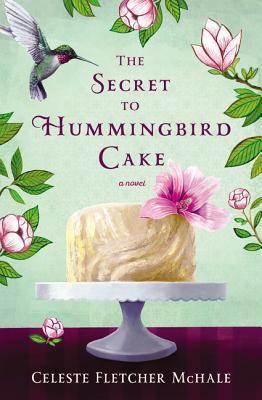
Bonus: The Secret to Hummingbird Cake

26893373
Thomas Nelson
The Secret to Hummingbird Cake
Celeste Fletcher McHale
2016

The Summary
"When all else fails, turn to the divine taste of hummingbird cake.

"In the South you always say "yes, ma'am" and "no, ma'am."  You know everybody's business.  Football is a lifestyle not a pastime.  Food--especially desert--is almost a religious experience.  And you protect your friends as fiercely as you protect your family--even if the threat is something you cannot see.

"In this spot-on Southern novel brimming with wit and authenticity, you'll laugh alongside lifelong friends, navigate the sometimes rocky path of marriage, and roll through the outrageous curveballs that life sometimes throws...from devastating pain to absolute joy.  And if you're lucky, you just may discover the secret to hummingbird cake along the way."

The Good
This novel was pretty incredible.  Yes, it felt a little clunky, a little heavy-handed and awkward, but, as first novels go, it was a decent novel with interesting characters and a poignant story that made me tear up a little.  (Okay, a lot.)  It's not as refined as I might have liked and Carrigan has a lot of flaws, which sometimes makes her a story a little difficult to stomach, but, overall, I enjoyed it.

Touching, funny and sweet, The Secret to Hummingbird Cake is laced with tragedy but it doesn't propel the story.  It's real life bundled into a book:  sometimes heartbreaking, sometimes wonderful, but ultimately a lovely representation of human foibles and follies and feelings.

While I can't say I enjoyed it as much as Sarah Addison Allen's Garden Spells or Linda Francis Lee's Glass Kitchen, The Secret to Hummingbird Cake taps the same vein of real-life magic and southern charm that I liked.  Without letting too much of the plot slip, it made me happy, sad, frustrated, ecstatic--the whole spectrum of emotions that comes when you get to know people and grow to love them.

I have friends like Carrigan and Ella Rae--tough, mouthy, but ultimately sweet and doggedly loyal when called to the fray--and I hope to someday befriend someone exactly like Laine, who does the right thing and takes care of her friends and stands up for those who need help.  Heck, I hope to someday be like Laine.  She's a beautiful person, and I couldn't help wishing the world had more people like her.

The Bad
As I pointed out, The Secret to Hummingbird Cake does feel a little awkward.  It's a debut novel, so it felt like the narrative sometimes wavered or grew weak.  Sometimes, it grew saccharine sweet; sometimes, I just couldn't quite believe it.  Overall, it's a wonderful, romantic novel on real life, but it does endure some of the pitfalls of an early novel.

The Ugly
Full disclosure:  I cried at the end of this book.

I don't want to give anything away, because it's worth reading this book to find out what happens to Laine, Carrigan, and Ella Rae, what turmoil they face as they endure the biggest journey of their lives.  But I will admit that it hit way to close to home, and I couldn't help breaking down to cry.

Tuesday, August 2, 2016

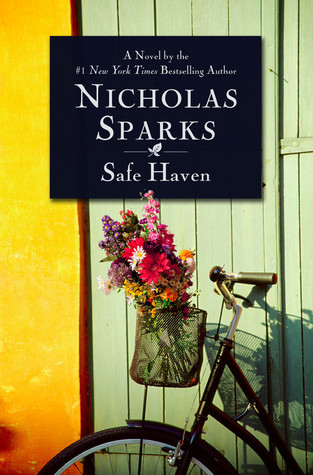
Safe Haven

7812659
Grand Central Publishing
Safe Haven
Nicholas Sparks
2010

The Summary
"When a mysterious young woman named Katie appears in the small North Carolina town of Southport, her sudden arrival raises questions about her past.  Beautiful yet self-effacing, Katie seems determined to avoid forming personal ties until a series of events draws her into two reluctant relationships:  one with her plainspoken neighbor, Jo; and another with Alex, a widowed store owner with two young children.  Despite her reservations, Katie slowly begins to relax her guard, putting down roots in the community and becoming increasingly attached to Alex and his family.

"But even as Katie begins to fall in love, she struggles with the dark secret that still haunts and terrifies her...a past that set her on a fearful journey across the country, to the oasis of Southport.  With Jo's support, Katie eventually realizes that she must choose between a life of transient safety and one of riskier rewards...and in the darkest hour, love is the only true safe haven."

The Good
Oddly enough, I fell in love with Safe Haven.  I've always been reluctant to read Nicholas Sparks.  I was never interested in reading The Notebook and I wasn't thrilled with The Choice, but I loved watching A Walk to Remember and I even liked watching Safe Haven when it came on TV.  Regardless, I was still a little hesitant to begin Safe Haven, because I really didn't know if I would enjoy it--if I would even get past the first chapter.

Well, I did.  And I was pleasantly surprised by how much I enjoyed it.

I've read Nicholas Sparks in the past, but I could never fully enjoy his writing.  Something about The Choice just wasn't appealing to me.  I'm not sure if it was his writing style, or the story, or the format--or if it just wasn't right for me at the time--but I wasn't impressed.  I pretty much brushed Nicholas Sparks aside and discounted him as a writer.

However, I found myself enjoying Safe Haven more than I expected.  It's a sweet little romance with endearing characters set in a small, Southern town on the coast, and it's threaded with very subtle hints of magic.  I might have liked it because it reminded me of Sarah Addison Allen and Linda Francis Lee, but I think I might have liked it best because it's set in North Carolina.  I've been to tiny towns like Southport, I've been to beaches like Katie describes, so the story appealed to me on a deeply personal level.

Most importantly, I think I liked the narrator:  Rebecca Lowman.  Lowman, who also narrated Girl Who Chased the Moon, does a fantastic job of bringing Sparks' works to life.  She's careful to distinguish characters with individual accents, using the soft drawl and twang of a Southern coastal town, while affecting different inflections in others.  I often felt myself drawn into the narrative as Lowman recounted Katie's story and her desperate flight from her past.

Safe Haven was a great audiobook, overall.  It struck a perfect balance of romance, suspense, and drama without leaning in one direction or the other, and it had a little bit of magic thrown into the mix that made it stand out.  It's sure to warm your heart, like it did mine.

The Bad
A few elements of Katie's romance with Alex rubbed me the wrong way, struck me as a little cliche, but it wasn't anything that left a lingering pall over the story.  It's not really even noticeable, just something that would appear every so often and then I would sink back into the story, ignoring it.  Otherwise, I don't really have any other complaints.

The Ugly
Domestic abuse is an ugly, ugly thing.

I didn't like Kevin for obvious reasons; however, I also feel like he wasn't crafted very well.  He has a strange religious/superiority complex that makes him strange, slightly absurd, but I suppose that stems from being purposefully made crazy.  He's not a great character, and he's a horrible human being.

And I really didn't like him.

Tuesday, March 15, 2016

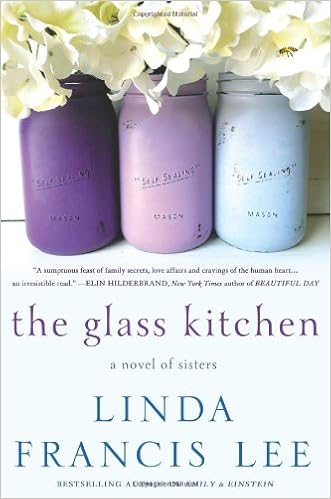
The Glass Kitchen

St. Martin's Press
The Glass Kitchen
Linda Francis Lee
2014

The Summary
"Portia Cuthcart never intended to leave Texas.  Her dream was to run the Glass Kitchen restaurant her grandmother built decades ago.  But after a string of betrayals and the loss of her legacy Portia is determined to start a new life with her sisters in Manhattan...and never cook again.

"When she moves into a dilapidated brownstone on the Upper West Side, she meets twelve-year-old Ariel and her widowed father, Gabriel, a man with his hands full trying to raise two daughters on his own.  Soon a promise made to her sisters forces Portia back into a world of magical food and swirling emotions, where she must confront everything she has been running from.  What seems so simple on the surfaces is anything but when long-held secrets are revealed, rivalries exposed, and the promise of new love stirs to life like chocolate mixing with cream.

"The Glass Kitchen is a delicious novel, a tempestuous story of a woman, washed up on the shores of Manhattan, who discovers that a kitchen--like an island--can be a refuge, if only she has the courage to give in to the pull of love and the power of forgiveness, and to accept the complications of what it means to be family."

The Good
I loved everything about this novel:  characters, story, tone--everything.  The descriptions were wonderful, luscious and full of food imagery that connected with me on a tactile, gustatory level.  Portia likens all her experiences and emotions to food, since that's what she knows best with her knowing--her inexplicable ability to plan and create food for just the right occasion.  I thought the author did an excellent job of connecting the dots and appealing to my love of food, especially Southern food.

I also loved Portia's mysterious family gift, her magical sense of knowing.  It immediately makes me think of Sarah Addison Allen and her style of writing:  vibrant, fun, threaded with magic that makes the novel shine just a little brighter.  Portia's knowing adds an element of adventure and complexity to the novel, adding a special spark that makes The Glass Kitchen that much more enjoyable.  It's a relatable story about turning over a new leaf, starting over, but it has that hint of magic that makes it whimsical without being fantastical.

And I enjoyed watching the progression of the sisters' relationship.  Their interactions seem genuine:  Olivia, Rose, and Portia fight and fuss, but, ultimately, they forgive one another and make up.  They're family, so it's only natural that they disagree, that they're brutally honest and grumpy, but they love one another, regardless of what happens.  It's sweet, which I really enjoyed, because it's just the sort of relationship that siblings can hope to have.

Overall, I loved reading The Glass Kitchen.  It hit all the right notes for me, bringing together all the qualities I love in a narrative and telling it in a compelling, beautiful way that keeps from hooked from cover to cover.  I can't wait to read more by Linda Francis Lee.

The Bad
The Glass Kitchen is a bit of an odd story, but I don't really have any complaints.  I wish Portia's knowing was explained a little better, but even Portia didn't fully understand her gift, so it isn't a surprise it remains undefined.

Otherwise, I loved every bit of Lee's novel.

The Ugly
Loss.  Tragedy.  Betrayal.  Divorce.  Love.  And more betrayal.

I feel bad for Portia, I really do.  My heart goes out to her as she tries to stand on her own two feet, as she tries to get back up after being knocked down, only to have the most important men in her life to a) lie to her, b) betray her trust, and c) deliberately withhold the truth.  It's frustrating and, in some cases, humiliating for Portia.

I couldn't imagine finding myself in the same situation.

Wednesday, February 4, 2015

A Place at the Table

Image courtesy of
A Place at the Table
Susan Rebecca White
2013

The Summary
Following the lives of Alice Stone, Bobby Banks, and Amelia Brighton, Susan Rebecca White weaves a subtle tale of loss, acceptance, and life in general as her characters cross paths in the unexpectedly popular Café Andres.

The Good
To be perfectly honest, A Place at the Table is something of a heartbreaker.  Alice Stone, Amelia Brighton, and Bobby Banks all struggle with individual trials as they seek to find themselves and redefine themselves.  Whether its familial turmoil, divorce, or personal loss, Amelia and Alice and Bobby each face tragic circumstances that they must surmount and, in time, accept.

I will say, however, I loved Bobby's story.

Alice's tale comes in bits and pieces, through hints and recollections she sparingly supplies to Bobby and Amelia when they meet, so I didn't really have the opportunity to fully embrace her as a character.  I liked her, but I didn't have much invested in her.

Likewise, I liked and enjoyed Amelia's story.  As a woman who's recently undergone a rocky divorce, Amelia is on a quest to recover herself and uncover who she is and where she comes from.  I really enjoyed reading about how she changed, how she grows into her own and, more importantly, how she learns to love and accept herself after being emotionally devastated by her husband.

However, I simply have a special place in my heart for Bobby.

Maybe, I liked his story best because it came first in the book.  Maybe, I liked his story because he grows up in the southern United States.  Either way, I latched onto his story as my favorite.  As his story progressed, I couldn't help wishing the best for him - and I was infinitely grateful for his Meemaw, who decided, "Your meemaw is not going to let anyone throw you to the wolves.  Your meemaw is going to keep you loved and safe."

That was it for me.  I needed a box of Kleenex.

The Bad
I found very few negatives in A Place at the Table.  I mean, certainly nothing worth pointing out as a major deterrent.

I would like to have read more about Bobby and I would like to have found more of his story further into the book; however, I was suitably captivated by Amelia's story in the latter half of the book that it isn't really a major complaint.  I'll get over it, you know.

The Ugly
Alice faces segregation and prejudice, sometimes blatant racism, and endures a terrible schism in her family.  Bobby finds himself ostracized for his homosexuality and faces further tragedy in losing two of the most important people in his life.  Amelia endures a messy, terrifying divorce, which leaves her to pick up the pieces of her life and put them back together again, and struggles to find her own identity when her family has no past - and no apparent future.

Let me put it bluntly:  it's emotionally draining.

Sunday, May 18, 2014

Under the Cajun Moon

Under The Cajun Moon
Image courtesy of
www.mindystarnsclark.com
Under the Cajun Moon
Mindy Starns Clark
2009

The Summary
When Chloe Ledet, an international expert in business and social etiquette, learns her father has been gravely wounded, she rushes home to New Orleans; however, she becomes embroiled in a police investigation and a dangerous plot that involves murder, buried treasure, and intrigue.

Now on the run with an high school friend, Chloe must evade the police and an anonymous murderer if she wants to stay alive - and uncover the secret her father has kept hidden for more than forty years.

The Good
Although it took some time to really sink into the story, it was intriguing.  I especially enjoyed when the novel veered into the past.  With Under the Cajun Moon, you actually have two perspectives to follow:  Jacques Soleil (his story) and Chloe Ledet (her personal narrative).

It's fascinating to see how the stories change and how they interweave.  At first, I didn't see how the stories even connected.  I mean, you have Jacques who is a goldsmith in 18th century France and Chloe who is an etiquette savvy businesswoman in modern America.  It's difficult to see the link between them, until you realize there's more to the story - and, more importantly, more to the random shooting that injures her father.

I also enjoyed the descriptions within Mindy Clark's novel.  The details afford to New Orleans and the surrounding areas really gives the reader a feel for the environment and, more to the point, the challenges which Chloe will face in her search.

The Bad
To be perfectly honest, I struggled a bit reconciling the religious undertone of Chloe's story - she does indeed go through a crisis of faith during the course of her story - and the sense of suspense and adventure as she and Travis Naquin go in search of buried treasure.

I have no problem with the addition of faith, merely how it appeared to pop up abruptly (at least to me) in the middle of what I assumed was an action-adventure tale of buried treasure and romance.  I mean, I suppose I imagined something along the lines of Indian Jones-esque adventure - you know, an unexpected and reluctant hero thrown into tough situations - rather than the tame, semi-religious novel I received.

I'm not bashing Clark's work.  It's a good novel with solid development and enjoyable characters.  However, I'm simply pointing out it wasn't quite what I expected - although I suppose I should have taken the hint when I read the back cover:  "[Clark] offers another exciting standalone novel, one full of Cajun mystery...and the glow of God's unending grace."

Yeah.  In retrospect, that should have been a dead giveaway.

The Ugly
Murder.  Big thing right there.

Otherwise, Under the Cajun Moon is pretty tame.

Sunday, October 13, 2013

The Beach Trees

The Beach Trees
Image courtesy of
www.karen-white.com
The Beach Trees
Karen White
2011

The Summary
After the death of her best friend, Monica, Julie Holt is left with guardianship of Monica's five-year-old son, Beau, and a house called Riversong all the way in Biloxi.  However, when she arrives in Mississippi, Julie discovers the house she hoped to find is no longer standing - and she is left with only one resort:  finding and embracing the family Monica mysteriously left behind nearly a decade before.

The Good
In Karen White's novel, you'll find a beautiful amount of detail and human emotion that reflects both the beauty and the struggles found when living on the Gulf Coast.  But it's also an interesting book, being equal parts drama and mystery, because it leaves you guessing what happened in Monica's family that made her leave them behind and what will happen now with Julie's own investigation.

The Beach Trees also has a unique narrative style by using dual protagonists:  Aimee Guidry, the family matriarch, and Julie Holt.  Not only do you receive an intimate glance into the life of Julie, who struggles daily with her sister's disappearance and figures out how to raise a five-year-old boy on her own in a city she has never seen, you are able to look into Aimee's life and discover what it was like to grow up on the banks of the Mississippi River, weathering year after year of hurricanes on the Gulf Coast.

It's raw, real, and resonant, because the story will linger with you long after you close the pages for the last time.

The Bad
The Beach Trees, like the cities in which it's based, sets up a slightly languid pace.  While I wouldn't say this is a bad quality in a book - personally, I rather enjoyed the pace of this novel, because it allows you to adequately soak up the detail and the emotion written into every word - it may prove slightly frustrating when all you want are answers to that questions that keep arising from this novel.

For instance, I was dying to know about Aimee's past - who murdered her mother?  And what happened to her mother's wedding ring? - and Caroline Guidry - where did she go?  What happened to her?  And what secret has Wes Guidry, her son, been keeping?

It certainly manages to keep you glued to the pages for want of answers.

The Ugly
Some family secrets are too ugly to share.

Sunday, August 25, 2013

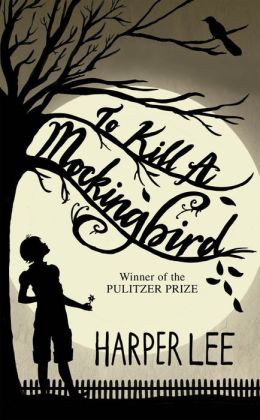
To Kill a Mockingbird

To Kill a Mockingbird
Image courtesy of
www.barnesandnoble.com
To Kill a Mockingbird
Harper Lee
1960

The Summary
For young Scout (Jean Louise) Finch, growing up in Maycomb county of Alabama presents its share of difficulties and joys:  playing pretend in the front yard, struggling to understand grown-up antics, trying to convince the mysterious Boo Radley to leave his house, reading the newspaper with Atticus, her father.  But The Great Depression has left its indelible mark, and one court case may very well change the course of history for the Finch family.

The Good
Harper Lee's novel is absolutely beautiful.

Told from the perspective of Scout Finch, a young girl living and growing up during the Great Depression, when hope sometimes seems at its lowest and equality seemes to appear only periodically, To Kill a Mockingbird opens the door on a world struggling to cope with new ideas and old cultural values - and children trying to cope with old ideas as they try to form their own.

Besides depicting a moving, heart-wrenching tale of growth and experience and portraying one, crucial court case that will rock the county of Maycomb to its foundations - and change Scout's and her brother's (Jem's) lives forever - Lee also creates a host of endearing and memorable characters.  And, through the voice of Scout, Lee brings her characters to life, fashioning a dynamic and beautiful piece of literature in the heart of one, tiny Southern town in Alabama.

To Kill a Mockingbird is more than a memorable book, however, it's an iconic novel about race, religion, class, gender, and learning to balance all these things in the earliest parts of adolescence.  In short, it's a novel about growing up in a world tinged by racism and prejudice and learning how to rise above it

The Bad
Some harsh language may appear; however, the most dramatic - or, rather, traumatic - episodes will occur in the latter half of the book with the trial one Tom Robinson, a man falsely accused simply because of the color of his skin.  The fate of Tom Robinson, and the results of his trial, are certain to put an ugly spin on an otherwise wonderful book.

The Ugly
Bob Ewell.

If you've ever had the opportunity to read Lee's novel, you'll certainly know what I mean.

Sunday, April 21, 2013

The Help

The Help
Image courtesy of
www.barnesandnoble.com
The Help
Kathryn Stockett
2009

The Summary
The Help tells the story of Aibileen and Minny, a pair of black maids who have spent their lives cleaning the homes and raising the children of white women, and Skeeter, a recent college graduate who is still trying to find herself, and their idea to pen a novel about what it's like to live and work the town of Jackson, Mississippi, in 1962.

The Good
One word: exquisite.

Not only has Kathryn Stockett managed to create a fabulous novel packed with richly depicted characters you'll adore, she tells an intricate and thought-provoking story that will keep you glued to the pages.  Quite frankly, The Help is an addictive piece of work that's hard to put down once you turn the first page.

But besides being an absolute joy to read, Stockett's novel is well-written and especially thoughtful because it considers dialect, speech patterns, and personal memories of each character, weaving them each into a beautifully sentimental story about three women and their struggles within society of the South.

Moreover, it isn't difficult to dive right into the lives of Minny, Skeeter, and Aibileen.  They're wonderful characters with thoughts, dreams, and aspirations of their own that make them real and strikingly human.  Their stories flow easily, because they are simply framed and simply told, but they are compelling and enjoyable nonetheless.

The Bad
The Help will certainly prove to be an emotional roller coaster ride, so I recommend keeping a box of tissues handy - just in case.

The Ugly
Envisioned in conjunction with the civil rights movement The Help portrays the lives of three women in Jackson, Mississippi. As such, Stockett's novel often portrays some of the worst aspects of racism - and the abject unfairness that such extraordinary women face such terrible circumstances.

Parts of this novel will ultimately perturb you because of the pure inability of some characters to see past themselves - and their own unfounded prejudices - to fully view the plight of others and manage even the smallest iota of humanity.

Tuesday, November 20, 2012

Narrative of the Life of Frederick Douglass

Image courtesy of
www.booksamillion.com
Narrative of the Life of Frederick Douglass
Frederick Douglass
1845

The Summary
Recounting the life of former slave and famous orator Frederick Douglass, Douglass' narrative describes the atrocities he was forced to face and the conditions he endured - and from which he fled - as a slave in Maryland.

The Good
Douglass' narrative is incredibly detailed and well-written.  Besides illuminating the crimes of slaveholders - which, by the way, Douglass shows no fear in naming names and revealing the most terrible crimes against human nature - and offering an intimate glance into the conditions under which slaves suffered, Douglass weaves an impressive tale of human survival.

His constant struggle, his never-ending fight to achieve freedom from slavery, and his flight from oppression will pluck at your heart strings.  It's deep and thought-provoking, and more than impressive.  Douglass has written a work well-worth reading.

The Bad
Although relatively brief in nature, Douglass' work can seem fairly dense and absolutely heart-wrenching.  For its size, it appears easy to read; however, certain sections may prove difficult due to the brutality recorded there.

The Ugly
Douglass's narrative reveals the sheer barbarity of slavery and provides detailed accounts of unprovoked cruelty toward African American men and women.  He reveals every terrible facet of slavery - and he does so without ever altering his purpose or concealing facts behind vague language.

Although Douglass could have recollected events of a less graphic nature, he adamantly refuses to mask the monstrosities of slavery as he saw and experienced them.  He stays true to his novel, weaving threads of truth into his work and offering the startling implication that such cruelty not only happened more than once, but appeared commonplace throughout the United States.

Tuesday, May 8, 2012

Beloved

Image courtesy of
www.booksamillion.com
Beloved
Toni Morrison
1987

The Summary
Beloved primarily tells the story of Sethe, an escaped slave, and recounts the horrors she endured at Sweet Home in Kentucky, the haunting recollections of her dead child, the strained relationship she has with her living daughter Denver, and the mysterious connection she has with a girl who names herself only as Beloved.

The Good
Based loosely on true events in the life of escaped slave Margaret Garner, Toni Morrison weaves a heart-wrenching tale of one woman's attempt to accept and live with - or, better yet, escape - the torments of the past.

It's rough, it's raw, and it's guaranteed to open your eyes on more than a few topics surrounding the treatment of slaves and the suffering endured even after the abolition of slavery.

The Bad
This novel often hops perspectives and backslides into the past, making the divide between characters - and time - a difficult thing to pinpoint.  Additionally, the ambiguity of Morrison's novel can often leave the reader questioning events, rather than acknowledging the impact it was meant to have.

There's no doubt Beloved will make you think twice, but, occasionally, thinking twice may require rereading certain passages to understand the whole context and meaning.

Moreover, Morrison occasionally dabbles modern speech with 19th century slave dialect, which makes Sethe's story a little less than "true-to-life."  Although it appropriately links Sethe's story to the Civil Rights movement and current conflicts, it can occasionally be frustrating to make the distinctions between historical fact and modern embellishment.

The Ugly
Many of the events in Sethe's life are tragic, including the gruesome death of her eldest daughter, the dark history she has with Sweet Home, the awful scars she carries on her back in the shape of a choke cherry tree, and the terrible abuse she faced under the vile Schoolteacher.

Rest assured, you may very well weep for Sethe and her children.  And, if Sethe's story doesn't break your heart, then Beloved's will.

Tuesday, February 21, 2012

The Grapes of Wrath

Image courtesy of
www.booksamillion.com
The Grapes of Wrath
John Steinbeck
1939

The Summary
The Grapes of Wrath, simply put, tells the story of the Joad family and their desperate journey to California.  After being forced off of their land by the owner, who sold his land to a bank, who in turn sold it to a corporation - and so on and so forth.  It's a never ending cycle - the Joad family moves west, hoping to find work (as promised in the pamphlet they discovered) and start a new life.

The Good
While the novel is primarily concerned with the Joad family and their flight across the country, several chapters - let's call them "bridge chapters," for the sake of being concise - describe the overall experience of the families forced to flee their homes.  These "bridge chapters" not only connect the Joad family to the larger, collective experience of these migrant people, but they also introduce the reader to a more intimate portrait of the suffering, terror, and desperation these people felt and experienced, during this great and terrible time.

While Steinbeck's novel isn't "delightful," it certainly has the qualities of a page turner.  It will keep you on the edge of your seat, wondering if the family will make it, if they will endure, and if they will make a home in California - if they can ever survive the journey.  On some level, this book will make you hope there is such a thing as happily-ever-after.

But, whether you find a happy ending, or not, is really up to you.

The Bad
This is a book that will break your heart, and then it will come back and stomp it into the dirt.

As Steinbeck once wrote in a letter to his publisher, "I am not writing a satisfying story.  I've done my damndest to rip a reader's nerves to rags, I don't want him satisfied.  And still one more thing - I've tried to write this book the way lives are lived not the way books are written."

The Ugly
The story of the Joad family occurs during a particularly chaotic time in American history.  It is a decade, when stock markets have crashed and banks have gone under; when dust has choked nearly half the country; when war - or an eviction notice - looms on the horizon, like the dusts of Oklahoma and Arkansas; when economic hardship has become the norm and exploitation of the poor, weak, and desperate happens regularly.

People suffer.  People die.  People are treated as less than human - and may become less than human through the fear and loathing of others, and under their own desperation.

In short, you - and the Joads - will be faced with tragedy again and again.

Tuesday, February 14, 2012

The Sound and the Fury

Image courtesy of
www.booksamillion.com
The Sound and the Fury
William Faulkner
1929

The Summary
Divided into four parts, The Sound and the Fury catalogs the events in the gradual deterioration of a southern family.  It presents events from the perspectives of Benjy (Benjamin), Quentin, and Jason Compson, as well as Dilsey, a servant in the house.  Besides giving the reader a glimpse into their lives and minds, Faulkner confronts the meaning of time (past, present, and future), toys with shadows and death, and examines southern heritage, honor, tradition, humanity, racism and religion, and more.

The Good
William Faulkner definitely will not disappoint with this novel.  It is deep, it is rich, it is complex.  The society - the lives - Faulkner creates in this story will enchant and disgust, endear and repel.  In The Sound and the Fury, there exists a depth of consciousness which encompasses all of humanity's vices and virtues.  Reality, to a certain degree, becomes actualized by Faulkner.  And, throughout his novel, he not only entreats you to read further but makes it well worth your while.

The Bad
The Sound and the Fury is not an easy book to read.  There exist layers of complexity beneath the surface, as well as an unusual prose style.  In the first section (Benjy's chapter), punctuation and chronology become mixed up with the memories and sights, smells, sounds, and sensations Benjy experiences.  It does not follow any set path, rather it bounces between the past and the present, interweaving dialogue and memories and experiences beyond any set point of recognition.

Likewise, the second section (Quentin's chapter) will toy with punctuation, capitalization, time, emotional and physical turmoil, and suicide.  In some of the final pages of his chapter, punctuation and capitalization are completely disregarded in a torrent of memory and emotion.  There's also a mental complexity to this chapter, which, ultimately, makes very little sense, until one understands it is the story of a man contemplating suicide.

It's also important to realize there are names, which overlap.  There are two characters named Quentin (one male, and one female), two characters named Jason (a father and son), and two characters named Maury (until one has his name changed to Benjamin - i.e. Benjy).

As I said, this is not an easy novel.  A character map or timeline may prove beneficial.

The Ugly
As you read this novel, certain topics will arise which may be difficult to swallow.  Suicide, virginity, obsession, familial disputes, cruelty, racism - and, well, the list goes on.  Moreover, cruel - and just plain nasty - individuals will step into the limelight.  (I might suggest the third section, Jason's chapter, as an excellent example of cruelty, racism, voyeurism, and unhealthy obsessions, among other things.)

Rest assured, you will find at least one character (quite possibly, two or three), who will merit all your hatred and loathing.