"All good books are alike in that they are truer than if they had really happened
and after you are finished reading one you will feel that all that happened to you
and afterwards it all belongs to you; the good and the bad, the ecstasy, the remorse,
and sorrow, the people and the places and how the weather was."
Ernest Hemingway
Showing posts with label Classics. Show all posts

Thursday, February 16, 2017

The BFG

170674
Penguin Books
The BFG
Roald Dahl
1982

The Summary
"Captured by a giant!

"The BFG is no ordinary bone-crunching giant.  He is far too nice and jumbly.  It's lucky for Sophie that he is.  Had she been carried off in the middle of the night by the Bloodbottler, or any of the other giants--rather than the BFG--she would have soon become breakfast.  When Sophie hears that the giants are flush-bunking off to England to swallomp a few nice chiddlers, she decides she must stop them once and for all.  And the BFG is going to help her!"

The Good
I had fun with The BFG.

It's an odd little story, principally on par with Dahl's other works, James and the Giant Peach and Charlie and the Chocolate Factory, but it's really quite a wonderful story.  It's funny, it has endearing characters, and, honestly, it has these adorable moments--mostly when the BFG fudges his words and leaves Sophie positively bumfuzzled--that wrench your heart and leave you smiling or laughing by turns.

Personally, I fell in love with the big friendly giant and I was always tickled by his antics, fascinated by his dream catching excursions, and, of course, warmed by his fondness for little orphaned Sophie.  Their relationship is so pure and sweet, and I couldn't help wishing I'd met a BFG of my own.

It's a great children's book.  I can certainly see what it's a classic.

The Bad
If I have one regret it's that I didn't take the time to find an audiobook copy of The BFG.  This would have been a magnificent book to have read to me.

The Ugly
I'll be honest, I was a little disturbed to learn that the giants ate people.  I never imagined The BFG would have such a dark and terrible beginning, but, then again, I should know by now that Roald Dahl was never afraid to approach the darker, more unsavory aspects of a story.

I mean, think about it:  Charlie in Charlie and the Chocolate Factory is very poor, so poor he cannot always afford food; James in James and the Giant Peach lost his parents to a rogue rhinoceros and lives with his cruel, vindictive aunts; and Sophie in The BFG is an orphan who is faced with horrible flesh-eating, bone-crunching, and chiddler-eating giants.

Seriously, it seems like all the children involved in Dahl's books face extraordinary hardship and it's absolutely heart-breaking.
Tuesday, February 14, 2017

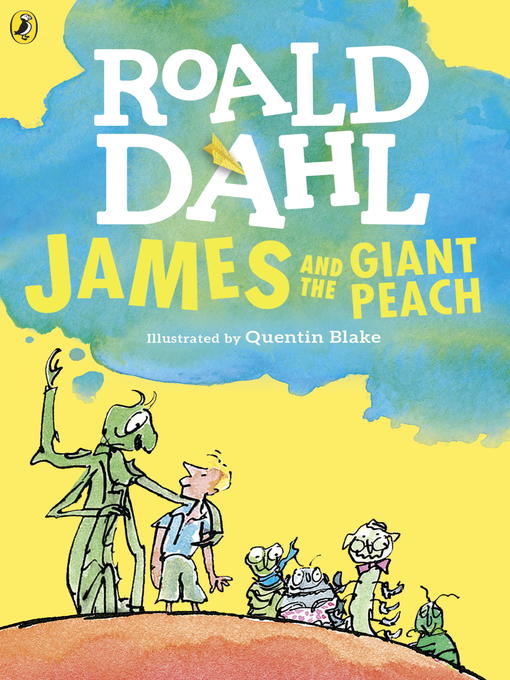
James and the Giant Peach

Title details for James and the Giant Peach by Roald Dahl - Wait list
Puffin Books
James and the Giant Peach
Roald Dahl
1961

The Summary
"A little magic can take you a long way...

"When James accidentally drops some magic crystals by the old peach tree, strange things start happening.  The peach at the very tip of the tree starts growing, and growing, and growing...until it's as big as a house!  When James crawls inside, he meets a houseful of oversized friends--Grasshopper, Centipede, Earthworm, and more.  With a snip of the stem, the peach starts rolling away and the adventure begins!"

The Good
As a child, I somehow never read any books by Roald Dahl.  I love the movies--Matilda, James and the Giant Peach, Charlie and the Chocolate Factory--but, for some reason, I never read any of the original books until recently when I first picked up Charlie and the Chocolate Factory.

Like Charlie and the Chocolate Factory, James and the Giant Peach is about a boy faced with incredible hardship who sets off on the adventure of a lifetime.  However, instead of meeting a Mad Hatter-esque chocolatier, James encounters a handful of gigantic insects and travels in a gigantic, magical peach.

Sounds like fun, no?

Honestly, I enjoyed reading James and the Giant Peach.  It's a quick, rather sweet happily-ever-after, and I had fun watching James as he escaped his despicable aunts, made new (and rather extraordinary) friends, and takes an incredible adventure across the sea.  More to the point, I liked that James was given the chance to thrive.

James is a clever, imaginative and sensitive little boy, and yet he's been under his aunts' thumbs for many months, subject to their tormenting and taunting and abject cruelty.  When he gets the opportunity to escape, I felt like jumping for joy.  I liked James, and I was so glad he was able break free of the aunts who didn't care for him and find a family, of his choosing, that would treat him well--and, more importantly, love him unconditionally.

I highly recommend it--and Roald Dahl in general--to young readers.

The Bad
When I first watched the James and the Giant Peach, I absolutely loved it.  I recall the characters with great fondness and I remember thinking what a wild, zany and wonderful adventure it was.  However, while I thought many of those same things about the book, I found I didn't enjoy the book as much as I enjoyed the movie.

Personally, I think part of it was Centipede and Miss Spider.  Centipede was terribly annoying and, yes, while he's thoughtlessly selfish in both the movie in the book, he was more of a nuisance than I remembered in the movie.  Plus, Miss Spider just wasn't as sassy and dramatic and lovely as she was in the movie.  She was, sadly, a bit forgettable, which I found disappointing.

The Ugly
Aunt Spiker and Aunt Sponge.

Ick.

Sunday, January 1, 2017

Happy New Year: Read Harder Challenge 2016

Since I completed my Read Harder Challenge of 2016 and filled in all the categories recommended by BookRiot, I created some of my own unique categories.  As part of my continued challenge, I've decided to:
  1. Read a book by or about a librarian (or about a library)
  2. Read a medical book (fiction or nonfiction)
  3. Listen to an audiobook romance
  4. Read a brand new, recently published book (anything from 2016)
  5. Read a spin-off from a classic novel and/or fairy tale
  6. Read a book about cake (fiction or nonfiction)
  7. Read a fantasy book featuring dragons
16101121
Gotham Books
I thought it might prove fun to dive into some new books I might not otherwise find.  Some are based on recommendations from co-workers, while others are based on books from my TBR pile--and still others are just ideas that seemed like fun.  And with the countdown to the New Year on, I can't wait to tell you all about the books I've read, starting with a book by (and about) a librarian:  The World's Strongest Librarian by Josh Hanagarne.

If you've never read Josh Hanagarne I highly recommend his memoir.  It's funny, it's candid, it's insightful, and, ultimately, it's uplifting.  Although Hanagarne does discuss religion, his main focus is his family, his battle with Tourette's, his struggles with infertility, and his general love of the library and all things literary.  It's enjoyable to see his passion for his family, his books, and his weightlifting come to the forefront as he learns to balance all the different aspects of his life.  Overall, it's a pretty great read.

Next, I read (or, rather, listened to) a medical book--a historical medical drama, fyi--by Tessa Harris:  The Anatomist's Apprentice.  Narrated by  Simon Vance, The Anatomist's Apprentice was an interesting deviation from my usual reading material.  Thomas Silkstone is a young anatomist from Philadelphia who finds himself in England about the time of the Revolutionary War, caught in the midst of a medical mystery...and a murder  It's dark, rather macabre, but it's ultimately fascinating with the sheer depth of detail and history included.  I enjoyed my time in Silkstone's world, and I found myself quickly gravitating to book number two, The Dead Shall Not Rest.

8546358
Bantam
As for listening to an audiobook romance, I decided to check out more by Sarah Addison Allen and picked up The Peach Keeper.  Now, let me give you a warning, I have read almost everything by Allen, except Lost Lake (that one is currently in my TBR), and I have loved almost everything she's written.  The Peach Keeper was no different.  I loved the characters and the complexity of their histories; I loved the little hints of every day magic she weaves into her novels; I even loved the ghost story, which is saying something, as I am not a fan of ghosts.  It was a wonderful visit back to her world, and it was so much fun recognizing an old friend.

I also picked up a brand new book just published this year, a little novel by J. Ryan Stradal called Kitchens of the Great Midwest.  Another audiobook, I know, but it was just as rewarding as any other.  Although it follows a myriad of characters, it focuses on Eva Thorvald and her life as she grows into her own--and all the foods that influenced her in the process.  That's really the simplified version; Kitchens of the Great Midwest is much more complex, much more nuanced than I make it out to be.  It's a recurring cast of characters centered around Eva, but it's quite unlike anything I've ever read.  It's wonderful, and I absolutely adored the narrators, Amy Ryan and Michael Stuhlbarg.
25938397
G.P. Putnam & Sons

Speaking of new books, I also discovered Jane Steele by Lyndsay Faye, which fit nicely into my category for a spin-off novel based on a classic work or a fairy tale.  There were several options for this particular category, but I decided on Jane Steele because Jane Eyre.  I love Jane Eyre (as is probably apparent here), and I loved having the opportunity to reimagine her story not as the quiet, resolute girl who refused to give ground to anyone or relinquish her personal beliefs, but as the sharp, deadly woman with no qualms whatsoever of killing if it means protecting herself and her own.  It's fascinating the contrasts, and I came to love Jane Steele equally for her unwavering commitment to being bad.  It's a rousing good time.

Next, I decided to keep my love of food alive with a book about cake and sisterhood:  The Secret to Hummingbird Cake by Celeste Fletcher McHale.  While I will admit that I liked Garden Spells and The Glass Kitchen better, I enjoyed reading McHale's debut novel--and I absolutely loved getting to know her characters.  I liked Carrigan and I liked Ella Rae for their bravery, sass, and sheer stubborness, but I adored Laine.  She's the impetus of the story, the reason for it all, and, like Carrigan and Ella Rae, I felt an unexpected affection and wonderful kinship with her.  I enjoyed reading their story more than I thought I would.  For a debut novel, The Secret to Hummingbird Cake was pretty great.

352262
Little, Brown Books for
Young Readers
Last but not least, I read a fantasy book featuring dragons with How to Train Your Dragon by Cressida Cowell.  I picked Cowell's novel up because I fell in love with the movie of the same name; however, I was a little disappointed.  Don't get me wrong, I enjoyed reading How to Train Your Dragon.  It's fun, it's inventive, and it's a great series for young readers (I especially liked the Hairy Scary Librarian), but, unfortunately, it's not what I expected.  I made the critical mistake of judging the book in comparison to the movie--and they're two very different creatures.  How to Train Your Dragon the book is very different from How to Train Your Dragon the movie, and it's best not to go into either one with the same expectations.

Saturday, December 31, 2016

Read Harder Challenge (Part Eight)

This week, I'm just barely eking by with my Read Harder Challenge.  After reading these last books, I have officially finished my list:
  1. Read a book that is set in the Middle East
  2. Read a nonfiction book about feminism or dealing with feminist themes
  3. Read a food memoir
Little, Brown and Co.
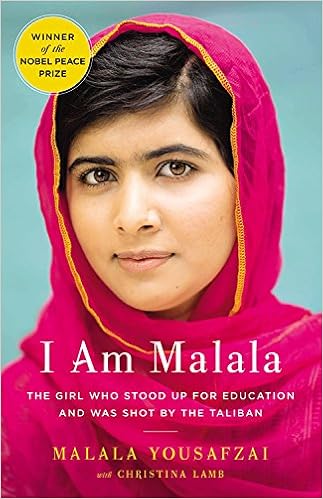
To start off, I finally finished reading I Am Malala by Malala Yousafzai.  It only took my 6 months, but I finished it and, honestly, I'm glad I did.  It's a fascinating story that's both heartbreaking and incredibly informative, offering insight into the various cultures and relations of Afghanistan.  Although her story is grim, it's simultaneously uplifting.  Personally, I enjoyed reading about her and her father's endeavors to bring education to local children--and particularly to the young women of the community.

Malala is a skilled narrator.  She's bright, she's hopeful, she's very detailed and she's very intelligent.  Although her book is a translation, which is sometimes apparent, I felt like I could read and relate to her feelings.  She does a fine job of connecting to her readers, detailing her thoughts and feelings--and making her voice heard.  She makes a compelling argument for education, for giving women equal education opportunities.  Truthfully, you can see why Malala Yousafzai is a Nobel Prize Laureate.

I also had the opportunity to read a short (and rather famous) essay by Virginia Woolf:  A Room of One's Own.  As an avid reader and, ahem, English major in college, you would think I'd have taken the opportunity to read A Room of One's Own, but, until this year, I had yet to make more than a cursory acquaintance with Woolf's work.  Unfortunately, I wasn't enamored by her essay.

Image result
Harcourt Inc.
A Room of One's Own makes some very valid points.  It's important to read and, after reading it, it's something that all young women should have a chance to read at least once in their life.  However, I had a hard time reading Woolf's essay, because I just couldn't seem to focus on one thing before it jumped to another.  For instance, in the first few pages when Woolf described Oxbridge and her experiences at the esteemed university, I thought it took quite a long time to get to the point--and, confidentially, I found myself growing a little bored as I waited for her to come to a conclusion.  Not that her writing is bad, mind you; I just struggled to stay committed given her style of writing, so I'm not sure if that's so much her failing as my own.

The point is, I finished reading A Room of One's Own and I have a new appreciation for Woolf.  She's a talented writer, but, personally, I'm not so sure she's the writer for me.  I appreciate her work and I appreciate the significance of her essay, but I don't think she's the one and only feminist writer for me.

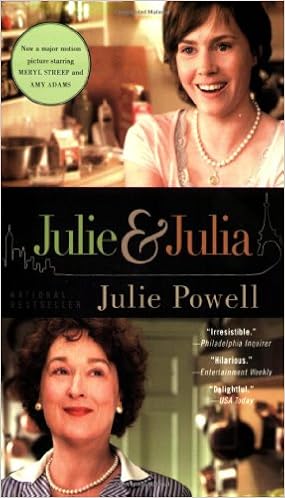
Last but not least, I read Julie and Julia by Julie Powell.  It's riotously funny, yet strangely poignant.  Oddly enough, it reminds me of Jenny Lawson and her memoir, Furiously Happy--yet just a tiny bit less chaotic.  Not by much, considering Julie Powell undertakes to make 524 different recipes, many of which take hours to prepare, in just one year in a crappy little apartment in Queens.  It's astonishing the things she (and her marriage) manages to survive, including:  biological clocks, frozen pipes, disastrous dinner parties, inane dead end secretarial jobs, break downs, Blanche days, and celebrity crushes.

Hatchette Books
It's really a pretty amusing book, especially if you decide to listen to it as read by the author (which I did); however, it's not quite the food memoir I expected.  In fact, Julie and Julia is more memoir than food.  Julie is hellbent on recreating all of Julia Child's recipes in Mastering the Art of French Cooking, vol. 1 and, in her journey, she learns how to make a variety of dishes and confronts some of the most trying times of her life.  While it features a lot of cooking, Julie and Julia feels like it's more about the experiences of cooking and the results, specifically what happens to the author as she slogs through more than 500 French recipes, than the actual cooking, but I can't say I minded.

Julie and Julia is strangely heartwarming and incredibly amusing.  To me, it strikes just the right balance that makes it a memoir worth reading, especially if you have the chance to listen to the author tell her own story.  It makes it memorable.  However, I will note that while I was listening to the audiobook I discovered I borrowed the abridged version.  I don't know if the audiobook had the full text, but I do know I missed a few things that might otherwise have filled in details or fleshed out the characters involved.  It was my only disappointment in an otherwise wonderful book.

Saturday, August 20, 2016

Read Harder Challenge (Part Six)

I'm working on my Read Harder Challenge again, and this time I decided to:
  1. Read a book out loud to someone else
  2. Read a book that is by an author from Southeast Asia
  3. Read a book about politics, in your country or another (fiction or nonfiction)
12868761
Putnam
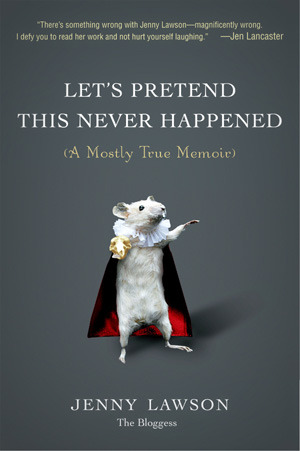
First off, I read Let's Pretend This Never Happened by Jenny Lawson out loud to my boyfriend.  At first, I read a few pages to my dog, but she didn't seem particularly interested and, moreover, she apparently had better things to do.  My boyfriend, on the other hand, was a little more receptive and seemed to enjoy Lawson's crazy (figuratively speaking) memoir.

He and I both enjoyed reading Let's Pretend This Never Happened, because it was just so funny.  After reading Furiously Happy, which is fueled by Lawson's frenetic energy and her off-kilter sense of humor, Let's Pretend This Never Happened was familiar ground--and equally hilarious.  I loved hearing about Lawson's childhood, her struggle to become an author, and her struggle to acclimate to her various disorders.

It's really quite funny, and it's hard not to laugh at the seemingly random and entirely crazy things that have happened to the author.  But, be warned, some of her stories may be jarring or, more accurately, scarring.  I mean, the incident with Stanley the Magical, Talking Squirrel left me with a feeling of revulsion and horror that's hard to beat.  But the embarrassing (and traumatizing) experience involving Jenny and a particular cow does its best to rival it.

16248223
William Morrow
Next, I read Ghost Bride by Yangsze Choo, a Malaysian author.  Set during the British colonization of Malay, Ghost Bride is an intricate and beautiful novel full of Chinese folklore and regional myths and Malaysian history.  The story revolves around Li Lan, a young woman from a poor aristocratic family, who finds herself confronted with an unusual proposal:  a spirit marriage to a young noble who recently perished.  But Li Lan has no interest in becoming a bride for a ghost.  In this haunting debut novel, Li Lan must fight for her freedom--and possibly her very soul--if she ever hopes to escape the clutches of the dead and marry the man she truly loves.

Li Lan was a lovely, dynamic narrator.  I found it interesting to see how she changed as a person from her experiences in the underworld and through her relationship with the mysterious, enigmatic Er Lang.  Li Lan did a wonderful job of explaining much of the customs and beliefs in Malay without overwhelming you by offering too much information or leaving you lost, unable to discern what is happening in the narrative.  It strikes a perfect balance, which I greatly appreciated.

Ghost Bride is a bit of an unusual story, yes, but it's absolutely fascinating.  I was enchanted by Choo's descriptions of the spirit world and the rules which govern them, by the intriguing (and, sometimes, terrifying), full-bodied characters she created, by the history of the Pacific nation.  In short, it's a wonderful book--and I absolutely loved it.

Last, I read The Prince by Niccolo Machiavelli.  I was not impressed, let me say so now.  I know part of that is because I purchased a translation that was--well, let's say less than spectacular.  While I was reading, I noticed little mistakes.  Some were simple typos, but a few were glaring grammar mistakes.  It's almost like the original Italian text was just fed through Google and published even with the transcription mistakes.

The Prince
Dante University 
Plus I was so bored ALL THE TIME.  (Sorry for the capitals, I just feel that statement needed extra emphasis.)  It took me literal weeks to finish reading The Prince, even though it was only 114 pages.  I just couldn't keep up with it.  I was bored by it after only a few pages, and I couldn't stand reading it after I realized I couldn't consider the text reliable.

It was terrible.

I finished the book only because I needed a book on politics as one of the requirements for my Read Harder Challenge.  But, honestly, I wouldn't subject anyone to my copy of The Prince.  I would read it again for a college course, if necessary; otherwise, I don't think I'd ever read it again if I didn't have to read it.

Tuesday, October 27, 2015

The Shining

Doubleday Books
The Shining
Stephen King
1977

The Summary
"Jack Torrance's new job at the Overlook Hotel is the perfect chance for a fresh start.  As the off-season caretaker at the atmospheric old hotel, he'll have plenty of time to spend reconnecting with his family and working on his writing.  But as the harsh winter weather sets in, the idyllic location feels ever more remote...and more sinister.  And the only one to notice the strange and terrible forces gathering around the Overlook is Danny Torrance, a uniquely gifted five-year-old."

The Good
Stephen King is an excellent writer.  His characters are fleshed out and full-bodied (and, more importantly, interesting), his writing is clear and precise (if a little heavy on wasp imagery), and his story is well formed and intricate.  And he makes, as one might expect, The Shining a triumph of the horror genre.

Like any number of his books, The Shining is a gravely unsettling novel.  It preys upon one's innate fears of isolation, darkness, doubt and despair - and the unnatural things which creep into the hallways, entirely unseen.  It shows one man's digression into madness, and one young boy's desperate fight to survive against a place that's intent on swallowing him whole.

If you're looking for a good scare or if you're looking for a novel that will give you chills and make your skin crawl, then The Shining is certainly a good place to start.

The Bad
I read The Shining as an ebook on my tablet.  While I still enjoyed it, I think something was lost in translation when I read it electronically.  It just didn't seem as scary and it felt a little more disjointed, like parts were split up when they shouldn't have been, like it had been formatted wrong.

Let's just say, I probably would have enjoyed it more if I'd actually read the physical book.  (Or, at least, found a larger screen than my tablet phone.)

The Ugly
Do I even want to get into how disturbing and morbidly terrifying this book was?

I found The Shining to be one of the scariest, one of the most unusual books I've ever read.  I was frightened by King's novel, but I was also disturbed and disgusted by the gruesome things lurking in the halls of the Overlook Hotel.  Danny has a frightening gift, which would have made The Shining eerie no matter the circumstances; however, King takes it a step further and introduces a cast of malevolent spirits, throws in some wasps and a grisly history for a sinister (and sentient) hotel - and a particularly fiendish ghoul in Room 217.

You see, I've realized that King has a way of really making you feel emotions, making you feel what his characters feel in certain situations, and he has a way of unsettling you with his writing.  I often felt squeamish and nervous, a lingering sense of disquiet, as I read The Shining - and it never really went away.  Not even after I finished the novel.

Which, I suppose, is the real point of horror:  it stays with you.

Saturday, October 3, 2015

Unfinished III

I love books.  I love books to the point of being obsessive, in fact, and I have a funny habit of wanting to complete each and every book I open.  Sometimes, that's not practical, I know; sometimes, I don't have time or I don't have the inclination to read (shocking) or I simply lose interest - and, sometimes, a book is just plain bad.

Here are a few of those books that I just couldn't seem to finish.

-

Barron's Educational Series
I picked up Twisted Fairy Tales by Maura McHugh on a whim one day.  I mistakenly thought it would give me a glimpse at my favorite fairy tales as they were originally told - they're twisted enough as it is, and they need no tweaking in order to perturb or frighten readers - but I discovered that McHugh hadn't simply gathered up my favorite fairy tales, she'd rewritten and revised them to reflect altogether different stories.

While I was intrigued by the retelling of "Snow White," in which delicate little Snow White became a fierce and merciless warrior, I just couldn't seem to stay with the story for very long.  I simply had no interest in seeing my favorite tales remade.

I mean, I grew up on Disney movies, so I've seen every fathomable reincarnation of fairy tales possible; however, I've also perused the original stories, seeing them as they were intended to be read.  And I expected to have a glimpse of some of the most sinister, most frightening, most gruesome fairy tales imaginable, as the Hans Christen Anderson and the Brothers Grimm intended.

I was a bit disappointed, and I quickly lost interest.

-

Pantheon
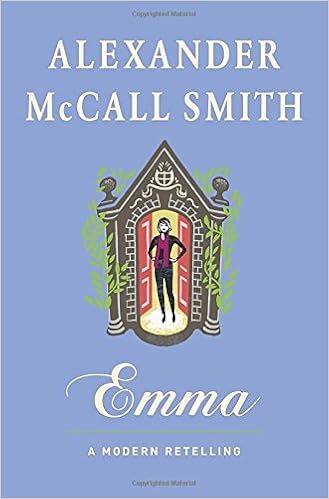
Emma:  A Modern Retelling by Alexander McCall Smith is, of course, a remake of the classic Emma by Jane Austen.  Although it borrows heavily from the original work, Emma:  A Modern Retelling is an entirely unique piece of work that gives a delightfully modern twist to Austen's most beloved characters.

McCall Smith has an interesting way of reincarnating Jane Austen's characters, her prose, her wit, her intelligence, without compromising his own sense of style and his own sense of humor.  And I think he does a fine job of bringing Emma into the twenty-first century.

However, I didn't find Emma endearing in the slightest.  As a character, she had a narrow field of vision and she had a selfishness that just didn't agree with me.  Granted, I enjoyed McCall Smith's writing and I liked the overall tone of the novel - and I'm quite sure that Smith stays close to Austen's original characters - but I just couldn't seem to enjoy Emma.

I disliked her on a personal level, especially when she continued to exert her influence on Harriet.  I just didn't like her and, with her being the main character of the novel, I struggled to stay with it, until, finally, I just gave up and put it aside.


Harry N. Abrams Publishers
I was enchanted by the cover of The Night Gardener by Jonathan Auxier.  I absolutely loved the way it looked, the blues and greens and blacks that combined to form a chilling and intriguing cover.  It invited me in, enchanted me unexpectedly, and I could not wait to read the book.

And then I read the book.

I liked The Night Gardener.  I was intrigued by the premise, I admired the characters and character descriptions, and I even enjoyed the level of detail which Auxier provided.  He fashioned a tale that was both spooky and suspenseful without growing macabre or gruesome.  It seemed to have such promise - and I really had high hopes - but I just couldn't dig into the story.

I don't know what happened.  I put it down, and then I finally put it aside without bothering to get farther than the fourth or fifth chapter.

-

Pyr
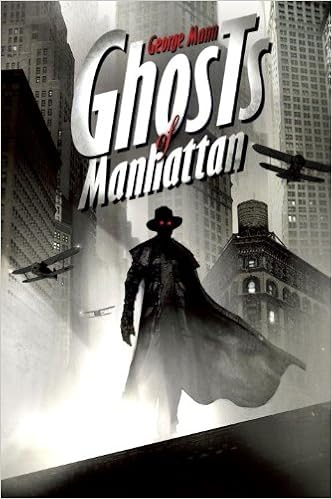
Ghosts of Manhattan by George Mann appealed to my interest in science-fiction and history, creating a fascinating world that opens in the midst of the Prohibition - when Britain still claims an empire, Queen Victoria has only recently been buried, and biplanes and coal-powered cars are a favored form of transportation - and fashions an intriguing antihero in The Ghost.

Unfortunately, The Ghost simply felt like a cruder reincarnation of Batman, living a double life (which reminisced of Fitzgerald's Gatsby) and fighting his own personal demons as he fights crime, and I wasn't impressed by the writing.  It read like a noir film feels:  dramatic, drab, and gray - and I just didn't care for it.

Not to mention I wasn't too fond of the unmitigated gore.  It just didn't suit me.

Maybe, I'll try it again in the future and, maybe then, I'll appreciate it; however, for the time being, I'll stick with other books.

Friday, March 27, 2015

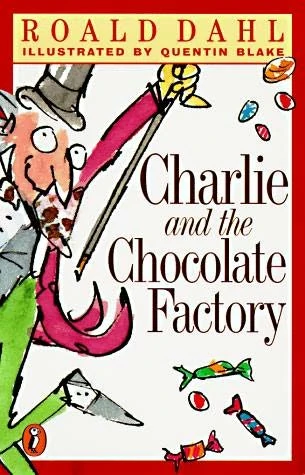
Postscript: Charlie and the Chocolate Factory

Alfred A. Knopf
My copy of Charlie and the Chocolate Factory had an interview with Roald Dahl.  In his interview with Todd McCormack in 1988, Dahl answered a number of questions, including how he creates such interesting characters and, more importantly, how he manages to avoid terrifying his young readers.

His interview was enlightening as it showed his process for fabricating stories, revealing his best tips and tricks for keeping up one's momentum, uncovering where he gets his ideas and why.  I found it fascinating to see how he worked, to find out why he did what he did and why he created what he created - and it was nice to get a glimpse into his creative capacity.

So how does Roald Dahl create such interesting characters as Veruca Salt and Grandpa Joe?  Well, for one, he refuses to write ordinary characters:
"When you're writing a book, with people in it as opposed to animals, it is no good having people who are ordinary, because they are not going to interest your readers at all.  Every writer in the world has to use the characters that have something interesting about them, and this is even more true in children's books.  I find that the only way to make my characters really interesting to children is to exaggerate all their good or bad qualities, and so if a person is nasty or bad or cruel, you make them very nasty, very bad, very cruel.  If they are ugly, you make them extremely ugly.  That, I think, is fun and makes an impact."
Exaggeration certainly does make an impact in reading Charlie and the Chocolate Factory.  It makes characters much more memorable.  Furthermore, it sets distinct lines between "good" and "bad" - that is, it emphasizes the good qualities of characters (like Charlie, and Grandpa Joe) and the bad qualities of characters (read:  Veruca Salt, Mike Teavee, etc.) and makes them more likable or despicable.  It makes them unique and, like Dahl points out, makes it fun.

Moreover, I would think that the reader finds it easier to bear when bad characters meet an equally bad ending.  When horrible characters meet a horrible end, it isn't always a tragic event.  However, Dahl takes the added step of making horrific events less - well, horrific:
"You never describe any horrors happening, you just say that they do happen.  Children who got crunched up in Willy Wonka's chocolate machine were carried away and that was the end of it.  When the parents screamed, "Where has he gone?" and Wonka said "Well, he's gone to be made into fudge," that's where you laugh, because you don't see it happening, you don't hear the child screaming or anything like that ever, ever, ever."
His argument makes sense.  When left up to the imagination, it's hard to envision that Augustus Gloop would ever be made into fudge - it's impossible, right? - and it's even harder to imagine Violet Beauregard turning into a blueberry and being juiced.  These events are never described in detail:  you will find no gore, you will find no real violence; rather, you will see the effects much later - you know, after you realize his characters are indeed still alive.

And, I suppose, that makes terrible things - Augustus Gloop being made into fudge, Violet Beauregard turning into a blueberry, Veruca Salt falling down a garbage chute to the incinerator, Mike Teavee getting shrunk to the size of a person's thumb - easier to stomach.

Tuesday, March 24, 2015

In Progress: Charlie and the Chocolate Factory (Completed)

Alfred A. Knopf
Having finished Charlie and the Chocolate Factory (and realized there were indeed no fatalities recorded), I feel confident saying I enjoyed Roald Dahl's novel.  I don't believe I'll change my mind about Willy Wonka.  He's still wickedly brilliant and he's incredibly devious, more so than I ever thought possible; moreover, he's attempting to groom a successor to run his chocolate factory, which I find rather unnerving if I really think about it.

But, regardless, Charlie and the Chocolate Factory has a happy ending.  The terrible children who disobeyed the rules and disregarded all parental authority suffered the consequences for their actions; Willy Wonka found a successor to ensure his factory would remain intact and safe; Charlie Bucket and his family are given a new home and they will no longer starve.

All's well that ends well, right?

By the conclusion of the book, I can't help being happy for Charlie Bucket.  As it turns out, Willy Wonka is harmless (more or less) and he's kind enough to leave Charlie a lasting legacy, giving the boy a brand new life:  Charlie will never go hungry again!  I realize that must be an incredible thing for a little boy who has only ever known poverty, uncertainty, and hunger.

And it seems incredibly important that Charlie and the Chocolate Factory ends with Charlie reassuring his family that their fortune has changed, that they will no longer starve.  It essentially brings the story full circle, taking it back to the issue of hunger under rather more auspicious circumstances.

Additionally, I've realized that Willy Wonka is only looking out for the best interests of his factory and his Oompa-Loompas.  If he is unforgiving of the other children who either disregard his authority or ignore his warnings, I suppose he has the right.  I mean, I understand why he doesn't feel the slightest bit of remorse for Veruca Salt being thrown down the garbage chute.  I never liked Veruca much either, so it's almost a relief when she gets her just desserts for her disobedience and petulant attitude.  Same with Mike Teavee:  you're  glad to see him gone.

However, I still find the Oompa-Loompas songs rather disturbing.  That has certainly not changed with further reading.  Even if I don't much care for Veruca Salt or Mike Teavee, I do feel a little bad for their plight.  Veruca is just a spoiled child, she doesn't deserve to reach the incinerator; Mike Teavee is disobedient and arrogant, he doesn't deserve to spend the rest of his life as the size of an ant.  The Oompa-Loompas would disagree:
"P.S. Regarding Mike Teavee,
We very much regret that we
Shall simply have to wait and see
If we can get him back his height,
But if we can't - it serves him right."
Yes, I suppose it serves him right, but I might still feel a twinge from my conscience.

Monday, March 23, 2015

In Progress: Charlie and the Chocolate Factory (Continued)

Alfred A. Knopf
As I'm reading Charlie and the Chocolate Factory by Roald Dahl, I've had a sudden and startling realization that Willy Wonka is a complete and utter psychopath.

Oh, I've shared similar realizations after watching both the 1971 film with Gene Wilder and the 2005 remake with Johnny Depp.  Wilder captures a darker side of Wonka, emulating his flagrant disregard for safety - and, let's be honest, the lives of his guests - while Depp portrays a particularly loony side of the renowned chocolate-maker.  After watching (and re-watching) the movies, I think it's safe to say that I know Willy Wonka is positively batty.

I love that he vacillates between sardonic and manic and pleasant and grim and silly.  There's something about him that's immediately intriguing, like he's having a laugh at the world but the world doesn't quite know it, like he has a secret to share and only those closest to him can be privy to such information.  Truthfully, I like Wonka for his eccentricities.  He's entirely crazy (or, at the very least, brilliantly unhinged), but that's what makes him interesting.

However, I never realized that Willy Wonka seems almost predatory.

I don't know if predatory is exactly the right word - criminally negligent, possibly?  Callous?  Careless? - but I find it does fit in some capacity because, you see, Wonka (and his Oompa-Loompa work force) is rather terrifying.  I mean, think about it:  Wonka has lured children and their parents to his chocolate factory, secluding them from the rest of the world, systematically playing upon their faults and weeding out the weak, greedy, irresponsible and stupid.  He isn't just some silly inventor of candies and sweet treats; he's an evil mastermind who preys upon other people.

And he's done it more than once.

After Augustus Gloop falls into the chocolate river and, subsequently, gets sucked up a tube to the Fudge Room, he tells his remaining guests not to worry:  "And please don't worry about Augustus Gloop.  He's bound to come out in the wash.  They always do."

They?  This has happened in the past?  Is no one else alarmed or, at least, discomfited by the notion that this has happened before?  I mean, Wonka could merely be referring to stains in general, using a vague "they" to refer to chocolate stains (working with chocolate every day must make him a bit of an expert on stain removal), or he could be implying that Augustus Gloop is a stain and he'll be forever changed after his experiences at the chocolate factory.

But, honestly, I find it more likely that Wonka actually means what he says.  (I'm guessing the poor Oompa-Loompas have gotten the raw in the deal seeing as how they're always his guinea pigs.  Honestly, he's probably referring to one of the Oompa-Loompas falling into the river and coming out clean later.  It wouldn't surprise me.)

And let's not forget Violet Beauregard, the girl who gets turned into a blueberry.  I'm not going to lie and say she didn't deserve it:  she did seeing as how Wonka clearly told her not to eat the gum and then she proceeded to disregard all advice contrary to her own desires.  However, I was a little perturbed by the little ditty that the Oompa-Loompas sang:
"And that is why we'll try so hard
To save Miss Violet Beauregard
From suffering an equal fate.
She's still quite young.  It's not too late,
Provided she survives the cure.
We hope she does.  We can't be sure."
First, they sing a song about Miss Bigelow, a lady who chews so much gum and chews so ferociously that she finally chews off her own tongue and, eventually, loses her mind; next, they sing about Violet in the hopes that things go well because, you know, it's entirely possible that she might just die from her unusual condition.

I suppose what makes it worse is the short exchange between Willie Wonka and Violet Beauregard during their trip to the Inventing Room:
"They passed a yellow door on which it said:  storeroom number 77--all the beans, cacao beans, coffee beans, jelly beans, and has beans. 
"'Has beans?' cried Violet Beauregard. 
"'You're one yourself!' said Mr. Wonka."
In the movies, you get the sense that Willy Wonka knows more than he's telling, he knows much more than he's letting on that he knows; however, you never really know for sure.  He either cleverly hides behind a veil of sarcasm or disregards the notion entirely, but, in the book, I find it highly unlikely he doesn't know what has and will happen in his chocolate factory.  I mean, Wonka is probably just insulting Violet when he calls her a "has been," but I can't get over how it foreshadows events in the future.

That's why I used the word predatory, because it's entirely possible that he's a patient, meticulous planner who manages to not only predict his guests behaviors but to create individualized traps to ensnare them.  Subsequently, that's also why I called him a compete and utter psychopath.

Why on earth did I ever wait to read Charlie and the Chocolate Factory?

Sunday, March 22, 2015

In Progress: Charlie and the Chocolate Factory

Alfred A. Knopf
As a child, I never once picked up a book by Roald Dahl - not The BFG, not Matilda, not Charlie and the Chocolate Factory - and, as much as I read (as much as I have read), I feel as if I've missed out on something great.  I've watched "Charlie and the Chocolate Factory" and "Matilda" countless times on VHS (I even think I still own the VHS), DVD, and TV.  I can even recite lines along with the movies.

But, admittedly, I've never read the books.  Which is a shame since I picked up Charlie and the Chocolate Factory yesterday and, honestly, I love it.

I'm only a few chapters into it, but I love how weird and zany it is, I love how it alternates between absurd and serious, and I love how Roald Dahl creates such intriguing characters.  Sure the other four children are rather terrible (oh, who am I kidding?  They're beastly, as Grandma Josephine aptly puts it), but they're such crazy caricatures that I find them interesting and, truthfully, they make Charlie Bucket shine a little brighter.

Although I've enjoyed reading Charlie and the Chocolate Factory immensely, I never realized that Dahl actually portrays rather horrific events in his novel.  For instance, I was struck to the quick when I realized how terribly poor Charlie and his family is.  I mean, I've watched the movies and I've surely realized that the Bucket family is impoverished; however, I didn't realize that Charlie Bucket was literally starving:
"And every day, Charlie Bucket grew thinner and thinner.  His face became frighteningly white and pinched.  The skin was drawn so tightly over the cheeks that you could see the shapes of the bones underneath.  [...]  And now, very calmly, with that curious wisdom that seems to come so often to small children in times of hardship, he began to make little changes here and there in some of the things that he did, so as to save his strength.  In the mornings, he left the house ten minutes earlier so that he could walk slowly to school, without ever having to run.  He sat quietly in the classroom during recess, resting himself, while the others rushed outdoors and threw snowballs and wrestled in the snow.  Everything he did now, he did slowly and carefully to prevent exhaustion."
Those words hit me like a punch in the gut.

I never went hungry during my childhood.  I was lucky to have parents who had the means and the opportunity to provide for me, so I never experienced hunger like Charlie Bucket does in Charlie and the Chocolate Factory.  In fact, hunger - more accurately, starvation - isn't something I regularly confront in my reading.  It's such a foreign experience to feel such desperate, visceral emotion when I'm reading, to recognize something tragic unfolding within what I once considered a happy story.

It's surprising and it's heartbreaking.

Luckily, I've gotten to the part where Charlie finds the Golden Ticket (I'm not spoiling anything, really.  I mean, it wouldn't be Charlie and the chocolate factory without him winning a Golden Ticket to enter the chocolate factory), so I find tragedy is balanced with a heaping dash of fortune.  It's hard not to be happy for Charlie when he finds the fifth and final ticket.  If anyone deserves such an amazing opportunity, it's Charlie Bucket.

Tuesday, June 18, 2013

Northanger Abbey

Image courtesy of
www.booksamillion.com
Northanger Abbey
Jane Austen
1817

The Summary
For Catherine Morland, her opportunity to visit the city of Bath comes as an unexpected surprise.  Befriending Isabella Thorpe and her brother, John, as well as meeting Henry Tinley and his sister, Eleanor, Catherine has found herself invited into a new and exciting kind of life, experiencing a kind of society of which she has only vaguely heard.

In this new world, however, not everyone is who they claim to be.

Catherine, now surrounded by new acquaintances and pulled into Gothic adventures, must quickly learn how to tell the difference between those who would wish her well - and those who would stab her in the back.

The Good
Jane Austen's novel is simultaneously intriguing and heart-warming, containing both the elements of a good mystery and a well-told romance.  But, more than recounting another budding romantic relationship or another Gothic adventure, Northanger Abbey chronicles the story of one young woman as she struggles to understand the bitter, unseemly side of society.

Austen's book, at its core, is a coming-of-age story for one young girl who is thrust into a new social class and must learn how to avoid social landmines in the process.  Not only must young Catherine learn how to distinguish between those who would help her and those who would harm her, she must understand the necessity of maturity and recognize her own desire for growth.

The Bad
Northanger Abbey, while entertaining at points, is ultimately boring.  Although I like the character of Catherine Morland - she's a bright, strong-willed girl, who is prone neither to nonsense nor to cruelty.  In short, she's a good, kind person with a clear grasp on reality and, occasionally, an imaginative mind - her story isn't exactly compelling.

Her tale is interesting, vaguely endearing, but not addictively compelling or fantastic.

The Ugly
Polite society, no matter how mild-mannered, is ultimately vicious.  Part hedonism, part venomous social enterprise, the social circle by which Catherine finds herself surrounded will not prove kindly.

Wednesday, February 27, 2013

Alice's Adventures in Wonderland & Through the Looking Glass

Image courtesy of
www.booksamillion.com
Alice's Adventures in Wonderland Through the Looking Glass
Lewis Carroll
1865/1872

The Summary
Lewis Carroll's dynamic duo of short novels, Alice's Adventures in Wonderland and Through the Looking Glass, follow the adventures of one imaginative and precocious young girl.  Alice, a young girl seeking to satisfy her curiosity, finds herself stepping into a brand new world after falling down a rabbit hole - and, later, after climbing through a mirrored portal.

The Good
Both Carroll's novels are imaginative and entertaining to read.  They're short, simple, and sweet, being sprinkled with ample amounts of adventure and spiced with the occasional dream-like contradictions of one young girl's imagination.

The Bad
At heart, it's honestly a child's bed-time story with wild adventures and strangely irreverent logic - and lots of talking animals and chess pieces.  While amusing and enjoyable, at times, it's less appealing as a classic piece of literature and more appropriate for a younger audience.

And, honestly, it even gets a bit dull, despite these ongoing adventures.  Alice isn't exactly the most fascinating narrator; in fact, she seems almost comically adult-ish in her short monologues as she reviews the illogical nature of her situation.

Not to mention Alice's Adventures in Wonderland and Through the Looking Glass are very similar in their nature:  Different passage, same insanity.

The Ugly
Admittedly, most books are far better than their movie counterparts.  But, in the case of Carroll's dual works, I might recommend watching a snippet or two of Disney's 1951 animated version of Alice in Wonderland.  Although I wouldn't call them identical, the movie possesses enough detail from the original books to provide an adequate grasp on Carroll's entire work.

Tuesday, December 4, 2012

Frankenstein

Image courtesy of
www.booksamillion.com
Frankenstein
Mary Shelley
1818

The Summary
Frankenstein tells the story of one man's attempt to play God and the tragedies which invariably ensued that would plague him for the rest of his days.

Alternately, Mary Shelley's novel also reveals the tale of the Frankenstein monster and recounts the horrors he is forced to endure as a leper and an outcast from society - a tragedy to which he is doomed from conception, even if he isn't such a bad fellow after all.

The Good
Frankenstein is a highly gratifying horror novel that combines exceptional detail with a close examination of human psychology and philosophy, and crosses it with a memorable narrator of an obscure moral fiber and warped personality.  (And, yes, I do mean Dr. Frankenstein in this instance.)

More importantly, it's a horror story that doesn't pull any punches, because it will challenge everything you have ever known and understood.  Your spine will tingle, and your mind will reel with the implications Mary Shelley makes.

It's terrifying, it's horrific - and it's absolutely wonderful.

The Bad
Despite it's gruesome nature and relatively unimposing stature, Shelley's novel is startlingly deep and philosophically complex.  As a work of literature, it's a hefty piece that will weigh on your conscience and your mind as you push through the pages.

Moreover, Shelley has a remarkable vocabulary - and she's certainly not afraid to put it to use.  More than most books, I would recommend keeping a dictionary within reach and making notes within the margins.

In short, Frankenstein  is difficult to read, but well worth the attempt.

The Ugly
This novel wreaks of moral ambiguity.

It will leave you wondering about the nature of humanity and its proximity to God.  But, more importantly, it will make you question who really deserves the title of "monster" in Shelley's novel:  the creator or the creation?

Monday, October 8, 2012

Dracula

Image courtesy of
www.booksamillion.com
Dracula
Bram Stoker
1897

The Summary
Bram Stoker's Dracula collects the journals and personal testimonies of Jonathan and Mina Harker, Dr. John Seward, Lucy Westenra, Arthur Holmwood, Quincey Morris, and Dr. Abraham Van Helsing, in which they confront the world's most terrifying creature:

A vampire.

The Good
Stoker will keep you riveted with his story.  Besides creating one of the literature's most fascinating - and terrifying - villains, he has taken the time and care to recreate the details of life within the pages of his novel.

And, considering the number of correspondences between characters and the specific connections necessary to complete the story, it's an amazingly well-written work.

It's beautifully detailed with marked differences between the individual characters involved.  Each character has their own personality, their own history, their own reactions to a situation - and they become honest, endearing folks.

More importantly, it's absolutely fascinating.  I mean, who can resist the allure one of literature's most prolific vampires?

(And, no, Edward Cullen does not count.)

The Bad
On the flip-side, all the detail makes reading Stoker's novel a bit tricky.  Once you make connections, it's easy to find those tenuous links between characters and locations and mysterious events; however, those can prove to be slightly elusive.

Moreover, chapters can occasionally take a while to "build-up" to a point.  You will battle with bouts of the humdrum and dull, but the story picks up considerably when certain realizations come together.  But, until then, it may seem a little lackluster and disjointed.

The only advice I can offer is persevere.

The Ugly
Guts, gore, mayhem, madness, death, and destruction.  Dracula has it all for the horror enthusiast.  Would you expect anything less from one of the most terrifying creatures written into existence?

Of course, for those of you with a more timid constitution, pace yourself.

Sunday, September 23, 2012

Pride and Prejudice

Pride & Prejudice
Image courtesy of
www.barnesandnoble.com
Pride and Prejudice
Jane Austen
1813

The Summary
Chronicling events in the life of Elizabeth Bennet and her interactions with her rather peculiar family - and, yes, the cool and enigmatic Mr. Fitzwilliam Darcy - Pride and Prejudice is a slow-growing romance filled with interconnected webs of acquaintances and various scandals.

The Good
To be perfectly honest, Jane Austen's work is a soap opera waiting to happen.

Within these pages there's romance, melodrama, secret marriages, social schemes, and scandal.  Pride and Prejudice has it all for the Victorian literature lover - but without all the back stabbing and revenge plotting and evil twins discovering.

Well, perhaps there will be some backstabbing.  I can't readily claim Caroline Bingley innocent of any malicious intent - or Lady Catherine, for that matter.

Additionally, beside creating a compelling romance, Austen crafts intriguing and lovable characters who show remarkable and recognizable growth, as well as increasingly human qualities with marked problems and faults.  They're comical, occasionally ridiculous, but familiar and enjoyable.

The Bad
Pride and Prejudice does fall under the rather broad umbrella of Victorian literature.

As such, you know what a pain it can be to read long-winded passages where characters throw their entire vocabulary onto a page.  Granted, Austen is an incredibly skilled writer and she works wonders in her novel; however, she too has the chronic Victorian problem of "over explanation."

More is better, apparently.

The Ugly
No zombies.

Monday, September 10, 2012

The Strange Case of Dr. Jekyll and Mr. Hyde

Image courtesy of
www.booksamillion.com
The Strange Case of Dr. Jekyll and Mr. Hyde
Robert Louis Stevenson
1886

The Summary
The Strange Case of Dr. Jekyll and Mr. Hyde recounts the story of one man's descent into darkness - and what happens when one tampers with human nature.

The Good
Robert Louis Stevenson has presented a fascinating study of human psychology and morality, and explored what occurs when the soul is divided.

He has taken time and care to craft an intricate, compelling story that will leave you breathless.  And, if you are entirely unfamiliar with Stevenson's work, the conclusion may come as a surprise.

More importantly, he incorporates all the best elements of gothic horror and tells a story of good plotted against evil, civilization plotted against barbarian, science against the nature of man - it's horrifying, but simultaneously enthralling and it will keep you glued to the pages.

As an added bonus, Stevenson's work comes in the form of a novella, which means it's refreshingly brief, if only a little complex.  An avid reader can finish it within an hour or more, but it can easily fit within the span of a day.

The Bad
Stevenson's work falls into the realm of the Victorian literature.

Need I say more?

The Ugly
Stevenson's novella tells the story of one man's - one good man's - descent into madness and his journey into the very heart of darkness, a darkness to which he may ultimately succumb.  Needless to say, the journey will not be a pretty one.  Between individuals being beaten to death, rampant indulgences in promiscuity, and identity theft, it's bound to leave you a bit shaken.

Monday, July 23, 2012

The Return of the King

Image courtesy of
www.booksamillion.com
The Return of the King
J.R.R. Tolkien
1955

The Summary
The Return of the King serves as the gripping conclusion to an epic event.  Here, all questions will be answered and all fates will be decided.

Will Frodo and Sam reach the fires of Mount Doom?  Will the Fellowship survive the relentless malevolence of Sauron?  Will Minas Tirith and Middle Earth fall to the Dark Lord - or will the King finally return to his rightful throne?

Read on and see for yourself.

The Good
J.R.R. Tolkien provides an intricacy and detail to his novels like no other writer (or so I believe).  His villains are more maniacal, his heroes more courageous, and his characters more vibrant than any other.  His novel leaves you with a lasting impression of its magnificence.

And, in the conclusion of his saga, his writing can be no more magnificent.

More importantly, as the climax of his trilogy, Tolkien delicately balances his story between two vastly dissimilar endings.  The Return of the King could just as easily turn into a tragedy as conclude happily.  The suspense he sets - and the breathless moments of expectation - will thrill you and leave you cheering.

The Bad
Once you begin your descent toward a resolution, you will long to reach its conclusion.  After three books (four, counting The Hobbit) and, no doubt, more than a thousand pages, an ending is a well-deserved reward. But Tolkien is a crafty fellow.

Just when you think you've reached the final pages....BAM!  Tolkien throws in an additional chapter, before giving you the conclusion you so richly deserve.

Like I said, he's crafty.

The Ugly
It's the end of the road, so to speak.  All is said and done, and it's finally time to say good-bye.

This is the saddest point of any series:  the point when we must close the book, end the adventure, and bid farewell to the characters we love.

Monday, July 16, 2012

The Two Towers

Image courtesy of
www.booksamillion.com
The Two Towers
J.R.R. Tolkien
1954

The Summary
With the dissolution of the Fellowship, Frodo and Sam have struck out on their own for the gates of Mordor, while Gimili, Legolas, and Aragorn seek to rescue Merry and Pippin from the clutches of Sauron's orc army.

Great battles and great hardships will ensue as the remaining members of the Fellowship are pushed to their limits in their desperate fight to save Middle Earth.

And Sam Gamgee, loyal and courageous companion of Frodo, will face the most difficult decision of all:  can he go forward without his dearest friend Frodo?

The Good
Like The Fellowship of the Ring, J.R.R. Tolkien crafts an intricate story with beautiful scenery and amazing characters, who will steal your heart and last forever in your memory.

More importantly, Tolkien has further developed his characters and the relationships they share.  Gimli and Legolas, despite the ancient animosity existing between their races, have become close friends.  Aragorn has ventured closer to embracing his destiny.  Merry and Pippin have begun growing into warriors.  And Frodo has changed - the One Ring has started taking its toll.

Strictly speaking, Tolkien knows his way around a story.

Additionally, he knows how to show his readers a good time.  He's not afraid to toy with your emotions, or give you some good news every once in a while.  You're certainly in for a treat, when a familiar - and much beloved - character returns.

The Bad
Since the Fellowship has shattered, the novel is split into two primary parts:  the journey of Frodo and Sam as they venture into Mordor, and the struggles the others face as they fight to remain together in the face of insurmountable odds.

Tolkien doesn't take pity on his readers and alternate his chapters; instead, he starkly divides them.  First, he presents the stories of Legolas, Gimli, Aragorn, Merry, and Pippin, and then he follows by chronicling the adventures of Frodo and Sam.

Throughout the course of one tale, you will long to hear of the other.  And when you reach the end and begin the next, you will long to return to the one you left.  You will always wonder what is happening to the beloved characters you cannot see.

The Ugly
Cliffhangers.

I won't spill any secrets or spoil the story, but I will offer this warning:  Tolkien ends with a major cliffhanger. He will first tear out your heart, then he will give you hope and leave you cheering, and tear out your heart yet again.

The Two Towers is a guaranteed emotional roller coaster ride.

Wednesday, July 11, 2012

The Fellowship of the Ring

Image courtesy of
www.booksamillion.com
The Fellowship of the Ring
J.R.R. Tolkien
1954

The Summary
Bequeathed the One Ring by an aging Bilbo Baggins, Frodo and his friends are given the task of returning it to the fires of Mount Doom in the lands of Mordor.

The road they follow, however, will not be an easy one, for they must face Ringwraiths, orcs, and the Dark Lord Sauron's all-seeing eye.

But Frodo and his half-ling companions will not be alone in their journey.  In the elves' city of Rivendell, they are joined by Gandalf (a tempestuous wizard), Strider (a Ranger with a mysterious family legacy), Legolas (an elf from the forests of Mirkwood), Gimli (a rather loud and loyal dwarf), and Boromir (a son of the Steward of Minas Tirith).

And so the Fellowship is forged.

The Good
J.R.R. Tolkien is an exceptional writer.  He infuses his work with great detail and depth.  Everything in his novel has a name - and every name has a meaning - and everyone has a history.  Whether it is a memento passed down through the ages or an individual reciting the lineage of his family, everything and everyone has a long, detailed history.

Tolkien is nothing if not thorough in his work.

Additionally, Tolkien creates enchanting and endearing characters, such as the ever-faithful Sam, or the playful Tom Bombadil, or the heroic and honorable Strider (less frequently known as Aragorn, son of Arathorn).  More to the point, he crafts characters who will become a part of our lives for a short moment in time and last forever in our memories.

The Bad
The Fellowship doesn't complete the first portion of their journey and remain entirely unscathed.  If you have read this book in the past (or, yes, even watched the movie), then you understand what I mean.

If not, find a book or a DVD player and see for yourself.

The Ugly
I wouldn't necessarily call the songs of Tolkien's novel "ugly," but I would occasionally call them annoying.

You see, Tom Bombadil sings.  The elves sing.  The hobbits sing.  Everyone sings, at one point in time or another.

Granted, it's amusing and it certainly shows Tolkien's talent (of which there is a great deal).  And yet it may compel you to skip a page or two - or three - for the sake of your sanity, if you find yourself unable to hold a tune.