"All good books are alike in that they are truer than if they had really happened
and after you are finished reading one you will feel that all that happened to you
and afterwards it all belongs to you; the good and the bad, the ecstasy, the remorse,
and sorrow, the people and the places and how the weather was."
Ernest Hemingway
Showing posts sorted by relevance for query charlie and the chocolate factory. Sort by date Show all posts

Sunday, March 22, 2015

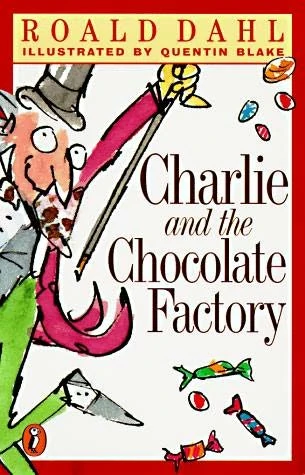
In Progress: Charlie and the Chocolate Factory

Alfred A. Knopf
As a child, I never once picked up a book by Roald Dahl - not The BFG, not Matilda, not Charlie and the Chocolate Factory - and, as much as I read (as much as I have read), I feel as if I've missed out on something great.  I've watched "Charlie and the Chocolate Factory" and "Matilda" countless times on VHS (I even think I still own the VHS), DVD, and TV.  I can even recite lines along with the movies.

But, admittedly, I've never read the books.  Which is a shame since I picked up Charlie and the Chocolate Factory yesterday and, honestly, I love it.

I'm only a few chapters into it, but I love how weird and zany it is, I love how it alternates between absurd and serious, and I love how Roald Dahl creates such intriguing characters.  Sure the other four children are rather terrible (oh, who am I kidding?  They're beastly, as Grandma Josephine aptly puts it), but they're such crazy caricatures that I find them interesting and, truthfully, they make Charlie Bucket shine a little brighter.

Although I've enjoyed reading Charlie and the Chocolate Factory immensely, I never realized that Dahl actually portrays rather horrific events in his novel.  For instance, I was struck to the quick when I realized how terribly poor Charlie and his family is.  I mean, I've watched the movies and I've surely realized that the Bucket family is impoverished; however, I didn't realize that Charlie Bucket was literally starving:
"And every day, Charlie Bucket grew thinner and thinner.  His face became frighteningly white and pinched.  The skin was drawn so tightly over the cheeks that you could see the shapes of the bones underneath.  [...]  And now, very calmly, with that curious wisdom that seems to come so often to small children in times of hardship, he began to make little changes here and there in some of the things that he did, so as to save his strength.  In the mornings, he left the house ten minutes earlier so that he could walk slowly to school, without ever having to run.  He sat quietly in the classroom during recess, resting himself, while the others rushed outdoors and threw snowballs and wrestled in the snow.  Everything he did now, he did slowly and carefully to prevent exhaustion."
Those words hit me like a punch in the gut.

I never went hungry during my childhood.  I was lucky to have parents who had the means and the opportunity to provide for me, so I never experienced hunger like Charlie Bucket does in Charlie and the Chocolate Factory.  In fact, hunger - more accurately, starvation - isn't something I regularly confront in my reading.  It's such a foreign experience to feel such desperate, visceral emotion when I'm reading, to recognize something tragic unfolding within what I once considered a happy story.

It's surprising and it's heartbreaking.

Luckily, I've gotten to the part where Charlie finds the Golden Ticket (I'm not spoiling anything, really.  I mean, it wouldn't be Charlie and the chocolate factory without him winning a Golden Ticket to enter the chocolate factory), so I find tragedy is balanced with a heaping dash of fortune.  It's hard not to be happy for Charlie when he finds the fifth and final ticket.  If anyone deserves such an amazing opportunity, it's Charlie Bucket.
Monday, March 23, 2015

In Progress: Charlie and the Chocolate Factory (Continued)

Alfred A. Knopf
As I'm reading Charlie and the Chocolate Factory by Roald Dahl, I've had a sudden and startling realization that Willy Wonka is a complete and utter psychopath.

Oh, I've shared similar realizations after watching both the 1971 film with Gene Wilder and the 2005 remake with Johnny Depp.  Wilder captures a darker side of Wonka, emulating his flagrant disregard for safety - and, let's be honest, the lives of his guests - while Depp portrays a particularly loony side of the renowned chocolate-maker.  After watching (and re-watching) the movies, I think it's safe to say that I know Willy Wonka is positively batty.

I love that he vacillates between sardonic and manic and pleasant and grim and silly.  There's something about him that's immediately intriguing, like he's having a laugh at the world but the world doesn't quite know it, like he has a secret to share and only those closest to him can be privy to such information.  Truthfully, I like Wonka for his eccentricities.  He's entirely crazy (or, at the very least, brilliantly unhinged), but that's what makes him interesting.

However, I never realized that Willy Wonka seems almost predatory.

I don't know if predatory is exactly the right word - criminally negligent, possibly?  Callous?  Careless? - but I find it does fit in some capacity because, you see, Wonka (and his Oompa-Loompa work force) is rather terrifying.  I mean, think about it:  Wonka has lured children and their parents to his chocolate factory, secluding them from the rest of the world, systematically playing upon their faults and weeding out the weak, greedy, irresponsible and stupid.  He isn't just some silly inventor of candies and sweet treats; he's an evil mastermind who preys upon other people.

And he's done it more than once.

After Augustus Gloop falls into the chocolate river and, subsequently, gets sucked up a tube to the Fudge Room, he tells his remaining guests not to worry:  "And please don't worry about Augustus Gloop.  He's bound to come out in the wash.  They always do."

They?  This has happened in the past?  Is no one else alarmed or, at least, discomfited by the notion that this has happened before?  I mean, Wonka could merely be referring to stains in general, using a vague "they" to refer to chocolate stains (working with chocolate every day must make him a bit of an expert on stain removal), or he could be implying that Augustus Gloop is a stain and he'll be forever changed after his experiences at the chocolate factory.

But, honestly, I find it more likely that Wonka actually means what he says.  (I'm guessing the poor Oompa-Loompas have gotten the raw in the deal seeing as how they're always his guinea pigs.  Honestly, he's probably referring to one of the Oompa-Loompas falling into the river and coming out clean later.  It wouldn't surprise me.)

And let's not forget Violet Beauregard, the girl who gets turned into a blueberry.  I'm not going to lie and say she didn't deserve it:  she did seeing as how Wonka clearly told her not to eat the gum and then she proceeded to disregard all advice contrary to her own desires.  However, I was a little perturbed by the little ditty that the Oompa-Loompas sang:
"And that is why we'll try so hard
To save Miss Violet Beauregard
From suffering an equal fate.
She's still quite young.  It's not too late,
Provided she survives the cure.
We hope she does.  We can't be sure."
First, they sing a song about Miss Bigelow, a lady who chews so much gum and chews so ferociously that she finally chews off her own tongue and, eventually, loses her mind; next, they sing about Violet in the hopes that things go well because, you know, it's entirely possible that she might just die from her unusual condition.

I suppose what makes it worse is the short exchange between Willie Wonka and Violet Beauregard during their trip to the Inventing Room:
"They passed a yellow door on which it said:  storeroom number 77--all the beans, cacao beans, coffee beans, jelly beans, and has beans. 
"'Has beans?' cried Violet Beauregard. 
"'You're one yourself!' said Mr. Wonka."
In the movies, you get the sense that Willy Wonka knows more than he's telling, he knows much more than he's letting on that he knows; however, you never really know for sure.  He either cleverly hides behind a veil of sarcasm or disregards the notion entirely, but, in the book, I find it highly unlikely he doesn't know what has and will happen in his chocolate factory.  I mean, Wonka is probably just insulting Violet when he calls her a "has been," but I can't get over how it foreshadows events in the future.

That's why I used the word predatory, because it's entirely possible that he's a patient, meticulous planner who manages to not only predict his guests behaviors but to create individualized traps to ensnare them.  Subsequently, that's also why I called him a compete and utter psychopath.

Why on earth did I ever wait to read Charlie and the Chocolate Factory?

Tuesday, March 24, 2015

In Progress: Charlie and the Chocolate Factory (Completed)

Alfred A. Knopf
Having finished Charlie and the Chocolate Factory (and realized there were indeed no fatalities recorded), I feel confident saying I enjoyed Roald Dahl's novel.  I don't believe I'll change my mind about Willy Wonka.  He's still wickedly brilliant and he's incredibly devious, more so than I ever thought possible; moreover, he's attempting to groom a successor to run his chocolate factory, which I find rather unnerving if I really think about it.

But, regardless, Charlie and the Chocolate Factory has a happy ending.  The terrible children who disobeyed the rules and disregarded all parental authority suffered the consequences for their actions; Willy Wonka found a successor to ensure his factory would remain intact and safe; Charlie Bucket and his family are given a new home and they will no longer starve.

All's well that ends well, right?

By the conclusion of the book, I can't help being happy for Charlie Bucket.  As it turns out, Willy Wonka is harmless (more or less) and he's kind enough to leave Charlie a lasting legacy, giving the boy a brand new life:  Charlie will never go hungry again!  I realize that must be an incredible thing for a little boy who has only ever known poverty, uncertainty, and hunger.

And it seems incredibly important that Charlie and the Chocolate Factory ends with Charlie reassuring his family that their fortune has changed, that they will no longer starve.  It essentially brings the story full circle, taking it back to the issue of hunger under rather more auspicious circumstances.

Additionally, I've realized that Willy Wonka is only looking out for the best interests of his factory and his Oompa-Loompas.  If he is unforgiving of the other children who either disregard his authority or ignore his warnings, I suppose he has the right.  I mean, I understand why he doesn't feel the slightest bit of remorse for Veruca Salt being thrown down the garbage chute.  I never liked Veruca much either, so it's almost a relief when she gets her just desserts for her disobedience and petulant attitude.  Same with Mike Teavee:  you're  glad to see him gone.

However, I still find the Oompa-Loompas songs rather disturbing.  That has certainly not changed with further reading.  Even if I don't much care for Veruca Salt or Mike Teavee, I do feel a little bad for their plight.  Veruca is just a spoiled child, she doesn't deserve to reach the incinerator; Mike Teavee is disobedient and arrogant, he doesn't deserve to spend the rest of his life as the size of an ant.  The Oompa-Loompas would disagree:
"P.S. Regarding Mike Teavee,
We very much regret that we
Shall simply have to wait and see
If we can get him back his height,
But if we can't - it serves him right."
Yes, I suppose it serves him right, but I might still feel a twinge from my conscience.

Tuesday, February 14, 2017

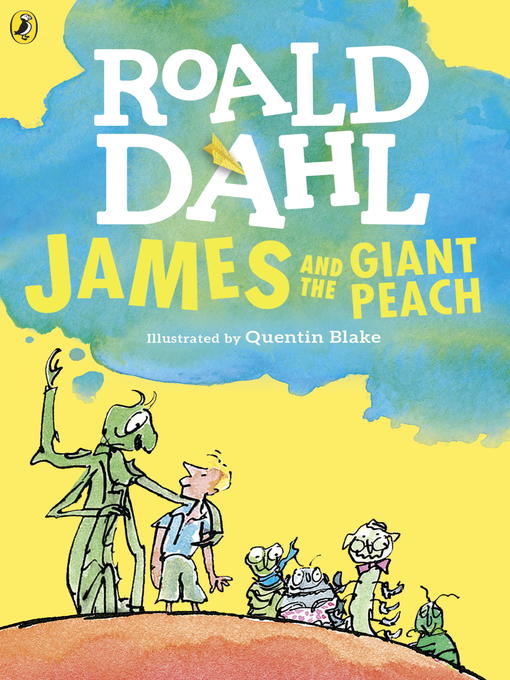
James and the Giant Peach

Title details for James and the Giant Peach by Roald Dahl - Wait list
Puffin Books
James and the Giant Peach
Roald Dahl
1961

The Summary
"A little magic can take you a long way...

"When James accidentally drops some magic crystals by the old peach tree, strange things start happening.  The peach at the very tip of the tree starts growing, and growing, and growing...until it's as big as a house!  When James crawls inside, he meets a houseful of oversized friends--Grasshopper, Centipede, Earthworm, and more.  With a snip of the stem, the peach starts rolling away and the adventure begins!"

The Good
As a child, I somehow never read any books by Roald Dahl.  I love the movies--Matilda, James and the Giant Peach, Charlie and the Chocolate Factory--but, for some reason, I never read any of the original books until recently when I first picked up Charlie and the Chocolate Factory.

Like Charlie and the Chocolate Factory, James and the Giant Peach is about a boy faced with incredible hardship who sets off on the adventure of a lifetime.  However, instead of meeting a Mad Hatter-esque chocolatier, James encounters a handful of gigantic insects and travels in a gigantic, magical peach.

Sounds like fun, no?

Honestly, I enjoyed reading James and the Giant Peach.  It's a quick, rather sweet happily-ever-after, and I had fun watching James as he escaped his despicable aunts, made new (and rather extraordinary) friends, and takes an incredible adventure across the sea.  More to the point, I liked that James was given the chance to thrive.

James is a clever, imaginative and sensitive little boy, and yet he's been under his aunts' thumbs for many months, subject to their tormenting and taunting and abject cruelty.  When he gets the opportunity to escape, I felt like jumping for joy.  I liked James, and I was so glad he was able break free of the aunts who didn't care for him and find a family, of his choosing, that would treat him well--and, more importantly, love him unconditionally.

I highly recommend it--and Roald Dahl in general--to young readers.

The Bad
When I first watched the James and the Giant Peach, I absolutely loved it.  I recall the characters with great fondness and I remember thinking what a wild, zany and wonderful adventure it was.  However, while I thought many of those same things about the book, I found I didn't enjoy the book as much as I enjoyed the movie.

Personally, I think part of it was Centipede and Miss Spider.  Centipede was terribly annoying and, yes, while he's thoughtlessly selfish in both the movie in the book, he was more of a nuisance than I remembered in the movie.  Plus, Miss Spider just wasn't as sassy and dramatic and lovely as she was in the movie.  She was, sadly, a bit forgettable, which I found disappointing.

The Ugly
Aunt Spiker and Aunt Sponge.

Ick.

Friday, March 27, 2015

Postscript: Charlie and the Chocolate Factory

Alfred A. Knopf
My copy of Charlie and the Chocolate Factory had an interview with Roald Dahl.  In his interview with Todd McCormack in 1988, Dahl answered a number of questions, including how he creates such interesting characters and, more importantly, how he manages to avoid terrifying his young readers.

His interview was enlightening as it showed his process for fabricating stories, revealing his best tips and tricks for keeping up one's momentum, uncovering where he gets his ideas and why.  I found it fascinating to see how he worked, to find out why he did what he did and why he created what he created - and it was nice to get a glimpse into his creative capacity.

So how does Roald Dahl create such interesting characters as Veruca Salt and Grandpa Joe?  Well, for one, he refuses to write ordinary characters:
"When you're writing a book, with people in it as opposed to animals, it is no good having people who are ordinary, because they are not going to interest your readers at all.  Every writer in the world has to use the characters that have something interesting about them, and this is even more true in children's books.  I find that the only way to make my characters really interesting to children is to exaggerate all their good or bad qualities, and so if a person is nasty or bad or cruel, you make them very nasty, very bad, very cruel.  If they are ugly, you make them extremely ugly.  That, I think, is fun and makes an impact."
Exaggeration certainly does make an impact in reading Charlie and the Chocolate Factory.  It makes characters much more memorable.  Furthermore, it sets distinct lines between "good" and "bad" - that is, it emphasizes the good qualities of characters (like Charlie, and Grandpa Joe) and the bad qualities of characters (read:  Veruca Salt, Mike Teavee, etc.) and makes them more likable or despicable.  It makes them unique and, like Dahl points out, makes it fun.

Moreover, I would think that the reader finds it easier to bear when bad characters meet an equally bad ending.  When horrible characters meet a horrible end, it isn't always a tragic event.  However, Dahl takes the added step of making horrific events less - well, horrific:
"You never describe any horrors happening, you just say that they do happen.  Children who got crunched up in Willy Wonka's chocolate machine were carried away and that was the end of it.  When the parents screamed, "Where has he gone?" and Wonka said "Well, he's gone to be made into fudge," that's where you laugh, because you don't see it happening, you don't hear the child screaming or anything like that ever, ever, ever."
His argument makes sense.  When left up to the imagination, it's hard to envision that Augustus Gloop would ever be made into fudge - it's impossible, right? - and it's even harder to imagine Violet Beauregard turning into a blueberry and being juiced.  These events are never described in detail:  you will find no gore, you will find no real violence; rather, you will see the effects much later - you know, after you realize his characters are indeed still alive.

And, I suppose, that makes terrible things - Augustus Gloop being made into fudge, Violet Beauregard turning into a blueberry, Veruca Salt falling down a garbage chute to the incinerator, Mike Teavee getting shrunk to the size of a person's thumb - easier to stomach.

Thursday, February 16, 2017

The BFG

170674
Penguin Books
The BFG
Roald Dahl
1982

The Summary
"Captured by a giant!

"The BFG is no ordinary bone-crunching giant.  He is far too nice and jumbly.  It's lucky for Sophie that he is.  Had she been carried off in the middle of the night by the Bloodbottler, or any of the other giants--rather than the BFG--she would have soon become breakfast.  When Sophie hears that the giants are flush-bunking off to England to swallomp a few nice chiddlers, she decides she must stop them once and for all.  And the BFG is going to help her!"

The Good
I had fun with The BFG.

It's an odd little story, principally on par with Dahl's other works, James and the Giant Peach and Charlie and the Chocolate Factory, but it's really quite a wonderful story.  It's funny, it has endearing characters, and, honestly, it has these adorable moments--mostly when the BFG fudges his words and leaves Sophie positively bumfuzzled--that wrench your heart and leave you smiling or laughing by turns.

Personally, I fell in love with the big friendly giant and I was always tickled by his antics, fascinated by his dream catching excursions, and, of course, warmed by his fondness for little orphaned Sophie.  Their relationship is so pure and sweet, and I couldn't help wishing I'd met a BFG of my own.

It's a great children's book.  I can certainly see what it's a classic.

The Bad
If I have one regret it's that I didn't take the time to find an audiobook copy of The BFG.  This would have been a magnificent book to have read to me.

The Ugly
I'll be honest, I was a little disturbed to learn that the giants ate people.  I never imagined The BFG would have such a dark and terrible beginning, but, then again, I should know by now that Roald Dahl was never afraid to approach the darker, more unsavory aspects of a story.

I mean, think about it:  Charlie in Charlie and the Chocolate Factory is very poor, so poor he cannot always afford food; James in James and the Giant Peach lost his parents to a rogue rhinoceros and lives with his cruel, vindictive aunts; and Sophie in The BFG is an orphan who is faced with horrible flesh-eating, bone-crunching, and chiddler-eating giants.

Seriously, it seems like all the children involved in Dahl's books face extraordinary hardship and it's absolutely heart-breaking.