"All good books are alike in that they are truer than if they had really happened
and after you are finished reading one you will feel that all that happened to you
and afterwards it all belongs to you; the good and the bad, the ecstasy, the remorse,
and sorrow, the people and the places and how the weather was."
Ernest Hemingway

Monday, March 28, 2016

Sorcery & Cecelia: Or, The Enchanted Chocolate Pot

Open Road Media
Sorcery & Cecelia:  Or, The Enchanted Chocolate Pot
Patricia C. Wrede
Caroline Stevermer
1988

The Summary
"Since they were children, cousins Kate and Cecelia have been inseparable.  But in 1817, as they approach adulthood, their families force them to spend a summer apart.  As Cecelia fights boredom in her small country town, Kate visits London to mingle with the brightest lights of English society.

"At the initiation of a powerful magician into the Royal College of Wizards, Kate finds herself alone with a mysterious witch who offers her a sip from a chocolate pot.  When Kate refuses the drink, the chocolate burns through her dress and the witch disappears.  It seems that strange forces are convening to destroy a beloved wizard, and only Kate and Celia can stop the plot.  But for two girls who have to contend with the pressures of choosing dresses and beaux for their debuts, deadly magic is only one of their concerns."

The Good
Although I was initially hesitant to begin this book because it began at such a slow pace, I found myself gradually falling in love with the story.  I enjoyed the exchange of letters between Kate and Ceclia, because you really get the chance to see their personalities blossom--hot-headed, quick-witted Kate; brash and brave Cecilia--and you have the opportunity to see both their stories unfold.  You couldn't enjoy one without the other.

Additionally, I found most of the characters enjoyable.  Cecelia and Kate are excellent narrators, both taking a great deal of time and effort to illuminate even the smallest details; moreover, they're both incredibly forward-thinking for the Victorian Era.  While they don't exactly defy social conventions, they certainly push the boundaries for "young ladies of good breeding" by starting foolish antics (there's some episode with a goat that I've not quite understood) and getting into trouble.

I have to admit, I was especially fond of Kate.  I liked Cecelia for her bravery, her uncompromising wit, and her unexpected adventures in the country-side; however, I liked Kate for her temper and her obvious intelligence.  She's all sass, which I liked.  She recognizes her need to rely on her relatives and her reputation, but she's doesn't let it define her.  She's a troublemaker deep down, and I liked her all the more for it.

I also like the scheme concocted by Miranda Tanistry and others (I'd rather not spoil the surprise).  It's a very wicked plot against one of the more powerful sorcerers in England, and it's surprisingly effective.  Miranda is an adept villain, along with her co-conspirator, and she's more than a little unsettling.

The Bad
Sorcery and Cecelia is a jarring mixture of Victorian social life, bucolic English countryside, danger, and sorcery.  I always found it strange to have Cecelia and Kate revert back to teenage girls in the midst of their "marriageable season" after they've been discussing wicked wizards, dangerous sorcery, black magic, and more that would imperil their lives.

It's a strange juxtaposition that would often leave me wondering how well they saw the danger to themselves.

The Ugly
Dark sorcery.  And devious men.

Black magic is, of course, a dangerous thing:  I mean, Miranda Tanistry's ultimate goal is to steal another magician's power to supplement her magic and leave said magician for dead.  It's a bit of a gruesome fate if we're being honest.

And, right up there with essentially leaving a magician as a lifeless husk, are men like Mr. Strangle (a very unfortunate--and foreboding--name) and Hollydean.  I found them infuriating, and I couldn't help hoping one or the other would get caught in magical trap or fall down a steep hill and break his neck.  Perhaps that's cruel, but I really, really disliked them.

Thursday, March 24, 2016

Bonus: Sweet Trouble

HQN Books
Sweet Trouble
Susan Mallery
2008

The Summary
"Jesse Keyes has done some serious growing up.  With a steady job and a vibrant four-year-old son, Gabe, she's in a far better place than when she left Seattle five years ago...pregnant and misunderstood by almost everyone in her life.

"Now it's time to go home and face her demons.  But her sisters, Claire and Nicole, aren't exactly impressed with the new and improved Jesse.  And then there's Matt, Gabe's father, who makes it clear that he never wants to see her again despite the lust that still smolders between them.

"Jesse doesn't know if she can make up for all the mistakes of her past.  But the promise of sweet nights with Matt might just give her the extra incentive she needs to make it worth the trouble..."

The Good
With Sweet Trouble I finally rounded out the Bakery Sisters trilogy and completed the Keyes sisters saga.  Although it was a little jarring to be transported five years into the future, especially considering Sweet Talk and Sweet Spot were so closely linked, I was pleasantly surprised by the beginning of Susan Mallery's third novel.  Moreover, I was pleased by the character development of Jesse Keyes.

In Sweet Spot, I was left with a lingering dissatisfaction over Jesse's disappearance.  After a certain point, you literally don't hear a word about her.  All the information is essentially secondhand:  we only learn what happens to Jesse and where she ends up after others discover where she finally landed.  But, luckily, this novel resolves all those questions.

I like that Jesse matures as an individual.  She grows up and takes responsibility for her actions, she holds a steady job, she learns how to take care of herself and her son--and she tries to make amends.  While I don't like the circumstances that conspired against her (wrong place, wrong time, wrong man), as they seem a little contrived, I'm pleased with how she developed after things spiraled out of control.

And, oddly enough, I liked Gabe.  That is, I like the way that Mallery characterizes Jesse's son.  Some authors have a difficult time creating believable children in their novels, making them into micro-adults or simply struggling to reflect the appropriate characteristics of children.  Mallery, however, succeeds in creating fairly believable characters and, moreover, believable children.

It's a sweet little romance about love and redemption.  It's about making amends, healing hearts, and reuniting families and loved ones.  And, even if it doesn't have the best pacing, it's easy to finish in a day or a little less.

The Bad
On a personal level, I simply didn't like the way this novel bounced back and forth in time.  Sure, it was nice to have a peek into Jesse's life, to see where things went wrong and her life fell apart.  You get to see a side of Jesse when she was younger, you get to see her side of the story--about what happened with Matt, what happened with Nicole and Claire--but I can't say I enjoyed it very much.

For me, the past is in the past.  I already know the heartbreak and turmoil Jesse suffered.  I already know what happened between her and Matt, and I already know she's moved past that moment in her life and managed to become a wonderful mother to a healthy, happy child.  I know what happened, so I was less interested in how she first met Matt and fell in love--and more interested in what was going to happen.

I skimmed, I admit it, but I won't be ashamed.  I read enough to know I'm all caught up with the story, so I didn't miss anything particularly important.

The Ugly
Revenge:  one word, a whole lot of hurt.

I understand why Matt is so upset.  I mean, he missed the first four years of his son's life and he's missed many of the milestones that accompany those years; however, I should point out that he made the decision to ignore Jesse's pleas.  He made the decision to cast her out, to disbelieve she carried his child.

Sure, she could have made the added effort to contact him later and tell him about Gabe, but, given the way he treated her in the first book (and we had the opportunity to relive it in Sweet Trouble), I can understand her hesitation.  He broke her heart once, and now he wants to break her heart again by taking her son.

No.  Just no.

I don't care how much money Matt has managed to accumulate.  I don't care how much time he's had to brood over his heartbreak when he could have moved on with his life.  I understand he's hurt, I understand he was devastated by Jesse's supposed infidelity, but I don't understand why on earth he would ever think trying to take Gabe was ever a good idea.  I mean, she's attempting to make amends, she's offering an olive branch, and he has the audacity to try and take her child for revenge?

It makes my blood boil.

Monday, March 21, 2016

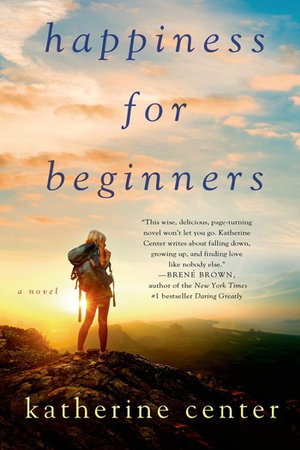
Happiness for Beginners

St. Martin's Press
Happiness for Beginners
St. Martin's Press
2015

The Summary
"It was time, Helen Carpenter knew that.  Thirty-two and divorced for a year, Helen knew it was time--past time--to pull herself together.  She needed to do something wild and adventurous and completely out of character.  Which is why she signed up for a wilderness survival course in Wyoming.

"Thus begins the strangest adventure of Helen Carpenter's well-behaved life:  three weeks in a remote mountain range where she will survive a summer blizzard, a group of sorority girls, rutting season for the elk, and more than one infuriating man.  Yet, despite the hardships and the indignities, the mountains bring their own wisdom to Helen's life, somehow teaching her the very things she needs to learn.  Like how to stand up for yourself.  How being scared can make you brave.  How the things you hold on to become the story of your life.  And, maybe most of all, how sometimes you just have to get really, really lost before you even have a hope of being found."

The Good
I absolutely loved listening to Happiness for Beginners.  After picking it out on a whim, I was pleasantly surprised by how much I enjoyed listening to Marguerite Gavin relate Helen Carpenter's story.  Gavin was an excellent narrator, lending her voice and attitude to Helen, making the story come to life.  It was an exceptional experience:  I found myself laughing in the midst of every chapter, thoroughly enjoying the narrator's company as I walked my dog.

Although I enjoyed the retelling of Katherine Center's novel, I also enjoyed the story and the characters.  Helen Carpenter is a candid narrator and a wonderful character, developing as her story builds and transforming from tentative, broken-hearted grade school teacher to a thoughtful, more knowledgeable woman.  She grows closer to her brother; she gains friends; she learns how to survive in the wilderness.

And it's wonderful to see how she develops, how she accomplishes her goals and, more importantly, manages to surprise herself in the end.

Her adventure is ludicrous--two weeks in the wilderness, surviving on her wits and little else--and her story is full of unintended twists, which even she acknowledges.  She goes in search of a new identity, in search of happiness and a piece of herself that she feels has been missing for years.  And she succeeds, reinventing herself, "rising from the ashes like a phoenix"--one of her many goals for her survival course.

I'm glad I had the opportunity to witness Helen's growth as a character.  Helen is really a wonderful character:  smart, a touch sarcastic, insightful, courageous and thoroughly grounded in reality.  As a recently divorced woman, she's been through the wringer and managed to come out on the other side--and I like that she succeeds in reinventing herself and reevaluating her life, as well as her relationships.

Overall, Happiness for Beginners was the perfect combination of narrator and story.  Something about the way the author wrote and Marguerite Gavin retold the story made me enjoy every minute of it.

The Bad
Some mild language and mature themes, which means it probably isn't for all readers, but it doesn't really detract from the story.  I loved it, nevertheless.

The Ugly
I loved that Katherine created such a candid narrator.  Helen Carpenter is a vivid storyteller, weaving emotion into every fiber of the novel, filling it with personal commentary and detail.  It's a wonderful story; however, her candid account means that she shares absolutely everything--even the most heart-wrenching, embarrassing and mortifying moments.

And, sometimes, it leaves you feeling just the tiniest it awkward for prying into the most personal areas of Helen's life.

Thursday, March 17, 2016

Bonus: Howl's Moving Castle

A Greenwillow Book
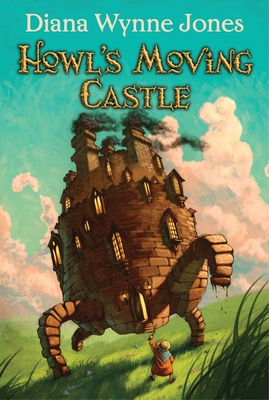
Howl's Moving Castle
Diana Wynne Jones
1986

The Summary
"Sophie has the great misfortune of being the eldest of three daughters, destined to fail miserably should she ever leave home to seek her fate.  But when she unwittingly attracts the ire of the Witch of the Waste, Sophie finds herself under a horrid spell that transforms her into an old lady.  Her only chance at breaking it lies in the ever-moving castle in the hills:  the Wizard Howl's castle.  To untangle the enchantment, Sophie must handle the heartless Howl, strike a bargain with a fire demon, and meet the Witch of the Waste head-on.  Along the way, she discovers that there's far more to Howl--and herself--than first meets the eye."

The Good
Howl's Moving Castle is a strange and fantastical piece of fiction.  The characters are unusual, but they're incredibly fun:  Howl is an odd creature, full of spite and pride, and he preens like a peacock; Sophie is cranky and sorely missing her younger years, but she has a lot of sass and a great deal of insight; Calcifer, like Howl, has a unique attitude that sees him alternating between grumpy and smoldering, bright and fiery.

Diana Wynne Jones does an excellent job of fleshing out her characters.  She gives Howl and Sophie, Calcifer and Michael, among others, a great deal of leeway, letting them grow and evolve as characters.  I was especially intrigued by Sophie:  I couldn't wait to see what would happen, and how she would grow into her new life with Howl.

While I did sometimes feel like I was missing pieces of the story--Howl was very bad about offering any sort of explanation, and I don't think I ever quite understood Howl as "Howell" who comes from the mysterious land of Wales--because circumstances were always changing so quickly, I remained enthralled by the story.

Magic is unique in the land of Ingary, which is what made it so strangely enchanting.  It's different from character to character.  For instance, Michael's magic is different from Howl's whose magic is different from the Witch of the Waste's.  Howl has a natural capacity for magic and enchanting, whereas Michael works best with spells and potions and mixtures, and Sophie weaves magic unexpectedly into whatever project she works.  It's intriguing to see how magic builds, develops and, more importantly, affects those around it.

Overall, I really enjoyed Jones' novel.  It's a book I would definitely recommend reading at least once, especially if you intend to watch the Miyazaki movie rendition.

The Bad
I have to admit, I was sometimes confused by the story.  Since Howl proved reticent about his past and how to use magic (expect when it proved beneficial to himself) and just about everything else, I found I didn't always understand what was happening.  Moreover, I always had moments where I'd realized things had changed--and then I'd look back, wondering where I'd missed such an astonishing development.

The Ugly
Howl isn't a good person.  He isn't evil, but he also isn't the best person upon which to rely.  He alternates between vain, selfish, and fickle--and, while he might sometimes affect a selfless attitude, he's a terrible coward and has to force himself to do anything remotely resembling brave.  Even the author points out that he would make a wonderfully horrible friend, partner, or husband, saying, "My opinion of Howl is that, much as I love him, he is the last person I would want to marry.  Apart from anything else, I would want to get in the bathroom sometimes."

Tuesday, March 15, 2016

The Glass Kitchen

St. Martin's Press
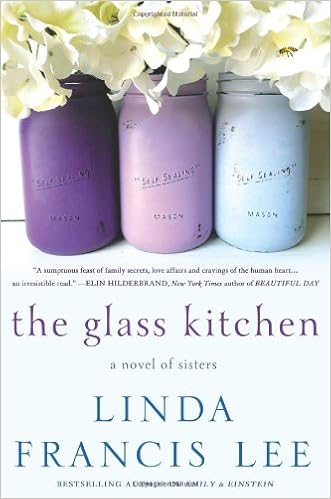
The Glass Kitchen
Linda Francis Lee
2014

The Summary
"Portia Cuthcart never intended to leave Texas.  Her dream was to run the Glass Kitchen restaurant her grandmother built decades ago.  But after a string of betrayals and the loss of her legacy Portia is determined to start a new life with her sisters in Manhattan...and never cook again.

"When she moves into a dilapidated brownstone on the Upper West Side, she meets twelve-year-old Ariel and her widowed father, Gabriel, a man with his hands full trying to raise two daughters on his own.  Soon a promise made to her sisters forces Portia back into a world of magical food and swirling emotions, where she must confront everything she has been running from.  What seems so simple on the surfaces is anything but when long-held secrets are revealed, rivalries exposed, and the promise of new love stirs to life like chocolate mixing with cream.

"The Glass Kitchen is a delicious novel, a tempestuous story of a woman, washed up on the shores of Manhattan, who discovers that a kitchen--like an island--can be a refuge, if only she has the courage to give in to the pull of love and the power of forgiveness, and to accept the complications of what it means to be family."

The Good
I loved everything about this novel:  characters, story, tone--everything.  The descriptions were wonderful, luscious and full of food imagery that connected with me on a tactile, gustatory level.  Portia likens all her experiences and emotions to food, since that's what she knows best with her knowing--her inexplicable ability to plan and create food for just the right occasion.  I thought the author did an excellent job of connecting the dots and appealing to my love of food, especially Southern food.

I also loved Portia's mysterious family gift, her magical sense of knowing.  It immediately makes me think of Sarah Addison Allen and her style of writing:  vibrant, fun, threaded with magic that makes the novel shine just a little brighter.  Portia's knowing adds an element of adventure and complexity to the novel, adding a special spark that makes The Glass Kitchen that much more enjoyable.  It's a relatable story about turning over a new leaf, starting over, but it has that hint of magic that makes it whimsical without being fantastical.

And I enjoyed watching the progression of the sisters' relationship.  Their interactions seem genuine:  Olivia, Rose, and Portia fight and fuss, but, ultimately, they forgive one another and make up.  They're family, so it's only natural that they disagree, that they're brutally honest and grumpy, but they love one another, regardless of what happens.  It's sweet, which I really enjoyed, because it's just the sort of relationship that siblings can hope to have.

Overall, I loved reading The Glass Kitchen.  It hit all the right notes for me, bringing together all the qualities I love in a narrative and telling it in a compelling, beautiful way that keeps from hooked from cover to cover.  I can't wait to read more by Linda Francis Lee.

The Bad
The Glass Kitchen is a bit of an odd story, but I don't really have any complaints.  I wish Portia's knowing was explained a little better, but even Portia didn't fully understand her gift, so it isn't a surprise it remains undefined.

Otherwise, I loved every bit of Lee's novel.

The Ugly
Loss.  Tragedy.  Betrayal.  Divorce.  Love.  And more betrayal.

I feel bad for Portia, I really do.  My heart goes out to her as she tries to stand on her own two feet, as she tries to get back up after being knocked down, only to have the most important men in her life to a) lie to her, b) betray her trust, and c) deliberately withhold the truth.  It's frustrating and, in some cases, humiliating for Portia.

I couldn't imagine finding myself in the same situation.