"All good books are alike in that they are truer than if they had really happened
and after you are finished reading one you will feel that all that happened to you
and afterwards it all belongs to you; the good and the bad, the ecstasy, the remorse,
and sorrow, the people and the places and how the weather was."
Ernest Hemingway

Wednesday, February 14, 2018

Break Time

It's time for a break.

If it isn't obvious, my updates have been sporadic (at best) and I've fallen completely behind on my reading schedule.  I love reading, but I've become a little less enthusiastic about writing reviews.  For now, I'm going to take a break and enjoy reading for the sake of reading without worrying about a review.

Maybe, some day, I'll write more reviews when I feel like I have more time, when I feel like adhering to a schedule--when I'm ready and raring to write about books.  In the meantime, I hope you all have a Happy Valentine's Day.

And, as always, happy reading.

Tuesday, January 30, 2018

Bandette: Presto! (Volume 1)

Image result for bandette: presto
Dark Horse Books
Bandette:  Presto! (Volume 1)
Paul Tobin
Colleen Coover
2012

The Summary
"She is alluring, she is mysterious, she is Bandette!

"The world's greatest thief is a costumed teen burglar by the nome d'arte of Bandette!  Gleefully plying her skills on either side of the law alongside her network of street urchins, Bandette is a thorn in the sides of both Police Inspector Belgique and the criminal underworld.  But it's not all breaking hearts and purloining masterpieces when a rival thief makes a startling discovery.  Can even Bandette laugh off a plot against her life?

"This beautiful hardcover includes the complete first adventure from Paul Tobin and Colleen Coover's enchanting series, plus Urchin Stories illustrated by guest artists Steve Lieber, Jonathan Case, Erika Moen, Jennifer Meyer, Rich Ellis, Alberto J. Alburquerque, Tina Kim, and Mitch Gerads; an original illustrated tale; and more."

The Good
Bandette is a fun, adventurous graphic novel featuring a quirky heroine--although heroine may be stretching it a bit.

Bandette is a thief, and a very good one; however, she's also a friend to many and an enemy only to those who would do true evil.  She's a bit of a Robin Hood character, but she enjoys thievery a little too much to be classified as a hero.

Overall, it's a very mild book with fun characters, colorful adventures, and funny stories.  Even when faced with deadly enemies, Bandette manages to have a good time.  She's intelligent, she's capable, she's kind-hearted--and she's the best at what she does:  stealing things and infuriating Inspector Belgique.

The Bad
No complaints.

The Ugly
There are a few mature themes, but nothing terribly frightening or vulgar.

Friday, January 12, 2018

The Fairy Godmother: Revisited

13982
Luna Books
The Fairy Godmother
Mercedes Lackey
2004

The Summary
"In the land of the Five Hundred Kingdoms, if you can't carry out your legendary role, life is no fairy tale...

"Elena Klovis was supposed to be her kingdom's Cinderella--until fate left her with a completely inappropriate prince!  So she set out to make a new life for herself.  But breaking with 'The Tradition' was no easy matter--until she got a little help from her own fairy godmother.  Who promptly offered Elena a most unexpected job...

"Now, instead of sleeping in the chimney, she has to deal with arrogant, stuffed-shirt princes who keep trying to rise above their place in the tale.  And there's one in particular who needs to be dealt with.

"Sometimes a fairy godmother's work is never done..."

The Good
I decided to reread The Fairy Godmother on a whim.  I liked it the first time around and I was craving something with adventure, magic, fantasy and romance.  And, honestly, I wasn't disappointed when I picked up Mercedes Lackey's novel.

It's chock full of fairy tales:  Cinderella, Rapunzel, the Fairy Godmother, Prince Charming, Snow White, the Evil Queen, and much more.  Each one is given a fresh twist that draws their stories together in new and exciting ways.  Plus, it has fairies.  Not the dainty little sprites you might imagine, but the tall, lithe fair folk--the kind you meet in The Lord of the Rings--which, somehow, I'd forgotten.

I found it interesting to reread The Fairy Godmother.  Despite knowing how the story ends, I enjoyed going back and seeing the small details I'd missed during my previous trip.  More importantly, I took the story at a slower pace and I enjoyed it far more than I expected.

I mean, in my last review (which you can check out here), I pointed out that Lackey's novel was missing some indefinable quality that would have made it perfect.  While I still don't think it's the perfect fantasy novel, I do have a new appreciation for the characters and the stories as a whole.  I loved the different strands of folklore and fairy tales that come together to create a wonderful story that's full of humor, heart, magic, and adventure.

It was just the thing I need.

The Bad
No complaints.  Like I said, I enjoyed The Fairy Godmother much better the second time.

The Ugly
These fairy tales are not for children.

Tuesday, January 9, 2018

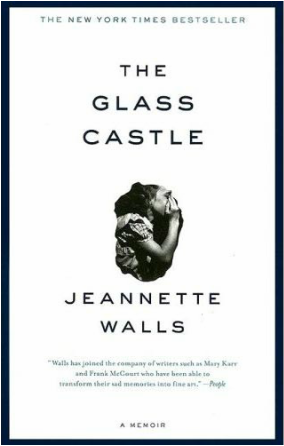
The Glass Castle

Image result for the glass castle book
Scribner
The Glass Castle
Jeannette Walls
2005

The Summary
"The Glass Castle is a remarkable memoir of resilience and redemption, and a revelatory look into a family at once deeply dysfunctional and uniquely vibrant.  When sober, Jeannette's brilliant and charismatic father captured his children's imagination, teaching them physics, geology, and how to embrace life fearlessly.  But when he drank, he was dishonest and destructive.  Her mother was a free spirit who abhorred the idea of domesticity and didn't want the responsibility of raising a family.

"The Walls children learned to take care of themselves.  They fed, clothed, and protected one another, and eventually found their way to New York.  Their parents followed them, choosing to be homeless even as their children prospered.

"The Glass Castle is truly astonishing--a memoir permeated by the intense love of a peculiar but loyal family."

The Good
It took me a long time to pick up and read The Glass Castle.  Like literal months.

First, I wasn't sure I wanted to read a memoir.  I was firmly entrenched in my romance novels and fantasy stories, and I didn't want to burst my own bubble by reading about the real world.  Second, I'd never read anything by Walls and, if I'm being honest with myself, I wasn't sure I wanted to start reading her now.  I mean, what if she was awful?  I hated the idea of slogging through a poorly written memoir.

However, The Glass Castle is anything but poorly written.  Jeannette Walls is a phenomenal writer.  As I settled in to read, I discovered she had a compelling voice and an incredible story to tell.  Her memoir tackles difficult subjects--like neglect, abuse, mental illness, homelessness, etc.--but Walls treats these things delicately.  She recounts her life in such a way that you are able to see it through her eyes as she grew from a child to a young woman.

The Glass Castle is sad and tragic, but it's ultimately a compelling and hopeful story about survival.

The Bad
Read below.  I have a bit of a spiel.

The Ugly
This book infuriated me.

Walls is a wonderful writer and her memoir is insightful, thoughtful, and incredibly fascinating; however, I wanted to argue that this was not a memoir about "the intense love of a peculiar but loyal family."  I didn't see loyalty (except between Jeannette and her siblings) and I didn't see love and I didn't see a quaint, peculiar little family; I saw intense neglect, if not outright abuse, and child endangerment and alcoholism.

I understand Walls loved her father and I understand that her father, as much as he was capable, loved his children.  However, I thought both her father and her mother were selfish, neglectful, and thoughtless to the health, well-being, and safety of their children.  I have only to point out that the first chapter that Walls was severely burned as a child while trying to cook her own food.  She was hungry and her mother wasn’t going to make her anything, so she did it on her own.  She couldn’t have been more than five.

Or then there’s the incident where she was flung from a moving vehicle.  Accident or not, that’s just reckless endangerment and it could have killed her.  Or there’s also the chapter where she speaks about digging old food out of the trash cans at school, so she wouldn’t starve.  All the while, her mother was squirreling away food for herself and not bothering to feed her children when she obviously could.

I only saw loyalty between the Walls children.  They protected and looked out for each other, they would help provide for the others; in fact, I imagine the only reason they survived their heinous childhood in West Virginia is because they stuck together.  Even after their parents undermine them again and again, they stick together.  Her sister escapes to New York first and then, one by one, they all manage to leave West Virginia--and their parents--behind.

Her father, no matter how much he professed to love his children, did not.  I understand that some parents or guardians struggle to provide for kids; however, sometimes you have to make difficult choices to provide for your children.  He could have sacrificed his pride and applied for federal assistance; they obviously needed it, so why wouldn't he ask for help?  Instead, he would lie and cheat and steal, and then blow his money on alcohol and hookers.

And why couldn't their mother do the same?  She could hold on to a job; in fact, she did for a little while.  I know she didn't like it.  No one wants to work at a job they hate, but, in order to provide for her children, couldn't she have kept a job long enough to put food on the table and start her search for a new job in the meantime?

Obviously not.  That would require a sense of selflessness and empathy she didn't possess.

This book disgusted me on so many levels, and it infuriated me.  I couldn't stand reading about how much Walls adored her father, only to have him disappoint her time after time.  It's heartbreaking as she comes to realize that the Glass Castle--her and her father's shared dream--will never become a reality.

Saturday, January 6, 2018

Kings of the Wyld

Image result
Hachette Book Group, Inc.
Kings of the Wyld
Nicholas Eames
2017

The Summary
"Glory never gets old.

"Clay Cooper and his band were once the best of the best, the most feared and renowned crew of mercenaries this side of the Heartwyld.

"Their glory days long past, the mercs have grown apart and grown old, fat, drunk, or a combination of the three.  Then an ex-bandmate turns up at Clay's door with a plea for help--the kind of mission that only the very brave or the very stupid would sign up for.

"It's time to get the band back together."

The Good
This is arguably one of the best books I read in 2017.  Sometimes ridiculous, sometimes gory, Kings of the Wyld is an unexpectedly endearing and simultaneously adventurous novel.  It's hilarious, heart-warming, and yet still action-packed.

I absolutely loved it.

I first stumbled across this book at my local library (though I will probably be acquiring a copy for my own shelves) and I was immediately caught by the cover.  At first, I couldn't quite reconcile the gritty, fantasy-esque cover image with the rock band motif.  I mean, "the boys are back in town"?  Really?

It just seemed so weird.  Mercenaries treated like rock stars?  It's absurd, but it was just the right level of absurdity to draw me in to the story.  Full of odd creatures and fascinatingly complex characters, it's a story that turns fantasy (as I have known it) on its head.

As far as fantasy heroes go, Clay and his band are not quite your typical heroes.  Granted, no one is perfect, but Moog, Gabriel, Matrick, and Ganelon are about as far from perfect as you can get.  Moog is a bit demented and terribly forgetful; Gabriel is a drunk whose life has spiraled out of control; Matrick is caught in a loveless marriage with a queen who wants him dead, not to mention he's kind of a horrible person; and Ganelon--well, Ganelon has spent the last decade or two trapped in stone, but, before that, he was a stone-cold killer.

They are seriously flawed, but they kind of grow on you.  I mean, Gabriel, despite being a crappy husband and a not-so-great dad, is setting out to save his daughter, Rose, against all odds, and Clay is going to help him do it.  They're fighting against age, personal demons, and time to save Rose.  While they may be a little more willing to break laws (and bones), they're ultimately good people.

And, personally, I found I liked Clay the best.

He wasn't the narrator, but much of the story is told from his perspective and he offered uncanny insight into the story.  Jaded and tough, gifted with a deadpan sense of humor, Clay was by far my favorite character.  (Moog, however, comes in at a close second.)  He was the driving force within the book, a steady voice, almost like the conscience of the story.

He has a dark past, but I admired him for his tenacity and loyalty.  Moreover, I couldn't help but appreciate the way he loved his wife, Ginny, and his daughter, Talley.  Clay is a big brute of a man, as you read on the first page:  "[His] shadow, drawn out by the setting sun, skulked behind him like a dogged reminder of the man he used to be:  great and dark and more than a little monstrous."

He was not a good man; in fact, he may not even be a very good man, even now.  But he cares about Ginny and Talley, and he'd do anything to protect them.  He respects Ginny, and he admires Talley.  If nothing else, I liked him for being a decent human being who cares about his family and doggedly follows his friends into battle to save another man's daughter.

The Bad
Admittedly, the story is a bit drawn out.  There's always so much happening, so many plot twists and adventures are thrown at our heroes that it can get a little tedious; however, it's an easily forgivable sin.  The ending was so satisfying, the absurd adventures in between were totally worth it.

Overall, it's an excellent debut.

The Ugly
People are not perfect.  They can make terrible mistakes and they can commit truly horrible atrocities.

Tuesday, January 2, 2018

A Dad for Billie

23843292
HQN Books
A Dad for Billie
Susan Mallery
1993

The Summary
"From the moment a baseball smashes through his window, banker Adam Barrington's life is never quite the same.  The guilty party, an eight-year-old tomboy, soon turns his household upside down.  But that shock is nothing compared to when Adam discovers who Billie's mother is...

"Jane Southwick knows that coming back home won't be easy, and that living next door to Adam again will be sweet torture.  But it's pure joy to see the delightful bond growing between him and her daughter, despite the guilty secret that clutches at Jane's heart."

The Good
I love Susan Mallery.  She's one of my favorite contemporary romance novelists, and I can't say I've really been disappointed by any of her books.  While A Dad for Billie isn't my absolute favorite by Mallery, it's a fun, sweet story with an adorable kid (she's so accident prone and messy; she's wonderful) and a lovely, complex romance that will warm your heart.

The Bad
It has many of the tropes familiar to romance novels.  It's predictable; however, I found the predictability reassuring.

The Ugly
Nothing, truthfully.  It's a sweet, mild little romance that invariably made me smile and feel all the warm fuzzies.

Tuesday, December 12, 2017

Crooked Letter, Crooked Letter

William Morrow
Crooked Letter, Crooked Letter
Tom Franklin
2010

The Summary
"In the 1970s, Larry Ott and Silas "32" Jones were boyhood pals in a small town in rural Mississippi.  Their worlds were as different as night and day:  Larry was the child of lower middle-class parents, and Silas, the son of a poor, black single mother.  But then Larry took a girl to a drive-in movie and she was never seen or heard from again.  He never confessed...and was never charged.

"More than twenty years have passed.  Larry lives a solitary, shunned existence, never able to rise above the whispers of suspicion.  Silas has become the town constable.  And now another girl has disappeared, forcing two men who once called each other "friend" to confront a past they've buried for decades."

The Good
I enjoyed this book so much.

I typically do not read mysteries, especially mysteries that showcase dark secrets and some of the more unsavory aspects of small-town life.  (I live in a small Southern town, so it's a bit unnerving to see similarities between my hometown and the one pictured in Crooked Letter, Crooked Letter.)  However, I was hooked by Tom Franklin's novel almost from the start.

The pace is excellent, as it doesn't dwell for long moments and it doesn't fly through the story; the tone it sets feels distinctly Southern, it feels like it's set in the heart of Mississippi; and the writing is excellent, so easy to read and yet descriptive enough to keep me interested.

While it does get a little too descriptive, particularly in respects to describing murder scenes, I found I enjoyed Crooked Letter, Crooked Letter for it's ability to conjure a setting.  When I was reading, I could really imagine Larry and Silas's town.  I could see the kudzu, envision the dirt roads and the mosquitoes swarming around the swamps, feel the stifling summer heat.  It was exciting to read a book that felt so real, that held such a visceral impact.

The Bad
No complaints.  It reads well and I enjoyed it immensely.

The Ugly
I felt so bad for Larry.

I mean, here's this smart, sweet, and socially awkward young man who's blamed for a murder he didn't commit and then he spends the rest of his life suffering under that dark shadow.  It's heart-breaking, especially as new light is shed on the case and you realize that Larry has been shunned by his entire community simply because he was different.

It's a bit sickening.

Oh, and fair warning, there's a number of murders and attempted murders in this book.  It's not for the faint of heart and it's doesn't shy away from the ugly topics of racism, infidelity, and abuse.  It's jarring how many dark secrets lurk under the facade of one, small Southern town.

Thursday, December 7, 2017

Lady Killers: Deadly Women Throughout History

Harper Perennial
Lady Killers:  Deadly Women Throughout History
Tori Telfer
2017

The Summary
"In 1998, an FBI profiler infamously declared in a homicide, 'There are no female serial killers'--but Lady Killers offers fourteen creepy examples to the contrary.  Though largely forgotten by history, female serial killers such as Erzsebet Bathory, Nannie Doss, Mary Ann Cotton, and Darya Nikolayevna Saltykova rival their male counterparts in cunning, cruelty, and appetite for destruction.

"With a feminist lens and a witty, morbidly humorous tone, Lady Killers dismisses easy explanations (she was hormonal, she did it for love, a man made her do it) and tired tropes (she was a femme fatale, a black widow, a witch), delving into the complex reality of female aggression and predation."

The Good
Honestly, I enjoyed this book far more than I probably should have.

There's something fascinating about female serial killers.  Perhaps, I have been susceptible to the idea that women are softer, gentler, and less likely to kill, despite knowing to the contrary, and find myself aghast that these ladies existed; perhaps, I'm just fascinated by the idea of off-kilter women surviving in any way possible.

Either way, I was absolutely hooked by Lady Killers.

I had a handful of chapters that I really enjoyed:  "The Sorceress of Kilkenny," which featured Alice Kyteler who was accused of being a witch and killing four husbands; "Vipers," featuring Raya and Sakina, prostitutes who owned a brothel murdered several young women (and possibly others) in Egypt after World War I; "Wretched Woman," which focused on Mary Ann Cotton, who killed several of her own children, several of her husbands' children, several husbands (all, but one) and lovers and, quite probably, many more; and, "The Tormentor," Darya Nikolaevna Saltykova, which you can read more about later.

These were just the most fascinating chapters for me; however, every chapter was thought-provoking and captivating in its own right.  Tori Telfer does a fantastic job as an author, creating a thoroughly researched and interesting book on an increasingly morbid topic.  She writes with a sense of humor, but also a deep appreciation of forgotten and/or misinterpreted history.

I especially appreciated Telfer's dedication to telling the truth or, at the very least, getting all her facts straight.  Telfer cuts through the terrible rumors and unfounded accusations that surround these women, dismissing what she cannot prove, and creates a believable portrait of each individual.

Elizabeth Bathory, for instance, is surrounded by a dark mythos of blood, terror, and sex.  She has become, on numerous occasions, a scandalous icon for debauchery and murder, a female counterpart to the wildly popular story of Dracula.  So much of what we know of her is unreal; however, Telfer makes an effort to humanize her, to reveal her a real person.  Yes, she committed heinous crimes and, yes, she was no doubt a murderess, but Telfer tells the story of a woman (albeit, a deeply disturbed woman), rather than a vampire or a dark temptress as she's sometimes portrayed.

The Bad
No complaints.

The Ugly
It's a book about serial killers.  It's going to be awful, horrible, gruesome, and macabre; it's going to have blood, gore, and violence--and all the other horrible things associated with cold-blooded killers.  Don't go into this book thinking, "It can't possibly be that bad.  It's not like it's Charles Manson or Jeffrey Dahmer, or someone like that."

Trust me, you're wrong.

These ladies are downright terrifying, just as much as any male serial killer.  Many of them got away with killing for years, like the murderous women of Nagyrev or Nannie Doss, before they were discovered; some even avoided justice altogether, like Alice Kyteler and Kate Bender.  They're killers, plain and simple, and they're frightening in their own right.

Perhaps one of the most frightening, in my opinion, was Darya Nikolaevna Saltykova.  Darya was a Russian noblewoman who lived during the reign of Catherine the Great and she killed, at the very least, 138 people (mostly women) during her lifetime.  She was inventive in her murders and, at times, she would kill someone with her bare hands if she didn't think anyone else would or could do it.  And, as the author points out, she showed zero remorse:
"So Darya killed and killed again, confident in her impregnability and furious at her serfs for each petty mistake, for getting in her way, for being her responsibility, for existing.  If she was a god, then her serfs were her pitiful playthings.  She could make them clean; she could make them cook; she could make them scream and bleed and beg. [...] 'I am my own mistress,' she cried. 'I am not afraid of anyone.' This belief that she was superior, unassailable, and even consecrated by the law was integral to her sense of self.  Perhaps she killed to prove one simple point:  that she could."

To me, Darya is absolutely terrifying.

Monday, December 4, 2017

Jane Steele: Revisited

31851019
G.P. Putnam's Sons
Jane Steele
Lyndsay Faye
2016

The Summary
"A sensitive orphan, Jane Steele suffers first at the hands of her spiteful aunt and predatory cousin, then at a grim school where she fights for her very life until escaping to London, leaving the corpses of her tormentors behind her. After years of hiding from the law while penning macabre “last confessions” of the recently hanged, Jane thrills at discovering an advertisement. Her aunt has died and her childhood home has a new master: Mr. Charles Thornfield, who seeks a governess.

"Burning to know whether she is in fact the rightful heir, Jane takes the position incognito and learns that Highgate House is full of marvelously strange new residents--the fascinating but caustic Mr. Thornfield, an army doctor returned from the Sikh Wars, and the gracious Sikh butler Mr. Sardar Singh, whose history with Mr. Thornfield appears far deeper and darker than they pretend. As Jane catches ominous glimpses of the pair’s violent history and falls in love with the gruffly tragic Mr. Thornfield, she faces a terrible dilemma: Can she possess him--body, soul, and secrets--without revealing her own murderous past? 


"A satirical romance about identity, guilt, goodness, and the nature of lies, by a writer who Matthew Pearl calls 'superstar-caliber' and whose previous works Gillian Flynn declared 'spectacular,' Jane Steele is a brilliant and deeply absorbing book inspired by Charlotte Brontë’s classic Jane Eyre."


The Good
Not so very long ago, I actually picked up the advanced readers copy of Jane Steele and read it within a couple of days.  More recently, I found the audiobook of Lyndsay Faye's novel and, I have to say, I wasn't disappointed.  I enjoyed rereading Jane Steele and I found I liked the story just as much the second time around.

Susie Riddell does a pretty great job as narrator.  I liked the way she told Jane's story, the cadence and tone of her voice that created a character who felt real.  It was enjoyable, and I found myself finding new facets of the story to appreciate and admire.

Overall, it's a great audiobook.  Short and, while it's definitely not sweet, fun, Jane Steele is an excellent choice for any reader seeking an off-kilter romance or a deeply twisted take on a classic.  However, I will say I enjoyed reading the book more than listening to the audiobook.  For some reason, I just appreciated the feeling of the book in my hands than the earbuds in my ears as I listened to Jane's story.

But that's more personal preference than anything.

The Bad
Honestly, I had a few moments where I became annoyed by the accents.  Don't get me wrong, Susie Riddell does a great job of reading Jane Steele; however, I was always a little annoyed by Thornfield's voice.  It wasn't awful, but it did take me a little longer to acclimate to his character than usual.

Likewise, I never did warm up to Rebecca's voice.  She had a softness to her voice, a sort of whiny sound that I just didn't like.  Confidentially, I was glad when I moved beyond her story and found myself strictly accompanying Jane.

The Ugly
Blood and gore.

Jane, as she warns readers in the first pages of her "memoir," is a murderess.  She's not a gentle, tame individual like the Jane we know from Jane Eyre; rather, she's a rambunctious, foul-mouthed young woman who knows her way around a knife.  She's deadly and she can prove it, too.

Friday, December 1, 2017

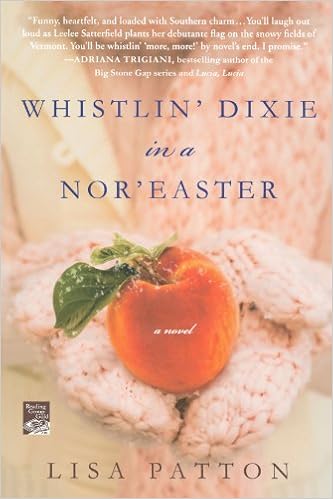
Whistlin' Dixie in a Nor'easter

Image result for whistlin dixie in a nor easterWhistlin' Dixie in a Nor'easter
Lisa Patton
2009

The Summary
"Leelee Satterfield leaves her beloved Memphis to follow her husband's pipe dream:  to manage a quaint Vermont inn.  But when they arrive, young daughters and ancient Yorkie in tow, they discover pretty fast that there's a truckload of things nobody tells you about Vermont until you live there.  When Leelee is left swindled and snowbound, she's forced to confront the true depth of her Southern grit in this foreign town.

"In this moving, comedic debut, Lisa Patton paints a hilarious portrait of a life in Vermont seen through the eyes of a Southern belle.  It's a charming, fish-out-of-water tale of one woman who learns to stand up for herself--in sandals and snow boots--against all odds."

The Good
Whistlin' Dixie in a Nor'easter is a pretty fun novel.

Sweet, humorous, and full of heart, Lisa Patton's novel is a delightful mixture of friendship, misadventure, and love.  It was an interesting blend, bringing together the warm, honeysuckle scented culture of the South and the colder, entirely foreign climate of the North.  When the two come together, it's a minefield fraught with dangers, as Leelee quickly learns.

Overall, it's a heartwarming story.  Whistlin' Dixie in a Nor'easter takes a while to build, takes an even longer time to get to the point that you actually see the Tennessee grit and determination upon which Leelee prides herself; however, it's a good story.  It's short, sweet, and easy to read, and it's worth checking out, especially for any local Tennesseans interested in a fun, romantic debut.

The Bad
Honestly, despite sharing a state with Leelee, I found I couldn't relate to her.  I mean, I understand what it means to be a "people-pleaser." (Sometimes, it's just hard to say "no" to the folks you know and love.)  However, I had hoped Leelee would find that Southern grit and rebellious determination to turn her life around long before she actually did.

It was frustrating to witness Leelee endure problem after problem, before she finally decided to take her life into her own hands.  I hated how Baker--among others--took advantage of her.  I hated that Leelee was left to foot the bill, even when it was her scummy husband's fault.

I hated it for her.  The embarrassment, the desolation, the betrayal and confusion.  It's a bit gut-wrenching.

The Ugly
I really don't like Baker.

We'll just leave it at that, lest I spoil the story.

Wednesday, October 11, 2017

Taking a Break

Apologies for the month-long hiatus.  Things have been a bit busy lately, but I'm sure I'll get back into the swing of things soon enough.  In the meantime, please feel free to browse books from the Archive--or check out this book review website from the Bristol Public Library.  They have a myriad of books and reviews to explore, and they're well worth checking out:  http://bristol-library-bookblog.blogspot.com/.

Enjoy and, as always, happy reading!

Monday, September 11, 2017

The Help: Revisited

Berkley Publishing Group
The Help
Kathryn Stockett
2009

The Summary
"Three ordinary women are about to take one extraordinary step...

"Aibileen is a black maid in 1962 Jackson, Mississippi, raising her seventeenth white child.  She's always taken orders quietly, but lately it leaves her with a bitterness she can no longer bite back.  Her friend Minny has certainly never held her tongue, or held on to a job for very long, but now she's working for a newcomer with secrets that leave her speechless.  And white socialite Skeeter has just returned from college with ambition and a degree but, to her mother's lament, no husband.  Normally Skeeter would find solace in Constantine, the beloved maid who raised her, but Constantine has inexplicably disappeared.

"Together, these seemingly different women join to work on a project that could forever alter their destinies and the life of a small town--to write, in secret, a tell-all book about what it's really like to work as a black maid in the white homes of the South.  Despite the terrible risks they will have to take, and the sometimes humorous boundaries they will have to cross, these three women unite with one intention:  hope for a better day."

The Good
I finished reading The Help a few years ago and, during July, I decided to join my local book club in reading it again--and I'm so glad I did.  The Help is as incredible to me now as it was to me the first time I read it.  I picked up different nuances and I noticed I related to different experiences this time around, especially where Skeeter is concerned; however, I think I love it just as much now, if not more, as I did then.

Incredibly compelling and soundly written, The Help is poignant and heart-wrenching novel that kept me glued to the pages.  I enjoyed meeting Skeeter, Aibileen, and Minnie; I especially enjoyed seeing how these ladies from distant social classes and experiences managed to create a book that is surely extraordinary.

And, as terrible as some of their stories veered, as heart-breaking as their histories are, I loved reading about them.  Their stories are compelling and beautiful, real and raw and, simply put, amazing.  I loved reading it, and I loved feeling connected to them.

Although Aibileen is still my favorite character, simply because she is an extraordinary woman, I found I connected more deeply with Skeeter during this second reading.  Having graduated from college since my first reading of The Help, I found I related more to Skeeter this time than I did the last.  That is, I recognize Skeeter's drive to do more with her life, yet she teeters between wanting to live her life--wanting to become an author--and hanging on to her family and struggling with the general expectations of Southern society.

It was a bit unexpected, maybe even a little jarring, to learn I see so much of myself and my personal experiences in Skeeter.  Although I was surprised by my connection to Skeeter, I don't think this detracted from the story in any way.  Rather, I found myself becoming more invested in the overall story and I certainly felt it more deeply.

I fully enjoyed rereading The Help.

The Bad
The Help is frequently written with a heavy emphasis on dialect and accent.  If you're not familiar with the region or it's verbal quirks, it might prove a little difficult to read.  On the other hand, if you're a Southerner or if you've ever lived in the South, reading this novel will be a piece of cake.

The Ugly
Racism.

Saturday, September 9, 2017

The Lorax

7784
Random House
The Lorax
Dr. Seuss
1971

The Summary
"In this haunting fable about the dangers of destroying our forests and woodlands, the long-suffering Lorax struggles to save all the Truffula Trees from the wicked Once-ler's axe. "

The Good
I've never read The Lorax.

There.  I've said it:  I've never read The Lorax.

Somehow, in the shuffle of children's books I've read throughout my lifetime, I never had the chance to read Dr. Seuss' Lorax.  It's kind of incredible, as I'm pretty positive I've read everything else he's ever written.

Anyway, I read The Lorax as part of a book bingo challenge at my library and, honestly, I wasn't disappointed.  It was basically what I expected.  Rhymes, bright colors, crazy creatures, unexpected morals.

It's not bad.  I can see why it's a children's classic.

The Bad
The Lorax is not my favorite Dr. Seuss book.  I reserve that strictly for Green Eggs and Ham.

The Ugly
Although The Lorax is a children's book and reads like a children's book, it's also a look at a very mature theme--that is, it shows what happens when people don't care and progress (like greed) is left unchecked by someone who does care.

"Unless someone like you cares a whole awful lot, nothing is going to get better.  It's not."

It's really a pretty jarring book when you think about it.

Wednesday, September 6, 2017

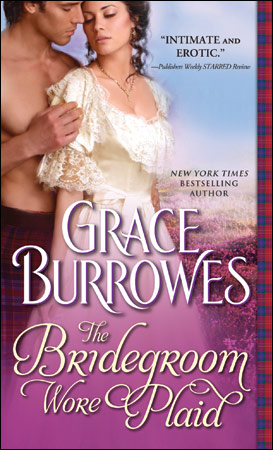
The Bridegroom Wore Plaid

Image result for the Bridegroom wore plaid
Sourcebooks Casablanca
The Bridegroom Wore Plaid
Grace Burrowes
2012

The Summary
"His family or his heart--one of them will be betrayed...

"Ian MacGregor is wooing a woman who is wrong for him in every way.  As the new Earl of Balfour, though, he must marry an English Heiress to repair the family fortunes.

"But in his intended's penniless chaperone, Augusta, Ian is finding everything he's ever wanted in a wife."

The Good
I'll be honest, Grace Burrowes is quickly become one of my favorite romance authors.  I've read several of her novels, but, I think, The Bridegroom Wore Plaid has quickly become my favorite.  Not only was I presented with strong heroes, clever heroines, and romance, but I found a fantastically well written novel riddled with little historical details that made it both believable and incredibly satisfying.

Personally, I loved Augusta and Ian as both individuals and as a couple.  Augusta, though quiet and reclusive, is thoughtful and clever and, if we're being honest, incredibly brave.  Although she suffers unspeakable loss, losing her father, her mother, her fiance, and her home within a year, she doesn't allow her situation to define who she is or keep her down.  She manages to make the best of bad circumstances, even when they seem dire.

Ian is pragmatic, honorable, and considerate.  He loves his family and he loves his home, and he'll do anything to keep them safe--even if it means marrying a woman he doesn't love.  Yet when he does find a woman he loves (Augusta, if that wasn't obvious), he cherishes her.  Although he can't dote upon her publicly, due to their precarious positions, he treats her kindly and he is openly honest with her, creating an intimacy between them that is both fragile and precious.

Their relationship is anything but practical, and yet their happily ever after is that much sweeter for the adversity they must overcome.  It's incredibly sweet and terrifically real, and I absolutely loved it.  I quickly became invested in the characters and their story, and I'm so glad I picked up another of Grace Burrowes' novels.  I highly recommend anything she writes.

The Bad
No complaints.  I enjoyed The Bridegroom Wore Plaid immensely, and I wouldn't mind reading it again or diving into the rest of the series.

The Ugly
Augusta's uncle, remembered by me as simply "The Baron," was an awful, horrible person.  Not to ruin any plot twists, but he's quite literally the cause of all of Augusta's sorrows--and more besides.  He is, without a doubt, the most despicable character in the entire book and I wasn't particularly saddened (or surprised) by his comeuppance.

Thursday, August 31, 2017

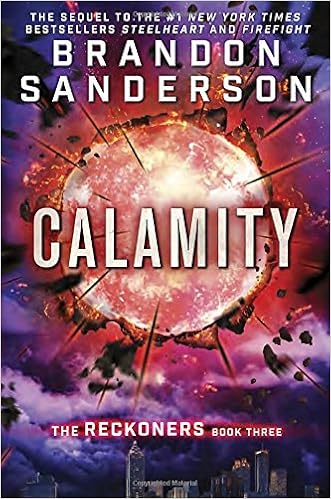
Calamity

Image result for calamity by brandon sandersonCalamity
Brandon Sanderson
2016

The Summary
"When Calamity lit up the sky, the Epics were born.  David's fate has been tied to their villainy ever since that historic night.  Steelheart killed his father.  Firefight stole his heart.  And now Regalia has turned his closest ally into a dangerous enemy.

"David knew Prof's secret, and kept it even when the Reckoners' leader struggled to control the effects of his Epic powers.  But facing Obliteration in Babilar was too much.  Prof has now embraced his Epic destiny.  He's disappeared into those murky shadows of menace Epics are infamous for the world over, and everyone knows there's no turning back...

"But everyone is wrong.  Redemption is possible for Epics--Megan proved it.  They're not lost.  Not completely.  And David is just about crazy enough to face down the most powerful High Epic of all to get his friend back.  Or die trying."

The Good
Although Calamity seemed to fall a little flat, I will admit that I have grown to love Brandon Sanderson's work.  The Reckoners series, as a whole, is full of fantastical imagery, imaginative characters, and adventure.  I was particularly fascinated by Ildithia (formerly Atlanta).

Like Babilar, Ildithia is a city of and controlled by epics.  Unlike the watery nightmare of Babylon Restored, Ildithia is a city turned to salt--much like how Steelheart turned Chicago into steel--that slowly crumbles and rebuilds every week.  It moves slowly across the country, an oddly flourishing city maintained by Larcener, Stormwind, and others that inches its way over the landscape.

It's an incredible image that sticks in my mind:  a city of salt stone laced with layers of color that sparkles in the light, one with dusty streets and salty air.  Sanderson does such an amazing job of coming up with these ideas, like incredible cities and unusual epic powers and quirky characters.  I love his work; I certainly want to explore more even if I was a little disappointed with Calamity.

The Bad
I loved Steelheart and I enjoyed Firefight immensely; I did not like Calamity nearly as much.

Calamity is a fascinating book.  Ildithia is an incredible place, an entire city made of salt that destroys and reconstructs itself every 7 days.  Sanderson is wonderfully imaginative and inventive and he's a spectacularly writer; however, Calamity was such a disappointment for two reasons:

One, I did not like the conclusion.  I mean, the epilogue is sort of sweet and I thought it was nice that David managed, for once, to catch a break, but I absolutely hated learning the truth about Calamity.  (I'm going to start discussing spoilers from the previous book, so turn away now if you don't want to hear more.)  Granted, it was an intriguing plot twist to learn that Calamity was actually an epic through which all powers were descended; however, I didn't like the idea that Calamity was actually some kind of alien being.

Two, I disliked the alternate dimensions Megan conjured.  As we learned in the last book, Megan isn't just an illusionist, she can actually tear holes into the fabric of reality and dive into alternative universes.  Cool, right?  Except it pokes some major holes in the plot of the story and it just adds another layer of complicated ugliness that I just didn't need or want.

I loved the series overall, but, as I dwell on this finale, I can't help thinking it could have been so much better.  The Reckoners had the makings of an epic (no pun intended) series--one that I would remember for a long time, one I would convince myself I needed to grace my own shelves--but it just seemed to fall apart.

Calamity just isn't nearly as good as it's predecessors.

The Ugly
Violence, death, destruction.  What do you expect when the world has been turned upside down by epics?

Oh, and fair warning:  a main character will die before all is said and done.  Just be prepared for it.

Tuesday, August 29, 2017

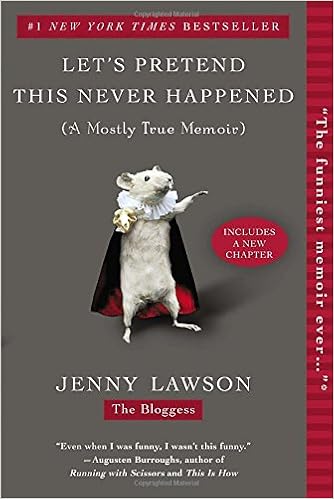
Let's Pretend This Never Happened

Penguin Books
Let's Pretend This Never Happened:  A Mostly True Memoir
Jenny Lawson
2012

The Summary
"When Jenny Lawson was little, all she ever wanted was to fit in.  That dream was cut short by her fantastically unbalanced father and a morbidly eccentric childhood.  It did, however, open up an opportunity for Lawson to find the humor in the strange shame-spiral that is her life, and we are all the better for it.

"In the irreverent Let's Pretend This Never Happened, Lawson's long-suffering husband and sweet daughter help her uncover the surprising discover that the most terribly human moments--the ones we want to pretend never happened--are the very same moments that make us the people we are today.

"For every intellectual misfit who thought they were the only ones to think the things that Lawson dares to say out loud, this is a poignant and hysterical look at the dark, disturbing, yet wonderful moments of our lives."

The Good
Jenny Lawson is hysterically funny.

Even when bad things happen, she's willing to share them with others and laugh about what happened to her, or, at least, convince others to laugh with her as she relives the trauma.  Although she doesn't have a filter, which translates to some rather outlandish statements, Lawson is able to capture a unique voice in her memoir that makes her stories relatable and memorable.

She's a bit absurd, I know, but she's hilarious.  Even when she's faced with traumatic experiences, like Stanley the Magical Squirrel or her high school agriculture class where she lost a turkey baster inside of a cow (don't ask) or wearing a deer sweater (which is more sickening than you imagine), she manages to make these memories funny for her readers.  Moreover, she has the ability to appeal to anyone who has had a non-traditional upbringing or who has ever thought their life is absolute mayhem.

She also captures those feelings of growing up and striking out, what it's like to go back and realize that the home you once knew--the childhood you'd unexpectedly treasured--is gone.  Life changes, life keeps moving forward and you find out quickly that you can't go back.  Lawson perfectly captures that melancholy and she expresses it in a way that feels familiar, bringing out an emotion that pinches at your heartstrings.

Her book, no matter how wild and absurd and occasionally crazy it may seem, is an examination of childhood, mental illness, marriage, friendship, and motherhood.  It is a depiction of life that can seem ludicrous, but it is a full life with family, friends, love and laughter.

The Bad
I will admit that Lawson's work can be an acquired taste.  I love her books, both Let's Pretend This Never Happened and Furiously Happy; however, I think she could rub some people the wrong way.  She's sardonic, witty, sarcastic, but she has a mouth like a sailor and she's not afraid to discuss any subject.

I'm not joking.

No matter how unbearably awkward, excruciatingly personal or heartwrenchingly horrifying, Lawson will tell you all about her experiences.  Sometimes, it's difficult because you feel like a bit of a voyeur; other times, you waffle between feeling relief that you don't have to deal with the absurdity she does or you feel a kinship for the odd and unusual things that happen to her because you endured the same.

The Ugly
Life can be an ugly, ugly business.  Lawson, for the most part, manages to take the sting from tragedy by making her readers laugh at the absurdity.  It still hurts, but, at least, some good does come from the bad.

Thursday, August 24, 2017

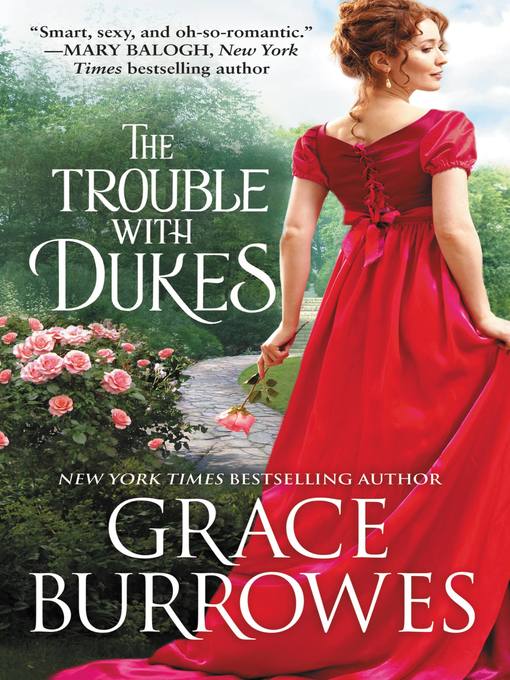
The Trouble with Dukes

Title details for The Trouble with Dukes by Grace Burrowes - Wait list
Forever
The Trouble with Dukes
Grace Burrowes
2016

The Summary
"USA Today bestselling author Grace Burrowes brings us the first book in her new Windham bride series!  The gossips whisper that Hamish MacHugh, the new Duke of Murdoch, is a brute, a murderer, and even worse--a Scot.  But Megan Windham sees something different, someone different.  She isn't the least bit intimidated by his dark reputation, but Hamish senses that she's fighting battles of her own.  For her, he'll become the warrior once more, and for her, he might just lose his heart."

The Good
The Trouble with Dukes is lovely, light reading for an evening.  It's amusing, witty, fun and sweet, and it's a nice novel to read when you want to unwind and believe that all is well with the world.

Personally, I enjoyed Burrowes' book.  While I wasn't fond of the incredibly embarrassing situations in which Megan and Hamish seemed to continually find themselves stuck, I found I liked the characters and I liked the story.  Megan is a bright young woman and Hamish, despite his brutish exterior, is a genuinely nice man who cares for his younger siblings.  I liked them both, and I enjoyed watching their lives and stories intersect.

More importantly, I liked that Hamish wasn't your traditional knight-in-shining-armor.  He sees the strength and ingenuity of Megan, he respects her for her capabilities; however, he'll rescue her in a heartbeat should the need arise.  He doesn't seem to treat her like a damsel-in-distress, which I appreciated, but he's more than willing to act as a rescuer.

Overall, I liked reading The Trouble with Dukes.  Romance novels are my guilty pleasure, as you probably know, and The Trouble with Dukes was a nice respite from some of the drearier things I've read.  Plus, I enjoyed meeting Megan and Hamish and watching their unfolding adventure, their budding romance.

It's nice to pick up a book and just know there's going to be a happily-ever-after.

The Bad
It's not the best book by Grace Burrowes that I've ever read (I've reserved that honor for The Bridegroom Wore Plaid, a historical romance from another series); however, I can't say I've read anything bad by Burrowes.  Like I said, it's a nice book.  Not great, but it's worth spending an evening with The Trouble with Dukes.

The Ugly
I despised Sir Fletcher.  Honestly, I (like Megan) found Hamish less terrifying than Sir Fletcher, despite his dark reputation as the "Duke of Murder."  Hamish is a warrior, an honorable one at that, and he's a survivor; Fletcher is a conniving, blackmailing rat who isn't above tormenting young women or stepping on others to get what he wants.

I hated him.

Tuesday, August 22, 2017

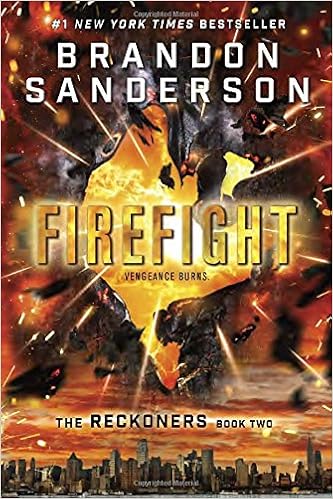
Firefight

Image result for firefight by brandon sanderson
Delacorte Press
Firefight
Brandon Sanderson
2015

The Summary
"Newcago is free.

"They told David it was impossible--that even the Reckoners had never killed a High Epic.  Yet Steelheart--invincible, immortal, unconquerable--is dead.  And he died by David's hand.

"Eliminating Steelheart was supposed to make life simpler.  Instead, it only made David realize he has questions.  Big ones.  And no one in Newcago can give him answers.

"Babylon Restored, the city formerly known as the borough of Manhattan, has possibilities, though.  Ruled by the mysterious High Epic Regalia, Babylon Restored is flooded and miserable, but David is sure it's the path that will lead him to what he needs to find.  Entering a city oppressed by a High Epic despot is risky, but David's willing to take the gamble.  Because killing Steelheart left a hole in David's heart.  A hole where his thirst for vengeance once lived.  Somehow, he filled that hole with another Epic--Firefight.  And he's willing to go on a quest darker and even more dangerous than the fight against Steelheart to find her, and to get his answers."

The Good
Honestly, I enjoyed Firefight almost as much as I enjoyed Steelheart.  Fast-paced and action-packed, Firefight is a great sequel to the Reckoners series by Brandon Sanderson.  Adding in Regalia and Obliteration gave the book an added layer of depth and danger, not to mention you're actively wondering what will happen to Prof--and you can't help wondering where Megan fits in to the grand scheme of things.

Is she good?  Is she bad?  And what will happen when Prof finds out that she's back?

Granted, I couldn't help equating some of the drama to a soap opera; however I enjoyed the novel overall.  I was also excited to learn more about Megan's powers and I was floored by the truth about Calamity.  Megan is incredible, by the way, but the "star" is still a bit of a mystery.  I won't say anymore, of course, for fear of spoilers.

Just know that Megan's powers are not what they seem and Calamity has a cause.

The Bad
I really enjoyed Firefight, don't get me wrong, but I really thought it had too much going on at once.  It's almost overwhelming the intensity of the action, how they never seem to catch a break.  It's just one fight after another after another, and it's packed with plot twists that made my head spin.

It's good, I won't deny it; however, it just has a little too much happening.

The Ugly
Death.  Gore.  Violence.

The usual.

Thursday, August 17, 2017

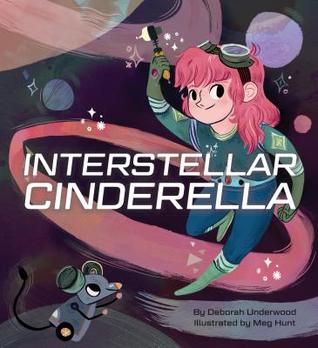
Interstellar Cinderella

22875394
Chronicle Books LLC
Interstellar Cinderella
Deborah Underwood
Meg Hunt
2015

The Summary
"Once upon a planetoid,
amid her tools and sprockets,
a girl named Cindrella dreamed
of fixing fancy rockets.

"With a little help from her fairy godrobot, Cinderella is going to the ball.  But when the prince's ship has mechanical trouble, someone will have to zoom to the rescue!  Readers will thank their lucky stars for this irrepressible fairy tale retelling, it's independent heroine, and its stellar happy ending."

The Good
I absolutely loved Interstellar Cinderella.  I happened across it one day at the library and I decided to read it before I returned it to the Children's Library, and I immediately fell in love with this little book.  It was so fun, so warm and colorful, so wonderfully depicted that I couldn't help enjoying it.

The art is lovely and bright, and the story is fun and heart-warming.  Meg Hunt does a fantastic job of envisioning the mechanical creations of Cinderella's world; Deborah Underwood recreates Cinderella as a smart, saavy, intrepid young girl, not to mention she gives Cinderella the agency to become what she's always wanted to be:  a rocket mechanic.

I think that's what I loved best about Interstellar Cinderella:  Cinderella isn't rescued by the prince; in fact, when he asks her to marry him, she turns him down.  That's right, Cinderella doesn't want to be married!  She's too young, she decides, and she has dreams of her own that she wants to make come true; instead, Cinderella offers to become his chief mechanic.

Interstellar Cinderella has two very important things going for it:  one, it creates an intelligent heroine who learns how to rescue herself; two, it makes it okay for a girl to focus on her dreams and aspirations of a career, rather than allow the expectations of other people dictate her life.

Yes, I know I got a lot more out of this children's book than I was probably supposed to find.  Yes, I know it's just a story.  But I found it heartwarming and, confidentially, inspiring.  It has a heroine who doesn't just dream, she tries to make her dreams come true.  She doesn't need anyone to rescue her, rather she can save herself.

And I like knowing there's that kind of heroine out there for the next girl to discover.

The Bad
I sometimes struggled with the rhyming scheme of the story, but, otherwise, no complaints.

The Ugly
There's nothing really terrible about Interstellar Cinderella.  It's a children's book.  Not to mention, it's basically Cinderella retold to include robots and space ships.  Her stepsisters and stepmother are terrible, but, spoiler alert, she manages to escape them.

It's a cute, fun book for kids.

Tuesday, August 15, 2017

The Last Renegade

Image result for the last renegade by jo goodman
Berkley Sensational
The Last Renegade
Jo Goodman
2012

The Summary
"As the owner of the Pennyroyal Saloon and Hotel, Lorraine Berry is privy to almost everything that goes on in Bitter Springs, Wyoming--including the bloodshed plaguing its citizens.  With all of the good men dying at the hands of a local rancher and his three sons, Raine hires a shootist to be the town's protector.  But her handsome new employee is more than a hired hand; he's a man who keeps his guns close and his secrets closer.

"After a chance encounter on the train, Kellen Coltrane travels to the Pennyroyal to carry out a dying man's last wish.  But once he meets the hotel's fiery-haired proprietor, Coltrane finds himself assuming the role of the shootist's accomplice and agrees to protect Bitter Springs.  And as he learns more about Raine's own tragedy, Coltrane can't deny his growing desire for the courageous widow, or the urge to protect her from the threat that draws near..."

The Good
Jo Goodman's novel is a western through and through.  It feels like an old western movie:  dashing heroes, fiery heroines, bad guys and good guys, gunfights and outlaws.  After reading so many historical romances set during the Victorian age or the Regency, The Last Renegade was a breath of fresh air.  It was nice to change things up.

Overall, The Last Renegade was a pretty good book.  I can't say I liked the relationship between Kellen and Lorraine.  Don't get me wrong, I was rooting for them to be together; however, after realizing she divulges her entire past to him, I kind of wish he'd offered her the same courtesy and, you know, remained honest with her.  I suppose I can see why he couldn't, but it bothered me a little.  (Personal problem, not a problem with the book, I know.)

I found I enjoyed my visit to Bitter Springs, Wyoming.  It's a quintessential outlaw western:  you have a powerful family that's trying to seize control of the town; a sassy, headstrong lady out for revenge; and a devastatingly handsome gunslinger out to protect a town he's grown to like (more or less).

It's interesting and it's familiar; that is, it's almost comforting.  Bad things might happen in Westerns--there are outlaws, there are murderers, there are bad people in the world--but you get the sense that everything, eventually, will turn out alright.

Besides which, I really liked the Collins family.  They were only secondary characters, but I absolutely adored Mr. Collins' grandsons, Finn and Rabbit.  They're troublesome, they're wily, they're honestly enough to give someone gray hair, but they're good kids and I really like them.  (They're also one of the reasons the mystery as solved in the first place.)

The Bad
Kellen plays his cards carefully, keeping them close to the vest; sometimes, to the detriment of everyone else--well, more accurately, readers.  I sometimes struggled to stay on top of Kellen's plans.  I mean, he obviously didn't share all his plans and ideas with Lorraine; likewise, he doesn't always make them apparent to readers.

He's very secretive and he doesn't tell you outright what he plans to do.  I had an inkling of what would happen, but, honestly, I was wrong just as often as I was right.  Although The Last Renegade did make me realize something about myself:  I'm good at predicting plot points, but I'm very bad at solving mysteries.

The Ugly
Rape.