"All good books are alike in that they are truer than if they had really happened
and after you are finished reading one you will feel that all that happened to you
and afterwards it all belongs to you; the good and the bad, the ecstasy, the remorse,
and sorrow, the people and the places and how the weather was."
Ernest Hemingway
Showing posts with label Religious. Show all posts

Sunday, January 1, 2017

Happy New Year: Read Harder Challenge 2016

Since I completed my Read Harder Challenge of 2016 and filled in all the categories recommended by BookRiot, I created some of my own unique categories.  As part of my continued challenge, I've decided to:
  1. Read a book by or about a librarian (or about a library)
  2. Read a medical book (fiction or nonfiction)
  3. Listen to an audiobook romance
  4. Read a brand new, recently published book (anything from 2016)
  5. Read a spin-off from a classic novel and/or fairy tale
  6. Read a book about cake (fiction or nonfiction)
  7. Read a fantasy book featuring dragons
16101121
Gotham Books
I thought it might prove fun to dive into some new books I might not otherwise find.  Some are based on recommendations from co-workers, while others are based on books from my TBR pile--and still others are just ideas that seemed like fun.  And with the countdown to the New Year on, I can't wait to tell you all about the books I've read, starting with a book by (and about) a librarian:  The World's Strongest Librarian by Josh Hanagarne.

If you've never read Josh Hanagarne I highly recommend his memoir.  It's funny, it's candid, it's insightful, and, ultimately, it's uplifting.  Although Hanagarne does discuss religion, his main focus is his family, his battle with Tourette's, his struggles with infertility, and his general love of the library and all things literary.  It's enjoyable to see his passion for his family, his books, and his weightlifting come to the forefront as he learns to balance all the different aspects of his life.  Overall, it's a pretty great read.

Next, I read (or, rather, listened to) a medical book--a historical medical drama, fyi--by Tessa Harris:  The Anatomist's Apprentice.  Narrated by  Simon Vance, The Anatomist's Apprentice was an interesting deviation from my usual reading material.  Thomas Silkstone is a young anatomist from Philadelphia who finds himself in England about the time of the Revolutionary War, caught in the midst of a medical mystery...and a murder  It's dark, rather macabre, but it's ultimately fascinating with the sheer depth of detail and history included.  I enjoyed my time in Silkstone's world, and I found myself quickly gravitating to book number two, The Dead Shall Not Rest.

8546358
Bantam
As for listening to an audiobook romance, I decided to check out more by Sarah Addison Allen and picked up The Peach Keeper.  Now, let me give you a warning, I have read almost everything by Allen, except Lost Lake (that one is currently in my TBR), and I have loved almost everything she's written.  The Peach Keeper was no different.  I loved the characters and the complexity of their histories; I loved the little hints of every day magic she weaves into her novels; I even loved the ghost story, which is saying something, as I am not a fan of ghosts.  It was a wonderful visit back to her world, and it was so much fun recognizing an old friend.

I also picked up a brand new book just published this year, a little novel by J. Ryan Stradal called Kitchens of the Great Midwest.  Another audiobook, I know, but it was just as rewarding as any other.  Although it follows a myriad of characters, it focuses on Eva Thorvald and her life as she grows into her own--and all the foods that influenced her in the process.  That's really the simplified version; Kitchens of the Great Midwest is much more complex, much more nuanced than I make it out to be.  It's a recurring cast of characters centered around Eva, but it's quite unlike anything I've ever read.  It's wonderful, and I absolutely adored the narrators, Amy Ryan and Michael Stuhlbarg.
25938397
G.P. Putnam & Sons

Speaking of new books, I also discovered Jane Steele by Lyndsay Faye, which fit nicely into my category for a spin-off novel based on a classic work or a fairy tale.  There were several options for this particular category, but I decided on Jane Steele because Jane Eyre.  I love Jane Eyre (as is probably apparent here), and I loved having the opportunity to reimagine her story not as the quiet, resolute girl who refused to give ground to anyone or relinquish her personal beliefs, but as the sharp, deadly woman with no qualms whatsoever of killing if it means protecting herself and her own.  It's fascinating the contrasts, and I came to love Jane Steele equally for her unwavering commitment to being bad.  It's a rousing good time.

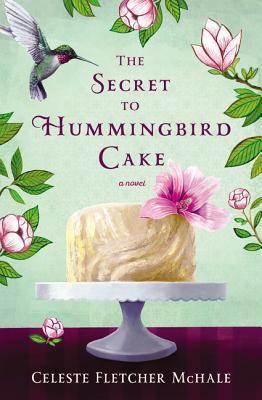
Next, I decided to keep my love of food alive with a book about cake and sisterhood:  The Secret to Hummingbird Cake by Celeste Fletcher McHale.  While I will admit that I liked Garden Spells and The Glass Kitchen better, I enjoyed reading McHale's debut novel--and I absolutely loved getting to know her characters.  I liked Carrigan and I liked Ella Rae for their bravery, sass, and sheer stubborness, but I adored Laine.  She's the impetus of the story, the reason for it all, and, like Carrigan and Ella Rae, I felt an unexpected affection and wonderful kinship with her.  I enjoyed reading their story more than I thought I would.  For a debut novel, The Secret to Hummingbird Cake was pretty great.

352262
Little, Brown Books for
Young Readers
Last but not least, I read a fantasy book featuring dragons with How to Train Your Dragon by Cressida Cowell.  I picked Cowell's novel up because I fell in love with the movie of the same name; however, I was a little disappointed.  Don't get me wrong, I enjoyed reading How to Train Your Dragon.  It's fun, it's inventive, and it's a great series for young readers (I especially liked the Hairy Scary Librarian), but, unfortunately, it's not what I expected.  I made the critical mistake of judging the book in comparison to the movie--and they're two very different creatures.  How to Train Your Dragon the book is very different from How to Train Your Dragon the movie, and it's best not to go into either one with the same expectations.

Saturday, October 22, 2016

Bonus: The Secret to Hummingbird Cake

26893373
Thomas Nelson
The Secret to Hummingbird Cake
Celeste Fletcher McHale
2016

The Summary
"When all else fails, turn to the divine taste of hummingbird cake.

"In the South you always say "yes, ma'am" and "no, ma'am."  You know everybody's business.  Football is a lifestyle not a pastime.  Food--especially desert--is almost a religious experience.  And you protect your friends as fiercely as you protect your family--even if the threat is something you cannot see.

"In this spot-on Southern novel brimming with wit and authenticity, you'll laugh alongside lifelong friends, navigate the sometimes rocky path of marriage, and roll through the outrageous curveballs that life sometimes throws...from devastating pain to absolute joy.  And if you're lucky, you just may discover the secret to hummingbird cake along the way."

The Good
This novel was pretty incredible.  Yes, it felt a little clunky, a little heavy-handed and awkward, but, as first novels go, it was a decent novel with interesting characters and a poignant story that made me tear up a little.  (Okay, a lot.)  It's not as refined as I might have liked and Carrigan has a lot of flaws, which sometimes makes her a story a little difficult to stomach, but, overall, I enjoyed it.

Touching, funny and sweet, The Secret to Hummingbird Cake is laced with tragedy but it doesn't propel the story.  It's real life bundled into a book:  sometimes heartbreaking, sometimes wonderful, but ultimately a lovely representation of human foibles and follies and feelings.

While I can't say I enjoyed it as much as Sarah Addison Allen's Garden Spells or Linda Francis Lee's Glass Kitchen, The Secret to Hummingbird Cake taps the same vein of real-life magic and southern charm that I liked.  Without letting too much of the plot slip, it made me happy, sad, frustrated, ecstatic--the whole spectrum of emotions that comes when you get to know people and grow to love them.

I have friends like Carrigan and Ella Rae--tough, mouthy, but ultimately sweet and doggedly loyal when called to the fray--and I hope to someday befriend someone exactly like Laine, who does the right thing and takes care of her friends and stands up for those who need help.  Heck, I hope to someday be like Laine.  She's a beautiful person, and I couldn't help wishing the world had more people like her.

The Bad
As I pointed out, The Secret to Hummingbird Cake does feel a little awkward.  It's a debut novel, so it felt like the narrative sometimes wavered or grew weak.  Sometimes, it grew saccharine sweet; sometimes, I just couldn't quite believe it.  Overall, it's a wonderful, romantic novel on real life, but it does endure some of the pitfalls of an early novel.

The Ugly
Full disclosure:  I cried at the end of this book.

I don't want to give anything away, because it's worth reading this book to find out what happens to Laine, Carrigan, and Ella Rae, what turmoil they face as they endure the biggest journey of their lives.  But I will admit that it hit way to close to home, and I couldn't help breaking down to cry.

Wednesday, September 2, 2015

The Bible's Cutting Room Floor: The Holy Scriptures Missing from Your Bible

Thomas Dunne Books
The Bible's Cutting Room Floor:  The Holy Scriptures Missing from Your Bible
Dr. Joel M. Hoffman
2014

The Summary
"The bible you usually read is the abridged version.  Some holy writings were left out for political or theological reasons, others simply because of the physical restrictions of ancient bookmaking technology.  At times, the compilers of the bible skipped information that they assumed everyone knew.  Some passages were even omitted by accident.

"In The Bible's Cutting Room Floor, acclaimed author and translator Dr. Joel M. Hoffman gives us the stories and other texts that didn't make it into the Bible, even though they offer penetrating insight into the Bible and its teachings.

"The Book of Genesis tells us about Adam and Eve's time in the Garden of Eden, but not their saga after they get kicked out or the lessons they have for us about good and evil.  The Bible introduces us to Abraham, but it doesn't include the troubling story of his early life, which explains how he came to reject idolatry to become the father of monotheism.  And while there are only 150 Psalms in today's Bible, there used to be many more.

"Dr. Hoffman deftly brings these and other ancient scriptural texts to life, exploring how they offer new answers to some of the most fundamental and universal questions people ask about their lives.  [...]  The Bible's Cutting Room Floor reveals what's missing from your Bible, who left it out, and why it's so important."

The Good
I picked up The Bible's Cutting Room Floor at my local library.  I was intrigued by the premise:  I knew about the various books of the Bible that were sometimes included and sometimes not, but I knew very little about the books themselves - and, worse, I couldn't say why these books were excluded.

Why was the Life of Adam and Eve struck from the record?  Why were the Books of Enoch, which were once so popular, barely recognized in modern religion?  And just how important was John the Baptist to religious history?

Hoffman is an excellent writer - very clear, very precise if a little dry on occasions, but he has a scathing wit that appears every few pages and delivers an unexpected jolt of laughter - and he weaves a great deal of detail into his work.

I can appreciate the depth of detail in The Bible's Cutting Room Floor, looking from the Dead Sea Scrolls to the Septuagint to the modern King James version, comparing and contrasting all the chapters that we sometimes no longer find, gives Hoffman's work an informative edge.  For research or study purposes, The Bible's Cutting Room Floor is an excellent resource.

The Bad
Admittedly, reading Hoffman's book proved to be slow going.  Hoffman provides a thorough examination of the forgotten (and, sometimes, purposefully ignored) books of the Bible, which I enjoyed; however, even in the first few chapters, his narration becomes repetitive.  That is, Hoffman has a very bad habit of rehashing information and repeating what he just said, which I didn't enjoy.

And it was a little dry.  (Very, very dry truthfully.  I was parched for some other reading material in the midst of finishing The Bible's Cutting Room Floor.  I binged on a little light reading after I finished.)

The Ugly
Not all the stories in the Bible are, shall we say, "nice."  There are some stories involving eternal damnation, fallen angels and evil spirits, abject cruelty, penance and failure - and so on and so forth.  It really isn't a pretty picture.

Saturday, April 18, 2015

Unfinished 2.0

Like most bibliophiles (or so I assume), I have a very long list of books that are waiting to be read.  Some books, I can dive right in and devour them; others, I find are a little tougher.  And, if we're being honest, I even have some that I let slip through my fingers because I simply can't find it in my heart to complete them.  Here are just a few of those:

-

HarperCollins
Mere Christianity by C.S. Lewis

Honestly, I've always enjoyed C.S. Lewis.  He was a gifted writer and orator, and he produced phenomenal works of literature.  His writing has always seemed wonderful, beautiful and uncannily inspiring.  Even Mere Christianity has that quality, a beautiful simplicity in which one man attempts not to justify or exonerate his faith but to explain it - to show readers and listeners the most important aspects of his religion.

I have honestly tried to read Mere Christianity.  I have succeeded, in some measure, in completing a handful of the essays contained within it; however, I haven't yet managed to complete the entire compilation.  I love the language of Lewis's work, but I find it relatively dense, manifesting in a theological examination of Christianity that simply doesn't hold my attention for long periods of time.

One day I may finish reading it.  Until then, I intend only to read snippets and relish the best parts I find.

-

1new-fp
Jill Sanders
Finding Pride by Jill Sanders

For me, Finding Pride was unreadable.  I mean, if I'd stayed and focused and worked hard to slog through the remainder of the novel, I probably could have done it.  I just didn't want to for the simple fact that I really, really disliked it.

I couldn't appreciate any of the setting descriptions, I didn't care for the characters, and I found the story a bit trite.  The novel seemed to lack something essential, a special quality that could keep me committed.  It lacked vibrancy, it lacked life.  It was like all the characters were carved from stone, emotionless and cold, and I felt absolutely nothing for them.

Finding Pride didn't appeal to me in the least.  Granted, I read it as an e-book, which could make a difference (or explain the hurried errors that seemed to populate the pages); however, I'm not counting on liking it in any format in which it exists.  I doubt I will ever finish it, not if I have anything to say about it.

-

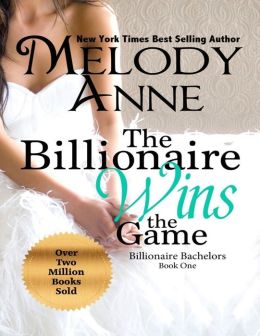
The Billionaire Wins the Game: Billionaire Bachelors - Book One
Lulu Press
The Billionaire Wins the Game by Melody Anne

Let me say, upfront, that I have a bad habit of randomly picking out free e-books on my tablet.  I make some of the worst decisions when it comes to reading material if I'm using an electronic device.  I don't know why, I simply do - and The Billionaire Wins the Game is a stellar example of this.

Not only do the characters feel like caricatures, wavering on a pendulum of extreme emotions, they feel rigid, mechanical.  More to the point, they just feel wrong.  I could never keep track of how they felt, how they were going to feel, and how those emotions would manifest and, before I even reached the middle of the story, I was battling whiplash.

But that isn't even the worst part.  No, I hated the entire interaction between the central protagonists:  the shotgun wedding that occurs as if it's okay to coerce another person into a marriage with veiled threats and poisonous charm, as if its okay to blackmail a woman over the livelihood and custody of her unborn child.

I'll say this now:  It is not okay.  Ever.

And I hated that I was suckered into reading a huge chunk of the novel before I finally gave up, threw it aside (figuratively speaking), and started on something more substantial.  Although I finished a portion of the book (and, yes, I even read the last five pages, because I can't leave any novel without some kind of closure), I will never pick it up again.  Honestly, it wasn't even worth the time I spent to open to the first page.

Sunday, April 12, 2015

The Mercy Seller

The Mercy Seller
St. Martin's Griffin
The Mercy Seller
Brenda Rickman Vantrease
2008

The Summary
"In the fifteenth century, with religious intolerance spreading like wildfire across Europe, Englishwoman Anna Bookman and her grandfather, Finn, earn a living in Prague by illuminating precious books - including forbidden translations of the Bible.  As their secret trade grows ever more hazardous, Finn urges Anna to seek sanctuary in England.  Her passage abroad, however, will be anything but easy.

"Meanwhile, a priest in London, Brother Gabriel, dutifully obeys church doctrine by granting pardons...for a small fee.  But when he is sent to France in disguise to find the source of the banned manuscripts finding their way to England, he meets Anna, who has set up a temporary stall as a bookseller.  She has no way of knowing that the rich merchant frequenting her stall is actually a priest - just as he does not know he has met the woman for whom he will renounce his church.

"It is only in England, which is far from the safe harbor once imagined, that their dangerous secrets will be revealed."

The Good
The Mercy Seller is a fascinating story.  I love the way Brenda Rickman Vantrease portrays the troubling dynamic between the Catholic Church, an entity unto itself in fifteenth century England, and the Lollard movement, which opposed the Church, promoted an individualized relationship with God, and translated the Bible into English (among other increasingly radical things).

I found it emotionally draining, especially when things started to fall apart for Anna, but I thought it interesting to see history take shape on the pages.  Vantrease does an excellent job of showing the political, religious, and social climate of the age.  More importantly, she manages to make it feel personal, makes it easy to invest yourself in the characters.

Speaking of which, I liked Anna and Gabriel.  I liked how their relationship initially shows the opposing views of the Lollards and the Church, how they are at one another's throats.  Furthermore, they're both interesting characters:  headstrong, inquisitive in their purpose and faith, and emotionally complex.

Gabriel, in particular, is subject to such emotional complexity as he struggles with his faith and his once stalwart belief in church doctrine.  I found his evolution as an individual, his shift from questing and questioning to decisive action, particularly intriguing.  Admittedly, his story captivated me more than Anna's.

But I'd be a liar if I said I didn't enjoy the romantic aspect of Anna and Gabriel's relationship.  They have a difficult relationship, yes, but it has its sweet, soft moments too.  It speaks something to the redemptive power of love.  (Cliché, I know.  I was a little sappy toward the end.)

The Bad
Vantrease's novel is a work if historical fiction and, as such, spoilers are easy to come by.  If you have any interest in history - or, heck, if you've ever had a high school class in English history - you can probably predict what will happen.

The Ugly
The Mercy Seller is very much a novel rooted in faith, specifically on the examination of Christian faith and division in the fifteenth century.  These characters, based on historical figures, are motivated by their beliefs to the point of fanaticism.  That fanatical faith frequently makes righteous decisions turn foul, leading to religious and social persecution (among other horrible things).

Dissidents, like Lollards, were often tortured and killed for their difference in faith.  Although The Mercy Seller is fictional, it's based on actual events.  While Anna and Gabriel may not have actually existed, events which they witnessed were unnervingly, startlingly true.

Monday, February 16, 2015

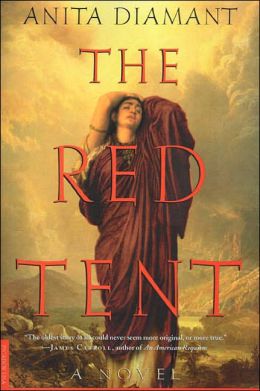
Bonus: The Red Tent

Picador USA
The Red Tent
Anita Diamant
1997

The Summary
In the Book of Genesis, Dinah is a forgotten story.  Except for a brief and bloody chapter, in which Dinah is only mentioned in passing, she never acts or speaks on her own.  She has no story to tell, no history to relate, no memories to share:  she is merely a tool used by her brothers.

Until now.

Now, Dinah has a voice.  Now, Dinah - daughter of Jacob and Leah, sister of Joseph, wife of Shalem - has a story that is uniquely, singularly her own.

The Good
Rich in storytelling and tradition, Anita Diamant weaves a tale that is both provoking and intimate  - and, if I may say so, utterly captivating.  As I described in other posts (read:  In Progress), I found Dinah's story thoroughly engrossing and wonderful.

The Red Tent is beautiful in a way that only books are beautiful:  it is a window to a world we wouldn't otherwise see, it is the culmination of thoughts, ideas, traditions and experiences that weave their way into our lives unexpectedly.  Although Diamant's novel is entirely fictive, there's an element of history and memory that makes it incredibly real.

The Bad
The Red Tent is a heady story.  Without some prior biblical knowledge, Diamant's novel can occasionally be confusing; however, the author does a competent job of explaining and describing enough of the religious and social context to properly flesh out her story and that of Genesis.

The Ugly
From the first page, Dinah alludes to her future, to the tragedies that are sure to come, but when it comes to pass, it's like a thunderbolt - fast, sudden, and agonizing.  Dinah faces loss like she's never known, and it's a heart-wrenching thing to witness.

I should also point out that The Red Tent is not for the faint of heart.  It's a story about memory and tradition, but it's also a story about mankind's faults, child-birth, death and loss.  Dinah does not conceal the truth.  She tells all from her first menstrual cycle to the rituals of womanhood to the trials of childbirth.  Some of it is shocking and some of it is stomach-turning, but it's all a part of her life, which she isn't afraid to lay bare.

Tuesday, February 10, 2015

Postscript: The Red Tent

Picador USA
Upon finishing The Red Tent by Anita Diamant, I discovered a "reading group guide" provided by the publisher, which includes a short paragraph detailing the motivation behind Diamant's The Red Tent:
"The biblical story that pits the two sisters [Leah and Rachel] against one another never sat right with me.  The traditional view of Leah as the ugly and/or spiteful sister, and of Jacob as indifferent to her, seemed odd in light of the fact that the Bible gives them nine children together.  As I re-read Genesis over the years, I settled on the story of Dinah, their daughter.  The drama and her total silence...cried out for explanation, and I decided to imagine one."
Her argument, I think, makes sense.  When observing the relationship between Jacob and his wives, when reading over Dinah's story in the Bible, Diamant's explanation of events in The Red Tent is logical and thoughtful.  She admits that her novel is "not a translation but a work of fiction" and it is a "radical departure from the historical text," but her book, regardless, raises questions about events in the Bible:  what happened to Dinah and her mothers?

As you might expect, The Red Tent begins with Dinah's mothers - Leah, Rachel, Zilpah, and Bilhah - and explains their relationship to one another, to Jacob, and to Dinah.  Considering the evidence (i.e. Leah had eight sons and one daughter by Jacob), Diamant's assertion that Jacob may not have been so indifferent to Leah, that he simply favored Rachel for her beauty and youth, seems plausible.  Their relationships are framed with human interaction, thus they are not easily discounted in my mind.

Additionally, if you compare The Red Tent to Genesis 34, as the reading guide suggests, you see how well Diamant parallels events from the Bible in her novel and, more importantly, breathes life into Dinah's story when she has no voice of her own.  She draws a spotlight to events, proposes questions that suggest her novel has an element of plausibility.

For instance, Shalem (named Shechem in the Bible) falls in love with Dinah and intends to marry her.  Diamant proposes a mutual attraction between Dinah and Shalem, which isn't a far-fetched assertion when you read:  "And his soul clave unto Dinah the daughter of Jacob, and he loved the damsel, and he spake kindly unto the damsel. / And Shechem spake unto his father Hamor, saying, Get me this damsel to wife" (Genesis 34:3-4).

Although the word "defiled" is thrown about, Shalem loved Dinah and he had ever intention to marry her.  More importantly, he agreed to some very strict stipulations to accomplish this, which certainly proves his commitment to Dinah (Genesis 34:11-24).  Could not Dinah have reciprocated, since her father ultimately agreed?

Furthermore, Diamant's characterizations of Simon and Levi as power-hungry, violent, and temperamental are not far off from the mark.  Simon and Levi murder every man in the city of Shechem and, furthermore, pillage and enslave (Genesis 34:25-31).  They are said to treat Shalem and Hamor deceitfully when negotiating marriage, when deciding upon a truce between the families of Hamor and Jacob (Genesis 34:13).

But what happened to Dinah after she was taken from Shechem?

Diamant may certainly have had resources at her disposal that I do not, which may explain how and why she decides to link Dinah to Egypt; however, I suppose the link could be natural.  If Dinah stayed with her family, she would probably be mentioned again.  Since she isn't found again in Genesis (at least, not as far as I've read), she could have made her way to Egypt.  The journey wouldn't be far, as attested by Joseph's appearance in Egypt, thus Dinah could have made the journey.

I do, however, find it interesting that Dinah meets her brother Joseph after so many years of separation from her family.  I like that Diamant does forge a small link back to Dinah's past and, more importantly, allows Dinah to recognize that her name will be remembered in some context:  "The story of Dinah was too terrible to be forgotten.  As long as the memory of Jacob lived, my name would be remembered.  The past had done its worst to me, and I had nothing to fear of the future."

I realize The Red Tent is a work of fiction.  It isn't meant to stand alone as a religious text, despite its link to the Bible, despite the biblical characters that appear in it; however, I also recognize that Diamant certainly did her research in imagining Dinah's story.  As the reading guide points out, "midrash" - an ancient literary form, which investigates or "searches" for answers outside of the typical range of the Bible - was a critical element:
"Historically, the rabbis used this highly imaginative form of storytelling to make sense of the elliptical nature of the Bible - to explain, for example, why Cain killed Abel.  The compressed stories and images in the Bible are rather like photographs.  They don't tell us everything we want or need to know.  Midrash is the story about what happened before and after the photographic flash."
Diamant, in my opinion, successfully combines biblical knowledge, historical fact, and imaginative fiction to create an intriguing and compelling story.

Monday, February 9, 2015

In Progress: The Red Tent (Completed)

Picador Publishing
I have finished reading The Red Tent by Anita Diamant and, let me simply say, I've found it to be one of the most exceptional novels I've read.  So much of this book appealed to me - Dinah's voice, her history, her life - and spoke to my reader's heart.

The Red Tent is a perfect combination of storytelling and history and, more importantly, memory.  In fact, I wouldn't hesitate to say that's one of the most important aspects of Diamant's novel:  memory.

And love.

Leading up to her journey to Egypt, Dinah's life is painfully tragic.  She's witnessed so much death, so much bloodshed, and she's endured so much pain.  However, despite her terrible losses, Dinah manages to survive and she recovers or, more accurately, discovers herself.  She regains love, which she thought lost with her first husband, which she finds with Benia, and she grows into her calling as a midwife.

Although it may sound contrived, love helps her heal.  Love for her son, love for Benia, brings her back from the brink.  Love for her dear friend, Meryt, and love for human life, her power as midwife to save the lives of mothers and children, gives her a renewed purpose.  And she has so much to tell, so much knowledge to share with those who would listen.
 
Earlier in her story, Dinah proclaims:
"You come hungry for the story that was lost.  You crave words to fill the great silence that swallowed me, and my mothers, and my grandmothers before them.  [...]  I am so grateful that you have come.  I will pour out everything inside me so you may leave this table satisfied and fortified."
Indeed, she pours out her story.  She fills that "great silence" with her memories and her knowledge, what she knows to be true and what she will pass to the next generation.  Her story, as I've mentioned in previous posts, is another link in the chain of mothers and daughters.

There's a longevity in the words of Dinah - the words that Diamant has so carefully grafted - and they linger, they live on.  By the end of the book, Dinah has gained a kind of immortality, like the lotus flower she mentions:
"Egypt loved the lotus because it never dies.  It is the same for people who are loved.  Thus can something insignificant as a name - two syllables, one high, one sweet - summon up the innumerable smiles and tears, sighs and dreams of a human life."
You can find a certain poetry in her words that makes them undeniably, irrevocably true.

Sunday, February 8, 2015

In Progress: The Red Tent (Continued)

Picador Publishers
I've nearly finished The Red Tent by Anita Diamant.  So far, I have learned of the fate of Dinah, learned the tragedy of her life and, furthermore, the fate of Shechem.  Oh, it's a hard thing to watch as Dinah's story unfolds and her life seems to unravel.

She continues along her route as storyteller, but her tale is no longer the tale of a young girl growing into her maidenhood but a woman who has suffered loss and endured unspeakable things.  You share her agony, you share her worry and her fear and her sorrow.  You see as she sees that some hope may endure, and you feel as she feels whens he turns her back upon the tribe of Jacob.

It's well and truly heart-breaking.

I still enjoy the familiar treats of Diamant's novel:  Dinah's voice, her strength and her sadness and her character, as she weaves an unfamiliar and intimate story.  It's her voice that continues to capture me, to keep me riveted even after I have had my heart broken with her.

And I've learned to enjoy the traditions of the women of her family.  I like that Dinah upholds the unbroken line of mothers.  I like that she has such a link from mother to daughter and so on and so forth into an indeterminate future.  While I cannot say I understand the traditions of the red tent, the traditions of her mother and her mother's mother, I find Dinah's connection to the past and family a reassuring thought.

Her traditions give her depth.  Her traditions give her purpose.  Her traditions give her hope.

Perhaps, that is why I've enjoyed Dinah and her story so completely.  I realize she is a fictional character, a creation woven from one small mention in another greater text, but I find that doesn't matter.  She's so real and raw, and she has a place.

Some element of Dinah does exist, she perseveres in a strange immortality of the written word.  Fictional or not, Dinah lives and breathes on the page as surely as if she had lived and breathed in the lands of her father or the banks of the Egyptian river.

I continue to love Dinah's story.  I continue to love her voice, her tale of girlhood and womanhood and, finally, motherhood.  I continue to enjoy The Red Tent with unabated ardor, and I have a feeling I will continue to do so.

Saturday, February 7, 2015

In Progress: The Red Tent (Continued)

Image courtesy of Barnes and Noble
I've managed to make it midway through The Red Tent by Anita Diamant.  So far, I'm enjoying the journey.  I love the story that Dinah has to tell; more accurately, I love the way in which she tells it.  Dinah has such a unique perspective, an almost poetic way of telling her story that's absolutely enchanting.

For instance, I love her descriptions of her mother, Leah:  "Leah's scent was no mystery.  She smelled of the yeast she handled daily, brewing and baking.  She reeked of bread and comfort..."  Likewise, her description of Rachel is enchanting:  "Rachel smelled like water.  Really!  Wherever my aunt walked, there was the scent of fresh water.  It was an impossible smell, green and delightful and in those dusty hills the smell of life and wealth."

And, if this makes sense, I like how Diamant manages to make Dinah's analogies realistic, reasonable for its context in the ancient world.  For example, when Dinah describes Bilhah as being good - "good the way milk is good, the way rain is good" - her description makes perfect sense.  Both milk and water were necessary for survival in such a harsh landscape, thus they were good.

Furthermore, I like the way that Dinah explains their beliefs.  Their world is one of gods and spirits and demons, so it's intriguing to see the ways in which Dinah describes her mothers' religious beliefs and her own, as they're shaped by the singular god of Jacob's tribe - El, Jehovah, God - and the multitude of gods of her mothers' tribe.

Their time was not as it is now, in which we have explanations for diseases, mathematics and physics to explain natural phenomenon.  So it's interesting to see how their world works and how they worship their gods, looking to them for explanations.  There are so many cultures and ideals clashing, crashing together to form something entirely unique to Dinah.

And that's what I like about Dinah, I think.  I like that Diamant shapes her character to the fullest extent, taking into consideration her heritage and her upbringing and her environment.  Dinah is truly given a life of her own within the pages of The Red Tent.

Oh, and I found a wonderful passage in my reading:
"The women sang like birds, only more sweetly.  They sounded like the wind in the trees, but louder.  Their voices were like the rush of the river's water, but with meaning.  Then their words cease and they began to sing with sound that meant nothing at all, yet gave new voice to joy, to pleasure, to longing, to peace."
Now, after I started reading The Red Tent, I did a little research on its reception in the literary community.  Diamant's novel has received some very high praise and, nearly 18 years later, has managed to maintain a respectable 4 of 5 stars on most websites which use that sort of rating (Barnes and Noble, Amazon, etc.).  However, I've stumbled across some comments that denounce it for its imperfections and question its accuracy.

The Red Tent is a work of fiction.  It's based on biblical characters about whom we know very little, thus it's hard to say it would be completely accurate.  We have no way of knowing how these people truly lived or worked or worshiped.  We can only guess - and, personally, I think that Diamant does a spectacular job of guessing.

As for the biblical integrity of The Red Tent, I can't really speak to that either, but I feel that Diamant does a decent job of paralleling the story in Genesis.  Complaints that Diamant simply tried to vilify individuals in the Bible, attempted to debase them, are weak at best.

For instance, Jacob, regardless of his exalted position in the Bible, had four wives and he begot several children (twelve, to be precise).  More to the point, I think it important to remember that he's only human.  You can't tell me he didn't have some kind of carnal desires.  Likewise, the Bible is filled with indiscretions.  You don't even have to look out of the first book of the Bible to find that Lot, even unintentionally, impregnates his daughters (Genesis 19), or Tamar tricks her father-in-law into having sex with her (Genesis 38).

The list goes on.

If you're going to say the Bible doesn't include sex and debauchery, murderers and liars and thieves, quintessential sin, you obviously haven't read very far or you've found a sanitized version.  The Bible doesn't conceal humankind's faults.  There's no two ways about it, people are sinners and they are going to do bad things.

Diamant, I think, just isn't afraid to point it out.

Friday, February 6, 2015

In Progress: The Red Tent

The Red Tent
Image courtesy of
I recently picked up a book called The Red Tent by Anita Diamant.  I found a used copy for a bargain after I saw commercials for a serialized television show on Lifetime, a short series by the same name.  I was intrigued, of course, so I thought, "Why not?"

Turns out, I found an unexpected gem.

So far, I've only managed to slip into the first couple of chapters, in which Dinah tells the stories of her mothers, the wives of Jacob, but I have enjoyed this book immensely.  I like the depth and the detail of it, the way it reaches into the past to bring forth a story that I admit, I hadn't realized existed.  It's a riveting story.

And Diamant has given Dinah such a unique voice.  She is a daughter, a mother, a midwife, a caretaker, and a storyteller, and I find that in her is some ancient female wisdom, some link to a history that is sometimes overlooked and often forgotten.  She brings memories back from the brink, gives them life again.  "It is terrible how much as been forgotten, which is why, I suppose, remembering seems a holy thing."

So much of the Old Testament is patriarchal.  Sons become fathers who beget more sons, and so on and so forth in an unbroken line.  Women, however, are fewer and farther in between these great men who appear in the Bible.  I'm not saying there aren't great women, but so many are the mothers or lovers of great men, rather than individuals in their own right.

Dinah holds in her a link from mother to daughter and beyond, a record-keeping of female knowledge and trust and secrets.  From the beginning, her story seems important - feels important, regardless that it's a work of fiction.  She's a storyteller who is ready to lay her life out before you:
"I am so grateful that you have come.  I will pour out everything inside me so you may leave this table satisfied and fortified.  Blessings on your eyes.  Blessings on your children.  Blessings on the ground beneath you.  My heart is a ladle of sweet water, brimming over."
Confidentially, I love it already.

Sunday, May 18, 2014

Under the Cajun Moon

Under The Cajun Moon
Image courtesy of
www.mindystarnsclark.com
Under the Cajun Moon
Mindy Starns Clark
2009

The Summary
When Chloe Ledet, an international expert in business and social etiquette, learns her father has been gravely wounded, she rushes home to New Orleans; however, she becomes embroiled in a police investigation and a dangerous plot that involves murder, buried treasure, and intrigue.

Now on the run with an high school friend, Chloe must evade the police and an anonymous murderer if she wants to stay alive - and uncover the secret her father has kept hidden for more than forty years.

The Good
Although it took some time to really sink into the story, it was intriguing.  I especially enjoyed when the novel veered into the past.  With Under the Cajun Moon, you actually have two perspectives to follow:  Jacques Soleil (his story) and Chloe Ledet (her personal narrative).

It's fascinating to see how the stories change and how they interweave.  At first, I didn't see how the stories even connected.  I mean, you have Jacques who is a goldsmith in 18th century France and Chloe who is an etiquette savvy businesswoman in modern America.  It's difficult to see the link between them, until you realize there's more to the story - and, more importantly, more to the random shooting that injures her father.

I also enjoyed the descriptions within Mindy Clark's novel.  The details afford to New Orleans and the surrounding areas really gives the reader a feel for the environment and, more to the point, the challenges which Chloe will face in her search.

The Bad
To be perfectly honest, I struggled a bit reconciling the religious undertone of Chloe's story - she does indeed go through a crisis of faith during the course of her story - and the sense of suspense and adventure as she and Travis Naquin go in search of buried treasure.

I have no problem with the addition of faith, merely how it appeared to pop up abruptly (at least to me) in the middle of what I assumed was an action-adventure tale of buried treasure and romance.  I mean, I suppose I imagined something along the lines of Indian Jones-esque adventure - you know, an unexpected and reluctant hero thrown into tough situations - rather than the tame, semi-religious novel I received.

I'm not bashing Clark's work.  It's a good novel with solid development and enjoyable characters.  However, I'm simply pointing out it wasn't quite what I expected - although I suppose I should have taken the hint when I read the back cover:  "[Clark] offers another exciting standalone novel, one full of Cajun mystery...and the glow of God's unending grace."

Yeah.  In retrospect, that should have been a dead giveaway.

The Ugly
Murder.  Big thing right there.

Otherwise, Under the Cajun Moon is pretty tame.

Friday, March 7, 2014

Can I Get an Amen?

Can I Get An Amen?
Image courtesy of
www.sarah-healy.com
Can I Get an Amen?
Sarah Healy
2012

The Summary
Filled with both tragedy and comedy, Sarah Healy's novel tells the story of Ellen Carlisle - a recently divorced former career-woman struggling to get her life back on track and deal with her infertility and growing despair - and her family as they all struggle to acclimate with changing circumstances and familial rifts.

Although Can I Get an Amen? deals with the question of religion, it isn't about finding religion or becoming a born-again Christian.  It's about coming to terms with the flaws of family and the looming questions about faith, love, and life.

The Good
Ellen is a witty and charismatic narrator, a relatable character with understandable problems and conventional wisdom, but she's also damaged, flawed, and, on occasion, mistaken.  She provides Can I Get an Amen? with an emotional depth and distinctly human voice that makes Healy's novel incredibly appealing on a personal level.

In general, Healy also presents a concise and well-written story with an appropriate amount of suspense, a touch of tragedy, a helping of romance, and a cast of enjoyable characters.

Can I Get an Amen? is also a fulfilling novel.  Although we aren't exactly told what happens with the rest of Ellen's life once we reach the final chapter, it's difficult to leave Ellen's story and not feel a bit optimistic.

The Bad
In Healy's novel, you'll find some strong language and "mature themes."  Grief, infertility, and attempted suicide come to mind; teen pregnancy and abortion, too.

You'll find nothing gratuitously graphic in Can I Get an Amen?, but you'll be confronted by topics that are sometimes difficult to face.  Topics that leave Ellen wanting to run away - and, sometimes, you can't help but want to join her.

The Ugly
Perhaps one of the ugliest elements of this book is the faint traces of tragedy that link this family.  In general, it's difficult to watch these characters - these people so easy to understand and relate to - simply sweep trouble under the rug, hide from scandal at the expense of their loved ones, and, in general make the usual mistakes that human beings tend to make over the course of a lifetime.

And reconciliation may not be an option.

Tuesday, January 15, 2013

A Light in the Window

Image courtesy of
www.booksamillion.com
A Light in the Window
Jan Karon
1995

The Summary
Jan Karon's second novel, A Light in the Window, continues to follow the life of the kind, quiet Episcolpalian priest, Father Tim Cavanaugh, as he acclimates to his new life with Dooley Barlowe, a dog named Barnabas, and diabetes.

Moreover, the novel highlights the growth of the tiny mountain town of Mitford and the budding romance between Father Tim and his delightfully quirky neighbor, Cynthia Coppersmith.

The Good
Karon's novel follows in the same vein as her previous novel, At Home in Mitford, by emphasizing the uncommon good of common people.  Granted, life for Father Tim is far from being full of sunshine and bowls of cherries, but he remains stalwart and good - a Godly man with a good conscience and a good heart.

And you almost can't help getting involved in his life and the lives of the sometimes crazy, sometimes maddening people of Mitford.

More importantly, the novel is easy and entertaining.  It's enjoyable for its simplicity of style and language, and it's a feel-good story that leaves you with a lingering sense of happiness.

The Bad
Here and there, Mitford can get a little dull.  But it's real life.  It can't always be a thrill a minute.

The Ugly
In this go round, Karon's novel becomes a little more gritty and unpleasant.  Well, not so much unpleasant as more attuned to the rougher aspects of life.  The episodes with Buck Leeper, a construction worker now inhabiting Mitford, prove a point that not all people have lived happy lives.

Oh, and Father Tim has a few unpleasant run-ins with the newly widowed Edith Mallory.  (One word, "man-eater.")