"All good books are alike in that they are truer than if they had really happened
and after you are finished reading one you will feel that all that happened to you
and afterwards it all belongs to you; the good and the bad, the ecstasy, the remorse,
and sorrow, the people and the places and how the weather was."
Ernest Hemingway
Showing posts with label Mars. Show all posts

Friday, May 19, 2017

Read Harder Challenge 2017: Part 4

This month, I finished a few more challenges, including:
  • Read a book by an immigrant or with a central immigration narrative.
  • Read a book published between 1900 and 1950.
  • Read a collection of poetry in translation on a theme other than love.

American Street
Balzer + Bray
First up, I read American Street by Ibi Zoboi, which follows Fabiola as she adjusts to life in America with her rowdy cousins and her reclusive aunt.  When she arrives in Detroit, she is confronted by a terrible crossroads that will change her life and haunt her as she goes in pursuit of the American Dream.  A fascinating inspection into the immigrant experience, American Street  was made all the more compelling by the fact that the author, like Fabiola, was emigrated from Haiti when she was only a child.

Overall, I liked American Street.  It's a good, solid book with interesting characters, a wonderful narrator, and a heart-wrenching story.  However, I often found myself divided, because I both loved and hated this book.  It inspired a lot of emotions, not all of them good, but it also made me think and it made me feel and it compelled me to read on through Fabiola's story even when I felt my interest waning.

But, most of all, I loved the hints of magical realism seeded throughout the story.  Fabiola has very strong beliefs and she particularly believes in the ilwas of Vodou, which adds a layer of mystery, a thin veil of magic that enriches her story.  You don't really discover if Bad Leg is really Papa Legba, or if he really is just some junkie off the street, like Fabiola's cousins say, but it's that uncertainty that imbues a certain strength in Fabiola's belief and offers uncommon insight into the landscape of Vodou.

John Carter of Mars (Barnes & Noble Collectible Editions): The First Five Novels
Barnes and Noble
Next, I conquered A Princess of Mars by Edgar Rice Burroughs, who also happens to be author of Tarzan of the Apes.  I picked up A Princess of Mars because I had it on my shelf and, more to the point, it seemed like an acceptable escape from reality; however, I wasn't always enchanted with the story.  I mean, it was really just mindless fun.

Originally serialized in 1912, A Princess of Mars is the first of many novels of the Barsoom Chronicles penned by Burroughs.  It follows John Carter, a former military man from Virginia, who finds himself ambushed in Arizona--and transported to a different world.  Mars (known as Barsoom to the native peoples) is a seemingly desolate land populated with dangerous creatures and war-like citizens, and Carter must find a way to survive if he eventually hopes to return to his home world.

For much of the story, it's really just Carter being really impressive with his super-strength and incredible agility and uncanny ability to learn languages--that is, unless he's rescuing the damsel in distress or endearing himself to the local wildlife.  Something interesting or incredible usually happens at the end of every chapter, so it's a bit of a page turner when Carter isn't boring you with facts that are obviously wrong or making you laugh with physics that could obviously never happen.

24601
New Directions
Last, I checked out Paris Spleen by Charles Baudelaire.  Paris Spleen is a short collection of poetry originally written in French in 1896 by Charles Baudelaire--and none of his poems are about love.  I found it exceedingly difficult to find a collection of poetry that didn't talk about love, because everyone likes to talk about love and relationships and affection.  They're warm, fuzzy feelings to which everyone can relate.

But Baudelaire doesn't base his poetry on warm, fuzzy feelings; instead, he examines a darker side of human life.  He looks at the every day pleasures of intoxicating drink, sensuous women, and fine art; however, he also shines a lot on oppression, city squalor, mistreatment, malice.  His work couldn't be farther from warm, fuzzy feelings, like love.

It worked for my Read Harder Challenge, but, I will admit, it's definitely an acquired taste.  Baudelaire is really something else.

Monday, January 23, 2017

Packing for Mars

Packing for Mars: The Curious Science of Life in the Void
W.W. Norton & Company
Packing for Mars
Mary Roach
2010

The Summary
"Space is a world devoid of the things we need to live and thrive:  air, gravity, hot showers, fresh produce, privacy, beer.  Space exploration is in some ways an exploration of what it means to be human.  How much can a person give up?  How much weirdness can they take?  What happens when you can't walk for a year?  have sex?  smell flowers?  What happens if you vomit in your helmet during a spacewalk?  Is it possible for the human body to survive a bailout from space?  To answer these questions, space agencies set up all manner of quizzical and startlingly bizarre space simulations.  As Mary Roach discovers, it's possible to preview space without ever leaving Earth.  From the Space Shuttle training toilet to a crash test of NASA's new space capsule (cadaver filling in for astronaut), Roach takes us on a surreally entertaining trip into the science of life in space and space on Earth."

The Good
After hearing about Mary Roach's book through the reader grapevine, I was absolutely fascinated by the idea of space travel to Mars.  Since I fell in love with The Martian by Andy Weir, I've been intrigued by Mars and outer space more than ever.  (That's part of the reason I slogged through How to Read the Solar System--and, you know, why I've been so inexplicably excited to start on John Carter of Mars.)

And I wasn't disappointed.

Packing for Mars is a fun and insightful science book.  Truthfully, it reminds me of Bill Nye:  humorous, but informative.  Roach makes science approachable and, dare I say it, fun.  Her writing is easy to read, yet she doesn't compromise facts or treat her reader as a big dummy for not understanding the intricacies of space.  Moreover, it gives you answers to questions that you never even knew you had.

Want to know what happens to a fuse when it's shot into space?  (Answer:  If a fuse blows in space, it fries everything; it's why they had to invent the transistor.)  Want to know what happens if you lay in bed for days on end with very little movement?  Want to know what happens to the human body when it meets lower-than-normal gravity?  Roach has answers to all these questions and more, and she does it with some highly humorous musings.

Overall, I found to Packing for Mars to be highly informative, incredibly rewarding--and lots of fun.

The Bad
I admit, I did sometimes lose interest in Packing for Mars.  Sometimes, I just wasn't interested in the subjects and I couldn't keep my mind focused enough on the trials and tribulations of animal test flights, or some other such thing; however, I think that's more my failing, rather than some grievous fault with Roach's book.

The Ugly
Porn.  In space.

For some reason, I was perturbed by the entire concept.  It bothered me, more than I'd like to admit, and I found myself in for some highly awkward reading.

Saturday, May 21, 2016

Read Harder Challenge (Part Four)

I have three more books to add to my list for the Read Harder Challenge:
  1. Read a nonfiction book about science.
  2. Read a book originally published in the decade you were born.
  3. Read a book with a main character that has a mental illness.
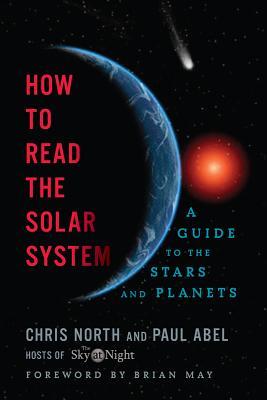
First on my list is How to Read the Solar System:  A Guide to the Stars and Planets by Chris North and Paul Abel, who host The Sky at Night on BBC.  I'm actually really glad I finished this book, because it offered me insight into the solar system that I certainly didn't have prior to reading North and Abel's book.  While it is a bit dry and quite dense, I should point out that How to Read the Solar System is not a bad book.
22488004
Pegasus Books
I mean, I was sometimes very bored when the authors went into great detail about indicating how amateur astronomers should find a specific location in space--like how to find a particular moon by Jupiter, or which filter to use use in order to observe the sun (helpful, if I understood where one might find such filters.  Or if my telescope worked properly), or pinpointing the exact degree to which one might adjust a telescope to find Venus--and I found myself losing interest.  Quickly.

I'm not saying it wasn't a good book.  I learned something interesting about each of the planets and the different heavenly bodies that inhabit space, which was an important aspect of reading this book.  For instance, I learned that Io, one of Jupiter's dozens of moons, has tectonic activity (specifically cryovolcanic activity, since it's an icy wasteland); sound waves travel faster through plasma, which gives scientists the opportunity to measure the internal activity of the sun (since it's made up of plasma); and meteor showers are essentially the debris left behind by comets, like a dust storm that the Earth passes through during its orbit.

I enjoyed actually learning something new, even if it's not quite as useful as one might hope.  Like I said, it's not a bad book.  Just a little dry and dense and, dare I say it, pedantic.  It's not something I would read twice, but it's a vast well of information that's sure to hold appeal for readers who greatly enjoy science, astronomy, technology, and even mathematics.  It's definitely worth checking out, especially if you're curious about the solar system and the explorations humankind has made.  More importantly, it gets a point in my book for having an index, so I was able to easily look up the most intriguing bits of information.

Next, I looked at The Professor and the Madman by Simon Winchester, which was more in line with my purview.  Titled The Surgeon of Crowthorne when it was originally published in Britain, Winchester's book underwent a slight change when it migrated over to the United States, becoming The Professor and the Madman--which was accompanied by the glorious subtitle, A Tale of Murder, Insanity, and the Making of the Oxford English Dictionary.  I mean, how could I not be the tiniest bit enticed?

25019
HarperPerenial
The Professor and the Madman is a story about the formation of the Oxford English Dictionary (OED), specifically one of the most prolific contributors in its history:  Dr. William Minor.  Minor was an American surgeon during the Civil War, who was eventually convicted of murder and put into a sanitarium; however, during his stint at Broadmoor Criminal Lunatic Asylum, he stumbled across a call for contributors to the dictionary.  Contacting Professor James Murray, who oversaw the entire project, he began to offer definitions for the OED and sent thousands of papers slips to Oxford, before his death in 1920.

As crazy as it might seem, it's all very true.

Like Erik Larson--who has written Devil in the White City, Dead Wake, and Thunderstuck--Winchester has a narrative quality to his work that makes it appealing without compromising the facts.  Winchester pulls from a variety of resources, including medical documents from Broadmoor (an infamous mental institution for the criminally insane in Crowthorne), correspondence between Professor Murray and Dr. Minor and other important individuals, as well as historical texts.  He uses information to benefit the story, supplying an electrifying narrative and, simultaneously, feeding his readers the true and unaltered facts.  It's all very, very good.

As for my final book, I read The Lives They Left Behind:  Suitcases from a State Hospital Attic by Darby Penney and Peter Stastny.  Although I suspect this final category--which recommends reading a book with a main character who has a mental illness--is referring to a fictional novel rather than a nonfiction narrative, I decided to run with the ambiguous wording and read something not about one character with mental illness, but ten.

The Lives They Left Behind explores the lives of Willard State Hospital patients who were admitted to the hospital during the late 19th and 20th centuries.  Penney and Stastny provides an in-depth look at some of the permanent residents at Willard, as well as offers a glimpse at the big picture of mental/psychiatric care during its formative years.  The book also provides photographs and illustrations that further illuminate the care patients received, and what sort of trials they went through with (or, in some cases, without) mental illness.
3322978
Bellevue Literary Press

Altogether, I found it to be a fascinating book.  It's an examination of psychiatric care that provides statistics, which can prove a bit dull, but it also connects on an emotional level and delivers nuggets of truth that are sometimes like a punch in the gut.  It's a tough read sometimes.  For instance, I had a hard time reading about the electroshock therapy that often caused patients to have convulsions, or the medications that were prescribed that often did more harm that good--or, worse, how some patients were treated even if they didn't suffer from a psychiatric disease.

Patients, like Ethel Smalls or Margaret Dunleavy, were most likely suffering from other conditions rather than mental disorder.  Ethel Smalls likely suffered from PTSD after losing her children and being on the opposite end of her husband's temper, enduring years of abuse that left her in a fragile state.  Likewise, Margaret Dunleavy was hospitalized after an uncharacteristic outburst due to a personal tragedy and chronic pain.  Neither woman displayed the usual characteristics of mental disorder, rather they were hospitalized because they were inconvenient.  It's a heartbreaking fact behind the stories of many patients.

Thursday, May 5, 2016

How to Read the Solar System: A Guide to the Stars and the Planets

22488004
Pegasus Books
How to Read the Solar System:  A Guide to the Stars and the Planets
Chris North
Paul Abel
2014

The Summary
"What exactly is the solar system?  We've learned the basics at school, but do we really understand what we are seeing in the night sky?  Expert astronomers Chris North and Paul Abel provide a fascinating guided tour of our solar system and explain its many wonders.

"They at all the major players including our more familiar cosmic neighbors--the sun, the planets, and their moons--as well as the occasional visitors to our planet--asteroids, meteors, and comets--in addition to the distant stars and what might lie beyond our solar system, including the mysterious Earth Mark II.  North and Abel recount the history of how our solar system came to be and decipher the myths that once shaped our astronomy.

"Through their cogent explanations of the latest scientific discoveries, they reveal how any amateur astronomer can view and interpret the solar system and enrich their understanding of our universe."

The Good
I'm actually really glad I finished How to Read the Solar System, because it offered me insight into the solar system that I certainly didn't have prior to reading North and Abel's book.  While it is a bit dry and quite dense, I should point out that it's not a bad book.

I learned something interesting about each of the planets and a whole assortment of facts about dwarf planets, the Sun, comets and asteroids, and more, which was one of the most important aspects of reading this book.

For instance, I learned that Io, one of Jupiter's many moons, has boasted volcanic activity (specifically cryovolcanic activity, since it's an icy wasteland); sound waves travel faster through plasma, which gives scientists the opportunity to measure the internal activity of the sun (since it's made up primarily of plasma); and meteor showers are essentially the debris left behind by commets, like a dust storm that the Earth passes through during its orbit.  It's fascinating, really.

While How to Read the Solar System isn't a book I would read twice, it's a vast well of information that's sure to hold appeal for readers who greatly enjoy science, astronomy, technology, and even mathematics.  It's definitely worth checking out, especially if you're curious about the solar system and the explorations humankind has made into space thus far.

More importantly, it gets an added bonus point in my book for having an index.  I was able to easily look up the most intriguing bits of information if I didn't feel like skimming.

The Bad
I will admit, I was sometimes bored with this book.  Like terribly bored, so bored that when I read it at night I fell asleep within a few minutes.  Don't get me wrong, it's not a bad book by any means, but I simply lost interest when the authors went into too great a detail.

Like when they explained how amateur astronomers should find a specific location in space, like how to find a particular moon by Jupiter, or which filter to use use in order to observe the sun (helpful, if I understood where one might find such filters.  Or if my telescope worked properly), or pinpointing the exact degree to which one might adjust a telescope to find Venus.

I'll be honest, if it didn't directly link to me in some way, I found myself losing interest.  Quickly.

The Ugly
I wish How to Read the Solar System had had more pictures and photographs to share.  I would have loved some full color photos from the universe, depicting images from deep in space or shots of auroras or pictures of the planets and the Sun.  It was a little dull without them.

Saturday, September 26, 2015

The Martian

The Martian 2014.jpg
Broadway Books
The Martian
Andy Weir
2011

The Summary
"Six days ago astronaut Mark Watney became one of the first people to walk on Mars.

"Now he's sure he'll be the first person to die there.

"After a dust storm forces his crew to evacuate the planet while thinking him dead, Mark finds himself stranded on Mars's surface, with no way to signal Earth that he's alive.  And even if he could get word out, his supplies would be gone years before a rescue could arrive.

"Chances are, though, Mark won't have time to starve to death.  The damaged machinery, unforgiving environment, or plain old "human error" are much more likely to kill him first.

"Armed with nothing but his ingenuity, his engineering skills - and a gallows sense of humor that proves to be his greatest strength - Mark embarks on a dogged quest to stay alive.  But will his resourcefulness be enough to overcome the impossible odds against him?"

The Good
I loved The Martian.

I am not the most avid fan of science-fiction.  I mean, I've really enjoyed the Lunar Chronicles by Marissa Meyer (see:  Cinder), I like H.G. Wells, and I'm quite a fan for alternate universes and post-apocalyptic thrillers; however, I don't read much in the way of science-fiction.  (The sheer number of labels I've used to designate "fantasy" will tell you that.)  But I absolutely loved reading Andy Weir's novel.

Weir puts so much detail into his work:  he gives you maps of real locations on Mars, he uses jargon and real theoretical physics, he explains chemical reactions (being unafraid to throw a little chemistry into the mix), and, in general, he makes a hypothetical trip to the Martian surface seem like a legitimate venture.  Events, as they unfold, seem incredibly real and believable, like this could really happen - Mark Watney could really exist!  As quoted from the expanded edition, which features a small essay in the back:
"A castaway story for the new millennium, The Martian presents a fresh take on the classic man-versus-nature battle for survival by setting it on the surface of Mars - a planet completely hostile to sustaining human life.  Yet debut novelist and self-proclaimed space nerd Andy Weir manages to make every moment of astronaut Mark Watney's outer-space ordeal painstakingly realistic and believable. 
"At its heart, The Martian is a tale of survival of the geekiest.  Mark's scientific ingenuity, his radically inventive botanical solution to starvation, his ability to address seemingly insurmountable problems with rationality and practicality, his sanity-saving sense of humor, and his understated bravery become a moving testament to the human spirit.  When the ground team at NASA and his crew discover he is alive, their commitment to rescuing one man against all odds likewise speaks to humanity's deeply rooted sense of connection."
This is exactly how I felt about Weir's novel:  I absolutely loved it.

I loved reading Mark's log entries.  I loved having a glimpse into events on Earth.  And I especially loved the interludes that included his crew mates.  I loved the entire story, how it weaved together the narratives of many different individuals and combined scientific fact and theory to create a seamlessly blended story that kept me captivated from cover to cover.

The Bad
Mark Watney has a bit of a foul mouth (as do most of the other characters), but I can certainly understand why.  I mean, he's stuck on Mars - alone, by the way - with no way to communicate with his crew or ground control back on Earth, and he has a limited supply of food, water, air, shelter, and time if he wants to survive long enough for rescue.

When he says, "I'm pretty much fucked," I feel I can forgive him his strong language because, let's be honest here, he kind of is.

The Ugly
Survival can get pretty ugly, especially when you're trapped in space with limited supplies and nowhere to go.  If you think Mark has it rough, imagine his crew members if they get stuck in space without any advanced supplies.  I don't even want to imagine the desperate measures to which they would resort.

I'll just leave it at that.  I don't want to spoil any surprises.