"All good books are alike in that they are truer than if they had really happened
and after you are finished reading one you will feel that all that happened to you
and afterwards it all belongs to you; the good and the bad, the ecstasy, the remorse,
and sorrow, the people and the places and how the weather was."
Ernest Hemingway
Showing posts with label Essays. Show all posts

Friday, April 28, 2017

A Room of One's Own

340793
Mariner
A Room of One's Own
Virginia Woolf
1929

The Summary
"In A Room of One's Own, Virginia Woolf imagines that Shakespeare had a sister.  A sister equal to Shakespeare in talent, and equal in genius, but whose legacy is radically different.  This imaginary woman never writes a word and dies by her own hand, her genius unexpressed.  If only she had found the means to create, argues Woolf, she would have reached the same heights as her immortal sibling.  In this classic essay, Virginia Woolf takes on the establishment, using her gift of language to dissect the world around her and give voice to those who are without.  Her message is a simple one:  women must have some money and a room of their own in order to have the freedom to create."

The Good
After completely reading A Room of One's Own, I can see why it is essential reading for many literature courses.  Woolf's work is insightful, thoughtful and, more importantly, it makes a very good point about the history of women in the arts.  It's a call to action, a call for equality when women were not expected to be seen or heard or expected to do anything other than marry, bear children, and keep house.

It's inflammatory, grounded in examples from history and insight into the female mind.  It's beautiful, but sharp, filled with words that are meant to make a difference--that are meant to bring blood, to make a point.  And yet it is ultimately uplifting.

I think that perhaps my favorite lines come from the very end of Woolf's essay, when she tells her readers that women can become writers and poets and artists and creators.  It's possible, it's a promise:
"[Then] the opportunity will come and the dead poet who was Shakespeare's sister will put on the body which she has so often laid down.  Drawing her life from the lives of the unknown who were her forerunners, as her brother did before her, she will be born.  As for her coming without that preparation, without that effort on our part, without that determination that when she is born again she shall find it possible to live and write her poetry, that we cannot expect, for that would be impossible.  But I maintain that she would come if we worked for her, and that so to work, even in poverty and obscurity, is worth while."

I love that line.

The Bad
Personally, I struggled with A Room of One's Own.  This isn't an essay to be read in a day; rather, it's to be savored and consumed in small pieces, reread and examined with highlighter or pen in hand.  It's a wonderful book for discussion and, I found, better understood when examined with more than one mind.

The Ugly
Although Woolf fabricates the incident with Shakespeare's sister (he did have sisters, but as far as I have heard, none of them were artistically inclined), her example isn't very far off the mark.  Women who have wanted to create, who wanted to be authors or poets or playwrights or artists, have suffered or were condemned for their genius.

As Virginia Woolf points out, "The indifference of the world which Keats and Flaubert and other me of genius have found so hard to bear was in her case not indifference but hostility.  The world did not say to her as it said to them, Write if you choose; it makes no difference to me.  The world said with a guffaw, Write?  What's the good of your writing?"
Saturday, December 31, 2016

Read Harder Challenge (Part Eight)

This week, I'm just barely eking by with my Read Harder Challenge.  After reading these last books, I have officially finished my list:
  1. Read a book that is set in the Middle East
  2. Read a nonfiction book about feminism or dealing with feminist themes
  3. Read a food memoir
Little, Brown and Co.
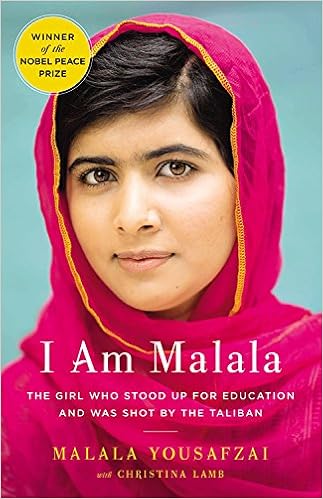
To start off, I finally finished reading I Am Malala by Malala Yousafzai.  It only took my 6 months, but I finished it and, honestly, I'm glad I did.  It's a fascinating story that's both heartbreaking and incredibly informative, offering insight into the various cultures and relations of Afghanistan.  Although her story is grim, it's simultaneously uplifting.  Personally, I enjoyed reading about her and her father's endeavors to bring education to local children--and particularly to the young women of the community.

Malala is a skilled narrator.  She's bright, she's hopeful, she's very detailed and she's very intelligent.  Although her book is a translation, which is sometimes apparent, I felt like I could read and relate to her feelings.  She does a fine job of connecting to her readers, detailing her thoughts and feelings--and making her voice heard.  She makes a compelling argument for education, for giving women equal education opportunities.  Truthfully, you can see why Malala Yousafzai is a Nobel Prize Laureate.

I also had the opportunity to read a short (and rather famous) essay by Virginia Woolf:  A Room of One's Own.  As an avid reader and, ahem, English major in college, you would think I'd have taken the opportunity to read A Room of One's Own, but, until this year, I had yet to make more than a cursory acquaintance with Woolf's work.  Unfortunately, I wasn't enamored by her essay.

Image result
Harcourt Inc.
A Room of One's Own makes some very valid points.  It's important to read and, after reading it, it's something that all young women should have a chance to read at least once in their life.  However, I had a hard time reading Woolf's essay, because I just couldn't seem to focus on one thing before it jumped to another.  For instance, in the first few pages when Woolf described Oxbridge and her experiences at the esteemed university, I thought it took quite a long time to get to the point--and, confidentially, I found myself growing a little bored as I waited for her to come to a conclusion.  Not that her writing is bad, mind you; I just struggled to stay committed given her style of writing, so I'm not sure if that's so much her failing as my own.

The point is, I finished reading A Room of One's Own and I have a new appreciation for Woolf.  She's a talented writer, but, personally, I'm not so sure she's the writer for me.  I appreciate her work and I appreciate the significance of her essay, but I don't think she's the one and only feminist writer for me.

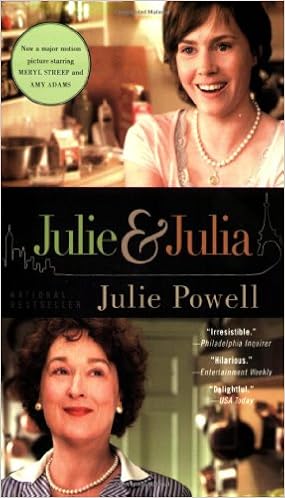
Last but not least, I read Julie and Julia by Julie Powell.  It's riotously funny, yet strangely poignant.  Oddly enough, it reminds me of Jenny Lawson and her memoir, Furiously Happy--yet just a tiny bit less chaotic.  Not by much, considering Julie Powell undertakes to make 524 different recipes, many of which take hours to prepare, in just one year in a crappy little apartment in Queens.  It's astonishing the things she (and her marriage) manages to survive, including:  biological clocks, frozen pipes, disastrous dinner parties, inane dead end secretarial jobs, break downs, Blanche days, and celebrity crushes.

Hatchette Books
It's really a pretty amusing book, especially if you decide to listen to it as read by the author (which I did); however, it's not quite the food memoir I expected.  In fact, Julie and Julia is more memoir than food.  Julie is hellbent on recreating all of Julia Child's recipes in Mastering the Art of French Cooking, vol. 1 and, in her journey, she learns how to make a variety of dishes and confronts some of the most trying times of her life.  While it features a lot of cooking, Julie and Julia feels like it's more about the experiences of cooking and the results, specifically what happens to the author as she slogs through more than 500 French recipes, than the actual cooking, but I can't say I minded.

Julie and Julia is strangely heartwarming and incredibly amusing.  To me, it strikes just the right balance that makes it a memoir worth reading, especially if you have the chance to listen to the author tell her own story.  It makes it memorable.  However, I will note that while I was listening to the audiobook I discovered I borrowed the abridged version.  I don't know if the audiobook had the full text, but I do know I missed a few things that might otherwise have filled in details or fleshed out the characters involved.  It was my only disappointment in an otherwise wonderful book.

Tuesday, October 4, 2016

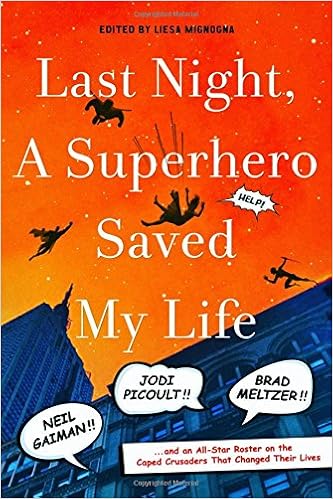
Last Night, A Superhero Saved My Life

Thomas Dunne Books
Last Night, A Superhero Saved My Life
Liesa Mignongna, ed.
2016

The Summary
"As broad as our growing cultural obsession with caped crusaders is, it runs just as deep.  Liesa Mignongna, the editorial director at Simon Pulse and editor of this anthology, can expound upon the irresistible appeal of Batman (her wedding was even Batman themed), but it's the retelling of her harrowing yet inspiring encounters with the Dark Knight over the years as she struggled to coexist with the supervillains in her own family that birthed this collection.

"Last Night, A Superhero Saved My Life gives readers the chance to connect to their favorite authors while those authors connect to their favorite superheroes, and within that feedback loop of respect and admiration lies a stellar, wonderfully accessible anthology full of thrills, chills, and spills.

"Contributors include New York Times best-sellers Christopher Golden, Leigh Bardugo, Brad Meltzer, Neil Gaiman, Carrie Vaughn, Jodi Picoult, and Jamie Ford, as well as award winners and mainstays like Joe R. Lansdale, Austin Grossman, and Ron Currie Jr., among many others.  Last Night, A Superhero Saved My Life is sure to follow in the footsteps of Grant Morrison's Supergods as its authors explore--with hilarious and heart-wrenching candor--why superheroes matter, what they tell us about who we are, and what they mean for our future."

The Good
I absolutely loved this book.  A collection of essays by today's most popular authors, journalists, and writers, Last Night, A Superhero Saved My Life was a wonderful study on superheroes and the impact they've had on readers and culture.  I know that makes it sound a bit dull, but it's not.  It's heart-wrenching and humorous and introspective and bursting with bright neon spandex colors.

It's a great book that's not beholden to one style or story.  Last Night, A Superhero Saved My Life compiles the work from the best of today's creative minds, drawing together exceptional stories and experiences with illustrations to create a work equally poignant and funny.

I loved these stories.  They were deeply personal and incredibly moving, beautiful for their candid commentary on human experience--and how comic book superheroes helped to get them through, helped shape their lives.  I actually had a handful of essays that I adored:
  • On the Hulk:  You Wouldn't Like Me When I'm Angry by Delilah S. Dawson
  • Dented Hearts:  A Story of Iron Man by Anthony Breznican
  • Everything I Know About Love, I Learned from Gambit and Rogue by Karina Cooper
  • You Never Forget Your First Time by Neil Gaiman
  • We Are Not Amazons by Leigh Bardugo
  • Superman:  One Rad Dude by Jim Di Bartolo
  • Swashbuckle My Heart:  An Ode to Nightcrawler by Jenn Reese
But, if I had to pick just one, it would probably be "Dented Hearts:  A Story of Iron Man" by Anthony Breznican.  It's a tough choice, especially since I loved Leigh Bardugo's essay, "We Are Not Amazons," for her frank discussion on female body image and cultural expectations, and Jim Di Bartolo's illustrated discourse on the importance of Superman; however, I was entirely smitten with Breznican's essay.

"Dented Hearts" was like a kick in the chest.  It took me by surprise, it broke my heart, and yet it's probably one of the most memorable essays I read.  It's an honest depiction of grief and turmoil, love and happiness and sibling relationships; it's a candid account of loss tinted with memory, affection, and a mutual love of superheroes.

I loved it.

Admittedly, I might be a little biased since I'm an avid reader and I've been on a superhero comic kick since May; however, Last Night, A Superhero Saved My Life is a brilliant compilation by exceptional authors, about incredible characters that have entertained and shaped readers for decades.  It's an excellent book, regardless if you're a fan of superheroes.

The Bad
No complaints.

The Ugly
Life is not all cherry pies and blue skies.  Even heroes are faced with defeat--even heroes suffer tragedy.

Saturday, September 10, 2016

Unfinished #5

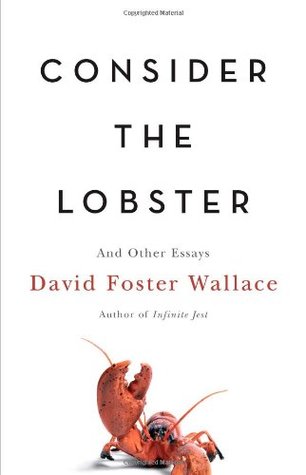
Consider the Lobster by David Foster Wallace was not a fun book for me.  I originally picked up Wallace's collection of essays as part of the Read Harder Challenge for Book Riot.  I couldn't help but be intrigued by the title, and I thought it seemed like an interesting thing to pick up; however, I quickly regretted my decision.
6751
Little, Brown & Co.

Dense and verbose, Consider the Lobster was an ill fit for me for the simple fact that it was not that interesting and Wallace has a lot to say.  I'm sure Wallace had a point to make and, perhaps, others may enjoy his style of writing, but I couldn't find it in myself to enjoy much of what I was reading.  He has an interesting sense of humor, which I didn't mind, but I wasn't entirely sold on the subject matter--or the never-ending foot notes.

The first essay is about the porn industry.  Yes, you heard me:  porn.

I was a little flummoxed as I started to read and, if I'm being honest, partially horrified.  I wouldn't say I'm a prude, but I would be lying if I said I wasn't bothered by the graphic descriptions of what the porn industry does and what some of the men and women experience in their daily working lives.  It was a little weird, and it wasn't something I could enjoy reading.  I found myself feeling like I'd been unexpectedly scarred.

It's not something I enjoyed, and it's definitely not something I'll attempt to read again.

-

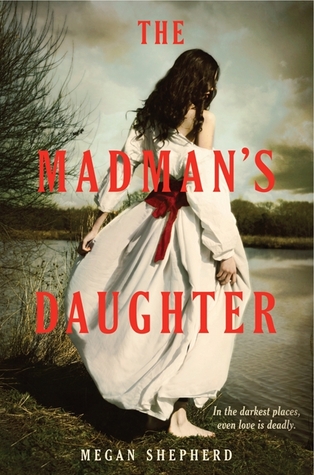
I picked up The Madman's Daughter by Megan Shepherd on a whim.  I was intrigued by the eerie cover and the story, which promised to be gruesomely scintillating and slightly macabre.  As a spin-off from H.G. Well's classic novel, The Island of Dr. Moreau, it picks up with Dr. Moreau's daughter, Juliet, and follows her dangerous path to reunite with her father--and the boy she once loved.

12291438
Balzer + Bray
It had so much promise, but it was a bit of a disappointment.  Although I probably ruined it for myself by reading the reviews of other readers (and inadvertently catching spoilers), I would probably have put Shepherd's book aside anyway.  It just didn't feel quite right to me.  I think the narrator was pretty interesting, and I think the author did a pretty good job of creating a singular voice; however, I found it was lacking some quality that would have made it great.

The author did a decent job of creating a unique Gothic atmosphere, borrowing from the works of H.G. Wells, Robert Louis Stevenson, and Mary Wollstonecraft Shelley; moreover, I thought Shepherd made a fair attempt at incorporating history into her work.  The Madman's Daughter had the architecture in place--the grim atmosphere, the subtle history woven into the story, the grisly story--and it could have been a great novel.

Except it was ruined by the implications of a love triangle.

Oh, yes, I understand that romance can blossom in the most unusual places.  Likewise, I realize the character can't help the way she feels.  However, I would have much preferred if Juliet was a little more concerned about her survival once she's out on the streets and her livelihood once she makes up her mind to find her father, a man who is known for his vicious vivisection and his nonexistent medical ethics.

I just couldn't take it seriously after that.

-

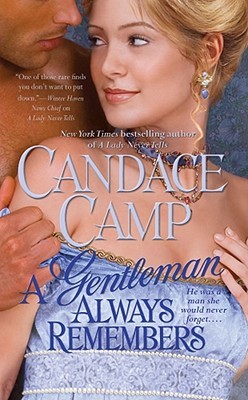
I can't remember why I started to read A Gentleman Always Remembers by Candace Camp, but I can clearly remember when I decided that it wasn't worth the time or effort to finish the novel.  Sometime in chapter two, I completely lost interest and decided to put it aside because I couldn't find anything redemptive in the characters, or the plot, or the setting--or, well, anything else.
A Gentleman Always Remembers (Willowmere, #2)
Pocket Star

In my opinion, it was just a bad novel.  A very bad novel.

I didn't think Eve was an incredibly endearing female protagonist, and, for some reason, I found Fitz to be rather preposterous.  I didn't care for either of them--or any of the other characters involved, to be perfectly honest.  They all felt like caricatures:  stiff, stagnant, boring.  I quickly grew tired of them and their individual histories.

I also noticed the story wasn't all that great, either.  I don't mind love stories, but this one felt a little contrived.  And the blackmail thread of the narrative felt silly, just another unnecessary way to propel the novel forward, because it doesn't have much substance.  Moreover, I wasn't a fan of the writing.  I didn't like Camp's style or her language or her inability to pace the story properly or develop her characters.

So, yes, I can safely say I didn't like A Gentleman Always Remembers.

Tuesday, July 12, 2016

I Feel Bad About My Neck: And Other Thoughts on Being a Woman

Vintage Books
I Feel Bad About My Neck:  And Other Thoughts on Being a Woman
Nora Ephron
2006

The Summary
"With her disarming, intimate, completely accessible voice, and dry sense of humor, Nora Ephron shares with us her ups and downs in I Feel Bad About My Neck, a candid, hilarious look at women who are getting older and dealing with the tribulations of maintenance, menopause, empty nests, and life itself.

"The woman who brought us When Harry Met Sally..., Sleepless in Seattle, You've Got Mail and Bewitched, and the author of best sellers Heartburn, Scribble Scribble, and Crazy Salad, discusses everything--from how much she hates to her purse to how much time she spends attempting to stop the clock:  the hair dye, the treadmill, the lotions and creams that promise to slow the aging process but never do.  Oh, and she can't stand the way her neck looks.  But her dermatologist tells her there's no quick fix for that.

"Ephron chronicles her life as an obsessed cook, passionate city dweller, and hapless parent.  She recounts her anything-but-glamorous days as White House intern during the JFK years ('I am probably the only young woman who ever worked in the Kennedy White House that the President did not make a pass at') and shares how she fell in and out of love with Bill Clinton--from a distance, of course.  But mostly she speaks frankly and uproariously about life as a woman of a certain age.

"Utterly courageous, wickedly funny, and unexpectedly moving in its truth telling, I Feel Bad About My Neck is a book of wisdom, advice, and laugh-out-loud moment, a scrumptious, irresistible treat."

The Good
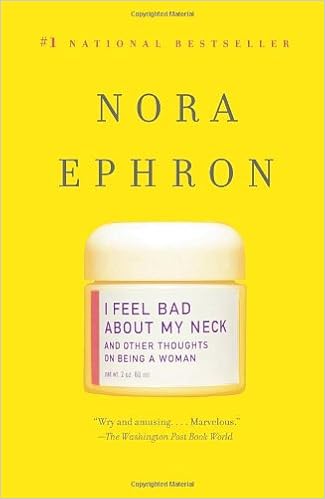
Nora Ephron's collection of essays is incredibly funny.  Ephron speaks to the universal experiences of all women, pointing out our shared fear of getting older, our worries of wrinkle and our eventual dependence on hair dye, our trouble with large purses (in which it's easy to lose everything, except that random little tic tac that always seems to appear).  It's a short book that's accessible to most, if not all, women who find themselves in similarly hilarious situations.

Overall, I enjoyed I Feel Bad About My Neck.  It's very well-written, incredibly descriptive, and strangely appealing.  I loved her essays because they spoke to me on a personal level, especially where purses are concerned.  (I can certainly see why Ephron dislikes them so, but, like her, I find them a necessary evil for random assortment of things I carry around, such as my books, or candy, or notebooks, or, heaven forbid, something reasonable like a wallet.)

Moreover, Ephron's book is short and it get straight to the point.  Unlike Consider the Lobster by David Foster Wallace, which I attempted to read before I found Ephron, I Feel Bad About My Neck is incredibly appealing, ridiculously funny, and accessible.  It doesn't get stale, because Ephron manages to enchant you with her writing.  She uses short, often funny--and frequently insightful--stories that are sure to appeal to many readers.

The Bad
No complaints.

I enjoyed the entire collection of essays.

The Ugly
Growing older is no picnic, as Ephron makes apparent.

Now, I can't help but wonder what's waiting in store for me.  I suppose I'll just have to find out.  In the mean time, I will learn to better appreciate the neck that I have.

Saturday, June 18, 2016

Read Harder Challenge (Part Five)

This week, I completed three more challenges:
  • Read a collection of essays
  • Read a book under 100 pages
  • Read a book by or about a person that identifies as transgender
Vintage Books
For my first challenge, I had to read a collection of essays.  At first, I picked up Consider the Lobster by David Foster Wallace, but I quickly changed my mind after attempting to read the first essay.  (Way too dense, and way too much porn for my taste.)  So, in my second attempt to finish this challenge, I read I Feel Bad About My Neck:  And Other Stories on Being a Woman by Nora Ephron--and am I glad that I did.

I absolutely loved reading Nora Ephron's essays on what it means to be a woman and, more importantly, what it feels like to have to deal with time, age, facial products, and oversized purses.  I laughed liberally throughout reading this book.  Her experiences are universal and her humor is outrageous.  Even if I couldn't relate to every experience, her essays had a way of picking out the familiar, like frustrations with wrinkles or hair dye, hatred of purses because they have a way of eating change and spitting up tic-tacs, or fighting over directions with a spouse.

It's a short read, but it's an incredibly fun journey.  I enjoyed every story in Ephron's book, but I especially enjoyed her wit and her candor and her humor as she recounted her many, familiar experiences.  She managed to connect with me as a reader and as a woman, and I appreciated her book for that.

Next, I quickly read Young Goodman Brown by Nathaniel Hawthorne.  Although it probably constitutes as a short story rather than a "book," which the challenge calls for, I thought it would be a good place to start.  I don't often read short books or novellas, and I had a dickens of a time trying to find a book under 100 pages.  Even How to Train Your Dragon, which took me part of a day to read, was over 100 pages.

So...short story it is!
Wildside Press

The plot of Young Goodman Brown is simple:  Goodman Brown takes leave of his wife, Faith, for some unknown errand in the forest, whereupon he meets a stranger in the forest carrying a black serpent-shaped staff.  He stumbles across various townspeople who travel the forest with him, until he reaches an altar in the middle of the wood where new acolytes are being brought into the fold--and one of them is his wife, Faith.  Events transpire which test his faith, causing him to live the rest of his life distrustful of his neighbors--and then he dies.

If you were hoping for a surprise, I'm sorry if I ruined the story for you, but I have to say that I didn't understand the point of this story.  On the one hand, Hawthorne sets up the episode as a potential dream, so I have no way of knowing whether or not his entire ordeal is real--which means a dream completely ruined his life.  On the other hand, if it is real, he has the ability to see the hypocrisy and sins of his neighbors, which also ruined his life.

I didn't like it.  I'm fairly certain that Faith was supposed to represent his actual faith and, when he lost her in the dream, he lost her in real life.  And I'm pretty positive that the traveler with the serpent staff is the devil, since all the evil people know him and Goodman--a good man--has the good sense to fear him.  There's so much metaphor and symbolism in, like, 12 pages that it's almost sickening.

Scholastic Press
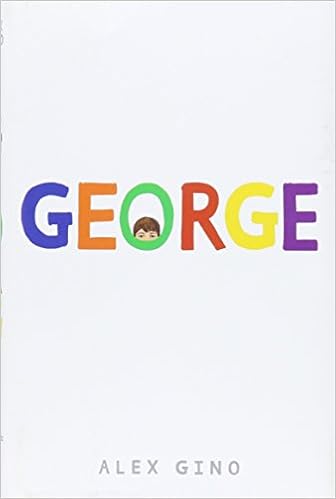
Last, I read George by Alex Gino as part of my reading a book by or about a person who identifies as transgender.  I don't know anything about the author, but I do know that the book is about George, a little boy who would rather be a girl and who desperately wants to play Charlotte in the school play of Charlotte's Web.

One of the things I noticed about this book was how George, who did not describe or identify himself as a boy, is consistently referenced with feminine pronouns.  I thought it was a nice touch, because it seemed to make an impact, seemed to impart the importance of a person who is transgender to identify with the gender they choose.  It's an intriguing and eye-opening concept that, I thought, adequately conveyed some of the struggles that George encounters.

I actually enjoyed reading George more than I thought I would.  I'll admit, I was a little hesitant, because I had my own preconceived notions with which to contend, as well as others.  Given the debate in the media over which bathrooms transgender individuals should and shouldn't use, I really didn't want to read a book that was full of ugly prejudices or a novel that would dwell upon hurtful things.  I was afraid of finding a depressing novel.

Luckily, I didn't.  George is surprisingly upbeat, and I found it was rather fun to follow his journey from George to Charlotte, how he managed to fulfill the slogan on the back cover:  "Be Who You Are."  It has a positive message, and it's appealing because it doesn't get bogged down by hateful language; rather, it focuses on George's journey and her success in embracing her own identity.

Saturday, January 2, 2016

Bonus: Me Talk Pretty One Day

Little, Brown and Company
Me Talk Pretty One Day
David Sedaris
2000

The Summary
In Me Talk Pretty One Day, David Sedaris recounts his childhood in North Carolina and his eventual migration to Paris via New York.  Full of funny and hilarious essays, Sedaris' book encompasses his entire life experience as a gay man in a rather dysfunctional family.

The Good
Me Talk Pretty One Day is very funny.  Sedaris has a sharp tongue and a scathing wit that makes his essays - or, more accurately, his stories about adolescence in the South and his adulthood in Paris - incredibly enjoyable.  Sedaris is not above poking fun at himself or others; he weaves his life experiences and opinions together, fashioning funny and (sometimes) absurd stories that are sure to make you laugh.

Truthfully, I think his stories about his father, Lou, are perhaps some of his best.  One of my favorites was "I'll Eat What He's Wearing," which was Sedaris's last essay.  It chronicles his dad's bad habit of keeping food long past any reasonable expiration date, including a particularly startling mishap with a hat.

The Bad
While I did enjoy  Me Talk Pretty One Day, I wasn't enthralled.  Sedaris is very humorous and his stories are pretty funny, but I just couldn't seem to stay involved in the book.  I would read a story here or there, but it took me weeks to finish the entire book.

Perhaps, that's the way it's meant to be read, taking one story at a time; however, I couldn't help feeling like I was just not enjoying it as much by reading it piecemeal.  It felt like I was forgetting bits of it as I only picked it up sporadically.  It was put on the back burner a lot more than I'd like to admit.

So, overall, Me Talk Pretty One Day is a decent book.  Not great, but not bad either.

The Ugly
Although Sedaris tells his story with a fair amount of humor, his stories about his drug addiction are rather brutal.  He's honest with himself about his addictions, plus he's honest with his audience, which means he's probably going to tell you everything in explicit detail.

Saturday, April 18, 2015

Unfinished 2.0

Like most bibliophiles (or so I assume), I have a very long list of books that are waiting to be read.  Some books, I can dive right in and devour them; others, I find are a little tougher.  And, if we're being honest, I even have some that I let slip through my fingers because I simply can't find it in my heart to complete them.  Here are just a few of those:

-

HarperCollins
Mere Christianity by C.S. Lewis

Honestly, I've always enjoyed C.S. Lewis.  He was a gifted writer and orator, and he produced phenomenal works of literature.  His writing has always seemed wonderful, beautiful and uncannily inspiring.  Even Mere Christianity has that quality, a beautiful simplicity in which one man attempts not to justify or exonerate his faith but to explain it - to show readers and listeners the most important aspects of his religion.

I have honestly tried to read Mere Christianity.  I have succeeded, in some measure, in completing a handful of the essays contained within it; however, I haven't yet managed to complete the entire compilation.  I love the language of Lewis's work, but I find it relatively dense, manifesting in a theological examination of Christianity that simply doesn't hold my attention for long periods of time.

One day I may finish reading it.  Until then, I intend only to read snippets and relish the best parts I find.

-

1new-fp
Jill Sanders
Finding Pride by Jill Sanders

For me, Finding Pride was unreadable.  I mean, if I'd stayed and focused and worked hard to slog through the remainder of the novel, I probably could have done it.  I just didn't want to for the simple fact that I really, really disliked it.

I couldn't appreciate any of the setting descriptions, I didn't care for the characters, and I found the story a bit trite.  The novel seemed to lack something essential, a special quality that could keep me committed.  It lacked vibrancy, it lacked life.  It was like all the characters were carved from stone, emotionless and cold, and I felt absolutely nothing for them.

Finding Pride didn't appeal to me in the least.  Granted, I read it as an e-book, which could make a difference (or explain the hurried errors that seemed to populate the pages); however, I'm not counting on liking it in any format in which it exists.  I doubt I will ever finish it, not if I have anything to say about it.

-

The Billionaire Wins the Game: Billionaire Bachelors - Book One
Lulu Press
The Billionaire Wins the Game by Melody Anne

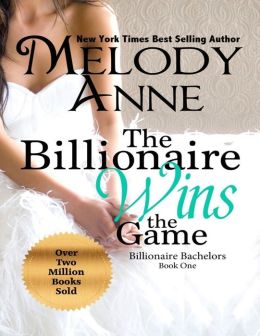
Let me say, upfront, that I have a bad habit of randomly picking out free e-books on my tablet.  I make some of the worst decisions when it comes to reading material if I'm using an electronic device.  I don't know why, I simply do - and The Billionaire Wins the Game is a stellar example of this.

Not only do the characters feel like caricatures, wavering on a pendulum of extreme emotions, they feel rigid, mechanical.  More to the point, they just feel wrong.  I could never keep track of how they felt, how they were going to feel, and how those emotions would manifest and, before I even reached the middle of the story, I was battling whiplash.

But that isn't even the worst part.  No, I hated the entire interaction between the central protagonists:  the shotgun wedding that occurs as if it's okay to coerce another person into a marriage with veiled threats and poisonous charm, as if its okay to blackmail a woman over the livelihood and custody of her unborn child.

I'll say this now:  It is not okay.  Ever.

And I hated that I was suckered into reading a huge chunk of the novel before I finally gave up, threw it aside (figuratively speaking), and started on something more substantial.  Although I finished a portion of the book (and, yes, I even read the last five pages, because I can't leave any novel without some kind of closure), I will never pick it up again.  Honestly, it wasn't even worth the time I spent to open to the first page.