"All good books are alike in that they are truer than if they had really happened
and after you are finished reading one you will feel that all that happened to you
and afterwards it all belongs to you; the good and the bad, the ecstasy, the remorse,
and sorrow, the people and the places and how the weather was."
Ernest Hemingway
Showing posts with label Plays. Show all posts

Saturday, May 7, 2016

Read Harder Challenge (Part Three)

I've discovered some more books as part of my commitment to the Read Harder Challenge of 2016, and I've discovered some great stories in my explorations.  I have managed to:
  1. Read a horror book.
  2. Read the first book in a series by a person of color.
  3. Read a play.
HarperTeen
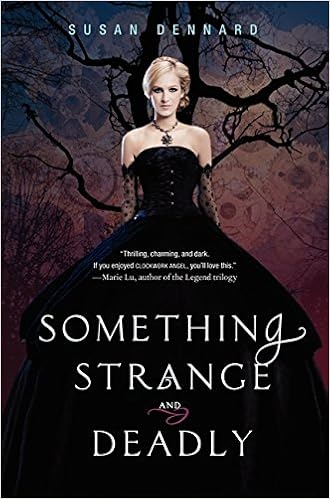
Usually, I don't read horror novels.  Dracula and Frankenstein are about it for me, but I have managed to read Stephen King's The Shining and The Strange Case of Dr. Jekyll and Mr. Hyde by Robert Louis Stevenson, among a handful of other novels that are considered good and scary.  And so, in order to satisfy my challenge criterion and read a horror story, I read Something Strange and Deadly by Susan Dennard.

Although I didn't initially lump Dennard's novel into the horror genre, I reconsidered my stance after necromancy and ritualized violence became involved.  The novel is pretty mild, all things considered--I mean, I certainly wouldn't put it at the level of The Walking Dead or Stephen King, or even Dracula--but it's still rather gory and riddled with a tough kind of suspense that leaves you hanging on the edge of your seat, hoping for more answers.  However, I think it's the zombies that pushed it over the edge and helped me give it a final designation as a horror novel.

I wouldn't call Something Strange and Deadly one of my favorites, but it isn't a bad book; in fact, I initially enjoyed it.  I liked the creepy atmosphere of it coupled with the turn of the century setting, and I even liked the story:  a wicked necromancer comes back from the dead to terrorize Eleanor Fitt, while the Dead continue to rise from their graves across Philadelphia.  It's an intriguing adventure, to say the least; however, I wasn't entirely thrilled with the story when I examined it in retrospect.  The phrase "shut pan" annoyed me to no end.  (Part of me began to think the author found a new, novel phrase and decided to run with it.)

Harper Voyager
Next, in reading the first book in a series by a person of color, I picked up My Soul to Keep by Tananarive Due.  As the first book in the African Immortals series, My Soul to Keep fit the bill perfectly to fulfill this challenge and check it off my list.  I stumbled across it purely by accident, finding it in audiobook form from my local library's website--and I was immediately hooked.

I was intrigued by the premise:  an Ethiopian warrior stumbles across the secret to immortality and spends the rest of his eternal life alternating between identities, enduring a number of years as a slave on a Southern plantation, before becoming a Civil War soldier, a jazz singer, and, finally, a college professor and author.  His story is one of sorrow and loss, desperation in trying to hold tight to the ones he loves.  I was riveted from the first word, from the first moment the narrator spoke and started to weave a complex, beautiful story about Dawit--David--and his wife, Jessica.

At just over eighteen hours long, it took me a number of weeks whittling away at the story to complete it, but I have to say I was thrilled.  It's detailed and strongly written (and narrated by Peter Francis James, who has an amazing voice by the way), and it's absolutely riveting.  The story packs a punch, pulling together a myriad of religions, myths, cultures, and countries to create a flawless tapestry of history and suspense, beauty and sorrow.  I became emotionally invested in Dawit and Jessica's story, and I found myself hoping for the best outcome--and crying (just a little) when tragedy strikes.  I highly recommend picking up My Soul to Keep and reading it for yourself.
Dover Publications
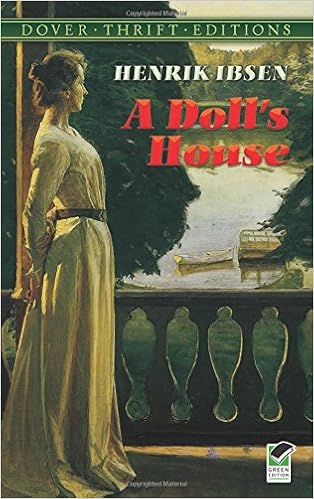
Last, I worked on Henrik Ibsen's A Doll's House.  Having read a portion of the play during a theater history class in college, I was intrigued about the prospect of reading the entire play this time around.  It was just my good fortune that I found a copy of the play for a dollar at my local used bookstore.  It's almost as if it was fated to be.

A Doll's House is an interesting play, not action-packed or suspenseful (like either of the two entries listed above).  For the time period, it's thought-provoking and, even now, it raises a lot of questions about women as spouses and mothers--and what are the typical roles of women in society.  It's a play designed to make you think, rather than thrill you.

Personally, I thought it was fascinating to see how Nora managed to flaunt convention, managed to get what she wanted despite the restrictive constraints of her time that were placed upon her gender, and, more importantly, proved she was capable of making her own decisions.  It's a bit slow, but I think it's worth reading at least once, especially if you're interested in theater.
Friday, April 15, 2016

A Doll's House

Hard Press
A Dolls House
Henrik Ibsen
1879

The Summary
Nora Helmer is a housewife:  she dutifully cooks and cleans, takes care of the children, and oversees her husband's home.  Flighty and lavish, Nora is doted upon by her husband, Torvald, and plays house for him.  But when their home and their very livelihood is threatened by an outside force, Nora's decisions will come back to haunt her--and it will shake her marriage to its very foundation.

The Good
A Doll's House is an interesting play and, I think, definitely worth reading at least once, because it offers insight into the life of a 19th century housewife and all the expectations that go along with it.  It's sharp in its telling, pinpointing marital flaws and social issues with uncompromising candor.

I found it particularly fascinating to see how Nora grows up in an instant.  When things begin to fall apart when her marriage--and, yes, her very life--is threatened, I thought it was interesting to see how she began to suddenly view herself through new eyes.  She begins to see her own self-worth, which is certainly an astonishing thing for a housewife who has known nothing else.

I was also intrigued by her final speech when she decides that things must change--that she must change if she's ever going to survive, if she's ever going to become her own person.  Her moment of clarity is sudden and brilliant:  her happiness is important too.

And she will stop the cycle, as she states when she tells Torvald she has never been happy and decides to leave:
Torvald:  Not--not happy! 
Nora:  No, only merry.  And you have always been so kind to me.  But our home has been nothing but a playroom.  I have been your doll wife, just as at home I was Papa's doll child; and here the children have been my dolls.  I thought it great fun when you played with me, just as they thought it was great fun when I played with them.  That is what our marriage has been, Torvald.
Her transformation is astonishing, and her decision would have been unheard of.  The fact that she made a decision for herself at all would have been surprising in the heavily moderated and monitored Victorian society.  It's actually pretty fascinating, and I think that Henrik Ibsen does a fantastic job of capturing the drama of a fractured domestic life.

The Bad
A Doll's House does have a few moments where it grows dull and dry, making it difficult to slog through the dialogue.  Honestly, the last five pages or so were exactly what I was waiting to find--that's exactly when the real drama unfolds and Nora shocks everyone (her husband included) by making a decision against convention.  Everything else just feels like idle chatter.

The Ugly
Nora is essentially a doll.  Her husband dictates everything in her life--her clothes, her shoes, her manners, her religious beliefs, her children's education, and more--and, when she makes decisions for herself (for the health of her husband, mind you), she is chastised and even threatened.  She's given no leeway, no sense of individuality, and, essentially, no hope.

It's a horrifying situation.

Tuesday, October 15, 2013

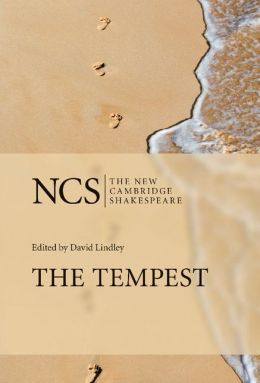
The Tempest

The Tempest
Image courtesy of
www.barnesandnoble.com
The Tempest
William Shakespeare
1610-1611

The Summary
For Prospero, the former Duke of Milan, life has not always been kind; however, when his brother (Antonio) and the King of Naples (Alonso), the very men who chased him from his dukedom, arrive on the shores his island, Prospero has been given a great opportunity to seek his revenge.

Filled with grand adventure, a generous helping of magic, and a bit of romance, The Tempest tells the story of one man's rise and fall from power as he struggles to contend with his past, his own feelings of bitterness, and his hope for the future.

The Good
Simultaneously amusing and complex, The Tempest is one of those Shakespearean plays that's sure to hold your attention for the sheer ridiculousness and magic and botched political intrigue it holds.  Between the fairy mischief on Ariel's part and, of course, jokes about sexuality courtesy of Trinculo and Stephano, Shakespeare's play presents a rousing good time.

More to the point, Shakespeare's characters are something to behold.  Not only are the characters fully fleshed out - and some being the epitome of a stereotype - they are enjoyable to watch and understand as they grow and mature, or, in some cases, meet whatever end they happen to find.

In short, it's a brief but fun play that's sure to entertain.

The Bad
As always, Shakespeare's plays are a little difficult to read given the barrier between languages - or, more accurately, time periods.  Filled with jokes and references to his generation, and riddled with older, archaic versions of English words, Shakespeare can be a bit challenging.

That's no excuse for not reading his work, of course; however, it's sometimes better to see his work in person - that is, on the stage - than just reading it.  Simply put, actors can make Shakespeare's work come of alive, even when the imagination can't.

The Ugly
Well, it can't all be fun and games.

Between brothers bent on fratricide and fairy mischief and wizards intent on revenge, there will inevitably be a little bit of violence and a suitable amount of language.  It's to be expected in the cold, calculating, politically charged society of Shakespeare's play.

Thursday, August 15, 2013

The Children of the Sun

Children of the Sun
Image courtesy of
www.barnesandnoble.com
The Children of the Sun
Maxim Gorky
1905

The Summary
Maxim Gorky's play tells the story of Protasov (Pavel), a minor Russian aristocrat and obsessive scientist, and his family as they weather the trials and tribulations of a particularly  frightening affair:  political uprising and violent protests.

The Good
Much of Gorky's play is told in good fun (or satire, as the case may be) - and Pavel is amusingly forgetful, terribly evasive, and frighteningly obsessive, even while he tries to avoid the attentions of Melanyia, a young widowed woman with her eyes now set on the married Pavel.

The awkward conflicts between the two are certain to garner a laugh, or, at least, a passing giggle.

Additionally, it's funny how often the characters of Gorky's play clash and rebound, ricocheting wildly against each other and their surroundings as they attempt to find a more comfortable place in society and acclimate to the changing social climate - even as they fail miserably at the latter.

The Bad
Honestly, reading Children of the Sun is a bit of a chore.  While the play has its moments where it amuses and enchants, it more frequently discourages with its seriously flawed characters, its dissatisfying conclusion, and its criticisms of human nature - or, more accurately, its criticisms of corruptible human nature within society.

It's interesting and potentially enlightening, but, ultimately, it's difficult to read and remain entirely attentive.

The Ugly
Although Children of the Sun is tinged with comedy, the characters of Gorky's play seem doomed to encounter tragedy and, more importantly, doomed to remain caricatures of a flawed, human society.

For instance, Pavel, a dedicated scientist, can no longer see past his experiments to even stop his wife from leaving.  Liza, afraid to trust the world and enjoy life, chases away the one many who loves her.  Melanyia, widowed and prowling for a new husband, spends her days tailing after a man who is not only married but couldn't possibly love her in the first place.

And that's not even half of it.

In between the miscalculations and missteps and mistakes, you'll find madness, violent protests, social upheaval, sickness, death, and suicide.  It's a concoction of tragedy that will leave you reeling - and not altogether satisfied with its conclusion.

Monday, June 24, 2013

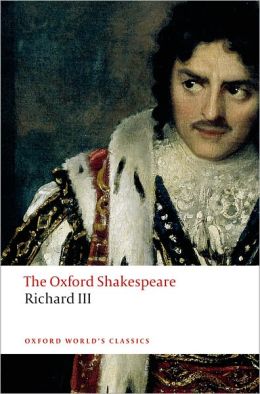
Richard III

The Tragedy of King Richard III: The Oxford Shakespeare The Tragedy of King Richard III
Image courtesy of
www.barnesandnoble.com
Richard III
William Shakespeare
1591

The Summary
Put simply, The Tragedy of King Richard III tells the story of one ambitious man's rise to power - and reveals his willingness to stoop to any means necessary to ascend to the throne.

The Good
William Shakespeare's play is absolutely thrilling.  Beautifully complex, full of political intrigue and suspense - and, yes, even daring escapes and brutal murders - Richard III is a captivating play about power and deceit, and what one man will do to seize the crown for himself.

Moreover, the character and plot developments seen throughout the play are absolutely perfect.  Well, perhaps perfection is too far, but, regardless, Richard III manages to create some of the most fascinating, endearing, grotesque, and terrifying characters.

Take Richard, Duke of Gloucester (and, later, King Richard III), for instance.  His description as a deformed human being - his depth as a character, the influence of self-fulfilling prophecy in his life - and his continuous acts of cruelty, his downward spiral into murder and treachery, make him a perfect villain.

Richard III is a character you will love to hate.

The Bad
As most people have read Shakespeare's plays at one time or another, it's easy to recognize some of the perils of Shakespeare's work, including Richard III.  Antiquated vocabularly, complex speech patterns, and distinct (sometimes, difficult) language quirks, all make Shakespeare's play more than a little challenging for many readers.

But it's worth reading, nonetheless, because this work, if you can manage the language barrier, is absolutely riveting.

The Ugly
Richard III is not a gentle tale by any means.

I mean, after all, Richard of Gloucester is a man intent on securing the crown for himself by any means necessary, including - and certainly not limited to - murder, war, genocide, and other forms of violent (very violent, and very brutal) forms of teachery and political intrigue.