"All good books are alike in that they are truer than if they had really happened
and after you are finished reading one you will feel that all that happened to you
and afterwards it all belongs to you; the good and the bad, the ecstasy, the remorse,
and sorrow, the people and the places and how the weather was."
Ernest Hemingway
Showing posts with label Nonfiction. Show all posts

Tuesday, January 9, 2018

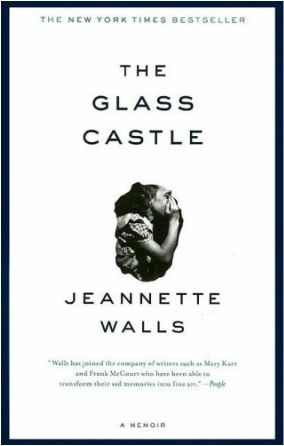
The Glass Castle

Image result for the glass castle book
Scribner
The Glass Castle
Jeannette Walls
2005

The Summary
"The Glass Castle is a remarkable memoir of resilience and redemption, and a revelatory look into a family at once deeply dysfunctional and uniquely vibrant.  When sober, Jeannette's brilliant and charismatic father captured his children's imagination, teaching them physics, geology, and how to embrace life fearlessly.  But when he drank, he was dishonest and destructive.  Her mother was a free spirit who abhorred the idea of domesticity and didn't want the responsibility of raising a family.

"The Walls children learned to take care of themselves.  They fed, clothed, and protected one another, and eventually found their way to New York.  Their parents followed them, choosing to be homeless even as their children prospered.

"The Glass Castle is truly astonishing--a memoir permeated by the intense love of a peculiar but loyal family."

The Good
It took me a long time to pick up and read The Glass Castle.  Like literal months.

First, I wasn't sure I wanted to read a memoir.  I was firmly entrenched in my romance novels and fantasy stories, and I didn't want to burst my own bubble by reading about the real world.  Second, I'd never read anything by Walls and, if I'm being honest with myself, I wasn't sure I wanted to start reading her now.  I mean, what if she was awful?  I hated the idea of slogging through a poorly written memoir.

However, The Glass Castle is anything but poorly written.  Jeannette Walls is a phenomenal writer.  As I settled in to read, I discovered she had a compelling voice and an incredible story to tell.  Her memoir tackles difficult subjects--like neglect, abuse, mental illness, homelessness, etc.--but Walls treats these things delicately.  She recounts her life in such a way that you are able to see it through her eyes as she grew from a child to a young woman.

The Glass Castle is sad and tragic, but it's ultimately a compelling and hopeful story about survival.

The Bad
Read below.  I have a bit of a spiel.

The Ugly
This book infuriated me.

Walls is a wonderful writer and her memoir is insightful, thoughtful, and incredibly fascinating; however, I wanted to argue that this was not a memoir about "the intense love of a peculiar but loyal family."  I didn't see loyalty (except between Jeannette and her siblings) and I didn't see love and I didn't see a quaint, peculiar little family; I saw intense neglect, if not outright abuse, and child endangerment and alcoholism.

I understand Walls loved her father and I understand that her father, as much as he was capable, loved his children.  However, I thought both her father and her mother were selfish, neglectful, and thoughtless to the health, well-being, and safety of their children.  I have only to point out that the first chapter that Walls was severely burned as a child while trying to cook her own food.  She was hungry and her mother wasn’t going to make her anything, so she did it on her own.  She couldn’t have been more than five.

Or then there’s the incident where she was flung from a moving vehicle.  Accident or not, that’s just reckless endangerment and it could have killed her.  Or there’s also the chapter where she speaks about digging old food out of the trash cans at school, so she wouldn’t starve.  All the while, her mother was squirreling away food for herself and not bothering to feed her children when she obviously could.

I only saw loyalty between the Walls children.  They protected and looked out for each other, they would help provide for the others; in fact, I imagine the only reason they survived their heinous childhood in West Virginia is because they stuck together.  Even after their parents undermine them again and again, they stick together.  Her sister escapes to New York first and then, one by one, they all manage to leave West Virginia--and their parents--behind.

Her father, no matter how much he professed to love his children, did not.  I understand that some parents or guardians struggle to provide for kids; however, sometimes you have to make difficult choices to provide for your children.  He could have sacrificed his pride and applied for federal assistance; they obviously needed it, so why wouldn't he ask for help?  Instead, he would lie and cheat and steal, and then blow his money on alcohol and hookers.

And why couldn't their mother do the same?  She could hold on to a job; in fact, she did for a little while.  I know she didn't like it.  No one wants to work at a job they hate, but, in order to provide for her children, couldn't she have kept a job long enough to put food on the table and start her search for a new job in the meantime?

Obviously not.  That would require a sense of selflessness and empathy she didn't possess.

This book disgusted me on so many levels, and it infuriated me.  I couldn't stand reading about how much Walls adored her father, only to have him disappoint her time after time.  It's heartbreaking as she comes to realize that the Glass Castle--her and her father's shared dream--will never become a reality.

Thursday, December 7, 2017

Lady Killers: Deadly Women Throughout History

Harper Perennial
Lady Killers:  Deadly Women Throughout History
Tori Telfer
2017

The Summary
"In 1998, an FBI profiler infamously declared in a homicide, 'There are no female serial killers'--but Lady Killers offers fourteen creepy examples to the contrary.  Though largely forgotten by history, female serial killers such as Erzsebet Bathory, Nannie Doss, Mary Ann Cotton, and Darya Nikolayevna Saltykova rival their male counterparts in cunning, cruelty, and appetite for destruction.

"With a feminist lens and a witty, morbidly humorous tone, Lady Killers dismisses easy explanations (she was hormonal, she did it for love, a man made her do it) and tired tropes (she was a femme fatale, a black widow, a witch), delving into the complex reality of female aggression and predation."

The Good
Honestly, I enjoyed this book far more than I probably should have.

There's something fascinating about female serial killers.  Perhaps, I have been susceptible to the idea that women are softer, gentler, and less likely to kill, despite knowing to the contrary, and find myself aghast that these ladies existed; perhaps, I'm just fascinated by the idea of off-kilter women surviving in any way possible.

Either way, I was absolutely hooked by Lady Killers.

I had a handful of chapters that I really enjoyed:  "The Sorceress of Kilkenny," which featured Alice Kyteler who was accused of being a witch and killing four husbands; "Vipers," featuring Raya and Sakina, prostitutes who owned a brothel murdered several young women (and possibly others) in Egypt after World War I; "Wretched Woman," which focused on Mary Ann Cotton, who killed several of her own children, several of her husbands' children, several husbands (all, but one) and lovers and, quite probably, many more; and, "The Tormentor," Darya Nikolaevna Saltykova, which you can read more about later.

These were just the most fascinating chapters for me; however, every chapter was thought-provoking and captivating in its own right.  Tori Telfer does a fantastic job as an author, creating a thoroughly researched and interesting book on an increasingly morbid topic.  She writes with a sense of humor, but also a deep appreciation of forgotten and/or misinterpreted history.

I especially appreciated Telfer's dedication to telling the truth or, at the very least, getting all her facts straight.  Telfer cuts through the terrible rumors and unfounded accusations that surround these women, dismissing what she cannot prove, and creates a believable portrait of each individual.

Elizabeth Bathory, for instance, is surrounded by a dark mythos of blood, terror, and sex.  She has become, on numerous occasions, a scandalous icon for debauchery and murder, a female counterpart to the wildly popular story of Dracula.  So much of what we know of her is unreal; however, Telfer makes an effort to humanize her, to reveal her a real person.  Yes, she committed heinous crimes and, yes, she was no doubt a murderess, but Telfer tells the story of a woman (albeit, a deeply disturbed woman), rather than a vampire or a dark temptress as she's sometimes portrayed.

The Bad
No complaints.

The Ugly
It's a book about serial killers.  It's going to be awful, horrible, gruesome, and macabre; it's going to have blood, gore, and violence--and all the other horrible things associated with cold-blooded killers.  Don't go into this book thinking, "It can't possibly be that bad.  It's not like it's Charles Manson or Jeffrey Dahmer, or someone like that."

Trust me, you're wrong.

These ladies are downright terrifying, just as much as any male serial killer.  Many of them got away with killing for years, like the murderous women of Nagyrev or Nannie Doss, before they were discovered; some even avoided justice altogether, like Alice Kyteler and Kate Bender.  They're killers, plain and simple, and they're frightening in their own right.

Perhaps one of the most frightening, in my opinion, was Darya Nikolaevna Saltykova.  Darya was a Russian noblewoman who lived during the reign of Catherine the Great and she killed, at the very least, 138 people (mostly women) during her lifetime.  She was inventive in her murders and, at times, she would kill someone with her bare hands if she didn't think anyone else would or could do it.  And, as the author points out, she showed zero remorse:
"So Darya killed and killed again, confident in her impregnability and furious at her serfs for each petty mistake, for getting in her way, for being her responsibility, for existing.  If she was a god, then her serfs were her pitiful playthings.  She could make them clean; she could make them cook; she could make them scream and bleed and beg. [...] 'I am my own mistress,' she cried. 'I am not afraid of anyone.' This belief that she was superior, unassailable, and even consecrated by the law was integral to her sense of self.  Perhaps she killed to prove one simple point:  that she could."

To me, Darya is absolutely terrifying.

Tuesday, August 29, 2017

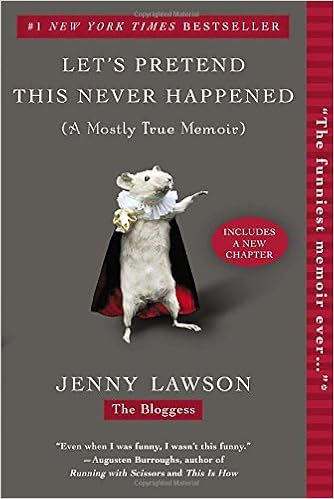
Let's Pretend This Never Happened

Penguin Books
Let's Pretend This Never Happened:  A Mostly True Memoir
Jenny Lawson
2012

The Summary
"When Jenny Lawson was little, all she ever wanted was to fit in.  That dream was cut short by her fantastically unbalanced father and a morbidly eccentric childhood.  It did, however, open up an opportunity for Lawson to find the humor in the strange shame-spiral that is her life, and we are all the better for it.

"In the irreverent Let's Pretend This Never Happened, Lawson's long-suffering husband and sweet daughter help her uncover the surprising discover that the most terribly human moments--the ones we want to pretend never happened--are the very same moments that make us the people we are today.

"For every intellectual misfit who thought they were the only ones to think the things that Lawson dares to say out loud, this is a poignant and hysterical look at the dark, disturbing, yet wonderful moments of our lives."

The Good
Jenny Lawson is hysterically funny.

Even when bad things happen, she's willing to share them with others and laugh about what happened to her, or, at least, convince others to laugh with her as she relives the trauma.  Although she doesn't have a filter, which translates to some rather outlandish statements, Lawson is able to capture a unique voice in her memoir that makes her stories relatable and memorable.

She's a bit absurd, I know, but she's hilarious.  Even when she's faced with traumatic experiences, like Stanley the Magical Squirrel or her high school agriculture class where she lost a turkey baster inside of a cow (don't ask) or wearing a deer sweater (which is more sickening than you imagine), she manages to make these memories funny for her readers.  Moreover, she has the ability to appeal to anyone who has had a non-traditional upbringing or who has ever thought their life is absolute mayhem.

She also captures those feelings of growing up and striking out, what it's like to go back and realize that the home you once knew--the childhood you'd unexpectedly treasured--is gone.  Life changes, life keeps moving forward and you find out quickly that you can't go back.  Lawson perfectly captures that melancholy and she expresses it in a way that feels familiar, bringing out an emotion that pinches at your heartstrings.

Her book, no matter how wild and absurd and occasionally crazy it may seem, is an examination of childhood, mental illness, marriage, friendship, and motherhood.  It is a depiction of life that can seem ludicrous, but it is a full life with family, friends, love and laughter.

The Bad
I will admit that Lawson's work can be an acquired taste.  I love her books, both Let's Pretend This Never Happened and Furiously Happy; however, I think she could rub some people the wrong way.  She's sardonic, witty, sarcastic, but she has a mouth like a sailor and she's not afraid to discuss any subject.

I'm not joking.

No matter how unbearably awkward, excruciatingly personal or heartwrenchingly horrifying, Lawson will tell you all about her experiences.  Sometimes, it's difficult because you feel like a bit of a voyeur; other times, you waffle between feeling relief that you don't have to deal with the absurdity she does or you feel a kinship for the odd and unusual things that happen to her because you endured the same.

The Ugly
Life can be an ugly, ugly business.  Lawson, for the most part, manages to take the sting from tragedy by making her readers laugh at the absurdity.  It still hurts, but, at least, some good does come from the bad.

Friday, May 26, 2017

Unfinished 7

2082136
W.W. Norton Company
Okay.  So, I started reading Bonk by Mary Roach after I finished reading Packing for Mars.  After reading a review on Goodreads that cracked me up, I decided I would give it a try--and I kind of regret it.

First off, Mary Roach is hilarious.  I liked Packing for Mars, and I think I could have enjoyed Bonk if I just hadn't been traumatized by some of the stories.  I like to think I'm not a prude, but when sex leads to disfigurement, count me out.  I just can't do it.  It gives me this weird squirmy feeling inside, and I just can't cope.

Mary Roach is a great author, but I just don't think I can handle Bonk.

-

25507925
Gallery Books
I picked up Tyler Oakely's Binge out of curiosity.  I'd seen it in the YA section at my local library and I thought it might fit my Read Harder Challenge, so I thought, "Why not?"  It seemed interesting and it would help me mark off one of my challenges.

Wrong.  On both accounts.

Oakley is a pretty funny, I'll give him that; however, I just wasn't taken with his memoir.  I like that he's so very candid about his experiences, even the most embarrassing ones, but I found there is something as too much of a good thing.  Oakley tells me a little more than I would normally like to know about his personal experiences, and I just found myself quietly closing the book and returning it to my library.

-

Death of a Darklord by Laurell K. Hamilton had so much potential.  It was beautifully written, it carried intricate characters with interesting talents, it had magic and fantasy and adventure.  It struck all the right notes for me.  I was so excited to read it, especially as I started in on the first couple of chapters.  I was intrigued by the villain and I wanted to see where the story would go.
30229
Wizards of the Coast

And then I made the mistake of looking up the book on Goodreads and discovering, much to my astonishment, that it was part of a series.  I learned Death of a Darklord is a stand-alone novel in a series roughly based in the same world (or something along those lines).  Not necessarily a bad thing, right?

Except it's part of a horror series.

When I picked up Death of a Darklord, I expected a fantasy novel.  I expected magic, mischief, adventure, trials and tribulations, before eventually culminating in a relatively happy ending.  There's always a little tragedy in every fantasy story; however, I always expect to find a satisfying conclusion, if not an outright happily-ever-after.

Death of a Darklord is a horror story.  It's full of tragedies, one after the other--and it literally doesn't get any better.  If I'd gone into this novel with the knowledge I was reading a tragic story, I probably would have been fine with it.  As the cover gave no inclination as to what I would find, I started reading with the expectation of a good ending and I was incredibly disappointed.  I put it aside without ever really finishing it.

-

27833668
Pantheon
War and Turpentine wasn't a bad novel.  It's based on Stefan Hertsman's grandfather, a would-be painter who lived through and fought in World War II.  Hertsman regales readers with embellished stories of his grandfather, his grandmother, his family, and, ultimately, his legacy.

It's an interesting book that reminds me of The Things They Carried, in that there are some truths buried beneath the fiction; however, it just didn't grip me like Tim O'Brien's earlier novel.  Personally, Hertsman's novel isn't for me.  I didn't care for the style or the feel of the novel, even though I wanted to enjoy it; I didn't like the characters, I didn't like the way they felt or the way they made me feel; moreover, I found myself growing bored with it at regular intervals and casting it aside for more interesting fare.

I'm sure it's a fine book, but it's just not for me.

Wednesday, May 24, 2017

Everything I Need to Know I Learned from a Little Golden Book

17190361
Golden Books
Everything I Need to Know I Learned from a Little Golden Book
Diane Muldrow
2013

The Summary
"Little Golden Books:  not just for children anymore!

"One day, Diane Muldrow, a longtime editor of the iconic Little Golden Books, realized that there is hardly a real-life situation these whimsical books don't address.  In this age of debt, depression, and diabetes, can grown-ups benefit from a Little Golden guide to life?  Yes, we can!

"Muldrow's humorous yet practical tips for getting the most out of life--Don't forget to enjoy your wedding!  Be a hugger!  Sweatpants are bad for morale!--are paired with delightful images from the best-loved children's books of all time.

"Sure to conjure memories and smiles, this book is a perfect gift for anyone who cherishes the sturdy little books with the shiny cardboard covers and gold-foil spines."

The Good
This book was cute, if forgettable.  Personally, I think I liked the pictures the best, which pulled from all the classic Little Golden Books I read as a child with my parents.  I mean, I'd forgotten about The Saggy Baggy ElephantTootle, Nurse Nancy, and Animal Friends.  This book is really just a nostalgic trip through childhood to all the little books you've read as a child and completely forgotten over the years.

It's cute, and it's certainly worth perusing through to recognize some of the characters and book you enjoyed as a child.

The Bad
It's short, and it's not really what I expected.  It's good, it's cute, but it's one of those books at which I shrug a shoulder and simply place it back on the shelf.  It's not really eye-opening or life-changing, just a quick, nostalgic story with inspirational content.

The Ugly
Not a thing.

Wednesday, May 17, 2017

When Churchill Slaughtered Sheep and Stalin Robbed a Bank

Picador
When Churchill Slaughtered Sheep and Stalin Robbed a Bank
Giles Milton
2016

The Summary
"More addictive and mind-blowing true tales from history, told by Giles Milton--one of today's most entertaining and accessible yet always intelligent and illuminating historians.

"In the second installment of his outrageously entertaining series, History's Unknown Chapters, Giles Milton shows his customary historical flair as he delves into the little-known stories from history, including when Stalin was actually assassinated with poison by one of his inner circle; the Russian scientist, dubbed the "Red Frankenstein," who attempted to produce a human-ape hybrid through ethically dubious means; the family who survived thirty-eight days at sea with almost no water or supplies after their ship was destroyed by a killer whale; or the plot that served as a template for 9/11, in which four Algerian terrorists attempted to hijack a plane and fly it into the Eiffel Tower."

The Good
Giles Milton's work is as entertaining as always in this latest addition to his series, History's Unknown Chapters.  Personally, I loved learning new things about history that I didn't know, like the rehearsal for D-Day that saw more than 900 casualties.  Or the spy who broke into Auscwitz.  Or the man who broke into Buckingham Palace and decided to hang out in the Queen's chambers.  Or Guy Gabaldon, who captured several hundred Japanese soldiers without even firing a bullet.

When Churchill Slaughtered Sheep and Stalin Robbed a Bank is pared down into manageable, bite-size sections, which makes Mileton's book both easy-to-read and accessible.  Don't want to hear about how Charlie Chaplain's grave was robbed?  Skip it!  Don't care to hear about Stalin's assassination?  Then move on to the next chapter.

This book is great if you like random facts, if you like history, or if you like learning about weird, quirky people and strange happenings across the globe.  It's highly entertaining and it's accessible, which I--and I'm sure other readers--appreciate.

The Bad
As I discovered with When Hitler Took Cocaine and Lenin Lost His Brain, When Churchill Slaughtered Sheep and Stalin Robbed a Bank is a book to be read at short intervals.  I loved the random facts, the quick anecdotes that taught me something new; however, I mostly read it in between other books or when I was waiting--like waiting for an oil change, or waiting for a seat at a restaurant, or waiting for my boyfriend to pick me up.

It's more of a short, entertaining read to be taken up at short intervals, rather than consumed in one large gulp.

The Ugly
Reality truly is stranger than fiction.

Wednesday, May 10, 2017

Navel Gazing: True Tales of Bodies, Mostly Mine (But Also My Mom's, Which I Know Sounds Weird)

28637246
Gallery Books
Navel Gazing:  True Tales of Bodies, Mostly Mine (But Also My Mom's, Which I Know Sounds Weird)
Michael Ian Black
2016

The Summary
"You'll laugh, you'll cry, you'll call your mom.

"New York Times bestselling author Michael Ian Black pulls no punches in this hilariously honest memoir, a follow-up to the acclaimed You're Not Doing It Right.  When Michael's mother receives a harrowing medical diagnosis, Michael begins a laugh-out-loud examination of health, happiness, and the human body from the perspective of a settled (and sedentary) husband and father of two.  With trademark wit that has made Michael's other books popular favorites, Navel Gazing is a heartfelt and poignant memoir about coming to terms with growing older and the inevitability of death.  It is also a self-deprecating and deliciously frank remembrance of exercise failures, finding out his is part Neanderthal, and almost throwing down with fellow author Tucker Max.

"Michael Ian Black may not have the perfect body.  Or be the perfect father.  Or husband.  Or son.  But readers will laugh as they recognize themselves in his attempts to do better.  And, inevitably, falling short."

The Good
When I first picked up Navel Gazing, I realized I recognized the author's name.  He was relatively famous, I knew that; I'd seen him on a screen somewhere, even if I couldn't remember exactly where.  However, I'd never recognized him as a writer.  It surprised me, and I couldn't help wondering if this wasn't just another book by a celebrity with a ghost writer.

Except Michael Ian Black isn't just another celebrity writing a book about his career; rather, he's a man writing about the trials of everyday life with a terminally ill parent.

He discusses his family and his life as he grapples with his mother's deteriorating health; he discusses his health and what he's not doing to improve it; he discusses his beliefs, his religion and how it impacts him as his mother grapples with one medical diagnosis after another.  It's a candid account on life in general and full of humorous musings on health, happiness, and faith.

I loved reading Black's memoir for the simple fact that I could relate to him.  When he talks about his health and his worries regarding growing older, yet he doesn't want to schedule another appointment with the doctor, I understood his fear of disease and his subsequent reluctance to do anything about it.  I mean, it sounds exactly like something I would do; in fact, it sounds like something I've done.

Likewise, when Black discussed his floundering attempts to become healthy and, for instance, decided to take up jogging as a healthier alternative to binge watching Netflix, I understood and connected with his experiences.  I understood his struggles with weight and physical exercise (it's exhausting), and I recognized his desperate desire to discover something deeper, more important in his running routine.
"The toughest thing about training for the half marathon was the time commitment:  hours per week, hours that could have been more fruitfully spent not running.  Why did I persist, week after week, through the summer heat and into the chilly days of autumn?  What was my fascination with running?  [...]  What did I want?  The truth is, I knew what I wanted from running, but I couldn't quite bring myself to admit it:  I wanted enlightenment.  And this is where are all my convoluted feelings about my body and Mom's declining health and aging and my own fear of death and praytheism congeal into a goopy sludge.  This is the nexus.  It is a stupid nexus, to be sure, but I could not quite shake the idea that running could save me."

I laughed at his self-deprecating humor, of course, but I enjoyed his candor and I connected on a personal level with his experiences.  I know what it's like to struggle with weight and health concerns (doesn't everyone?), and I know what it's like to hope that you can find something--anything--in physical activity.  You hope to find enlightenment, contentment, peace--you know, something--and it's always a little disappointing if you don't.

Overall, I loved the reading Navel Gazing.  It's fun and humorous, like it's intended to be, but it's also insightful and relatable.  It connects on a deeply human level, exploring our individual foibles and disappointments, our worries and fears and insecurities.  Personally, I came away from Navel Gazing with a familiar, "intense...almost electrical connection" to another human being.

It's a feeling that I'm sure any reader will appreciate after finishing Black's memoir.

The Bad
No complaints.  His humor is sarcastic, slightly odd, so I can see how it might rub people the wrong way; however, I loved his sense of humor and I loved his candor as he talked about his experiences as a child with a terminally ill parent, as a parent with children, and as a human being with health concerns of his own.

If I have one complaint it might be that Black sometimes skips quickly to the next thought without any segue or break between subjects.  It's pretty common through his memoir, but I think it's a pretty easy quirk to overlook.  He might jump to a new subject without warning, which could be construed as confusing or annoying (depending on how you look at it); however, I wouldn't call it a deal breaker.

The Ugly
Cancer.

Wednesday, April 26, 2017

Dinner Made Simple

26031078
Oxmoor House
Dinner Made Simple
Real Simple
2016

The Summary
"Think you'll never win at weeknight cooking?  Think again.

"Organized from apples to zucchini, Dinner Made Simple is filled with 350 easy inventive dishes--many ready in 30 minutes or less--to help you get out of your recipe rut.  With 10 ideas for every ingredient, you'll never look at a box of spaghetti, a bunch of carrots, or a ball of pizza dough the same way again."

The Good
Okay, so I know you can't really "read" a cook book in the traditional sense; however, I can say with confidence that I looked at every single page in this book and I examined all the recipes and checked it from cover to cover and even tested out some of the recipes, and it has been "read."

And I loved it.

Now, let me tell you why:

One, I loved the pictures.  They were bright and really very lovely when you're looking at how a dish should have looked.  Granted, reality is never going to be as pretty as the picture (and I never get the portions right), but I think the book does a fine job of showing you what it will look like--and then helping you achieve those results.

Two, I adored the fact that the book has an index; in fact, it has two.  One is similar to a table of contents, which shows you the main ingredient of each recipe in alphabetical order, followed by an easy to read table that show you what's vegetarian, what's vegan, what's family friendly (read:  kid friendly), what's gluten free, and more.  Moreover, it goes on to tell you all the nutritional information and it helps you make healthy choices.

Three, I liked that it has good food that's easy to make within an hour or less.  Most of the recipes only take 30 minutes, and that's including prep time and baking, which I absolutely loved.  As the subtitle promises it has "easy recipes" that are loaded with simple, but wholesome ingredients, and easy-to-read recipes that make cooking so much less of a chore.

For instance, I liked that I could reach into my cupboard and cobble together a delicious meal in just an hour after work.  I tried the Shepherd's Pie (which was delicious), the garlic rolls (equally delicious, but I added some mozzarella cheese and I think it could have used some more butter and parsley), and the sausage and broccoli calzones (or, more accurately, I took the recipe and made it my own with Italian sausage, spinach, pepperoni, mozzarella cheese, and a little bit of Parmesan cheese).

All these recipes turned out delicious, and they were seriously some of the easiest meals I made throughout my week.  After working until 5 or 6 in the evening, I liked coming home, throwing together a Shepherd's Pie with the leftover hamburger in my refrigerator and pouring on a heaping helping of instant mashed potatoes and cheese.  It was pretty delicious, but I will probably be more careful about following the directions to the letter next time.

The Bad
No complaints.  I found the recipes I loved, and then if I didn't like the recipe I simply didn't make it.  There are more than 350 different recipes that range from gluten-free to Vegan with a spattering of other healthy choices in between decadent recipes like Salted Caramel Cupcakes and Hot Chocolate Cupcakes with Marshmallow Frosting, so there's bound to be something for everyone.

I'm still drooling over the marshmallow frosting.

The Ugly
There's really not anything here to complain about.  I mean, unless you just don't like food, in which case you wouldn't even pick it up in the first place, it's a nice little cook book that's good to give you an idea on busy weeknights.

Friday, April 21, 2017

Read Harder Challenge 2017: Part 3

I finally finished the next part of my Read Harder Challenge.  I finished:
  • Read a book about books.
  • Read a book that is set within 100 miles of your location.
  • Read a collection of stories by a woman.

26531650
Simon & Schuster
Starting out, I finished reading The Bad-Ass Librarians of Timbuktu by Joshua Hammer, which details events beginning in 2012 when more than 350,000 manuscripts--many of which had been painstakingly collected by Abdel Kader Haidara--were endangered by Al Qaeda militants seizing control of Mali.  In his book, Hammer details how Haidara and other manuscript collectors managed to find, preserve, and rescue hundreds of thousands of manuscripts, before smuggling them out of the country under the noses of Al Qaeda.

As the summary attests, it's indeed a "brazen heist worth of Ocean's Eleven."  Personally, I found it fascinating to learn how Haidara became involved in the manuscript preservation business and how he and other librarians managed to steal away more than 350,000 manuscripts from Timbuktu.  I mean, the number is simply mind boggling.

Moreover, I was consistently fascinated by the history and culture of Timbuktu and Mali as a whole.  Hammer offers a rich variety of details, discussing the medical, cultural, historical, scholastic and artistic impact of Timbuktu.  Although his work can grow a little dry, every chapter offers fascinating insight into the history of Timbuktu and, more importantly, provides readers with an eye-opening portrait of the conditions faced by Mali's residents when Al Qaeda invaded.

Beauty and the Mustache
Cipher-Naught
Next, I checked out Beauty and the Mustache by Penny Reid.  Set in Tennessee, Beauty and the Mustache is a short, sweet little romance--which kicks off the Winston Brothers series and continues the Knitting in the City series, both by Penny Reid--that brings together Ashley Winston and Drew Runous.  After spending more than 8 years away from home, Ashley is forced to return to Tennessee to help take care of her ailing mother.  Expecting the same rough treatment from her brothers as from years before, she's surprised to learn they've changed.  She's even more surprised to meet their friend Drew, especially when she realizes he's exactly her type.

Overall, I really enjoyed reading Beauty and the Mustache.  Like I noted above, it's a short, sweet little romance and it's absolutely adorable.  It's sometimes bittersweet, sometimes tragic, but I immensely enjoyed reading Penny Reid's novel.  I found I connected to Ashley, our main character and narrator, on a personal level and I admired her sharp, sarcastic sense of humor, her intelligence, and her ability to go toe-to-toe with Drew's philosophical meanderings.

However, I will note I was bothered by one thing:  I did not like the setting.  I love the Smoky Mountains, don't get me wrong; however, I simply didn't like the narrator's inability to describe her surroundings.  I was incredibly disappointed by the setting descriptions, which were seriously lacking.  I wanted to hear more about the winding roads, the multitude of trees, the softly sloping mountains in the distance, or the way the hills fade against the horizon, deepening to a slate blue before disappearing altogether.

I wanted to hear about places I've known or seen, but, sadly, I didn't get that chance.  It was slightly disappointing.

2782459
Anchor
Last, I read Moral Disorder by Margaret Atwood.  I think I might have fudged the challenge parameters with this one, since it's really just a single novel; however, as it's labeled with "Other Stories," I assumed it would do the trick.  It centers around one woman--Nell--but it's a compilation of many short stories from different points in her life.

It begins with "Bad News," toward the tail end of Nell's life, but it jumps through time with each story and catapults Nell into the past, showing readers glimpses of her childhood and her adolescence and, finally, her transition into adulthood.

Truthfully, I didn't enjoy reading Moral Disorder that much.  Atwood is a fantastic writer and her prose packs a punch when she wants it, but, personally, I found I couldn't always connect with the stories in Moral Disorder, I couldn't always connect to Tig and Nell.  Granted, when I did connect with one of these stories, it moved me deeply and I worried for Nell, like I'd worry for a friend; however, I found it was a rather unremarkable journey for me overall.

Thursday, March 9, 2017

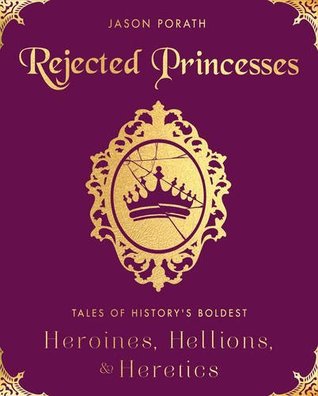
Rejected Princesses: Tales of History's Boldest Heroines, Hellions, and Heretics

Dey St.
Rejected Princesses:  Tales of History's Boldest Heroines, Hellions, and Heretics
Jason Porath
2016

The Summary
"Well-behaved women seldom make history...and these women are far from well behaved.

"Let's face it:  the list of historical women we learn about in school is lacking.  It's safe, it's censored, it's short.  And even when we learn about a true legend--say, Harriet Tubman--we get half the story (and it's usually not the half about her as a plantation-torching Union spy-master).  This is just the list of women we know about.  What of the women we don't?

"In place of complex, real-life heroines, we get sparkly, doe-eyed animated damsels who dominate children's minds everywhere.

"Rejected Princesses is here to provide an alternative to all that.

"In this fully illustrated, deeply researched, and totally entertaining collection, Jason Porath offers 100 women too uncompromising, too untoward, or too uncomfortable to fit the modern princess mold.  Gathering together a diverse set of some famous, some infamous, some forgotten, and some virtually unknown figures from history and myth, from all over the globe, this book presents the female role models we never knew we needed.  Yes, there are a few princesses, but there are also pirates, spies, journalists, activists, concubines, empresses, ninjas, pilots, samurais, mathematicians, sword-slingers, and war-lords too.

"These women were rebels and rulers, pioneers in their fields, and fighters for their causes (and sometimes for themselves).  In a time when women are still pushing for equal pay and equal opportunity, shouldn't we be putting brave women like Sybil Luddington, Hatshepshut, Nzinga Mbande, Josephine Baker, Khutulun, Rani Lakshimbai, Harriet Tubman, Emmeline Parkhurst, and Joan of Arc on equal footing with Cinderella or Sleeping Beauty?

"Women have always played a key, kick-ass role in revolutionizing our world.  The girls of today are the latest links in a long chain of geniuses, warriors, and fearless women.  It is the birthright of every woman to have a connection to that history.  Empowering, uproarious, and anything but traditional, Rejected Princesses seeks to provide just that."

The Good
I loved this book.

Yes, loved.

If it's not already apparent, I'm a bit of a history nerd and I love learning about quirky, unconventional history and feisty females who made their mark on history (see:  Bad Girls), so Rejected Princesses was the best of both worlds for me.

I imagine that many of the women featured in this book were too rebellious, too dangerous and, sometimes, too deadly to make it into high school textbooks; in fact, many of the women--whether resigned to the darkest parts of history or lingering at the edges of myth--were a pleasant surprise.  That is, I'd never read about them and I loved learning about them and the impact they made on history.

Here are some of my favorites:
  • Khutulun
  • Noor Inayat Khan
  • Julie d'Aubigny
  • Annie Jump Cannon
  • Iara
  • Mariya Oktyabrskaya
  • Olga of Kiev
  • Ching Shih
  • Sybil Luddington
  • Alfhild
  • Mary Bowser
  • Nanny of the Maroons
  • Tomo Gozen
  • Marjana
All of these women were incredible.  I mean, on this list alone you have fighters and warriors, spies and astronomers, pirates and Vikings, rebels and freedom fighters.  They're incredible.  Granted, I know some of them didn't exist (Marjana is a literary character, whereas Iara and, I think, Alfhild are myths and/or legends), but it was wonderful getting a glimpse into these individual cultures and their perceptions of women--and how these women flaunted conventions.

It was great.

And, of course, I can't forget the Night Witches from my list.  You can hear about me rhapsodize about the Night Witches here, so I won't go into much detail about them, except to say that they are without a doubt the most incredible pilots of World War II (I'm not joking) and, perhaps, some of the most incredible women about which I've had the pleasure to learn.

Overall, Rejected Princesses is a wonderful book.  Full of humor, colorful art, historical facts and, of course, incredible women, it's a great resource for those who wish to dabble in history--and it will show you just what it means to fight like a girl.


The Bad
No complaints.

I seriously want a copy for myself.

The Ugly
History is not always pretty--and, let's be honest here, it hasn't always been kind to women.  Some were burned at the stake because they were different; others were buried alive or faced a firing squad; some were even assassinated for their own violent reactions to society.  Not all these ladies had the luxury to happily retire.

Saturday, February 25, 2017

In Progress: Rejected Princesses (Completed)

Image result
Dey St.
Okay, so I finished reading Rejected Princesses by Jason Porath--and, in many ways, it makes me proud of my gender right about now.  I mean, sure, there are a few dark parts to history (Boudica, here's looking at you!) and they aren't always nice, considerate, or remotely moral; however, I enjoyed reading Rejected Princesses just for the simple fact that it decided to chronicle interesting, sometimes terrifying, sometimes brutal, but always fascinating women of history.  I learned so much more than I expected.

I've heard of Mata Hari, Joan of Arc, Harriet Tubman, Elizabeth Bathory, Boudica, Ching Shih, and a few others.  I read Bad Girls by Joan Stradling and gained a whole new appreciation for the most infamous women in history; however, Porath offers a more comprehensive look at these famous--and, of course, infamous--ladies and he does it with a touch of humor.  His passages are relatively short (three to four pages, max), but they're simultaneously informative and entertaining.

More importantly, I discovered aspects of history about which I never knew.  I love history and I love learning about history, whether it's in my own back yard or across the ocean, and I loved that I was able to deepen my knowledge of various time periods.  For instance, I was excited to learn more about female contributions to the American Revolution with Sybil Ludington.  Or learning about the Canary Islands, about which I knew nothing, with Andamana.  Or learning more about technological, mathematical, and scientific discoveries with Annie Jump Cannon, Hypatia, Ada Lovelace, and so many more.

It was exciting.

But, I have to say, I think I loved the Night Witches of World War II the best.

I mean, I am fascinated by World War II.  I've read several books about it, and I've studied it probably more than the average person.  I'm not an expert by any means, but I find myself constantly fascinated by conflicts and social/political shifts that occurred in WWII.  It's an era that has such wide-reaching effects we can still see the ripples today; heck, we can still talk to the people who endured it.  I may not enjoy violence, but I like hearing stories about it and I like piecing together my knowledge of it, I like holding those stories.

And yet I've somehow never heard of the Night Witches.

How?

But here's how cool they were:
"The Night Witches mark one of the greatest underdog accomplishments in military history.  Handed a bunch of slow, flammable trainer planes that had been designed only to dust crops, an all-female group of untrained civilians became one of the most decorated divisions in the entire Soviet military.  Flying without armor, guns, sights, radio, cockpits, brakes, parachutes, or virtually any navigation machinery, they dropped bombs on the Germans every three minutes, like clockwork, every night for three years."
Moreover, they would often cut their engines and dive over German military camps on the Eastern front, before kicking on their engines and dropping bombs.  They literally fell out of the sky, dropped bombs, and then did it again and again and again.  "They flew over 1,100 nights of combat, and each pilot flew over 800 missions."

Holy cow.

These women are super women.  They were--and are--amazing.  They pushed the physical limits of the human body, while simultaneously making due with substandard military equipment and challenging the typical military and/or social culture of Soviet Russia.  They're incredible!

Guess, I know what I'll be reading about next.

Wednesday, February 22, 2017

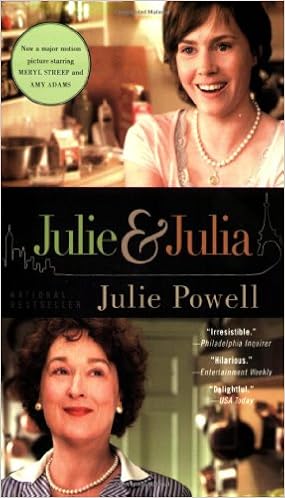
Julie & Julia: 365 Days, 524 Recipes, 1 Tiny Apartment Kitchen: How One Girl Risked Her Marriage, Her Job, and Her Sanity to Master the Art of Living

Hatchette Books
Julie & Julia:  365 Days, 524 Recipes, 1 Tiny Apartment Kitchen:  How One Girl Risked Her Marriage, Her Job, and Her Sanity to Master the Art of Living
Julie Powell
2005

The Summary
"Powell needs something to break the monotony of her life.  So, she invents a deranged assignment:  she will take her mother's dog-eared copy of Julia Child's 1961 classic, Mastering the Art of Frech Cooking, and cook all 524 recipes in the span of just one year."

Truthfully, the subtitle says it all.

The Good
I read Julie and Julia by Julie Powell as part of my Read Harder Challenge for 2016 (which you can read more about here), and I was absolutely delighted with it.

Amusing, candid, and insightful, I really enjoyed listening to Julie Powell's memoir--or food memoir?  I'm not really sure where it falls in the grand scheme of things, but, regardless, I thought it was a wonderful book.  It's riotously funny, yet strangely poignant.  Oddly enough, it reminds me of Jenny Lawson and her memoir, Furiously Happy--yet just a tiny bit less chaotic.

Not by much, considering Julie Powell undertakes to make 524 different recipes, many of which take hours to prepare, in just one year in a crappy little apartment in Queens.  It's astonishing the things she (and her marriage) manages to survive, including:  biological clocks, frozen pipes, disastrous dinner parties, inane dead end secretarial jobs, break downs, Blanche days, and celebrity crushes.

It's really a pretty amusing book, especially if you decide to listen to it as read by the author (which I did--and which I highly recommend); however, it's not quite the food memoir I expected.  In fact, Julie and Julia is more memoir than food.  Julie is hellbent on recreating all of Julia Child's recipes in Mastering the Art of French Cooking, vol. 1 and, in her journey, she learns how to make a variety of dishes and confronts some of the most trying times of her life.

While it features a lot of cooking, Julie and Julia feels like it's more about the experiences of cooking and the results, specifically what happens to the author as she slogs through more than 500 French recipes, than the actual cooking, but I can't say I minded.

Julie and Julia is strangely heartwarming and incredibly amusing.  To me, it strikes just the right balance that makes it a memoir worth reading, especially if you have the chance to listen to the author tell her own story.  It makes Julie and Julia that much more memorable.

The Bad
I will note that while I was listening to the audiobook I discovered I borrowed the abridged version.  I don't know if the audiobook had the full text, but I do know I missed a few things that might otherwise have filled in details or fleshed out the characters involved.  It was my only disappointment in a book that was, otherwise, wonderful.

The Ugly
Okay, I'll be honest:  I liked Julie, but, sometimes, I just couldn't handle very much of her.

I mean, I liked her and I liked her style of writing.  I loved listening to the audiobook, because it has this authenticity to it, this genuine emotion that seeps through every chapter.  However, I could only take so much.  She was very dramatic and she stressed out so easily--and, confidentially, she stressed me out when she went on a rant about how cooking was going to ruin her and so on...and, sometimes, it was just a little too shrill, you know?

Saturday, February 18, 2017

In Progress: Rejected Princesses (Continued)

Image result
Dey St.
Okay, so I've made it about half way through Jason Porath's book; however, I have wantonly skimmed it and skipped to some of the more intriguing--not to say they aren't all intriguing, or curious, or fascinating, or strange--entries.  Like the warlord's widow who cultivated an entire school of ninjas in Japan, or the Vietnamese sisters who waged a war against Chinese invaders, or Phoolan Devi (that was a difficult one to read), or Elizabeth Bathory (this one blew my mind).

There are so many of these entries.  Some of them mind-blowing, some of them fascinating, some of them hilarious and/or tragic.  You get the whole spectrum with Rejected Princesses and, truthfully, I haven't been disappointed yet.  I mean, all of these women are powerful and independent, and they don't adhere to the traditional roles of females in society.

Instead, they go out and kick butt, fight against a system that tries to squash them, and, in  general, be awesome.

I love that Porath takes the time to carefully research these ladies; honestly, I love that he makes an effort at all to chronicle the forgotten women of history who worked as shipbuilders and soldiers and strongmen--ahem, strongwomen--and ninjas, and so, so much more.  It's great.  It's not always safe for kids, as his trigger warnings make apparent on the corner at the introduction of each entry; however, it's a nice addition to any burgeoning historian's collection.

I mean, how could you not enjoy learning about these ladies who have made and redefined history and continue to influence our world today?

So far, I have a list of favorites:
  • Khutulun
  • Tatterhood
  • Sybil Ludington
  • Grace O'Malley
  • "Stagecoach" Mary Fields
  • Iara
  • Trung Trac and Trung Nhi
  • Mary Bowser
  • Julie "La Maupin" d'Aubigny
  • Nanny of the Maroons
  • Tomoe Gozen
  • Mariya Oktyabrskaya
  • Ada Lovelace
  • Laskarina Bouboulina
  • Ching Shih

I'm just going to say it again:  This book is great.

Saturday, February 11, 2017

In Progress: Rejected Princesses

28820006
Dey St.
So, I have just had my mind blown by Jason Porath's Rejected Princesses.  Thus far, I've only read a few entries, like Tatterhood and Agnodice, Andamana, Sybil Ludington, and Grace O'Malley; however, I have fallen completely and irrevocably in love with this book and Porath's humorous--yet surprisingly well-researched--entries.  It's funny, it's informative, and it's full of kick ass women who have been overlooked (and/or forgotten) by history.

It's amazing.

I mean, I never knew about Tatterhood.  I love fairy tales and yet, somehow, Tatterhood and her weird, winding story managed to escape me!  Granted, I might have enjoyed her story a little more with Porath's candid commentary on the story; regardless, I think I gained a new appreciation for Norwegian fairy tales and myths.  I'm curious to learn more.

Likewise, I'd love to learn more about Khutulun and Sybil Ludington.  Kutulun was a Mongolian princess (great-great granddaughter to Genghis Khan, by the way) who was an incredible fighter and a skilled ruler.  She issued a challenge to any potential suitors:  if any could best her in wrestling, they would have her hand in marriage; if they could not, she would get their horses.  (Spoiler alert:  she was never defeated.)  She's a fascinating historical figure and, while she isn't quite as brutal as her infamous ancestor, she made a huge impact on Mongolian culture even to this day.  How on earth haven't I heard about her?

And then there's Sybil Ludington.  She could be an American icon, and yet I've never heard her name.  Born in southeastern New York, she was the daughter of Colonel Henry Ludington--and a revolutionary solider in her own right.  Like Paul Revere, she set out on a midnight ride to warn about the impending British invasion; however, she took it a step further and rode out 40 miles in a little over three hours through the dark, rainy forest riddled with bandits and other dangers.  "By contrast," Porath writes, "a certain other someone...only went 12 miles across well-worn streets and was caught by British loyalists at the end of it.  Ahem."

She's awesome.

And, so far, this book is awesome.

I think I'll have to buy a copy for myself.

-

For more of Jason Porath's Rejected Princesses, you can actually check out rejectedprincesses.com for more entries and plenty more fun.

Monday, January 23, 2017

Packing for Mars

Packing for Mars: The Curious Science of Life in the Void
W.W. Norton & Company
Packing for Mars
Mary Roach
2010

The Summary
"Space is a world devoid of the things we need to live and thrive:  air, gravity, hot showers, fresh produce, privacy, beer.  Space exploration is in some ways an exploration of what it means to be human.  How much can a person give up?  How much weirdness can they take?  What happens when you can't walk for a year?  have sex?  smell flowers?  What happens if you vomit in your helmet during a spacewalk?  Is it possible for the human body to survive a bailout from space?  To answer these questions, space agencies set up all manner of quizzical and startlingly bizarre space simulations.  As Mary Roach discovers, it's possible to preview space without ever leaving Earth.  From the Space Shuttle training toilet to a crash test of NASA's new space capsule (cadaver filling in for astronaut), Roach takes us on a surreally entertaining trip into the science of life in space and space on Earth."

The Good
After hearing about Mary Roach's book through the reader grapevine, I was absolutely fascinated by the idea of space travel to Mars.  Since I fell in love with The Martian by Andy Weir, I've been intrigued by Mars and outer space more than ever.  (That's part of the reason I slogged through How to Read the Solar System--and, you know, why I've been so inexplicably excited to start on John Carter of Mars.)

And I wasn't disappointed.

Packing for Mars is a fun and insightful science book.  Truthfully, it reminds me of Bill Nye:  humorous, but informative.  Roach makes science approachable and, dare I say it, fun.  Her writing is easy to read, yet she doesn't compromise facts or treat her reader as a big dummy for not understanding the intricacies of space.  Moreover, it gives you answers to questions that you never even knew you had.

Want to know what happens to a fuse when it's shot into space?  (Answer:  If a fuse blows in space, it fries everything; it's why they had to invent the transistor.)  Want to know what happens if you lay in bed for days on end with very little movement?  Want to know what happens to the human body when it meets lower-than-normal gravity?  Roach has answers to all these questions and more, and she does it with some highly humorous musings.

Overall, I found to Packing for Mars to be highly informative, incredibly rewarding--and lots of fun.

The Bad
I admit, I did sometimes lose interest in Packing for Mars.  Sometimes, I just wasn't interested in the subjects and I couldn't keep my mind focused enough on the trials and tribulations of animal test flights, or some other such thing; however, I think that's more my failing, rather than some grievous fault with Roach's book.

The Ugly
Porn.  In space.

For some reason, I was perturbed by the entire concept.  It bothered me, more than I'd like to admit, and I found myself in for some highly awkward reading.

Saturday, December 31, 2016

Read Harder Challenge (Part Eight)

This week, I'm just barely eking by with my Read Harder Challenge.  After reading these last books, I have officially finished my list:
  1. Read a book that is set in the Middle East
  2. Read a nonfiction book about feminism or dealing with feminist themes
  3. Read a food memoir
Little, Brown and Co.
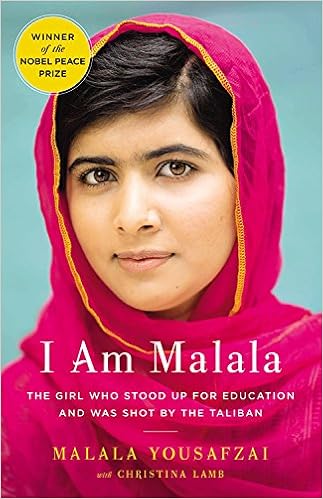
To start off, I finally finished reading I Am Malala by Malala Yousafzai.  It only took my 6 months, but I finished it and, honestly, I'm glad I did.  It's a fascinating story that's both heartbreaking and incredibly informative, offering insight into the various cultures and relations of Afghanistan.  Although her story is grim, it's simultaneously uplifting.  Personally, I enjoyed reading about her and her father's endeavors to bring education to local children--and particularly to the young women of the community.

Malala is a skilled narrator.  She's bright, she's hopeful, she's very detailed and she's very intelligent.  Although her book is a translation, which is sometimes apparent, I felt like I could read and relate to her feelings.  She does a fine job of connecting to her readers, detailing her thoughts and feelings--and making her voice heard.  She makes a compelling argument for education, for giving women equal education opportunities.  Truthfully, you can see why Malala Yousafzai is a Nobel Prize Laureate.

I also had the opportunity to read a short (and rather famous) essay by Virginia Woolf:  A Room of One's Own.  As an avid reader and, ahem, English major in college, you would think I'd have taken the opportunity to read A Room of One's Own, but, until this year, I had yet to make more than a cursory acquaintance with Woolf's work.  Unfortunately, I wasn't enamored by her essay.

Image result
Harcourt Inc.
A Room of One's Own makes some very valid points.  It's important to read and, after reading it, it's something that all young women should have a chance to read at least once in their life.  However, I had a hard time reading Woolf's essay, because I just couldn't seem to focus on one thing before it jumped to another.  For instance, in the first few pages when Woolf described Oxbridge and her experiences at the esteemed university, I thought it took quite a long time to get to the point--and, confidentially, I found myself growing a little bored as I waited for her to come to a conclusion.  Not that her writing is bad, mind you; I just struggled to stay committed given her style of writing, so I'm not sure if that's so much her failing as my own.

The point is, I finished reading A Room of One's Own and I have a new appreciation for Woolf.  She's a talented writer, but, personally, I'm not so sure she's the writer for me.  I appreciate her work and I appreciate the significance of her essay, but I don't think she's the one and only feminist writer for me.

Last but not least, I read Julie and Julia by Julie Powell.  It's riotously funny, yet strangely poignant.  Oddly enough, it reminds me of Jenny Lawson and her memoir, Furiously Happy--yet just a tiny bit less chaotic.  Not by much, considering Julie Powell undertakes to make 524 different recipes, many of which take hours to prepare, in just one year in a crappy little apartment in Queens.  It's astonishing the things she (and her marriage) manages to survive, including:  biological clocks, frozen pipes, disastrous dinner parties, inane dead end secretarial jobs, break downs, Blanche days, and celebrity crushes.

Hatchette Books
It's really a pretty amusing book, especially if you decide to listen to it as read by the author (which I did); however, it's not quite the food memoir I expected.  In fact, Julie and Julia is more memoir than food.  Julie is hellbent on recreating all of Julia Child's recipes in Mastering the Art of French Cooking, vol. 1 and, in her journey, she learns how to make a variety of dishes and confronts some of the most trying times of her life.  While it features a lot of cooking, Julie and Julia feels like it's more about the experiences of cooking and the results, specifically what happens to the author as she slogs through more than 500 French recipes, than the actual cooking, but I can't say I minded.

Julie and Julia is strangely heartwarming and incredibly amusing.  To me, it strikes just the right balance that makes it a memoir worth reading, especially if you have the chance to listen to the author tell her own story.  It makes it memorable.  However, I will note that while I was listening to the audiobook I discovered I borrowed the abridged version.  I don't know if the audiobook had the full text, but I do know I missed a few things that might otherwise have filled in details or fleshed out the characters involved.  It was my only disappointment in an otherwise wonderful book.

Sunday, November 27, 2016

Florence Foster Jenkins

30111726
St. Martin's Griffin
Florence Foster Jenkins:  The Inspiring True Story of the World's Worst Singer
Nicholas Martin
Jasper Rees
2016

The Summary
"Despite having no pitch, no rhythm, and no tone, Florence Foster Jenkins became one of America's best-known sopranos and [even performed] at Carnegie Hall.  Born in Wilkes-Barre, Pennsylvania, Florence Foster adored music and as a girl was a talented pianist, but her wealthy father refused to allow her to study in Europe.  In retaliation, she eloped with Dr. Frank Jenkins, but the marriage soon foundered, not least because the eighteen-year-old bride contacted syphilis on their wedding night.  Moving to New York, Florence became a piano teacher, but after her father's death in 1909, she inherited a considerable sum of money.  It was then that she vowed to become a great soprano and began taking singing lessons.  That same year she met the man who would become first her manager and, then, her common-law husband, St. Clair Bayfield.  Over forty years later, after a lifetime supporting New York's classical musical societies and even founding her own, Florence's greatest dream was finally realized.  At the age of seventy-six, she gave a recital, by public demand, at Carnegie Hall.  Her extraordinary story is now a film starring Meryl Streep as Florence and Hugh Grant as St. Clair Bayfield, directed by Stephen Frears."

The Good
Florence Foster Jenkins was quite an entertaining book.  I really liked the detail involved in her story, and I also liked how the authors pulled from several documents and resources to bring Florence's character to life.  She's an absurd character in history, a larger-than-life persona that fed on the adoration of her many fans, but both Rees and Martin manage to ground her firmly in reality and delve deep into her history.

She's quite a fascinating individual.  After eloping with a man twice her age, Florence became a concert pianist (she was quite the accomplished player), a music teacher, a social club manager, and, fulfilling a lifelong dream, a concert soprano at the age of 76.  She might not be a shining star in history, and she might not be remembered half so well as others; however, she made quite a splash in the early twentieth century.

Meeting Florence Foster Jenkins for the first time was an interesting experience, especially after listening to a recording of her music.  (If you intend to read this book, I would highly recommend sampling her work.  It gives a little more context as to why she was dubbed the "world's worst singer" and, more importantly, it gives you an idea of what she really sounded like.)  But it was a good experience, and I'm glad I read up on her.

Moreover, I appreciated the pictures that showed Florence's family--including her philandering husband, her raucous cousin on the Jenkins' side (who managed to escape murder charges on two separate occasions), and her beloved St. Clair Bayfield--as well as portraits of her youth.  It was nice to actually see her costumes, period pieces for the Verde Club that were both ostentatious and remarkable, like their wearer.

Overall, I had a great time reading Florence Foster Jenkins.

The Bad
Occasionally, the text did become a little dry.  I sometimes struggled to finish Florence Foster Jenkins for the simple reason that the chapters seemed to last forever and it seemed to rehash some familiar information unnecessarily.  It's a wonderfully detailed book, but it can border on tiresome, especially toward the end.

The Ugly
Syphilis.

You know, I didn't realize that syphilis could actually impair hearing.  I knew it could drive a person insane, but I didn't realize it could attack one's ears and actually induce deafness--or, in the case of Florence Foster Jenkins, alter hearing considerably.

Saturday, October 15, 2016

Read Harder Challenge (Part Seven)

I finished some new books for my Read Harder Challenge, and I've completed more reading tasks:
  1. Read a biography (not memoir or autobiography)
  2. Read a dystopian or post-apocalyptic novel
  3. Read a book about religion (fiction or nonfiction)
St. Martin's Griffin
First up, I finished Florence Foster Jenkins by Nicholas Martin and Jasper Rees, which inspired the recently released movie of the same name.  Florence Foster Jenkins was not a traditional singer.  At a young age, she was well known for her skill with a piano and her love--and, more importantly, support--of music; however, it wasn't until she was 76 years old that she undertook to become a concert singer.  She's best remembered for her concert at Carnegie Hall and her vinyl recordings, which introduced the world to her rather...unique voice.

I enjoyed reading Florence Foster Jenkins.  Drawing from multiple resources, including Florence and her common law husband, St. Clair Bayfield, Martin and Rees' book does an incredible job of shedding light on Florence, her work, and her time.  It's intriguing without becoming dull, amusing without ridiculing its rather unorthodox subject, and chock full of interesting historical facts about Florence and the New York artistic scene of the early 20th century.  Overall, I enjoyed it and I highly recommend for any readers to take a moment to listen to Madame Jenkins on YouTube to get a better idea of how her singing voice sounded.  You (probably) won't regret it.

23399192
Scholastic Press
Next, I completed Rook by Sharon Cameron.  The Sunken City--formerly Paris, the City of Lights--is a place of danger, desperation, and despotism.  Ruled by the corrupt Premier Allemande and the bloodthirsty LeBlanc, the Sunken City is brimming with discontent and revolution--and, at the heart of it all, is the mysterious Red Rook who spirits people from their cells and wreaks havoc against the Premier's puppet government.

A story packed with action and adventure, political intrigue and danger, Rook has quickly become one of my guilty pleasures.  I know it falls under the rather broad category of dystopian young adult fantasy (think Hunger Games, Divergent, The Maze RunnerLife as We Knew It or even The Giver), but I really enjoyed Sharon Cameron's novel.  I enjoyed the characters, the unexpected twists and turns, the ambiguous references to the past, the complicated political climate.  I wasn't a fan of the love triangle and, yes, I will admit that the story seemed to drag in a few places; however, altogether, I really liked it and I think it settles in nicely next to Cinder.

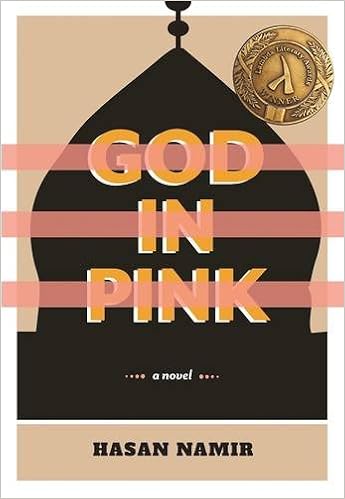
Last, I rounded out my reading with God in Pink by Hasan Namir.  Ramy is a young Muslim man living in Iraq in 2003, right in the midst of a war and a cultural revolution--and he also happens to be gay.  Struggling with what he knows his brother would term a "sexual deviancy," Ramy tries to balance his feelings with his obligations to his family and his faith.

Arsenal Pulp Press
Truthfully, I struggled with this novel, because I was not comfortable with all the depictions of heinous violence and wanton savagery.  I understand that mindless cruelty, thoughtless barbarity is simply a fact; I understand that it happens, that it's not something you can ignore if you live on the planet Earth.  I know it exists, but it's still hard to read about terrible things happening to other people.

I didn't hate this novel; rather, the opposite.  I thought God in Pink was a magnificent book depicting life in war-torn Iraq for a gay Muslim man.  It's poignant and it's guaranteed to make an impact, but, at the same time, it will tear out your heart.  I recommend reading it with great caution, like I would for Native Son by Richard White, Beloved by Toni Morrison, or The Grapes of Wrath by John Steinbeck.  Read it, but expect deep emotional turmoil.

Saturday, September 10, 2016

Unfinished #5

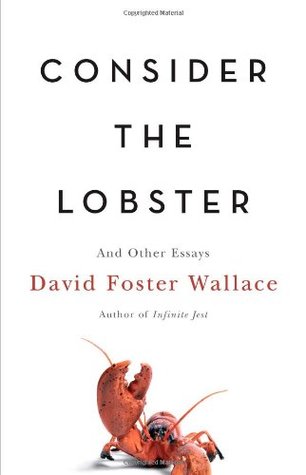
Consider the Lobster by David Foster Wallace was not a fun book for me.  I originally picked up Wallace's collection of essays as part of the Read Harder Challenge for Book Riot.  I couldn't help but be intrigued by the title, and I thought it seemed like an interesting thing to pick up; however, I quickly regretted my decision.
6751
Little, Brown & Co.

Dense and verbose, Consider the Lobster was an ill fit for me for the simple fact that it was not that interesting and Wallace has a lot to say.  I'm sure Wallace had a point to make and, perhaps, others may enjoy his style of writing, but I couldn't find it in myself to enjoy much of what I was reading.  He has an interesting sense of humor, which I didn't mind, but I wasn't entirely sold on the subject matter--or the never-ending foot notes.

The first essay is about the porn industry.  Yes, you heard me:  porn.

I was a little flummoxed as I started to read and, if I'm being honest, partially horrified.  I wouldn't say I'm a prude, but I would be lying if I said I wasn't bothered by the graphic descriptions of what the porn industry does and what some of the men and women experience in their daily working lives.  It was a little weird, and it wasn't something I could enjoy reading.  I found myself feeling like I'd been unexpectedly scarred.

It's not something I enjoyed, and it's definitely not something I'll attempt to read again.

-

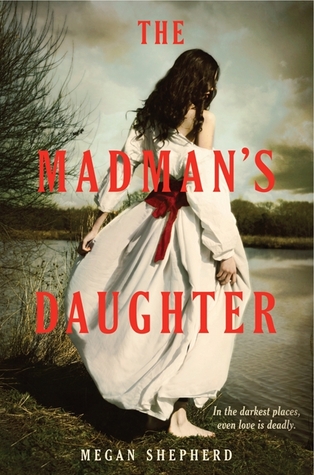
I picked up The Madman's Daughter by Megan Shepherd on a whim.  I was intrigued by the eerie cover and the story, which promised to be gruesomely scintillating and slightly macabre.  As a spin-off from H.G. Well's classic novel, The Island of Dr. Moreau, it picks up with Dr. Moreau's daughter, Juliet, and follows her dangerous path to reunite with her father--and the boy she once loved.

12291438
Balzer + Bray
It had so much promise, but it was a bit of a disappointment.  Although I probably ruined it for myself by reading the reviews of other readers (and inadvertently catching spoilers), I would probably have put Shepherd's book aside anyway.  It just didn't feel quite right to me.  I think the narrator was pretty interesting, and I think the author did a pretty good job of creating a singular voice; however, I found it was lacking some quality that would have made it great.

The author did a decent job of creating a unique Gothic atmosphere, borrowing from the works of H.G. Wells, Robert Louis Stevenson, and Mary Wollstonecraft Shelley; moreover, I thought Shepherd made a fair attempt at incorporating history into her work.  The Madman's Daughter had the architecture in place--the grim atmosphere, the subtle history woven into the story, the grisly story--and it could have been a great novel.

Except it was ruined by the implications of a love triangle.

Oh, yes, I understand that romance can blossom in the most unusual places.  Likewise, I realize the character can't help the way she feels.  However, I would have much preferred if Juliet was a little more concerned about her survival once she's out on the streets and her livelihood once she makes up her mind to find her father, a man who is known for his vicious vivisection and his nonexistent medical ethics.

I just couldn't take it seriously after that.

-

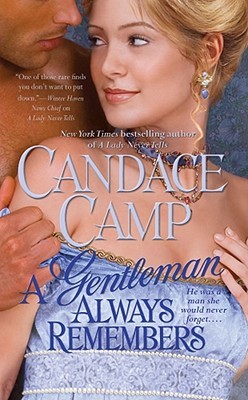
I can't remember why I started to read A Gentleman Always Remembers by Candace Camp, but I can clearly remember when I decided that it wasn't worth the time or effort to finish the novel.  Sometime in chapter two, I completely lost interest and decided to put it aside because I couldn't find anything redemptive in the characters, or the plot, or the setting--or, well, anything else.
A Gentleman Always Remembers (Willowmere, #2)
Pocket Star

In my opinion, it was just a bad novel.  A very bad novel.

I didn't think Eve was an incredibly endearing female protagonist, and, for some reason, I found Fitz to be rather preposterous.  I didn't care for either of them--or any of the other characters involved, to be perfectly honest.  They all felt like caricatures:  stiff, stagnant, boring.  I quickly grew tired of them and their individual histories.

I also noticed the story wasn't all that great, either.  I don't mind love stories, but this one felt a little contrived.  And the blackmail thread of the narrative felt silly, just another unnecessary way to propel the novel forward, because it doesn't have much substance.  Moreover, I wasn't a fan of the writing.  I didn't like Camp's style or her language or her inability to pace the story properly or develop her characters.

So, yes, I can safely say I didn't like A Gentleman Always Remembers.

Tuesday, September 6, 2016

The Prince

Prestwick House Literary Touchstone Press
The Prince
Niccolo Machiavelli
1532

The Summary
Written in the 16th century by Italian diplomat and political theorist Niccolo Machiavelli, The Prince (or Il Principe) is a political treatise on the responsibilities of the aristocracy and the rights of principalities.  Although published after his death in 1527, The Prince made waves for its use of common language (Italian, rather than traditional Latin) and its unexpected expressions on modern philosophy and politics.

The Good
The Prince is intriguing and innovative for its time.  I can appreciate it more now that I've had the opportunity to read a little more about its history, as well as its impact.  It's a book that defied convention and, more importantly, defined an entire genre on political tracts and political philosophy.

The Bad
I did not like reading The Prince.  I know part of that is because I purchased a translation that was--well, let's say less than spectacular.  While I was reading, I noticed little mistakes.  Some were simple typos, but a few were glaring grammar mistakes.  It's almost like the original Italian text was just fed through Google and published even with the transcription mistakes.

Plus I was so bored ALL THE TIME.  (Sorry for the capitals, I just feel that statement needed extra emphasis.)  It took me literal weeks to finish reading The Prince, even though it was only 114 pages.  I just couldn't keep up with it.  I was bored by it after only a few pages, and I couldn't stand reading it after I realized I couldn't consider the text reliable.

It was terrible.

I finished the book only because I needed a book on politics as one of the requirements for my Read Harder Challenge.  But, honestly, I wouldn't subject anyone to my copy of The Prince.  I would read it again for a college course, if necessary; otherwise, I don't think I'd ever read it again if I didn't have to read it.

Put simply, it's not the best reading experience I've ever had.  Not the absolute worst, but it's a close second.

The Ugly
Bad translations and boredom.