Apologies for the month-long hiatus. Things have been a bit busy lately, but I'm sure I'll get back into the swing of things soon enough. In the meantime, please feel free to browse books from the Archive--or check out this book review website from the Bristol Public Library. They have a myriad of books and reviews to explore, and they're well worth checking out: http://bristol-library-bookblog.blogspot.com/.
Enjoy and, as always, happy reading!
Showing posts with label Miscellaneous posts. Show all posts
Showing posts with label Miscellaneous posts. Show all posts
Wednesday, October 11, 2017
Wednesday, January 18, 2017
Read Harder Challenge 2017
 |
| Image courtesy of BookRiot |
- Read a book about books
- Read a book that is set more than 5000 from your location.
- Read a nonfiction book about technology.
- Read a classic by an author of color.
- Read a book in which a character of color goes on a spiritual journey.
- Read an LGBTQ+ romance.
- Read a book published by a micropress.
- Read a collection of poetry in translation on a them other than love.
A few of these challenges will be difficult. I mean, I don't know that I've ever read a book by a micropress or I've never consciously sought out one. Likewise, I don't think I've thought about a book in which a character of color goes on a spiritual journey or actively looked for an LGBTQ+ romance.
I've already found suggestions. Thanks to my coworkers (and a few hints on Goodreads), I've managed to find a potential book for just about all 24 challenges and I've already gotten a start on my reading. (By the way, I highly recommend Moon Girl and Devil Dinosaur by Brandon Montclare and Amy Reeder for reading an all-ages comic. It's very good.)
And with that, I'm off to hunt down new books!
Happy reading.
Wednesday, June 1, 2016
Comic Book Extravaganza!
This month, I decided to do something special. Since it's almost summer and it's the perfect time for sitting outside, enjoying the warm weather, and reading--and since I've been on a crazy comic kick--I thought it would be nice to review some of my latest comic book conquests. I have new Marvel volumes with Thor and the latest Ms. Marvel, a handful of indie publications featuring the Lumberjanes and the sassy, oh-so-classy Rat Queens, and some old favorites given a new lease on life (or afterlife, as the case may be) with Archie and the gang.
To me, it seemed like the best time to bask in the stories and wonderful illustrations of the comic book world.
I hope you enjoy, and happy reading.
- The Scrivener
To me, it seemed like the best time to bask in the stories and wonderful illustrations of the comic book world.
I hope you enjoy, and happy reading.
- The Scrivener
Saturday, May 7, 2016
Read Harder Challenge (Part Three)
I've discovered some more books as part of my commitment to the Read Harder Challenge of 2016, and I've discovered some great stories in my explorations. I have managed to:
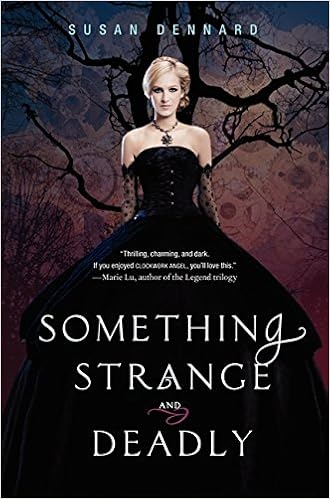
Usually, I don't read horror novels. Dracula and Frankenstein are about it for me, but I have managed to read Stephen King's The Shining and The Strange Case of Dr. Jekyll and Mr. Hyde by Robert Louis Stevenson, among a handful of other novels that are considered good and scary. And so, in order to satisfy my challenge criterion and read a horror story, I read Something Strange and Deadly by Susan Dennard.
Although I didn't initially lump Dennard's novel into the horror genre, I reconsidered my stance after necromancy and ritualized violence became involved. The novel is pretty mild, all things considered--I mean, I certainly wouldn't put it at the level of The Walking Dead or Stephen King, or even Dracula--but it's still rather gory and riddled with a tough kind of suspense that leaves you hanging on the edge of your seat, hoping for more answers. However, I think it's the zombies that pushed it over the edge and helped me give it a final designation as a horror novel.
I wouldn't call Something Strange and Deadly one of my favorites, but it isn't a bad book; in fact, I initially enjoyed it. I liked the creepy atmosphere of it coupled with the turn of the century setting, and I even liked the story: a wicked necromancer comes back from the dead to terrorize Eleanor Fitt, while the Dead continue to rise from their graves across Philadelphia. It's an intriguing adventure, to say the least; however, I wasn't entirely thrilled with the story when I examined it in retrospect. The phrase "shut pan" annoyed me to no end. (Part of me began to think the author found a new, novel phrase and decided to run with it.)
Next, in reading the first book in a series by a person of color, I picked up My Soul to Keep by Tananarive Due. As the first book in the African Immortals series, My Soul to Keep fit the bill perfectly to fulfill this challenge and check it off my list. I stumbled across it purely by accident, finding it in audiobook form from my local library's website--and I was immediately hooked.
I was intrigued by the premise: an Ethiopian warrior stumbles across the secret to immortality and spends the rest of his eternal life alternating between identities, enduring a number of years as a slave on a Southern plantation, before becoming a Civil War soldier, a jazz singer, and, finally, a college professor and author. His story is one of sorrow and loss, desperation in trying to hold tight to the ones he loves. I was riveted from the first word, from the first moment the narrator spoke and started to weave a complex, beautiful story about Dawit--David--and his wife, Jessica.
At just over eighteen hours long, it took me a number of weeks whittling away at the story to complete it, but I have to say I was thrilled. It's detailed and strongly written (and narrated by Peter Francis James, who has an amazing voice by the way), and it's absolutely riveting. The story packs a punch, pulling together a myriad of religions, myths, cultures, and countries to create a flawless tapestry of history and suspense, beauty and sorrow. I became emotionally invested in Dawit and Jessica's story, and I found myself hoping for the best outcome--and crying (just a little) when tragedy strikes. I highly recommend picking up My Soul to Keep and reading it for yourself.
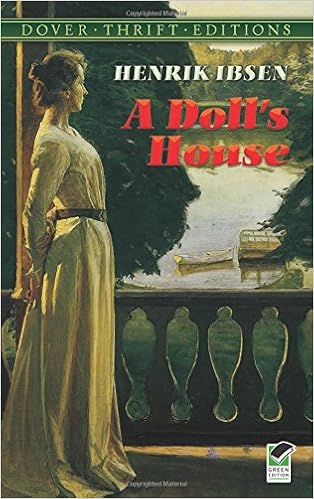
Last, I worked on Henrik Ibsen's A Doll's House. Having read a portion of the play during a theater history class in college, I was intrigued about the prospect of reading the entire play this time around. It was just my good fortune that I found a copy of the play for a dollar at my local used bookstore. It's almost as if it was fated to be.
A Doll's House is an interesting play, not action-packed or suspenseful (like either of the two entries listed above). For the time period, it's thought-provoking and, even now, it raises a lot of questions about women as spouses and mothers--and what are the typical roles of women in society. It's a play designed to make you think, rather than thrill you.
Personally, I thought it was fascinating to see how Nora managed to flaunt convention, managed to get what she wanted despite the restrictive constraints of her time that were placed upon her gender, and, more importantly, proved she was capable of making her own decisions. It's a bit slow, but I think it's worth reading at least once, especially if you're interested in theater.
- Read a horror book.
- Read the first book in a series by a person of color.
- Read a play.
 |
| HarperTeen |
Although I didn't initially lump Dennard's novel into the horror genre, I reconsidered my stance after necromancy and ritualized violence became involved. The novel is pretty mild, all things considered--I mean, I certainly wouldn't put it at the level of The Walking Dead or Stephen King, or even Dracula--but it's still rather gory and riddled with a tough kind of suspense that leaves you hanging on the edge of your seat, hoping for more answers. However, I think it's the zombies that pushed it over the edge and helped me give it a final designation as a horror novel.
I wouldn't call Something Strange and Deadly one of my favorites, but it isn't a bad book; in fact, I initially enjoyed it. I liked the creepy atmosphere of it coupled with the turn of the century setting, and I even liked the story: a wicked necromancer comes back from the dead to terrorize Eleanor Fitt, while the Dead continue to rise from their graves across Philadelphia. It's an intriguing adventure, to say the least; however, I wasn't entirely thrilled with the story when I examined it in retrospect. The phrase "shut pan" annoyed me to no end. (Part of me began to think the author found a new, novel phrase and decided to run with it.)
 |
| Harper Voyager |
I was intrigued by the premise: an Ethiopian warrior stumbles across the secret to immortality and spends the rest of his eternal life alternating between identities, enduring a number of years as a slave on a Southern plantation, before becoming a Civil War soldier, a jazz singer, and, finally, a college professor and author. His story is one of sorrow and loss, desperation in trying to hold tight to the ones he loves. I was riveted from the first word, from the first moment the narrator spoke and started to weave a complex, beautiful story about Dawit--David--and his wife, Jessica.
At just over eighteen hours long, it took me a number of weeks whittling away at the story to complete it, but I have to say I was thrilled. It's detailed and strongly written (and narrated by Peter Francis James, who has an amazing voice by the way), and it's absolutely riveting. The story packs a punch, pulling together a myriad of religions, myths, cultures, and countries to create a flawless tapestry of history and suspense, beauty and sorrow. I became emotionally invested in Dawit and Jessica's story, and I found myself hoping for the best outcome--and crying (just a little) when tragedy strikes. I highly recommend picking up My Soul to Keep and reading it for yourself.
 |
| Dover Publications |
A Doll's House is an interesting play, not action-packed or suspenseful (like either of the two entries listed above). For the time period, it's thought-provoking and, even now, it raises a lot of questions about women as spouses and mothers--and what are the typical roles of women in society. It's a play designed to make you think, rather than thrill you.
Personally, I thought it was fascinating to see how Nora managed to flaunt convention, managed to get what she wanted despite the restrictive constraints of her time that were placed upon her gender, and, more importantly, proved she was capable of making her own decisions. It's a bit slow, but I think it's worth reading at least once, especially if you're interested in theater.
Wednesday, April 20, 2016
Unfinished (Part 4)
For every ten books I enjoy, I find myself stumbling across a book I simply don't like or one I don't care to finish. Some books, I initially loved; others, not so much. Regardless, I must sadly admit defeat and say I didn't finish a single book I have listed here.
-
The Boy Detective Fails by Joe Meno was an interesting book. I was initially intrigued by the title and the cover, a gray cover with the white-and-blue image of a young boy (i.e. the boy detective) looking at what appears to be a severed arm. It's a strikingly macabre illustration that made me first pick up the book; however, as I continued to read the novel, I was less enthusiastic. While Joe Meno crafts an intriguing young adult novel about a boy still reeling from the loss of his sister to suicide, still struggling to find a new balance in his life and deal with his mental illness, I can't stay I stayed intrigued.
There's something about the tone of the novel that eventually put me off reading. Part of it may have been the fact that Billy Argo, the Boy Detective, spent the majority of his adolescence in a mental institution, or the fact that Billy, once released, is dead set on finding out what happened to his sister, looking for killers who may or may not exist. With facts like these, I couldn't help but predict one of two outcomes for the book: one, Billy Argo is seriously deluded and ends up hurting and/or killing someone in the pursuit of "justice"; or, two, Billy Argo discovers his sister was murdered and then his world/case unravels.
I could have jumped the gun by predicting the outcome of the book. I mean, I could be completely wrong about how The Boy Detective Fails ends; however, I wasn't ready to risk reading an entire book when my two options seemed so very unappealing.
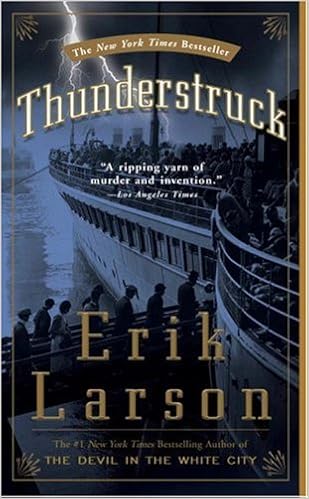
I really enjoyed Erik Larson's Thunderstruck. As a lover of books and a lover of history, Thunderstruck seemed to hit all the right notes with me. It helped me learn about an obscure part of history I simply didn't know and it introduced me to a startling new world of science and engineering, telling me about Guglielmo Marconi and his startling new invention, the wireless telegraph. I mean, I really enjoyed reading Larson's book.
But I couldn't finish it.
Don't ask me why, but I couldn't seem to commit myself to more than a handful of pages at a time. I'd read five pages, then stop; I'd read another six pages, then stop myself again, and promptly find myself distracted by another book. (Like The DUFF by Kody Keplinger, or The Martian by Andy Weir--which I highly recommend, by the way--or A Game of Thrones by George R.R. Martin.) It was a frustrating cycle and, eventually, I just gave up.
I still intend to finish reading Thunderstruck. I want to find out what happens with Marconi's machine, how a brutal murder in London is connected to the wireless telegraph--and how a mild-mannered physician became what he became. One day, I'll have answers to these questions; one day, I'll finish reading Larson's book.
Today, however, just isn't that day.
The Anatomy of Ghosts by Andrew Taylor was an interesting novel. Part mystery, part drama, it combines vaguely supernatural elements with human desperation and tragedy. It's a strangely compelling narrative. I'd liken it to watching a train crash: you simply can't look away from the devastation.
I listened to it as an audiobook, listening to John Holdsworth's personal tragedies as his life and story begin to unravel, listening as Holdsworth investigates the haunting at Jerusalem College at Cambridge--and, admittedly, I was hooked for several hours. However, I hit a point in the story when I simply didn't want to hear anymore. Perhaps, it was the antics of the Holy Ghost Club; perhaps, it was the macabre images of ghosts and corpses; perhaps, it was Frank Overshaw's imprisonment in a mental institution.
Regardless of the cause, I found I couldn't bear to witness anymore and I had to put the story aside and move on to something happier. Something with a little less gore, I thought. Something that wouldn't make my stomach squirm quite so much.
As a sidenote, I'll point out that John Telfer was an extraordinary narrator. I loved how he gave a different tone, different voice to each and every character. I couldn't help but enjoy how he managed to give each character a uniquely distinguishable voice. It was wonderful, and I'd love to find another story narrated by him.
Last, but not least, I must admit failure with one very special, very wonderful book: A Game of Thrones by George R.R. Martin.
I absolutely loved reading George R.R. Martin's novel. I loved the way the book felt: heavy with stories, full of suspense, riddled with elements of fantasy--and don't forget the dragons. But, for some reason, I just couldn't muddle through A Game of Thrones. Like Thunderstruck by Erik Larson, I couldn't stay committed to just one book.
I became distracted by other books, by slimmer volumes that offered immediate gratification, by stories that weren't quite so...tragic. It's a grim story, blood-soaked and twisted. And after witnessing a number of harrowing misadventures and horrible deaths, I found myself less and less inclined to finish reading A Game of Thrones.
I suppose having the story ruined by the HBO show didn't help matters either.
-
 |
| Punk Planet Books |
There's something about the tone of the novel that eventually put me off reading. Part of it may have been the fact that Billy Argo, the Boy Detective, spent the majority of his adolescence in a mental institution, or the fact that Billy, once released, is dead set on finding out what happened to his sister, looking for killers who may or may not exist. With facts like these, I couldn't help but predict one of two outcomes for the book: one, Billy Argo is seriously deluded and ends up hurting and/or killing someone in the pursuit of "justice"; or, two, Billy Argo discovers his sister was murdered and then his world/case unravels.
I could have jumped the gun by predicting the outcome of the book. I mean, I could be completely wrong about how The Boy Detective Fails ends; however, I wasn't ready to risk reading an entire book when my two options seemed so very unappealing.
-
 |
| Broadway Books |
But I couldn't finish it.
Don't ask me why, but I couldn't seem to commit myself to more than a handful of pages at a time. I'd read five pages, then stop; I'd read another six pages, then stop myself again, and promptly find myself distracted by another book. (Like The DUFF by Kody Keplinger, or The Martian by Andy Weir--which I highly recommend, by the way--or A Game of Thrones by George R.R. Martin.) It was a frustrating cycle and, eventually, I just gave up.
I still intend to finish reading Thunderstruck. I want to find out what happens with Marconi's machine, how a brutal murder in London is connected to the wireless telegraph--and how a mild-mannered physician became what he became. One day, I'll have answers to these questions; one day, I'll finish reading Larson's book.
Today, however, just isn't that day.
-
 |
| Hyperion |
I listened to it as an audiobook, listening to John Holdsworth's personal tragedies as his life and story begin to unravel, listening as Holdsworth investigates the haunting at Jerusalem College at Cambridge--and, admittedly, I was hooked for several hours. However, I hit a point in the story when I simply didn't want to hear anymore. Perhaps, it was the antics of the Holy Ghost Club; perhaps, it was the macabre images of ghosts and corpses; perhaps, it was Frank Overshaw's imprisonment in a mental institution.
Regardless of the cause, I found I couldn't bear to witness anymore and I had to put the story aside and move on to something happier. Something with a little less gore, I thought. Something that wouldn't make my stomach squirm quite so much.
As a sidenote, I'll point out that John Telfer was an extraordinary narrator. I loved how he gave a different tone, different voice to each and every character. I couldn't help but enjoy how he managed to give each character a uniquely distinguishable voice. It was wonderful, and I'd love to find another story narrated by him.
-
 |
| Bantam |
I absolutely loved reading George R.R. Martin's novel. I loved the way the book felt: heavy with stories, full of suspense, riddled with elements of fantasy--and don't forget the dragons. But, for some reason, I just couldn't muddle through A Game of Thrones. Like Thunderstruck by Erik Larson, I couldn't stay committed to just one book.
I became distracted by other books, by slimmer volumes that offered immediate gratification, by stories that weren't quite so...tragic. It's a grim story, blood-soaked and twisted. And after witnessing a number of harrowing misadventures and horrible deaths, I found myself less and less inclined to finish reading A Game of Thrones.
I suppose having the story ruined by the HBO show didn't help matters either.
Friday, March 4, 2016
Read Harder Challenge (Part Two)
 |
| Feiwel & Friends |
- Read a book over 500 pages long.
- Read a book of historical fiction set before 1900.
- Read a book that was adapted into a movie, then watch the movie. Debate which is better.
Shortly after the New Year, I finished reading Winter by Marissa Meyer. At just over 800 pages, it fit nicely into the "over 500 pages" category--and I couldn't be more excited. As the conclusion of the Lunar Chronicles, which spanned four books (including Cinder, Scarlet, and Cress) and spawned a novella (Fairest) and a short story collection (Stars Above), Winter is the book I've been waiting all year to read.
In Meyer's latest novel, you have the opportunity to meet Winter, princess of Luna. She is the step-daughter of Queen Levana, ruling monarch of the Lunar colony; moreover, she's the cousin of the lost princess, Selene (who's very important to the story, trust me). Several years ago, she vowed never to use her manipulative powers again--which means she's slowly going crazy--and she quietly rebels against the queen.
 |
| Open Road Media |
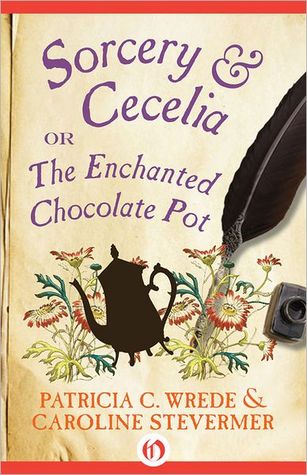
Next, I read Sorcery and Cecelia; Or the Enchanted Chocolate Pot by Patricia C. Wrede and Caroline Stevemer. Although Wrede and Stevemer's novel technically falls into the realm of fantasy, I think (read: decided) it can also be construed as a historical fiction novel. Being set in England in 1895, it's at the very cusp of the 19th century. So, yes, I think it qualifies.
Sorcery and Cecelia is a strangely pleasing novel. Think Jane Austen, but throw in a bit of wizardry and magic for spice. It's an enjoyable little story that features the exchange of letters between Cecelia and Kate, cousins who share an adventurous spirit--and a fiery attitude. Their correspondence begins at a bit of a slow pace, but once the schemes of Miranda Tanistry begin to unfold, the adventure picks up pace and soon Kate and Cecelia are drawn into a twisted web of danger and deception--and, of course, intrigue with a distinctively Victorian flavor.
It's an immensely satisfying story, and I was ultimately thrilled by the novel. It appealed to my love of classic English literature and fantasy without compromising on either one. Although I was initially hesitant to begin Wrede and Stevemer's novel (for the slow pace, mind), I'm glad I stuck with the story and finished it. It was surprisingly enjoyable and, I'll point out, exceedingly fun.
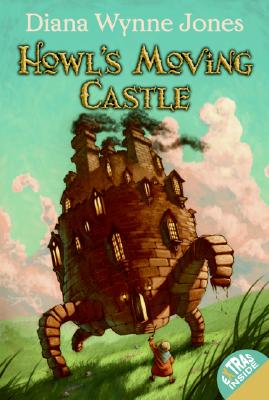
Last, I read Howl's Moving Castle by Diane Wynne Jones. Finding a book that I wanted to read and watch onscreen proved a trifle more difficult than either entry listed above. Howl's Moving Castle is both a classic young readers novel by Jones and an animated movie directed by Hayao Miyazaki. Having watched Miyazaki's movie in the past, but needing a refresher, I decided it would be appropriate to pick up Howl's Moving Castle and decide which is ultimately best.
Except I don't really have an immediate answer.
Howl's Moving Castle as a book and Howl's Moving Castle as a movie are two very different beasts. First, they are very different formats and have their own merits as such; two, they tell different stories; and, three, the characters feel completely different that I have a hard time classifying them as the same individuals. For instance, in the book, Sophie is quiet and mousy as a young woman, but she's an outspoken curmudgeon when she's morphed into an old woman; however, in the movie, she's pretty quiet throughout and she's more like a doting grandmother, rather than the nosy old grouch in the book.
Likewise, the stories have an entirely different flavor to them. In the book, the Witch of the Waste is the real danger. Her machinations have directed the kingdoms toward disaster and put Howl's loved ones in grave danger (and, yes, Howl does have loved ones outside Ingary). Howl is, in fact, running from his responsibilities and putting a number of miles between himself, the King of Ingary, and the Witch of the Waste--and the curse she's heaped upon him. But in the movie, Howl is caught in the midst of a war and the Witch of the Waste, while still a daunting figure, is certainly not up to challenging Howl, less so the Wizard Suliman (who is of a different gender entirely in the novel, but that's another story).
Anyway, as I said, I can't really pick which one is better. Miyazaki's creation is wonderful: beautiful animation, an intriguing and compelling story, and a whole heaping of creativity that takes a story and gives it wings--quite literally. And Jones's book is absolutely lovely: magical and creative, full of quirky characters and fabulous stories and a weaving, winding plot that's sure to keep readers on their toes. Both are equally wonderful and entertaining, but if I lean more toward appreciating the book, I can only say I like it best for the fact that I can physically hold it in my hands and let my imagination truly wander.
 |
| Greenwillow Book |
Last, I read Howl's Moving Castle by Diane Wynne Jones. Finding a book that I wanted to read and watch onscreen proved a trifle more difficult than either entry listed above. Howl's Moving Castle is both a classic young readers novel by Jones and an animated movie directed by Hayao Miyazaki. Having watched Miyazaki's movie in the past, but needing a refresher, I decided it would be appropriate to pick up Howl's Moving Castle and decide which is ultimately best.
Except I don't really have an immediate answer.
Howl's Moving Castle as a book and Howl's Moving Castle as a movie are two very different beasts. First, they are very different formats and have their own merits as such; two, they tell different stories; and, three, the characters feel completely different that I have a hard time classifying them as the same individuals. For instance, in the book, Sophie is quiet and mousy as a young woman, but she's an outspoken curmudgeon when she's morphed into an old woman; however, in the movie, she's pretty quiet throughout and she's more like a doting grandmother, rather than the nosy old grouch in the book.
 |
| Studio Ghibli |
Anyway, as I said, I can't really pick which one is better. Miyazaki's creation is wonderful: beautiful animation, an intriguing and compelling story, and a whole heaping of creativity that takes a story and gives it wings--quite literally. And Jones's book is absolutely lovely: magical and creative, full of quirky characters and fabulous stories and a weaving, winding plot that's sure to keep readers on their toes. Both are equally wonderful and entertaining, but if I lean more toward appreciating the book, I can only say I like it best for the fact that I can physically hold it in my hands and let my imagination truly wander.
Saturday, January 23, 2016
Read Harder Challenge (Part One)
As part of the Read Harder Challenge for 2016, I've picked several books to fulfill some of the criteria. So far, I've managed to:
For my middle grade novel, I completed Flora and Ulysses: The Illuminated Adventures by Kate DiCamillo. A fun little book with amusing illustrations, Flora and Ulysses was a nice surprise for me. I picked it up for the simple fact that it had a squirrel on the cover. I simply couldn't help myself--I mean, who wouldn't be enticed by a book that has a squirrel as a main character? (Not a friend of mine, I can say with certainty.)
Anyway, the main point is that I really liked DiCamillo's novel. It caters to a younger audience, yes, but it's accessible and enjoyable to read even as an adult. It toys with more mature themes, like divorce; however, it does so in a way that's understood by children and appealing to parents. It's a good book with a good story (an odd story, but a good story nevertheless). DiCamillo is also the author of Because of Winn Dixie, and she further cements her reputation as an exceptional author with Flora and Ulysses.
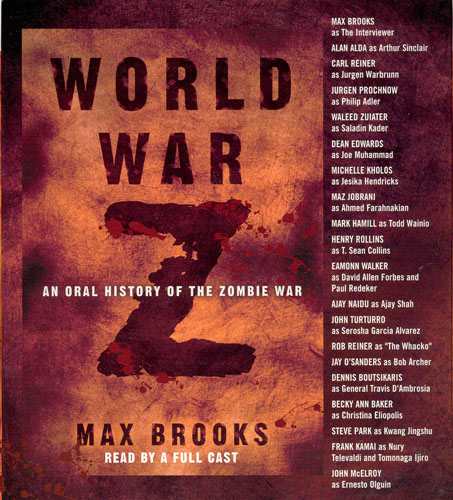
Now, to fulfill my audiobook requirement, I actually revisited World War Z by Max Brooks. I originally listened to the audiobook simply because I loved World War Z and I was intrigued to see what a full cast would be like reading it (especially since I discovered it featured Nathan Fillion, Martin Scorsese, and, of course, Mark Hamill). It was just a happy accident that I happened to stumble across an Audie Award winner from 2007.
I highly recommend listening to World War Z if you've read the book--or, actually, even if you haven't read the book. Having a full cast, World War Z is singularly entertaining as an audiobook. It's still full of the same stories, the same diversity and detail that made it such a wonderful novel, but, now, you have the chance to actually listen to those stories and more fully imagine the characters behind them.
(I will note, however, that I think I picked up an abridged version of the novel. I don't know if the abridged novel is the only one available, or if there's a copy of the audiobook out there that has every single chapter, but, regardless, I recommend trying to get your hands on the full copy for the greatest effect. My only complaint was that it left out some of my favorite chapters.)
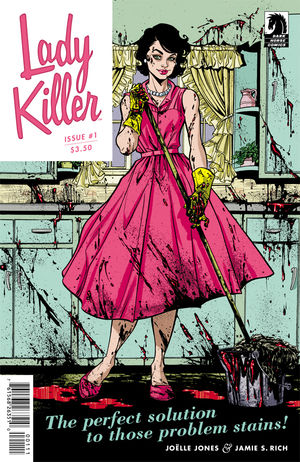
And then there's my non-superhero comic: Lady Killer by Jamie S. Rich and Joelle Jones. I picked up Lady Killer at my local comic book store on a whim, because I liked the cover (oddly enough) and I liked the idea of reading about a housewife who worked part-time as a hired killer. It was a fascinating dynamic that intrigued and compelled me to pick up a copy for myself.
Josie Schuller is far from being a superhero: she's pragmatic, ruthless, and cold-blooded. She's a survivor, which means anything goes when it comes to protecting herself and her own (including her darling twin girls). Overall, I liked reading Lady Killer. It's probably one of the best comic books I've read within the last year--and it might simply be one of the best I've ever read. Period.
For more on the Read Harder Challenge of 2016, check out Book Riot. And for more book reviews from Reader's Reach, scroll through the archives to find something you might like.
And, as always, happy reading.
- Read a middle grade novel
- Listen to an audiobook that has won an Audie Award
- Read a non-superhero comic that debuted in the last three years
 |
| Candlewick Press |
Anyway, the main point is that I really liked DiCamillo's novel. It caters to a younger audience, yes, but it's accessible and enjoyable to read even as an adult. It toys with more mature themes, like divorce; however, it does so in a way that's understood by children and appealing to parents. It's a good book with a good story (an odd story, but a good story nevertheless). DiCamillo is also the author of Because of Winn Dixie, and she further cements her reputation as an exceptional author with Flora and Ulysses.
 |
| Random House |
I highly recommend listening to World War Z if you've read the book--or, actually, even if you haven't read the book. Having a full cast, World War Z is singularly entertaining as an audiobook. It's still full of the same stories, the same diversity and detail that made it such a wonderful novel, but, now, you have the chance to actually listen to those stories and more fully imagine the characters behind them.
(I will note, however, that I think I picked up an abridged version of the novel. I don't know if the abridged novel is the only one available, or if there's a copy of the audiobook out there that has every single chapter, but, regardless, I recommend trying to get your hands on the full copy for the greatest effect. My only complaint was that it left out some of my favorite chapters.)
 |
| Dark Horse |
Josie Schuller is far from being a superhero: she's pragmatic, ruthless, and cold-blooded. She's a survivor, which means anything goes when it comes to protecting herself and her own (including her darling twin girls). Overall, I liked reading Lady Killer. It's probably one of the best comic books I've read within the last year--and it might simply be one of the best I've ever read. Period.
---
For more on the Read Harder Challenge of 2016, check out Book Riot. And for more book reviews from Reader's Reach, scroll through the archives to find something you might like.
And, as always, happy reading.
Friday, January 8, 2016
Read Harder Challenge 2016
 Last year, I attempted to complete the Read Harder Challenge. I finished a portion of the list, and I even posted some reviews on another blog I maintained (which I have since let fall into disrepair - unfortunately); however, I let it fall by the wayside after a couple of months. This year, however, I hope to change that and complete the Read Harder Challenge of 2016.
Here is a snippet of what you can expect:
- Read a horror book
- Read a nonfiction book about science
- Read a biography (not a memoir or autobiography)
- Read a book originally published in the decade you were born
- Listen to an audiobook that has won an Audie Award
- Read a book by an author that is set in the Middle East
- Read a nonfiction book about feminism or dealing with feminist themes
Anyway, I've only just started on my list, but I'm hoping to finish it and maybe work on some of my own reading challenges once I'm done. My goal for the New Year is to read more and read broadly, and maybe find some new favorites along the way.
---
For more information about the Read Harder Challenge, check out Book Riot. You can find suggestions and recommendations from other readers who are trying to find books just like you!
And for a copy of your own reading challenge, click here.
---
As always, happy reading.
- The Scrivener
Saturday, October 3, 2015
Unfinished III
I love books. I love books to the point of being obsessive, in fact, and I have a funny habit of wanting to complete each and every book I open. Sometimes, that's not practical, I know; sometimes, I don't have time or I don't have the inclination to read (shocking) or I simply lose interest - and, sometimes, a book is just plain bad.
Here are a few of those books that I just couldn't seem to finish.
I picked up Twisted Fairy Tales by Maura McHugh on a whim one day. I mistakenly thought it would give me a glimpse at my favorite fairy tales as they were originally told - they're twisted enough as it is, and they need no tweaking in order to perturb or frighten readers - but I discovered that McHugh hadn't simply gathered up my favorite fairy tales, she'd rewritten and revised them to reflect altogether different stories.
While I was intrigued by the retelling of "Snow White," in which delicate little Snow White became a fierce and merciless warrior, I just couldn't seem to stay with the story for very long. I simply had no interest in seeing my favorite tales remade.
I mean, I grew up on Disney movies, so I've seen every fathomable reincarnation of fairy tales possible; however, I've also perused the original stories, seeing them as they were intended to be read. And I expected to have a glimpse of some of the most sinister, most frightening, most gruesome fairy tales imaginable, as the Hans Christen Anderson and the Brothers Grimm intended.
I was a bit disappointed, and I quickly lost interest.
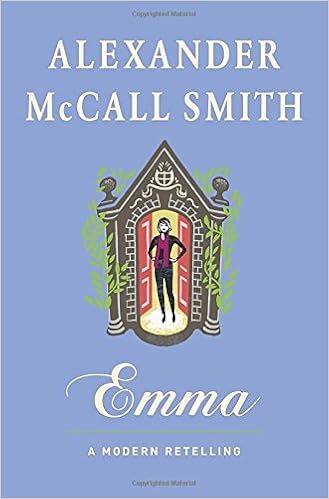
Emma: A Modern Retelling by Alexander McCall Smith is, of course, a remake of the classic Emma by Jane Austen. Although it borrows heavily from the original work, Emma: A Modern Retelling is an entirely unique piece of work that gives a delightfully modern twist to Austen's most beloved characters.
McCall Smith has an interesting way of reincarnating Jane Austen's characters, her prose, her wit, her intelligence, without compromising his own sense of style and his own sense of humor. And I think he does a fine job of bringing Emma into the twenty-first century.
However, I didn't find Emma endearing in the slightest. As a character, she had a narrow field of vision and she had a selfishness that just didn't agree with me. Granted, I enjoyed McCall Smith's writing and I liked the overall tone of the novel - and I'm quite sure that Smith stays close to Austen's original characters - but I just couldn't seem to enjoy Emma.
I disliked her on a personal level, especially when she continued to exert her influence on Harriet. I just didn't like her and, with her being the main character of the novel, I struggled to stay with it, until, finally, I just gave up and put it aside.
I was enchanted by the cover of The Night Gardener by Jonathan Auxier. I absolutely loved the way it looked, the blues and greens and blacks that combined to form a chilling and intriguing cover. It invited me in, enchanted me unexpectedly, and I could not wait to read the book.
And then I read the book.
I liked The Night Gardener. I was intrigued by the premise, I admired the characters and character descriptions, and I even enjoyed the level of detail which Auxier provided. He fashioned a tale that was both spooky and suspenseful without growing macabre or gruesome. It seemed to have such promise - and I really had high hopes - but I just couldn't dig into the story.
I don't know what happened. I put it down, and then I finally put it aside without bothering to get farther than the fourth or fifth chapter.
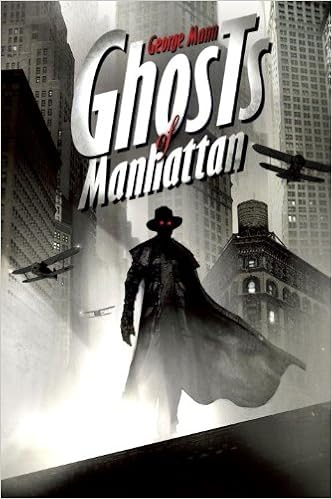
Ghosts of Manhattan by George Mann appealed to my interest in science-fiction and history, creating a fascinating world that opens in the midst of the Prohibition - when Britain still claims an empire, Queen Victoria has only recently been buried, and biplanes and coal-powered cars are a favored form of transportation - and fashions an intriguing antihero in The Ghost.
Unfortunately, The Ghost simply felt like a cruder reincarnation of Batman, living a double life (which reminisced of Fitzgerald's Gatsby) and fighting his own personal demons as he fights crime, and I wasn't impressed by the writing. It read like a noir film feels: dramatic, drab, and gray - and I just didn't care for it.
Not to mention I wasn't too fond of the unmitigated gore. It just didn't suit me.
Maybe, I'll try it again in the future and, maybe then, I'll appreciate it; however, for the time being, I'll stick with other books.
Here are a few of those books that I just couldn't seem to finish.
-
 |
| Barron's Educational Series |
While I was intrigued by the retelling of "Snow White," in which delicate little Snow White became a fierce and merciless warrior, I just couldn't seem to stay with the story for very long. I simply had no interest in seeing my favorite tales remade.
I mean, I grew up on Disney movies, so I've seen every fathomable reincarnation of fairy tales possible; however, I've also perused the original stories, seeing them as they were intended to be read. And I expected to have a glimpse of some of the most sinister, most frightening, most gruesome fairy tales imaginable, as the Hans Christen Anderson and the Brothers Grimm intended.
I was a bit disappointed, and I quickly lost interest.
-
 |
| Pantheon |
McCall Smith has an interesting way of reincarnating Jane Austen's characters, her prose, her wit, her intelligence, without compromising his own sense of style and his own sense of humor. And I think he does a fine job of bringing Emma into the twenty-first century.
However, I didn't find Emma endearing in the slightest. As a character, she had a narrow field of vision and she had a selfishness that just didn't agree with me. Granted, I enjoyed McCall Smith's writing and I liked the overall tone of the novel - and I'm quite sure that Smith stays close to Austen's original characters - but I just couldn't seem to enjoy Emma.
I disliked her on a personal level, especially when she continued to exert her influence on Harriet. I just didn't like her and, with her being the main character of the novel, I struggled to stay with it, until, finally, I just gave up and put it aside.
-
 |
| Harry N. Abrams Publishers |
And then I read the book.
I liked The Night Gardener. I was intrigued by the premise, I admired the characters and character descriptions, and I even enjoyed the level of detail which Auxier provided. He fashioned a tale that was both spooky and suspenseful without growing macabre or gruesome. It seemed to have such promise - and I really had high hopes - but I just couldn't dig into the story.
I don't know what happened. I put it down, and then I finally put it aside without bothering to get farther than the fourth or fifth chapter.
-
 |
| Pyr |
Unfortunately, The Ghost simply felt like a cruder reincarnation of Batman, living a double life (which reminisced of Fitzgerald's Gatsby) and fighting his own personal demons as he fights crime, and I wasn't impressed by the writing. It read like a noir film feels: dramatic, drab, and gray - and I just didn't care for it.
Not to mention I wasn't too fond of the unmitigated gore. It just didn't suit me.
Maybe, I'll try it again in the future and, maybe then, I'll appreciate it; however, for the time being, I'll stick with other books.
Saturday, April 18, 2015
Unfinished 2.0
Like most bibliophiles (or so I assume), I have a very long list of books that are waiting to be read. Some books, I can dive right in and devour them; others, I find are a little tougher. And, if we're being honest, I even have some that I let slip through my fingers because I simply can't find it in my heart to complete them. Here are just a few of those:
Mere Christianity by C.S. Lewis
Honestly, I've always enjoyed C.S. Lewis. He was a gifted writer and orator, and he produced phenomenal works of literature. His writing has always seemed wonderful, beautiful and uncannily inspiring. Even Mere Christianity has that quality, a beautiful simplicity in which one man attempts not to justify or exonerate his faith but to explain it - to show readers and listeners the most important aspects of his religion.
I have honestly tried to read Mere Christianity. I have succeeded, in some measure, in completing a handful of the essays contained within it; however, I haven't yet managed to complete the entire compilation. I love the language of Lewis's work, but I find it relatively dense, manifesting in a theological examination of Christianity that simply doesn't hold my attention for long periods of time.
One day I may finish reading it. Until then, I intend only to read snippets and relish the best parts I find.
Finding Pride by Jill Sanders
For me, Finding Pride was unreadable. I mean, if I'd stayed and focused and worked hard to slog through the remainder of the novel, I probably could have done it. I just didn't want to for the simple fact that I really, really disliked it.
I couldn't appreciate any of the setting descriptions, I didn't care for the characters, and I found the story a bit trite. The novel seemed to lack something essential, a special quality that could keep me committed. It lacked vibrancy, it lacked life. It was like all the characters were carved from stone, emotionless and cold, and I felt absolutely nothing for them.
Finding Pride didn't appeal to me in the least. Granted, I read it as an e-book, which could make a difference (or explain the hurried errors that seemed to populate the pages); however, I'm not counting on liking it in any format in which it exists. I doubt I will ever finish it, not if I have anything to say about it.
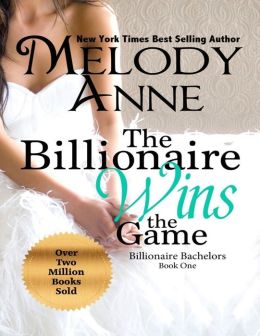
The Billionaire Wins the Game by Melody Anne
Let me say, upfront, that I have a bad habit of randomly picking out free e-books on my tablet. I make some of the worst decisions when it comes to reading material if I'm using an electronic device. I don't know why, I simply do - and The Billionaire Wins the Game is a stellar example of this.
Not only do the characters feel like caricatures, wavering on a pendulum of extreme emotions, they feel rigid, mechanical. More to the point, they just feel wrong. I could never keep track of how they felt, how they were going to feel, and how those emotions would manifest and, before I even reached the middle of the story, I was battling whiplash.
But that isn't even the worst part. No, I hated the entire interaction between the central protagonists: the shotgun wedding that occurs as if it's okay to coerce another person into a marriage with veiled threats and poisonous charm, as if its okay to blackmail a woman over the livelihood and custody of her unborn child.
I'll say this now: It is not okay. Ever.
And I hated that I was suckered into reading a huge chunk of the novel before I finally gave up, threw it aside (figuratively speaking), and started on something more substantial. Although I finished a portion of the book (and, yes, I even read the last five pages, because I can't leave any novel without some kind of closure), I will never pick it up again. Honestly, it wasn't even worth the time I spent to open to the first page.
-
 |
| HarperCollins |
Honestly, I've always enjoyed C.S. Lewis. He was a gifted writer and orator, and he produced phenomenal works of literature. His writing has always seemed wonderful, beautiful and uncannily inspiring. Even Mere Christianity has that quality, a beautiful simplicity in which one man attempts not to justify or exonerate his faith but to explain it - to show readers and listeners the most important aspects of his religion.
I have honestly tried to read Mere Christianity. I have succeeded, in some measure, in completing a handful of the essays contained within it; however, I haven't yet managed to complete the entire compilation. I love the language of Lewis's work, but I find it relatively dense, manifesting in a theological examination of Christianity that simply doesn't hold my attention for long periods of time.
One day I may finish reading it. Until then, I intend only to read snippets and relish the best parts I find.
-
 |
| Jill Sanders |
For me, Finding Pride was unreadable. I mean, if I'd stayed and focused and worked hard to slog through the remainder of the novel, I probably could have done it. I just didn't want to for the simple fact that I really, really disliked it.
I couldn't appreciate any of the setting descriptions, I didn't care for the characters, and I found the story a bit trite. The novel seemed to lack something essential, a special quality that could keep me committed. It lacked vibrancy, it lacked life. It was like all the characters were carved from stone, emotionless and cold, and I felt absolutely nothing for them.
Finding Pride didn't appeal to me in the least. Granted, I read it as an e-book, which could make a difference (or explain the hurried errors that seemed to populate the pages); however, I'm not counting on liking it in any format in which it exists. I doubt I will ever finish it, not if I have anything to say about it.
-
 |
| Lulu Press |
Let me say, upfront, that I have a bad habit of randomly picking out free e-books on my tablet. I make some of the worst decisions when it comes to reading material if I'm using an electronic device. I don't know why, I simply do - and The Billionaire Wins the Game is a stellar example of this.
Not only do the characters feel like caricatures, wavering on a pendulum of extreme emotions, they feel rigid, mechanical. More to the point, they just feel wrong. I could never keep track of how they felt, how they were going to feel, and how those emotions would manifest and, before I even reached the middle of the story, I was battling whiplash.
But that isn't even the worst part. No, I hated the entire interaction between the central protagonists: the shotgun wedding that occurs as if it's okay to coerce another person into a marriage with veiled threats and poisonous charm, as if its okay to blackmail a woman over the livelihood and custody of her unborn child.
I'll say this now: It is not okay. Ever.
And I hated that I was suckered into reading a huge chunk of the novel before I finally gave up, threw it aside (figuratively speaking), and started on something more substantial. Although I finished a portion of the book (and, yes, I even read the last five pages, because I can't leave any novel without some kind of closure), I will never pick it up again. Honestly, it wasn't even worth the time I spent to open to the first page.
Subscribe to:
Posts (Atom)