"All good books are alike in that they are truer than if they had really happened
and after you are finished reading one you will feel that all that happened to you
and afterwards it all belongs to you; the good and the bad, the ecstasy, the remorse,
and sorrow, the people and the places and how the weather was."
Ernest Hemingway
Showing posts with label American classics. Show all posts

Saturday, June 18, 2016

Read Harder Challenge (Part Five)

This week, I completed three more challenges:
  • Read a collection of essays
  • Read a book under 100 pages
  • Read a book by or about a person that identifies as transgender
Vintage Books
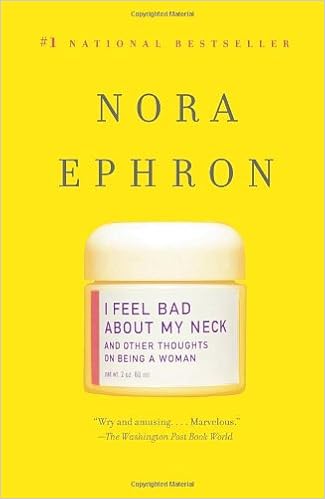
For my first challenge, I had to read a collection of essays.  At first, I picked up Consider the Lobster by David Foster Wallace, but I quickly changed my mind after attempting to read the first essay.  (Way too dense, and way too much porn for my taste.)  So, in my second attempt to finish this challenge, I read I Feel Bad About My Neck:  And Other Stories on Being a Woman by Nora Ephron--and am I glad that I did.

I absolutely loved reading Nora Ephron's essays on what it means to be a woman and, more importantly, what it feels like to have to deal with time, age, facial products, and oversized purses.  I laughed liberally throughout reading this book.  Her experiences are universal and her humor is outrageous.  Even if I couldn't relate to every experience, her essays had a way of picking out the familiar, like frustrations with wrinkles or hair dye, hatred of purses because they have a way of eating change and spitting up tic-tacs, or fighting over directions with a spouse.

It's a short read, but it's an incredibly fun journey.  I enjoyed every story in Ephron's book, but I especially enjoyed her wit and her candor and her humor as she recounted her many, familiar experiences.  She managed to connect with me as a reader and as a woman, and I appreciated her book for that.

Next, I quickly read Young Goodman Brown by Nathaniel Hawthorne.  Although it probably constitutes as a short story rather than a "book," which the challenge calls for, I thought it would be a good place to start.  I don't often read short books or novellas, and I had a dickens of a time trying to find a book under 100 pages.  Even How to Train Your Dragon, which took me part of a day to read, was over 100 pages.

So...short story it is!
Wildside Press

The plot of Young Goodman Brown is simple:  Goodman Brown takes leave of his wife, Faith, for some unknown errand in the forest, whereupon he meets a stranger in the forest carrying a black serpent-shaped staff.  He stumbles across various townspeople who travel the forest with him, until he reaches an altar in the middle of the wood where new acolytes are being brought into the fold--and one of them is his wife, Faith.  Events transpire which test his faith, causing him to live the rest of his life distrustful of his neighbors--and then he dies.

If you were hoping for a surprise, I'm sorry if I ruined the story for you, but I have to say that I didn't understand the point of this story.  On the one hand, Hawthorne sets up the episode as a potential dream, so I have no way of knowing whether or not his entire ordeal is real--which means a dream completely ruined his life.  On the other hand, if it is real, he has the ability to see the hypocrisy and sins of his neighbors, which also ruined his life.

I didn't like it.  I'm fairly certain that Faith was supposed to represent his actual faith and, when he lost her in the dream, he lost her in real life.  And I'm pretty positive that the traveler with the serpent staff is the devil, since all the evil people know him and Goodman--a good man--has the good sense to fear him.  There's so much metaphor and symbolism in, like, 12 pages that it's almost sickening.
Scholastic Press
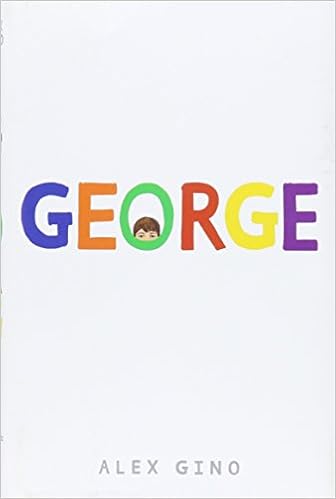
Last, I read George by Alex Gino as part of my reading a book by or about a person who identifies as transgender.  I don't know anything about the author, but I do know that the book is about George, a little boy who would rather be a girl and who desperately wants to play Charlotte in the school play of Charlotte's Web.

One of the things I noticed about this book was how George, who did not describe or identify himself as a boy, is consistently referenced with feminine pronouns.  I thought it was a nice touch, because it seemed to make an impact, seemed to impart the importance of a person who is transgender to identify with the gender they choose.  It's an intriguing and eye-opening concept that, I thought, adequately conveyed some of the struggles that George encounters.

I actually enjoyed reading George more than I thought I would.  I'll admit, I was a little hesitant, because I had my own preconceived notions with which to contend, as well as others.  Given the debate in the media over which bathrooms transgender individuals should and shouldn't use, I really didn't want to read a book that was full of ugly prejudices or a novel that would dwell upon hurtful things.  I was afraid of finding a depressing novel.

Luckily, I didn't.  George is surprisingly upbeat, and I found it was rather fun to follow his journey from George to Charlotte, how he managed to fulfill the slogan on the back cover:  "Be Who You Are."  It has a positive message, and it's appealing because it doesn't get bogged down by hateful language; rather, it focuses on George's journey and her success in embracing her own identity.

Saturday, October 5, 2013

Unfinished

Today, I decided to take a break from the books I have finished and take a look at the novels I've currently left unfinished.  I have a small list of books which I haven't completed - books which I am uncertain I will ever complete now or in the future - or I haven't liked well enough to read from cover to cover, so they've been put aside, forgotten, or ignored.

And, now, they're here.

-
Image courtesy of
www.booksamillion.com

Vellum by Hal Duncan

It's an interesting concept, a unique blend of myth interwoven with lore and magic and insanity.  The first couple of chapters are intriguing, being creatively disjointed and wildly reordered in the mind of the story's only first-person narrator; however, the novel keeps the same, disjointed style throughout, which makes it infinitely more confusing and infinitely less enjoyable.

It's especially frustrating when old familiar characters are overlapped with ancient Mesopotamian gods and reformed into new characters with similar faces, different names, and different histories.  As a side note, it's also intensely violent and riddled with gore.  Thus, between the confusion and the violence, Vellum is a hard novel to stomach let alone understand.

Which is why it remains unfinished on the shelf of my bookcase.

-

Image courtesy of
www.booksamillion.com
A Tree Grows in Brooklyn by Betty Smith

A classic, I have no doubt.  From the few chapters I've read, the novel has a lovely cadence - a tempo that makes the reading of it almost poetic.  It's a beautiful story, well-written and detailed and enjoyable.  And, yet, I can't even force myself to slog through the rest of it.

I have no qualms about A Tree Grows in Brooklyn, I just can't seem to finish it.  I've tried, but I stop about three or four chapters into Francie's tale, put it aside, and promptly forget about it.

One day, I will finish it (and write about it).  Today, however, is just not that day, or so it would seem.

-

Ship Made of Paper, A By Scott Spencer
Image courtesy of
www.harpercollins.com
A Ship Made of Paper by Scott Spencer

Not a bad novel by any means; but it just happens to be unappealing to me.  Perhaps, I've struggled with the pace of the novel - the slow, endless trudge through detail and script - or the languid build of the story as it limps to some sort of resolution I can't really foresee.  Either way, this novel just seems uninteresting to me.

I can't say I will ever finish this novel.  Although passably interesting to me, it's just never been able to keep my attention for more than a few pages at one time.  The characters, while sometimes intriguing, just aren't that endearing and the story remains unremarkable.

In short, I may never finish reading it.

-

Undoubtedly, more will follow in later weeks.  More novels I haven't finished, or simply haven't enjoyed and haven't had the patience or fortitude to write a proper review.  So, make of them what you will - and voice your own opinions.

- The Scrivener

Sunday, August 25, 2013

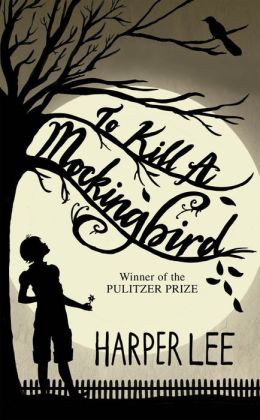
To Kill a Mockingbird

To Kill a Mockingbird
Image courtesy of
www.barnesandnoble.com
To Kill a Mockingbird
Harper Lee
1960

The Summary
For young Scout (Jean Louise) Finch, growing up in Maycomb county of Alabama presents its share of difficulties and joys:  playing pretend in the front yard, struggling to understand grown-up antics, trying to convince the mysterious Boo Radley to leave his house, reading the newspaper with Atticus, her father.  But The Great Depression has left its indelible mark, and one court case may very well change the course of history for the Finch family.

The Good
Harper Lee's novel is absolutely beautiful.

Told from the perspective of Scout Finch, a young girl living and growing up during the Great Depression, when hope sometimes seems at its lowest and equality seemes to appear only periodically, To Kill a Mockingbird opens the door on a world struggling to cope with new ideas and old cultural values - and children trying to cope with old ideas as they try to form their own.

Besides depicting a moving, heart-wrenching tale of growth and experience and portraying one, crucial court case that will rock the county of Maycomb to its foundations - and change Scout's and her brother's (Jem's) lives forever - Lee also creates a host of endearing and memorable characters.  And, through the voice of Scout, Lee brings her characters to life, fashioning a dynamic and beautiful piece of literature in the heart of one, tiny Southern town in Alabama.

To Kill a Mockingbird is more than a memorable book, however, it's an iconic novel about race, religion, class, gender, and learning to balance all these things in the earliest parts of adolescence.  In short, it's a novel about growing up in a world tinged by racism and prejudice and learning how to rise above it

The Bad
Some harsh language may appear; however, the most dramatic - or, rather, traumatic - episodes will occur in the latter half of the book with the trial one Tom Robinson, a man falsely accused simply because of the color of his skin.  The fate of Tom Robinson, and the results of his trial, are certain to put an ugly spin on an otherwise wonderful book.

The Ugly
Bob Ewell.

If you've ever had the opportunity to read Lee's novel, you'll certainly know what I mean.

Wednesday, January 23, 2013

The Things They Carried

Image courtesy of
www.booksamillion.com
The Things They Carried
Tim O'Brien
1990

The Summary
Written with the author's personal experiences in mind, The Things They Carried chronicles the violence and aftermath of the war in Vietnam.

Embellished with facts and fiction, Tim O'Brien's novel provides readers with an intimate and emotional connection to the soldiers of Vietnam, as well as insight into the physical, emotional, and mental carnage that occurred before, during, and after the Vietnam War.

The Good
Well-written and dynamic, this novel will keep you riveted from cover to cover.  The Things They Carried provides intimate insight into the lives and minds of soldiers.  It's deep, thought-provoking, and astonishingly compelling.

More importantly, it's an interesting story because so much of it involves fact - perhaps, even reminisces of a memory or two - but it combines factual events with fictional chracters and situations.  It's strange, slightly surreal, but interesting nonetheless.

The Bad
Although O'Brien creates an exceptional novel, his book contains gratuitous amounts of foul language and violence.  Not only is it graphic in nature, it's gruesome and slightly terrifying.

Admittedly, it isn't for the faint of heart - or younger readers.

The Ugly
To be perfectly honest, The Things They Carried is a heavy, emotionally draining piece of work.  Full of graphic details of violence and gore, it displays the most frightening and perilous sides of the Vietnam War from the perspective of a soldier.

Perhaps the most disturbing aspect of this novel, however, is not the elements of fiction which embellish its pages but, rather, how much of it remains factual.

Tuesday, November 20, 2012

Narrative of the Life of Frederick Douglass

Image courtesy of
www.booksamillion.com
Narrative of the Life of Frederick Douglass
Frederick Douglass
1845

The Summary
Recounting the life of former slave and famous orator Frederick Douglass, Douglass' narrative describes the atrocities he was forced to face and the conditions he endured - and from which he fled - as a slave in Maryland.

The Good
Douglass' narrative is incredibly detailed and well-written.  Besides illuminating the crimes of slaveholders - which, by the way, Douglass shows no fear in naming names and revealing the most terrible crimes against human nature - and offering an intimate glance into the conditions under which slaves suffered, Douglass weaves an impressive tale of human survival.

His constant struggle, his never-ending fight to achieve freedom from slavery, and his flight from oppression will pluck at your heart strings.  It's deep and thought-provoking, and more than impressive.  Douglass has written a work well-worth reading.

The Bad
Although relatively brief in nature, Douglass' work can seem fairly dense and absolutely heart-wrenching.  For its size, it appears easy to read; however, certain sections may prove difficult due to the brutality recorded there.

The Ugly
Douglass's narrative reveals the sheer barbarity of slavery and provides detailed accounts of unprovoked cruelty toward African American men and women.  He reveals every terrible facet of slavery - and he does so without ever altering his purpose or concealing facts behind vague language.

Although Douglass could have recollected events of a less graphic nature, he adamantly refuses to mask the monstrosities of slavery as he saw and experienced them.  He stays true to his novel, weaving threads of truth into his work and offering the startling implication that such cruelty not only happened more than once, but appeared commonplace throughout the United States.

Tuesday, May 8, 2012

Beloved

Image courtesy of
www.booksamillion.com
Beloved
Toni Morrison
1987

The Summary
Beloved primarily tells the story of Sethe, an escaped slave, and recounts the horrors she endured at Sweet Home in Kentucky, the haunting recollections of her dead child, the strained relationship she has with her living daughter Denver, and the mysterious connection she has with a girl who names herself only as Beloved.

The Good
Based loosely on true events in the life of escaped slave Margaret Garner, Toni Morrison weaves a heart-wrenching tale of one woman's attempt to accept and live with - or, better yet, escape - the torments of the past.

It's rough, it's raw, and it's guaranteed to open your eyes on more than a few topics surrounding the treatment of slaves and the suffering endured even after the abolition of slavery.

The Bad
This novel often hops perspectives and backslides into the past, making the divide between characters - and time - a difficult thing to pinpoint.  Additionally, the ambiguity of Morrison's novel can often leave the reader questioning events, rather than acknowledging the impact it was meant to have.

There's no doubt Beloved will make you think twice, but, occasionally, thinking twice may require rereading certain passages to understand the whole context and meaning.

Moreover, Morrison occasionally dabbles modern speech with 19th century slave dialect, which makes Sethe's story a little less than "true-to-life."  Although it appropriately links Sethe's story to the Civil Rights movement and current conflicts, it can occasionally be frustrating to make the distinctions between historical fact and modern embellishment.

The Ugly
Many of the events in Sethe's life are tragic, including the gruesome death of her eldest daughter, the dark history she has with Sweet Home, the awful scars she carries on her back in the shape of a choke cherry tree, and the terrible abuse she faced under the vile Schoolteacher.

Rest assured, you may very well weep for Sethe and her children.  And, if Sethe's story doesn't break your heart, then Beloved's will.

Tuesday, April 10, 2012

The Catcher in the Rye

Image courtesy of
www.booksamillion.com
The Catcher in the Rye
J.D. Salinger
1951

The Summary
After moving to California with his brother D.B., Holden Caulfield recalls all the "madman stuff" that happened to him just before Christmas.  He remembers his tenure at Pencey Prep (the military school which he attended - and from which he was promptly expelled) and his misadventures in New York City, opening the door on a world warped by teenage angst, desperation, and cynicism, and the search for identity.

The Good
J. D. Salinger creates an amazing and realistic character in Holden Caulfield.  His astute observations, his eccentric and scattered identity, and his uninhibited cynicism will draw you in and cut right to your heart.

Despite the unusual quirks in mood and stability, however, Holden possesses the capability to relate to everyone.  Although our desires may not be so spontaneously fulfilled as his, he often speaks from a place of knowledge and experience.

What he knows and what he experiences you may have learned and experienced also - which makes Holden all the more real and remarkable.

The Bad
Although entirely entertaining, the world of The Catcher in the Rye exists in the mind of Holden Caulfield, which generally means uninhibited wit, candid observations, and prolific amounts of swearing.  (I can't say there's a page in this novel that doesn't have at least some type of offensive language - or questions about sexuality - on it.)

Simply put, Holden has no qualms about relaying his each and every thought or sprinkling in an expletive or two (or ten) to embellish his vocabulary.

The Ugly
Although Holden's story opens with his admission about the "madman stuff" that happened in New York, you don't have a conscious understanding of just how broken and disjointed his mind may have become.

His fear of disappearing, his sudden and inarticulate desires, his intense and frightening feelings of depression, and his attempts to speak to Ally (his deceased brother) remind you that he is, in fact, a very damaged individual.  And his fears grow disproportionately large and foreboding as the novel progresses.

You can visibly track the progression of all the "madman stuff," as his body and mind begin to wear down.  He appears to be following a path of self-destruction - and that's probably the most frightening aspect of this novel, because Holden could just as easily be you.

Tuesday, March 6, 2012

Native Son

Image courtesy of
www.booksamillion.com
Native Son
Richard Wright
1940

The Summary
Native Son chronicles a brief time in the life of Bigger Thomas, a young black man living in Chicago before the outbreak of World War II.

This novel reveals the conditions Bigger confronts while living in Chicago's "Black Belt," such as a rat-infested apartment, inflated rent prices, racism, fear, and hatred, and how his growing anger with the status quo results in an irrevocable crime that may cost him his life.

The Good
For such an emotionally and psychologically complex novel, Richard Wright has made Native Son into an accessible story.  Despite its great length, Native Son reads fairly easily and pages nearly turn by themselves.  Moreover, Wright clearly defines his characters and gives them a depth rivaled only by the poignant nature of his novel.

The Bad
Wright has no intention of pulling punches with this novel.  It is a raw and uncompromising look at Bigger's life and his rising resentment - and clarity - concerning the segregation of and corruption in society.

Additionally, Wright never seeks to make Bigger a likeable character; instead, he looks to toy with your emotions and twist your sympathies into knots and wear your nerves raw.  Like John Steinbeck with The Grapes of Wrath, he will force you to look at the uglier side of human existence for long periods of time and rub your nose in the ultimate unfairness of society.

The Ugly
Racism, hatred, fear, and anger permeate every page of Wright's novel.  The treatment Bigger faces from the larger (and richer) white population of Chicago and his own actions in retaliation will undoubtedly appall and disgust.

Although Native Son promises accessibility to readers with its straightforward language and uncomplicated dialogue, this novel sometimes requires a break.  Murder, brutality, racism, questionable actions, and extreme violations of human rights are just the tip of the iceberg.

And, I can assure you, putting aside this novel may be required for the particularly harsh scenes; otherwise, I see no way of surviving Native Son with your emotional stability intact.

Wednesday, February 29, 2012

The Great Gatsby

Image courtesy of
www.booksamillion.com
The Great Gatsby
F. Scott Fitzgerald
1925

The Summary
Written from the perspective of Nick Carraway, a young man from Minnesota who recently moved to New York City, The Great Gatsby catalogs his experiences as he enters into the company of West Egg residents, Daisy and Tom, and slips into their glorious and careless world of glitz, glamour, and gold.  Moreover, he narrates the events that transpire as he encounters his enigmatic and charming neighbor, Jay Gatsby, who strives to realize his dream of reclaiming his long-lost love.

In short, it's a story about the American Dream - and what happens when it slips through one's fingers.

The Good
Set within the roaring twenties, among the socialites and party-goers of the day, The Great Gatsby is a novel which tears away the curtain masking the irresistibly famous and incomprehensibly rich.  Through the eyes of Nick, Fitzgerald weaves a compelling tale about the seamy underside of fame and crafts beautiful characters, who have been influenced - and, yes, one might say corrupted - by wealth and prestige.

Fitzgerald illuminates the characters of Jay Gatsby (Nick's remarkably reserved and simultaneously ostentatious neighbor), Daisy and Tom Buchanan (West Egg residents, who are bound up in riches, fame, and extramarital affairs), and Myrtle Wilson (a vibrant, beautiful woman from the "Valley of Ashes" between West Egg and New York, who has an affair with Tom) and reveals their story as their lives intertwine in a world of fraudulent happiness and carelessness.

In this novel, Fitzgerald will tear apart your preconceived notions and, essentially, rattle your cage with the awful, ugly truth that lies beneath the world of Daisy and Tom.  It's beautiful, but it's tragic just the same.

The Bad
Like many great novels, tragedy is an integral part to this story.  While you may not cry at the inevitability of Nick's story or the tragedy which he will face and, eventually, try to escape, it is still a story that will tug on the heart strings.

It is a novel, however, which will make you question the integrity of human beings and express disgust, like Nick, for a sense of moral deterioration.  It will make you doubt who you can trust, because who is compassionate enough and honest enough to tell the truth?

Perhaps, no one.

The Ugly
At the end of this book, you may just go away from the experience, like Nick Carraway, with a bad taste in your mouth.

Tuesday, February 21, 2012

The Grapes of Wrath

Image courtesy of
www.booksamillion.com
The Grapes of Wrath
John Steinbeck
1939

The Summary
The Grapes of Wrath, simply put, tells the story of the Joad family and their desperate journey to California.  After being forced off of their land by the owner, who sold his land to a bank, who in turn sold it to a corporation - and so on and so forth.  It's a never ending cycle - the Joad family moves west, hoping to find work (as promised in the pamphlet they discovered) and start a new life.

The Good
While the novel is primarily concerned with the Joad family and their flight across the country, several chapters - let's call them "bridge chapters," for the sake of being concise - describe the overall experience of the families forced to flee their homes.  These "bridge chapters" not only connect the Joad family to the larger, collective experience of these migrant people, but they also introduce the reader to a more intimate portrait of the suffering, terror, and desperation these people felt and experienced, during this great and terrible time.

While Steinbeck's novel isn't "delightful," it certainly has the qualities of a page turner.  It will keep you on the edge of your seat, wondering if the family will make it, if they will endure, and if they will make a home in California - if they can ever survive the journey.  On some level, this book will make you hope there is such a thing as happily-ever-after.

But, whether you find a happy ending, or not, is really up to you.

The Bad
This is a book that will break your heart, and then it will come back and stomp it into the dirt.

As Steinbeck once wrote in a letter to his publisher, "I am not writing a satisfying story.  I've done my damndest to rip a reader's nerves to rags, I don't want him satisfied.  And still one more thing - I've tried to write this book the way lives are lived not the way books are written."

The Ugly
The story of the Joad family occurs during a particularly chaotic time in American history.  It is a decade, when stock markets have crashed and banks have gone under; when dust has choked nearly half the country; when war - or an eviction notice - looms on the horizon, like the dusts of Oklahoma and Arkansas; when economic hardship has become the norm and exploitation of the poor, weak, and desperate happens regularly.

People suffer.  People die.  People are treated as less than human - and may become less than human through the fear and loathing of others, and under their own desperation.

In short, you - and the Joads - will be faced with tragedy again and again.

Tuesday, February 14, 2012

The Sound and the Fury

Image courtesy of
www.booksamillion.com
The Sound and the Fury
William Faulkner
1929

The Summary
Divided into four parts, The Sound and the Fury catalogs the events in the gradual deterioration of a southern family.  It presents events from the perspectives of Benjy (Benjamin), Quentin, and Jason Compson, as well as Dilsey, a servant in the house.  Besides giving the reader a glimpse into their lives and minds, Faulkner confronts the meaning of time (past, present, and future), toys with shadows and death, and examines southern heritage, honor, tradition, humanity, racism and religion, and more.

The Good
William Faulkner definitely will not disappoint with this novel.  It is deep, it is rich, it is complex.  The society - the lives - Faulkner creates in this story will enchant and disgust, endear and repel.  In The Sound and the Fury, there exists a depth of consciousness which encompasses all of humanity's vices and virtues.  Reality, to a certain degree, becomes actualized by Faulkner.  And, throughout his novel, he not only entreats you to read further but makes it well worth your while.

The Bad
The Sound and the Fury is not an easy book to read.  There exist layers of complexity beneath the surface, as well as an unusual prose style.  In the first section (Benjy's chapter), punctuation and chronology become mixed up with the memories and sights, smells, sounds, and sensations Benjy experiences.  It does not follow any set path, rather it bounces between the past and the present, interweaving dialogue and memories and experiences beyond any set point of recognition.

Likewise, the second section (Quentin's chapter) will toy with punctuation, capitalization, time, emotional and physical turmoil, and suicide.  In some of the final pages of his chapter, punctuation and capitalization are completely disregarded in a torrent of memory and emotion.  There's also a mental complexity to this chapter, which, ultimately, makes very little sense, until one understands it is the story of a man contemplating suicide.

It's also important to realize there are names, which overlap.  There are two characters named Quentin (one male, and one female), two characters named Jason (a father and son), and two characters named Maury (until one has his name changed to Benjamin - i.e. Benjy).

As I said, this is not an easy novel.  A character map or timeline may prove beneficial.

The Ugly
As you read this novel, certain topics will arise which may be difficult to swallow.  Suicide, virginity, obsession, familial disputes, cruelty, racism - and, well, the list goes on.  Moreover, cruel - and just plain nasty - individuals will step into the limelight.  (I might suggest the third section, Jason's chapter, as an excellent example of cruelty, racism, voyeurism, and unhealthy obsessions, among other things.)

Rest assured, you will find at least one character (quite possibly, two or three), who will merit all your hatred and loathing.