"All good books are alike in that they are truer than if they had really happened
and after you are finished reading one you will feel that all that happened to you
and afterwards it all belongs to you; the good and the bad, the ecstasy, the remorse,
and sorrow, the people and the places and how the weather was."
Ernest Hemingway
Showing posts with label Banned and Challenged. Show all posts

Thursday, April 28, 2016

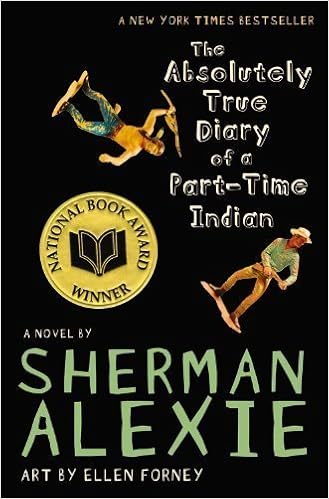
The Absolutely True Diary of a Part-Time Indian

Little, Brown
The Absolutely True Diary of a Part-Time Indian
Sherman Alexie
2007

The Summary
"Junior is a budding cartoonist growing up on the Spokane Indian reservation.  Born with a variety of medical problems, he is picked on by everyone but his best friend.  Determined to receive a good education, Junior leaves the rez to attend an all-white school in the neighboring farm town where the only other Indian is the school mascot.  Despite being condemned as a traitor to his people and enduring great tragedies, Junior attacks life with wit and humor and discovers a strength inside himself that he never knew existed.

"Inspired by his own experiences growing up, award-winning author Sherman Alexie chronicles the contemporary adolescence for one unlucky boy trying to rise above the life everyone expects him to live."

The Good
Let me state, first off, that I read The Absolutely True Diary of a Part-Time Indian for the simple fact that it was on the banned books list (again) for 2014.  Like Captain Underpants (yes, seriously) and The Perks of Being a Wallflower and The Bluest Eye, Sherman Alexie's novel has managed to appear on the list not once, not twice, but five times since its original publication in 2007.  Although the banned books list for 2015 has not yet been released by the American Library Association, I have a suspicion that Alexie's novel will return to the list for a sixth consecutive year.

Now, while I did pick The Absolutely True Diary of a Part-Time Indian because it ended up on another banned books list, I finished it because it is a great YA novel.  Sherman Alexie does a wonderful job bringing Junior's character to life, offering an intimate glimpse into the conflicts he faces and the difficult choices he must make--and the person he becomes.

Junior is a smart kid, and he makes an intelligent, insightful narrator.  He works hard to further his education and, at the recommendation of his teacher, sets out to learn at a local school beyond the reservation.  Not only does he face being ostracized by his community for leaving, he's initially ridiculed by his peers at Reardan and endures the abandonment of his closest friend.  He tells you his struggles, tells you what he thinks and feels, giving you a candid account of what it's like to be a kid who feels like a fish out of water.

Even though I didn't always relate to him, seeing how he has had much different life experiences, I always felt like I could connect to him.  In telling his story, he shows the real struggles that all teenagers face:  loss, love, friendship, failure, tragedy, bullying, parental and social expectations.  His story can really connect to readers, showing the overall experiences that all teenagers are likely to face in high school.  He's a wonderful, candid narrator with a heart of gold and he's a fantastic storyteller, appealing with his words and his illustrations.

There's just something about Alexie's novel that makes it so very enjoyable.  Perhaps it's Junior's illustrations, or his storytelling abilities, or his story as he recounts his sudden move from the Spokane reservation to Reardan--or, perhaps, it's a combination of all three elements.  Fine illustrations, a wonderful narrator, and a great story.  Either way, I found The Absolutely True Diary of a Part-Time Indian an immensely enjoyable novel.

The Bad
Junior does use strong language and he touches upon mature themes, especially those entwined with his culture.  He faces hardships that I will never know or even begin to understand.  He has lived in a completely different world that, I'll admit, I have no knowledge of or experience with, which makes it difficult to relate to him.

But that's more a failing on my part than anything else.  His story actually gives me the opportunity to broaden my horizons and understand a place, a time, and, yes, a unique culture that I wouldn't have otherwise had the opportunity to see.

The Ugly
Adolescence.

Puberty, peer pressure, coming to grips with one's sexuality, bullying, social and cultural expectations--it's a very messy business.

-

For more on banned books, check out the ALA website:  http://www.ala.org/bbooks/frequentlychallengedbooks/classics
Wednesday, November 25, 2015

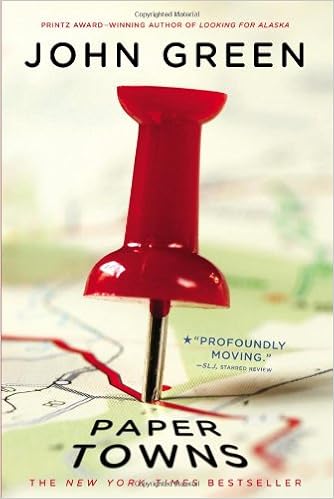
Paper Towns

Speak
Paper Towns
John Green
2009

The Summary
"Quentin Jacobsen has spent a lifetime loving the magnificently adventurous Margo Roth Spiegelman from afar.  So when she cracks open a window and climbs into his life - dressed like a ninja and plotting an ingenious campaign of revenge - he follows.  After their all-nighter ends, and a new day breaks, Q arrives at school to discover that Margo, always an enigma, has now become a mystery.  But Q soon learns that there are clues - and they're for him.  Urged down a disconnected path, the closer he gets, the less Q sees the girl he thought he knew..."

The Good
I liked Quentin.

Quentin is a good person:  he tries his best at school, he has a good group of friends, he has a great relationship with his parents, and he has plans for his future.  And I liked him precisely because he is a good person.  He's not infallible and he certainly isn't perfect, but he's a good person and he's trying his hardest to be a good friend.

Quentin also has a unique voice.  Like all the narrators in John Green's books - Miles from Looking for Alaska, Hazel from The Fault in Our Stars, or Colin in An Abundance of Katherines - Quentin is a gifted storyteller and narrator.  Quentin is smart and thoughtful, making connections and finding clues from Margo that no one else managed to find or decipher, and he's an enjoyable narrator.  He's intelligent and introspective; he's precise and clear.

Quentin is the type of narrator who manages to ensnare me in his story, precisely because he knows how to tell his story.  He knows how to keep me involved in the journey - and I was quickly enthralled.

The Bad
There's a bit of foul language and mature themes, but it's high school.  You're bound to confront it eventually.

The Ugly
Margo Roth Spiegelman was a considerable disappointment in Paper Towns.  Although my impression of Margo was colored by Quentin's adoration, I had a sinking suspicion she was not the wild, adventurous and amazing girl he - and, well, everyone else - considered her to be.

And I was right.

I know why Quentin had to find Margo:  it was a personal journey, a quest for self-discovery.  I also know why Quentin had to destroy his image of Margo by finally meeting the real Margo.  Margo on paper is different from Margo in real life, and Quentin had to have that misconception destroyed - like us, like the readers.

But finding Margo was a bit anticlimactic.  I mean, perhaps I had unrealistic expectations, like Quentin, or perhaps I've been corrupted by traditional literature, which allows for unrealistic expectations.  Regardless, I was disappointed.

I understand why John Green did what he did at the end of his novel.  I see why he had to destroy Quentin's - and, by proxy, our - expectations for Margo.  She became a mirror, reflecting the thoughts and ideas and feelings of all those who knew her (including us), and Green had to shatter that mirror in order for us to see the real Margo.

I get it.  I really do.

However, I could have finished Paper Towns without ever finding out what really happened to Margo.  It would have spared me the frustration.

Wednesday, May 6, 2015

Neverwhere

Avon
Neverwhere
Neil Gaiman
1998

The Summary
"Richard Mayhew is a young man with a good heart and an ordinary life, which is changed forever when he stops to help a girl he finds bleeding on a London sidewalk.  His small act of kindness propels him into a world he never dreamed existed.  There are people who fall through the cracks, and Richard has become one of them.  And he must learn to survive in this city of shadows and darkness, monsters and saints, murderers and angels, if he is ever to return to the London that he knew."

The Good
Door is endearing and (most of the time) sweet, if only a little scary.  De Carabas is unusual, possibly dangerous, but always interesting.  And Richard Mayhew - well, you simply feel sorry for the poor sot who gets mixed up in all the madness.  Together, they have a very intriguing dynamic and an interesting story to weave.

All told, I enjoyed Neverwhere.  It has an intriguing blend of myth and urban legend, human error and horror, and a good versus evil dynamic - or, more accurately, an epic struggle for survival between good and evil, between survival and oblivion - that kept me coming back time and again.

Islington, the angel, was particularly interesting:  I wanted to know who he (or, more accurately, it) was and what he was planning and where he fit into the whole grand scheme of things.  He's an intriguing and intimidating character, and I was constantly curious to see where he would lead.

The Bad
Neverwhere was highly unusual.

Not a bad thing for the most part, but I wasn't quite sure what to make of it.  Laced with urban legends, myths, religious detritus, and horrors that can only come from the most terrifying nightmares, Neverwhere is a story that has no clear resolution.  It simply is what it is - and there's certainly more to it, but I'm just not sure what.

The Ugly
There is death involved, which is gruesome and disheartening on its own, but coupled with Mr. Croup and Mr. Vandemar, it's downright bloody.  Moreover, I found the world under London to be incredibly frightening.  There's something inherently terrifying about the notion of an invisible world existing beneath our own, of getting sucked into it and being completely, utterly forgotten.

Total obscurity is a frightening thing.

Tuesday, January 27, 2015

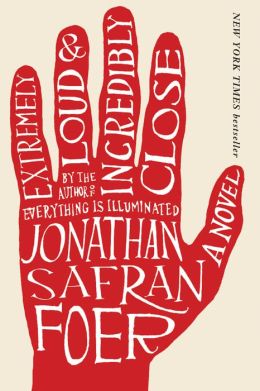
Extremely Loud and Incredibly Close

Extremely Loud and Incredibly Close
Image courtesy of
www.barnesandnoble.com
Extremely Loud and Incredibly Close
Jonathan Safran Foer
2005

The Summary
Since the death of his father on September 11, 2001, Oskar Schnell has been inventing and cataloging and, in a word, searching - to find meaning, to find answers, to find his father and whatever is left of him.

However, Oskar's life takes an abrupt turn after he discovers a key left by his father and realizes he has one last mystery to solve:  find the lock which belongs to his key and uncover the truth behind his father's final puzzle.

The Good
Extremely Loud and Incredibly Close is a remarkable story about one boy's search to solve his father's final puzzle and recover his father's memory; however, this story doesn't belong to Oskar alone.

Foer's work is a compilations of notes and stories from survivors:  Oskar's mother, his grandmother, his grandfather, and others, like Abby Black, William Black, Abe Black, who Oskar meets in his search to find the lock that fits his father's mysterious key.  This is a book about surviving trauma, about finding answers, and, maybe, even learning how to live and accept things as they are.

It's a lovely story, but, admittedly, it's an unusual one in its format.  In fact, it reminds me of The Sound and the Fury by William Faulkner.  It follows a sort of stream of consciousness format that allows it to better identify with a character's emotional state.  You can visual what Oskar - what all of the characters - feel and you can see what he sees, view the things that speak to him and shape him.

The Bad
I enjoyed seeing through Oskar's eyes, knowing what he felt and what he thought, understanding who he is and why he does what he does.  I liked the insight, even if I wasn't provided with anymore answers than Oskar.  However, I will say that the first-person perspective does have a down-side:  stream of consciousness.

Thought is not always coherent, which means the story will not always retain a coherent pattern.  (Read:  quotation marks are entirely optional, format is malleable, and time is certainly not linear.)  It makes the story unique, yes, but it can also make it slightly confusing.

The Ugly
All the characters you meet are survivors of some terrible trauma.  Whether World War II, September 11, or personal family tragedy, each character endures loss and endures the repercussions of that loss, including the void that is left behind.

And when they can't cope, when they can't endure, it's emotionally jarring to witness.

Friday, January 23, 2015

Twilight

Image courtesy of
www.booksamillion.com
Twilight
Stephanie Meyer
2005

The Summary
Twilight tells the story of a young girl named Bella Swan, who moves to Forks, Washington, with her father, and begins a complicated love affair with Edward Cullen, a vampire.

The Good
Meyer's book provides you with a simple and easy-to-read format, allowing you to finish it within an afternoon and enjoy the rest of your evening mulling over the quirks of her writing.

More importantly, it promises to offer a unique take on the age-old vampire legends, which, depending on your perspective, might seem like a breath of fresh air.

The Bad
By the same token, the simplicity that Meyer features in her writing can certainly detract from the overall story and mood of Twilight.  Granted, while many of the central characters in her novel are vampires and possess centuries of tradition behind an unchanging facade, that doesn't excuse Meyer's entire lack of development and perpetual use of static characters.

Meanwhile, Meyer receives a gold star for using such creative license in her novel and introducing her audience to the wonderful world of reading; however, I can't done the transition of the vampire from delightful Gothic terror and Creature of the Night to the emasculated horror that terrorizes Bambi in the wilds of Washington and befriends teenage girls.

(Dracula had three wives, controlled ravenous packs of wolves, and terrorized villagers on a nightly basis, not to mention he was a sadistic psychopath, who gleefully slit throats and drained people dry.  Edward Cullen is a far cry from the monstrosity we all know and love in Bram Stoker's work.)

Besides this, the plot appears exceptionally linear and juvenile, not to mention redundant.  This idea of ill-fated lovers has been done before, and done much better.  (Might I suggest Shakespeare?)

I won't say Twilight has absolutely no merits.  It serves as a perfect spring board for introducing young readers to books or as a short vacation from substantially more complex novels, but, honestly, I wouldn't really recommend it to anyone over the age of thirteen.

The Ugly
Bella - and her narrative - possesses a bland uniformity, an annoying monotone, that bored me to tears.  It's not that I didn't enjoy some parts of the story, I just really couldn't stand Bella Swan.  So, if you prefer a little depth to your narrator and some meat on the bones of your plot, you probably won't fall in love with Twilight.

Tuesday, November 25, 2014

American Gods

American Gods - US - Mass Market Paperback
Image courtesy of
www.neilgaiman.com
American Gods
Neil Gaiman
2001

Cover Synopsis
"Shadow is a man with a past.  But now he wants nothing more than to live a quiet life with his wife and stay out of trouble.  Until he learns that she's been killed in a terrible car accident.

"Flying home for the funeral, as a violent storm rocks the plane, a strange man in the seat next to him introduces himself.  The man calls himself Mr. Wednesday, and he knows more about Shadow than is possible.

"He warns Shadow that a far bigger storm is coming.  And from that moment on, nothing will ever be the same..."

Thoughts
Neil Gaiman's novel is beautifully detailed and intricate, overflowing with interesting characters and places.  It's a wild odyssey full of old gods and myths, ancient stories and strange adventures - and even stranger ideas that linger in places you'd never expect.

It's a great novel.

However, I will say American Gods is a long novel and, yes, I'll even admit it was a confusing novel for me to read.  Sometimes, I thought Shadow's story made absolutely no sense - why has he agreed to do this?  Why is he so important?  What is it that makes him so special that Mr. Wednesday specifically singles him out? - and it wasn't until the very end of the story that I understood Shadow's real importance.

Likewise, I didn't always understand who (or what) certain characters represented.  Some characters were obvious (or were when I realized the implication), like Low Key Lyesmith or Mr. Wednesday; however, with other characters, I went the entire novel without ever finding out who they really were.

But that may be my own fault, considering my knowledge of world mythology is rather small.

Overall Impression
To put it simply, I enjoyed American Gods.

So much of the story (and the characters) rely on simple belief alone for their existence, what may or may not exist and what we, as people, give power to - and this idea made Gaiman's novel unique and interesting.  I was pretty well hooked as I tried to puzzle out Shadow's story and figure out what would happen next.

I will point out, however, that if you know anything about mythology and the religious fervor once attached to old gods, you'll know that their stories and their entire existence will not always be pleasant.  They are selfish, murderous, promiscuous, and volatile.  They are destroyers and killers and pillagers, demanding of sacrifice and belief - and, honestly, that's about as nice as they get.

Monday, May 26, 2014

The Joy Luck Club

The Joy Luck Club
Image courtesy of
www.barnesandnoble.com
The Joy Luck Club
Amy Tan
1989

The Summary
Jing-Mei (June) Woo has lost her mother, Suyuan, and must now take her mother's seat at the Joy Luck Club.  As she speaks to her mother's friends, she learns a stunning secret:  the twin daughters that Suyuan left behind are alive and wish to meet her.

Thus, begins June's journey to remember her mother and meet her sisters, just as Rose Hsu, Waverly Jong, and Lena St. Clair learn to reconnect with their mothers and reclaim one more piece of family history.

The Good
Simultaneously heart-warming and heart-wrenching, The Joy Luck Club is a wonderful collection of stories that recounts the lives of mothers and daughters - Chinese immigrants and their American-born children - as they struggle to bridge a gap in language and culture to communicate and, more importantly, find common ground.

What makes Amy Tan's novel so appealing, however, is that it's readily accessible for readers.  Although The Joy Luck Club prominently features Chinese and American culture (individuals learning how to embrace and/or acclimate to one or the other),
Tan's work doesn't focus on one nationality over the other.

This novel holds many universal themes that offer a deeper connection to the work and to the individual characters.  It is about human emotion and experience, perspective of mothers and daughters as they learn to listen to one another and, finally, connect.

The Bad
My primary difficulty lay with distinguishing each story and figuring out how they matched, how each mother's story matched her daughter's narrative; however, I believe that's more attributed to my personal confusion than anything else.

The Ugly
Not all the stories you read will be pretty.  You will find eloquent tales with beautiful imagery and emotional narratives that will shed light on both Chinese and American culture; however, many of these stories will be tragic and many more will be heart-breaking.

In particular, it's important to note that all of the mothers - Suyuan Woo, An-mei Hsu, Lindo Jong, Ying-ying St. Clair - lived through World War II and faced the turmoil of that era.  They experienced damaging social upheaval, political strife, and human depravity, and all of their stories reflect the tragedies they faced during World War II and the tribulations they endured in emigrating to America.

It's not always a pretty picture.

Sunday, August 25, 2013

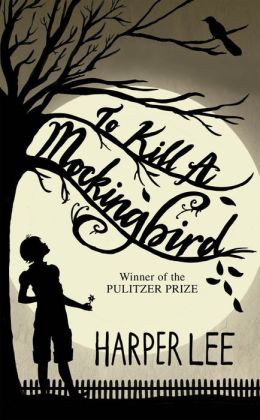
To Kill a Mockingbird

To Kill a Mockingbird
Image courtesy of
www.barnesandnoble.com
To Kill a Mockingbird
Harper Lee
1960

The Summary
For young Scout (Jean Louise) Finch, growing up in Maycomb county of Alabama presents its share of difficulties and joys:  playing pretend in the front yard, struggling to understand grown-up antics, trying to convince the mysterious Boo Radley to leave his house, reading the newspaper with Atticus, her father.  But The Great Depression has left its indelible mark, and one court case may very well change the course of history for the Finch family.

The Good
Harper Lee's novel is absolutely beautiful.

Told from the perspective of Scout Finch, a young girl living and growing up during the Great Depression, when hope sometimes seems at its lowest and equality seemes to appear only periodically, To Kill a Mockingbird opens the door on a world struggling to cope with new ideas and old cultural values - and children trying to cope with old ideas as they try to form their own.

Besides depicting a moving, heart-wrenching tale of growth and experience and portraying one, crucial court case that will rock the county of Maycomb to its foundations - and change Scout's and her brother's (Jem's) lives forever - Lee also creates a host of endearing and memorable characters.  And, through the voice of Scout, Lee brings her characters to life, fashioning a dynamic and beautiful piece of literature in the heart of one, tiny Southern town in Alabama.

To Kill a Mockingbird is more than a memorable book, however, it's an iconic novel about race, religion, class, gender, and learning to balance all these things in the earliest parts of adolescence.  In short, it's a novel about growing up in a world tinged by racism and prejudice and learning how to rise above it

The Bad
Some harsh language may appear; however, the most dramatic - or, rather, traumatic - episodes will occur in the latter half of the book with the trial one Tom Robinson, a man falsely accused simply because of the color of his skin.  The fate of Tom Robinson, and the results of his trial, are certain to put an ugly spin on an otherwise wonderful book.

The Ugly
Bob Ewell.

If you've ever had the opportunity to read Lee's novel, you'll certainly know what I mean.

Wednesday, January 23, 2013

The Things They Carried

Image courtesy of
www.booksamillion.com
The Things They Carried
Tim O'Brien
1990

The Summary
Written with the author's personal experiences in mind, The Things They Carried chronicles the violence and aftermath of the war in Vietnam.

Embellished with facts and fiction, Tim O'Brien's novel provides readers with an intimate and emotional connection to the soldiers of Vietnam, as well as insight into the physical, emotional, and mental carnage that occurred before, during, and after the Vietnam War.

The Good
Well-written and dynamic, this novel will keep you riveted from cover to cover.  The Things They Carried provides intimate insight into the lives and minds of soldiers.  It's deep, thought-provoking, and astonishingly compelling.

More importantly, it's an interesting story because so much of it involves fact - perhaps, even reminisces of a memory or two - but it combines factual events with fictional chracters and situations.  It's strange, slightly surreal, but interesting nonetheless.

The Bad
Although O'Brien creates an exceptional novel, his book contains gratuitous amounts of foul language and violence.  Not only is it graphic in nature, it's gruesome and slightly terrifying.

Admittedly, it isn't for the faint of heart - or younger readers.

The Ugly
To be perfectly honest, The Things They Carried is a heavy, emotionally draining piece of work.  Full of graphic details of violence and gore, it displays the most frightening and perilous sides of the Vietnam War from the perspective of a soldier.

Perhaps the most disturbing aspect of this novel, however, is not the elements of fiction which embellish its pages but, rather, how much of it remains factual.

Tuesday, December 4, 2012

Frankenstein

Image courtesy of
www.booksamillion.com
Frankenstein
Mary Shelley
1818

The Summary
Frankenstein tells the story of one man's attempt to play God and the tragedies which invariably ensued that would plague him for the rest of his days.

Alternately, Mary Shelley's novel also reveals the tale of the Frankenstein monster and recounts the horrors he is forced to endure as a leper and an outcast from society - a tragedy to which he is doomed from conception, even if he isn't such a bad fellow after all.

The Good
Frankenstein is a highly gratifying horror novel that combines exceptional detail with a close examination of human psychology and philosophy, and crosses it with a memorable narrator of an obscure moral fiber and warped personality.  (And, yes, I do mean Dr. Frankenstein in this instance.)

More importantly, it's a horror story that doesn't pull any punches, because it will challenge everything you have ever known and understood.  Your spine will tingle, and your mind will reel with the implications Mary Shelley makes.

It's terrifying, it's horrific - and it's absolutely wonderful.

The Bad
Despite it's gruesome nature and relatively unimposing stature, Shelley's novel is startlingly deep and philosophically complex.  As a work of literature, it's a hefty piece that will weigh on your conscience and your mind as you push through the pages.

Moreover, Shelley has a remarkable vocabulary - and she's certainly not afraid to put it to use.  More than most books, I would recommend keeping a dictionary within reach and making notes within the margins.

In short, Frankenstein  is difficult to read, but well worth the attempt.

The Ugly
This novel wreaks of moral ambiguity.

It will leave you wondering about the nature of humanity and its proximity to God.  But, more importantly, it will make you question who really deserves the title of "monster" in Shelley's novel:  the creator or the creation?

Tuesday, November 13, 2012

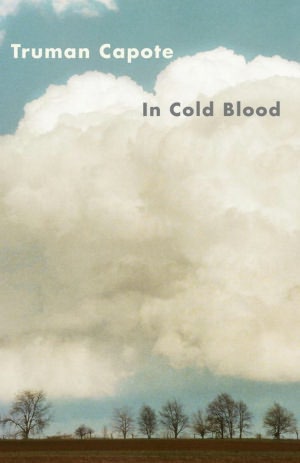
In Cold Blood

In Cold Blood: A True Account of a Multiple Murder and Its Consequences
Image courtesy of
www.barnesandnoble.com
In Cold Blood
Truman Capote
1965

The Summary
In 1959, four members of the Clutter family were brutally murdered in their home in Holcomb, Kansas.  With no motive to speak of and virtually no clues, the killers almost walked away scot-free.

In this novel, Truman Capote reveals all the gory details behind the case of a multiple murder and reveals the fear and distrust which struck at the very heart of the tiny town of Holcomb, Kansas.


The Good
Capote provides rich amounts of detail and offers uncanny insight into the lives of murderers Richard Hickock and Perry Smith.  Besides giving a realistic depiction of events, the author also imparts a journalistic quality to his novel that lends credence to his work and gives it an aura of undeniable fact.

For every event he describes, he unearths evidence to prove his point and, for every detail he offers to his audience, he provides legitimate documentation.  Capote, one way or another, gets his facts straight - and they're incredibly hard to refute.

The Bad
In Cold Blood, however, can also get bogged down by all those details.

Capote almost offers too much fact.  I know that may seem hard to believe, but there are years of legal documentation and newspaper reports and investigations to sift through.  Honestly, all that information crammed into one tiny space can prove challenging.  It's difficult to wade through it all and retain an honest interest in the story Capote's trying to tell.

Additionally, I think it's important to note that Capote has embellished his work to some degree.  Fiction, if only a slight amount, manages to creep its way into Capote's novel.  You see, in trying to instill as much truth and detail as possible, Capote has managed to undermine his own work.

Although he tells his story with as much truth and honesty as he can muster, certain facts may still become misconstrued because Capote has attempted to chronicle the thoughts of other individuals and pass them off as the highest truth.  No one can write with complete certainty what another individual is thinking at all times - unless, of course, that person happens to be a mind reader.

And I highly doubt the conclusion that Capote was telepathic.

The Ugly
Unlike most books, Capote's novel is a "true account of a multiple murder."  The implications, then, are staggering.  You cannot fall back on the comforting excuses of fiction, because you can't simply dismiss the credibility of Capote's tale.

In Cold Blood is strikingly, chillingly real.

Monday, October 8, 2012

Dracula

Image courtesy of
www.booksamillion.com
Dracula
Bram Stoker
1897

The Summary
Bram Stoker's Dracula collects the journals and personal testimonies of Jonathan and Mina Harker, Dr. John Seward, Lucy Westenra, Arthur Holmwood, Quincey Morris, and Dr. Abraham Van Helsing, in which they confront the world's most terrifying creature:

A vampire.

The Good
Stoker will keep you riveted with his story.  Besides creating one of the literature's most fascinating - and terrifying - villains, he has taken the time and care to recreate the details of life within the pages of his novel.

And, considering the number of correspondences between characters and the specific connections necessary to complete the story, it's an amazingly well-written work.

It's beautifully detailed with marked differences between the individual characters involved.  Each character has their own personality, their own history, their own reactions to a situation - and they become honest, endearing folks.

More importantly, it's absolutely fascinating.  I mean, who can resist the allure one of literature's most prolific vampires?

(And, no, Edward Cullen does not count.)

The Bad
On the flip-side, all the detail makes reading Stoker's novel a bit tricky.  Once you make connections, it's easy to find those tenuous links between characters and locations and mysterious events; however, those can prove to be slightly elusive.

Moreover, chapters can occasionally take a while to "build-up" to a point.  You will battle with bouts of the humdrum and dull, but the story picks up considerably when certain realizations come together.  But, until then, it may seem a little lackluster and disjointed.

The only advice I can offer is persevere.

The Ugly
Guts, gore, mayhem, madness, death, and destruction.  Dracula has it all for the horror enthusiast.  Would you expect anything less from one of the most terrifying creatures written into existence?

Of course, for those of you with a more timid constitution, pace yourself.

Monday, July 23, 2012

The Return of the King

Image courtesy of
www.booksamillion.com
The Return of the King
J.R.R. Tolkien
1955

The Summary
The Return of the King serves as the gripping conclusion to an epic event.  Here, all questions will be answered and all fates will be decided.

Will Frodo and Sam reach the fires of Mount Doom?  Will the Fellowship survive the relentless malevolence of Sauron?  Will Minas Tirith and Middle Earth fall to the Dark Lord - or will the King finally return to his rightful throne?

Read on and see for yourself.

The Good
J.R.R. Tolkien provides an intricacy and detail to his novels like no other writer (or so I believe).  His villains are more maniacal, his heroes more courageous, and his characters more vibrant than any other.  His novel leaves you with a lasting impression of its magnificence.

And, in the conclusion of his saga, his writing can be no more magnificent.

More importantly, as the climax of his trilogy, Tolkien delicately balances his story between two vastly dissimilar endings.  The Return of the King could just as easily turn into a tragedy as conclude happily.  The suspense he sets - and the breathless moments of expectation - will thrill you and leave you cheering.

The Bad
Once you begin your descent toward a resolution, you will long to reach its conclusion.  After three books (four, counting The Hobbit) and, no doubt, more than a thousand pages, an ending is a well-deserved reward. But Tolkien is a crafty fellow.

Just when you think you've reached the final pages....BAM!  Tolkien throws in an additional chapter, before giving you the conclusion you so richly deserve.

Like I said, he's crafty.

The Ugly
It's the end of the road, so to speak.  All is said and done, and it's finally time to say good-bye.

This is the saddest point of any series:  the point when we must close the book, end the adventure, and bid farewell to the characters we love.

Monday, July 16, 2012

The Two Towers

Image courtesy of
www.booksamillion.com
The Two Towers
J.R.R. Tolkien
1954

The Summary
With the dissolution of the Fellowship, Frodo and Sam have struck out on their own for the gates of Mordor, while Gimili, Legolas, and Aragorn seek to rescue Merry and Pippin from the clutches of Sauron's orc army.

Great battles and great hardships will ensue as the remaining members of the Fellowship are pushed to their limits in their desperate fight to save Middle Earth.

And Sam Gamgee, loyal and courageous companion of Frodo, will face the most difficult decision of all:  can he go forward without his dearest friend Frodo?

The Good
Like The Fellowship of the Ring, J.R.R. Tolkien crafts an intricate story with beautiful scenery and amazing characters, who will steal your heart and last forever in your memory.

More importantly, Tolkien has further developed his characters and the relationships they share.  Gimli and Legolas, despite the ancient animosity existing between their races, have become close friends.  Aragorn has ventured closer to embracing his destiny.  Merry and Pippin have begun growing into warriors.  And Frodo has changed - the One Ring has started taking its toll.

Strictly speaking, Tolkien knows his way around a story.

Additionally, he knows how to show his readers a good time.  He's not afraid to toy with your emotions, or give you some good news every once in a while.  You're certainly in for a treat, when a familiar - and much beloved - character returns.

The Bad
Since the Fellowship has shattered, the novel is split into two primary parts:  the journey of Frodo and Sam as they venture into Mordor, and the struggles the others face as they fight to remain together in the face of insurmountable odds.

Tolkien doesn't take pity on his readers and alternate his chapters; instead, he starkly divides them.  First, he presents the stories of Legolas, Gimli, Aragorn, Merry, and Pippin, and then he follows by chronicling the adventures of Frodo and Sam.

Throughout the course of one tale, you will long to hear of the other.  And when you reach the end and begin the next, you will long to return to the one you left.  You will always wonder what is happening to the beloved characters you cannot see.

The Ugly
Cliffhangers.

I won't spill any secrets or spoil the story, but I will offer this warning:  Tolkien ends with a major cliffhanger. He will first tear out your heart, then he will give you hope and leave you cheering, and tear out your heart yet again.

The Two Towers is a guaranteed emotional roller coaster ride.