"All good books are alike in that they are truer than if they had really happened
and after you are finished reading one you will feel that all that happened to you
and afterwards it all belongs to you; the good and the bad, the ecstasy, the remorse,
and sorrow, the people and the places and how the weather was."
Ernest Hemingway
Showing posts with label Middle East. Show all posts

Friday, April 21, 2017

Read Harder Challenge 2017: Part 3

I finally finished the next part of my Read Harder Challenge.  I finished:
  • Read a book about books.
  • Read a book that is set within 100 miles of your location.
  • Read a collection of stories by a woman.

26531650
Simon & Schuster
Starting out, I finished reading The Bad-Ass Librarians of Timbuktu by Joshua Hammer, which details events beginning in 2012 when more than 350,000 manuscripts--many of which had been painstakingly collected by Abdel Kader Haidara--were endangered by Al Qaeda militants seizing control of Mali.  In his book, Hammer details how Haidara and other manuscript collectors managed to find, preserve, and rescue hundreds of thousands of manuscripts, before smuggling them out of the country under the noses of Al Qaeda.

As the summary attests, it's indeed a "brazen heist worth of Ocean's Eleven."  Personally, I found it fascinating to learn how Haidara became involved in the manuscript preservation business and how he and other librarians managed to steal away more than 350,000 manuscripts from Timbuktu.  I mean, the number is simply mind boggling.

Moreover, I was consistently fascinated by the history and culture of Timbuktu and Mali as a whole.  Hammer offers a rich variety of details, discussing the medical, cultural, historical, scholastic and artistic impact of Timbuktu.  Although his work can grow a little dry, every chapter offers fascinating insight into the history of Timbuktu and, more importantly, provides readers with an eye-opening portrait of the conditions faced by Mali's residents when Al Qaeda invaded.

Beauty and the Mustache
Cipher-Naught
Next, I checked out Beauty and the Mustache by Penny Reid.  Set in Tennessee, Beauty and the Mustache is a short, sweet little romance--which kicks off the Winston Brothers series and continues the Knitting in the City series, both by Penny Reid--that brings together Ashley Winston and Drew Runous.  After spending more than 8 years away from home, Ashley is forced to return to Tennessee to help take care of her ailing mother.  Expecting the same rough treatment from her brothers as from years before, she's surprised to learn they've changed.  She's even more surprised to meet their friend Drew, especially when she realizes he's exactly her type.

Overall, I really enjoyed reading Beauty and the Mustache.  Like I noted above, it's a short, sweet little romance and it's absolutely adorable.  It's sometimes bittersweet, sometimes tragic, but I immensely enjoyed reading Penny Reid's novel.  I found I connected to Ashley, our main character and narrator, on a personal level and I admired her sharp, sarcastic sense of humor, her intelligence, and her ability to go toe-to-toe with Drew's philosophical meanderings.

However, I will note I was bothered by one thing:  I did not like the setting.  I love the Smoky Mountains, don't get me wrong; however, I simply didn't like the narrator's inability to describe her surroundings.  I was incredibly disappointed by the setting descriptions, which were seriously lacking.  I wanted to hear more about the winding roads, the multitude of trees, the softly sloping mountains in the distance, or the way the hills fade against the horizon, deepening to a slate blue before disappearing altogether.

I wanted to hear about places I've known or seen, but, sadly, I didn't get that chance.  It was slightly disappointing.

2782459
Anchor
Last, I read Moral Disorder by Margaret Atwood.  I think I might have fudged the challenge parameters with this one, since it's really just a single novel; however, as it's labeled with "Other Stories," I assumed it would do the trick.  It centers around one woman--Nell--but it's a compilation of many short stories from different points in her life.

It begins with "Bad News," toward the tail end of Nell's life, but it jumps through time with each story and catapults Nell into the past, showing readers glimpses of her childhood and her adolescence and, finally, her transition into adulthood.

Truthfully, I didn't enjoy reading Moral Disorder that much.  Atwood is a fantastic writer and her prose packs a punch when she wants it, but, personally, I found I couldn't always connect with the stories in Moral Disorder, I couldn't always connect to Tig and Nell.  Granted, when I did connect with one of these stories, it moved me deeply and I worried for Nell, like I'd worry for a friend; however, I found it was a rather unremarkable journey for me overall.

Wednesday, April 19, 2017

The Bad-Ass Librarians of Timbuktu: And Their Race to Save the World's Most Precious Manuscripts

25814351
Simon & Schuster
The Bad-Ass Librarians of Timbuktu:  And Their Race to Save the World's Most Precious Manuscripts
Joshua Hammer
2016

The Summary
"To save precious centuries-old Arabic texts from Al Qaeda, a band of librarians in Timbuktu pulls off a brazen heist worthy of Ocean's Eleven.

"In the 1980s, a young adventurer and collector for a government library, Abdel Kader Haidara, journeyed across the Sahara and along the Niger River, tracking down and salvaging tens of thousands of ancient Islamic and secular manuscripts that were crumbling in the trunks of desert farmers.  His goal was to preserve this crucial part of the world's patrimony in a gorgeous library.  But then Al Qaeda showed up at the door.

"The Bad-Ass Librarians of Timbuktu tells the incredible story of how Haidara, a mild mannered activist and historian from the legendary city of Timbuktu, became one of the world's greatest and most brazen smugglers by saving the texts from destruction.  With bravery and patience, he organized a dangerous operation to sneak all 350,000 volumes out of the city to the safety of southern Mali.  This real-life thriller is a reminder that ordinary citizens often do the most to protect the beauty and imagination of their culture.  It is also the story of a man who, through extreme circumstances, discovered his higher calling and was changed forever by it."

The Good
I enjoyed reading The Bad-Ass Librarians of Timbuktu.  First and foremost, I had the chance to learn about some amazing librarians who did extraordinary things (I always like learning about librarians); second, I learned so much about Timbuktu and Mali, which I enjoyed.  I love learning about different regions and locales, and I was positively enchanted by Mali and the beautiful manuscripts Abdel Kader Haidara uncovers.

I love books.  I especially love old books.  They're beautiful and precious, and I was enthralled by the simple history and content of the hundreds of manuscripts that Haidara saved.  Joshua Hammer had a way of describing the manuscripts that made me want to reach out and hold them, to run my fingers over the pages and see the full-colored details painstakingly drawn upon their pages.

I was dying to view one for myself and feel the weight of history in my hands.

It's a consistent feeling throughout the book.  Hammer gives these manuscripts--and the men and women who saved them--a great significance.  They feel important, crucial to the preservation of history and culture and memory.

You get the feeling that Hammer is passionate about this story.  He wants to tell readers about the incredible librarians who preserved history against all odds, about the city and country that suffered under Al Qaeda, about the small community that banded together to survive unspeakable tragedy.  Truly, it's awe-inspiring to read.

The Bad
No complaints.

It's a bit slow on the build up, but it's a fascinating and thoughtful inspection on a region of the world with which I'm unfamiliar.  I was excited to learn more about Mali's wonderful and colorful history, to hear more about Haidara's unprecedented rescue mission of more than 350,000 books and manuscripts.

The Ugly
The violence this region endured is staggering.

Mali, particularly Timbuktu, was a thriving haven for artists, musicians, tourists, religious leaders, educators, and historians.  Regular festivals were held in honor of local music and musicians, and museums sprang up to celebrate the social, scholarly, medical, and cultural history of Mali.  And yet almost over night everything changed with the arrival of Al Qaeda.

Strict religious and social laws, appalling punishments, brutal behavior, cruelty, and that's just the tip of the iceberg.  They killed and maimed those they believed broke their laws; they restricted local businesses and workers, imposing harsh strictures, and all but killed Mali's economy; they defaced monuments and burned books, art, and more, destroying anything they saw as challenging their leadership.  They effectively tried to erase Mali's history and impose their own.

It's horrifying to witness these things.  I mean, I found it heartbreaking to see Timbuktu have its entire culture and history reworked through a lens of bigotry and hate, to witness innocent people lose their homes, their businesses, their limbs and their very lives for a philosophy of violence.  It's painful, and it's what makes The Bad-Ass Librarians of Timbuktu such a hard book to read and discuss.

Thursday, March 9, 2017

Rejected Princesses: Tales of History's Boldest Heroines, Hellions, and Heretics

Dey St.
Rejected Princesses:  Tales of History's Boldest Heroines, Hellions, and Heretics
Jason Porath
2016

The Summary
"Well-behaved women seldom make history...and these women are far from well behaved.

"Let's face it:  the list of historical women we learn about in school is lacking.  It's safe, it's censored, it's short.  And even when we learn about a true legend--say, Harriet Tubman--we get half the story (and it's usually not the half about her as a plantation-torching Union spy-master).  This is just the list of women we know about.  What of the women we don't?

"In place of complex, real-life heroines, we get sparkly, doe-eyed animated damsels who dominate children's minds everywhere.

"Rejected Princesses is here to provide an alternative to all that.

"In this fully illustrated, deeply researched, and totally entertaining collection, Jason Porath offers 100 women too uncompromising, too untoward, or too uncomfortable to fit the modern princess mold.  Gathering together a diverse set of some famous, some infamous, some forgotten, and some virtually unknown figures from history and myth, from all over the globe, this book presents the female role models we never knew we needed.  Yes, there are a few princesses, but there are also pirates, spies, journalists, activists, concubines, empresses, ninjas, pilots, samurais, mathematicians, sword-slingers, and war-lords too.

"These women were rebels and rulers, pioneers in their fields, and fighters for their causes (and sometimes for themselves).  In a time when women are still pushing for equal pay and equal opportunity, shouldn't we be putting brave women like Sybil Luddington, Hatshepshut, Nzinga Mbande, Josephine Baker, Khutulun, Rani Lakshimbai, Harriet Tubman, Emmeline Parkhurst, and Joan of Arc on equal footing with Cinderella or Sleeping Beauty?

"Women have always played a key, kick-ass role in revolutionizing our world.  The girls of today are the latest links in a long chain of geniuses, warriors, and fearless women.  It is the birthright of every woman to have a connection to that history.  Empowering, uproarious, and anything but traditional, Rejected Princesses seeks to provide just that."

The Good
I loved this book.

Yes, loved.

If it's not already apparent, I'm a bit of a history nerd and I love learning about quirky, unconventional history and feisty females who made their mark on history (see:  Bad Girls), so Rejected Princesses was the best of both worlds for me.

I imagine that many of the women featured in this book were too rebellious, too dangerous and, sometimes, too deadly to make it into high school textbooks; in fact, many of the women--whether resigned to the darkest parts of history or lingering at the edges of myth--were a pleasant surprise.  That is, I'd never read about them and I loved learning about them and the impact they made on history.

Here are some of my favorites:
  • Khutulun
  • Noor Inayat Khan
  • Julie d'Aubigny
  • Annie Jump Cannon
  • Iara
  • Mariya Oktyabrskaya
  • Olga of Kiev
  • Ching Shih
  • Sybil Luddington
  • Alfhild
  • Mary Bowser
  • Nanny of the Maroons
  • Tomo Gozen
  • Marjana
All of these women were incredible.  I mean, on this list alone you have fighters and warriors, spies and astronomers, pirates and Vikings, rebels and freedom fighters.  They're incredible.  Granted, I know some of them didn't exist (Marjana is a literary character, whereas Iara and, I think, Alfhild are myths and/or legends), but it was wonderful getting a glimpse into these individual cultures and their perceptions of women--and how these women flaunted conventions.

It was great.

And, of course, I can't forget the Night Witches from my list.  You can hear about me rhapsodize about the Night Witches here, so I won't go into much detail about them, except to say that they are without a doubt the most incredible pilots of World War II (I'm not joking) and, perhaps, some of the most incredible women about which I've had the pleasure to learn.

Overall, Rejected Princesses is a wonderful book.  Full of humor, colorful art, historical facts and, of course, incredible women, it's a great resource for those who wish to dabble in history--and it will show you just what it means to fight like a girl.


The Bad
No complaints.

I seriously want a copy for myself.

The Ugly
History is not always pretty--and, let's be honest here, it hasn't always been kind to women.  Some were burned at the stake because they were different; others were buried alive or faced a firing squad; some were even assassinated for their own violent reactions to society.  Not all these ladies had the luxury to happily retire.

Saturday, December 31, 2016

Read Harder Challenge (Part Eight)

This week, I'm just barely eking by with my Read Harder Challenge.  After reading these last books, I have officially finished my list:
  1. Read a book that is set in the Middle East
  2. Read a nonfiction book about feminism or dealing with feminist themes
  3. Read a food memoir
Little, Brown and Co.
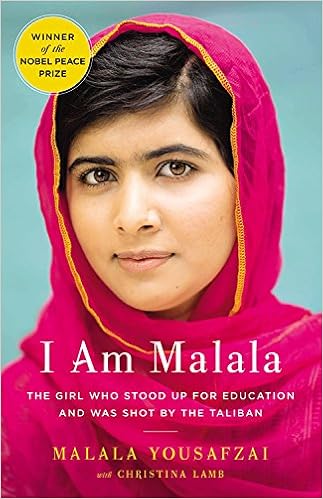
To start off, I finally finished reading I Am Malala by Malala Yousafzai.  It only took my 6 months, but I finished it and, honestly, I'm glad I did.  It's a fascinating story that's both heartbreaking and incredibly informative, offering insight into the various cultures and relations of Afghanistan.  Although her story is grim, it's simultaneously uplifting.  Personally, I enjoyed reading about her and her father's endeavors to bring education to local children--and particularly to the young women of the community.

Malala is a skilled narrator.  She's bright, she's hopeful, she's very detailed and she's very intelligent.  Although her book is a translation, which is sometimes apparent, I felt like I could read and relate to her feelings.  She does a fine job of connecting to her readers, detailing her thoughts and feelings--and making her voice heard.  She makes a compelling argument for education, for giving women equal education opportunities.  Truthfully, you can see why Malala Yousafzai is a Nobel Prize Laureate.

I also had the opportunity to read a short (and rather famous) essay by Virginia Woolf:  A Room of One's Own.  As an avid reader and, ahem, English major in college, you would think I'd have taken the opportunity to read A Room of One's Own, but, until this year, I had yet to make more than a cursory acquaintance with Woolf's work.  Unfortunately, I wasn't enamored by her essay.

Image result
Harcourt Inc.
A Room of One's Own makes some very valid points.  It's important to read and, after reading it, it's something that all young women should have a chance to read at least once in their life.  However, I had a hard time reading Woolf's essay, because I just couldn't seem to focus on one thing before it jumped to another.  For instance, in the first few pages when Woolf described Oxbridge and her experiences at the esteemed university, I thought it took quite a long time to get to the point--and, confidentially, I found myself growing a little bored as I waited for her to come to a conclusion.  Not that her writing is bad, mind you; I just struggled to stay committed given her style of writing, so I'm not sure if that's so much her failing as my own.

The point is, I finished reading A Room of One's Own and I have a new appreciation for Woolf.  She's a talented writer, but, personally, I'm not so sure she's the writer for me.  I appreciate her work and I appreciate the significance of her essay, but I don't think she's the one and only feminist writer for me.

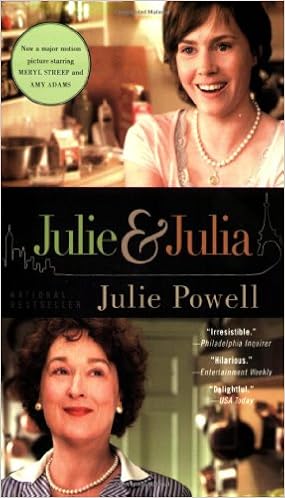
Last but not least, I read Julie and Julia by Julie Powell.  It's riotously funny, yet strangely poignant.  Oddly enough, it reminds me of Jenny Lawson and her memoir, Furiously Happy--yet just a tiny bit less chaotic.  Not by much, considering Julie Powell undertakes to make 524 different recipes, many of which take hours to prepare, in just one year in a crappy little apartment in Queens.  It's astonishing the things she (and her marriage) manages to survive, including:  biological clocks, frozen pipes, disastrous dinner parties, inane dead end secretarial jobs, break downs, Blanche days, and celebrity crushes.

Hatchette Books
It's really a pretty amusing book, especially if you decide to listen to it as read by the author (which I did); however, it's not quite the food memoir I expected.  In fact, Julie and Julia is more memoir than food.  Julie is hellbent on recreating all of Julia Child's recipes in Mastering the Art of French Cooking, vol. 1 and, in her journey, she learns how to make a variety of dishes and confronts some of the most trying times of her life.  While it features a lot of cooking, Julie and Julia feels like it's more about the experiences of cooking and the results, specifically what happens to the author as she slogs through more than 500 French recipes, than the actual cooking, but I can't say I minded.

Julie and Julia is strangely heartwarming and incredibly amusing.  To me, it strikes just the right balance that makes it a memoir worth reading, especially if you have the chance to listen to the author tell her own story.  It makes it memorable.  However, I will note that while I was listening to the audiobook I discovered I borrowed the abridged version.  I don't know if the audiobook had the full text, but I do know I missed a few things that might otherwise have filled in details or fleshed out the characters involved.  It was my only disappointment in an otherwise wonderful book.

Tuesday, December 27, 2016

God in Pink

Arsenal Pulp Press
God in Pink
Hasan Namir
2016

The Summary
"A revelatory novel about being queer and Muslim, set in war-torn Iraq in 2003.  Ramy is a closeted university student whose parents have died, and who lives under the close scrutiny of his strict brother and sister-in-law.  They exert pressure on him to find a wife, leaving him anguished and struggling to find a balance between his sexuality, religion, and culture.  Desperate for counsel, he seeks the advice of Ammar, a sheikh at a local mosque, whose tolerance is challenged by the contradictions between Ramy's dilemma and the teachings of the Qur'an, leading him to question his own belief system.

"Alternating between quiet moments of beauty and raw depictions of violence, God in Pink poignantly captures the anguish and the fortitude of gay Muslims in Iraq."

The Good
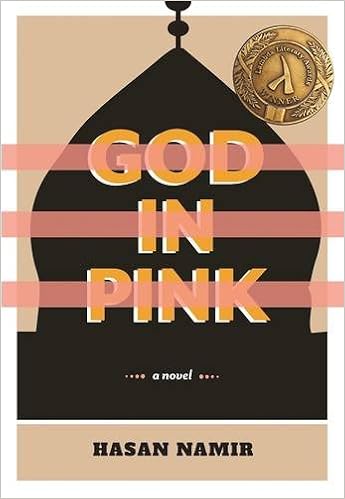
God in Pink is an intriguing novel.  It's a powerful book full of tragedy, but similar moments of beauty.  It strikes a chord, I think, because it depicts a time of turmoil that I never saw or never remembered--and it isn't afraid to broach the subject of sexuality.  It takes on the hard subjects, it shows readers the violence that homosexuals faced in Iraq in 2003 and beyond.

It's one of those books that serves to kick you in the chest and leave you reeling.

The Bad
I did not like the ending of God in Pink.  I can't say I quite understood Ammar's change of heart, perhaps because I did not see the signs or, more notably, I did not understand the character from the very beginning; moreover, I was very disappointed with the fate of Ramy.  It kind of broke my heart that he couldn't be himself, that he couldn't fall in love with who he wanted--that he wasn't free to be who he wanted to be.

It broke my heart.

I understand why the story ended as it did, even if I didn't quite understand what happened to Ammar--what changed him in the first place that his true colors showed in the final chapters.  I understand why Ramy had to keep his feelings under wraps, but I wasn't pleased with it.  God in Pink is meant to make you think, to feel something powerful; however, it's also a tragic story with, in my opinion, a disappointing ending.

The Ugly
I struggled with this novel, because I was not comfortable with all the depictions of heinous violence and wanton savagery.  I understand that mindless cruelty, thoughtless barbarity is simply a fact; I understand that it happens, that it's not something you can ignore if you live on the planet Earth.  I know it exists, but it's still hard to read about terrible things happening to other people.

I didn't hate this novel, but I hated the cruelty and gratuitous violence.  It made me physically sick and, even though I was only a few pages from finishing, I had to put the book aside for a couple of days just to recuperate.

This is a magnificent book depicting life in war-torn Iraq for a gay Muslim man.  It's poignant and it's guaranteed to make an impact, but, at the same time, it will tear out your heart.  I recommend reading it with great caution, like I would for books like Native Son by Richard White, Beloved by Toni Morrison, or The Grapes of Wrath by John Steinbeck.

Read it, but be prepared for acute emotional turmoil.

Saturday, October 15, 2016

Read Harder Challenge (Part Seven)

I finished some new books for my Read Harder Challenge, and I've completed more reading tasks:
  1. Read a biography (not memoir or autobiography)
  2. Read a dystopian or post-apocalyptic novel
  3. Read a book about religion (fiction or nonfiction)
St. Martin's Griffin
First up, I finished Florence Foster Jenkins by Nicholas Martin and Jasper Rees, which inspired the recently released movie of the same name.  Florence Foster Jenkins was not a traditional singer.  At a young age, she was well known for her skill with a piano and her love--and, more importantly, support--of music; however, it wasn't until she was 76 years old that she undertook to become a concert singer.  She's best remembered for her concert at Carnegie Hall and her vinyl recordings, which introduced the world to her rather...unique voice.

I enjoyed reading Florence Foster Jenkins.  Drawing from multiple resources, including Florence and her common law husband, St. Clair Bayfield, Martin and Rees' book does an incredible job of shedding light on Florence, her work, and her time.  It's intriguing without becoming dull, amusing without ridiculing its rather unorthodox subject, and chock full of interesting historical facts about Florence and the New York artistic scene of the early 20th century.  Overall, I enjoyed it and I highly recommend for any readers to take a moment to listen to Madame Jenkins on YouTube to get a better idea of how her singing voice sounded.  You (probably) won't regret it.

23399192
Scholastic Press
Next, I completed Rook by Sharon Cameron.  The Sunken City--formerly Paris, the City of Lights--is a place of danger, desperation, and despotism.  Ruled by the corrupt Premier Allemande and the bloodthirsty LeBlanc, the Sunken City is brimming with discontent and revolution--and, at the heart of it all, is the mysterious Red Rook who spirits people from their cells and wreaks havoc against the Premier's puppet government.

A story packed with action and adventure, political intrigue and danger, Rook has quickly become one of my guilty pleasures.  I know it falls under the rather broad category of dystopian young adult fantasy (think Hunger Games, Divergent, The Maze RunnerLife as We Knew It or even The Giver), but I really enjoyed Sharon Cameron's novel.  I enjoyed the characters, the unexpected twists and turns, the ambiguous references to the past, the complicated political climate.  I wasn't a fan of the love triangle and, yes, I will admit that the story seemed to drag in a few places; however, altogether, I really liked it and I think it settles in nicely next to Cinder.

Last, I rounded out my reading with God in Pink by Hasan Namir.  Ramy is a young Muslim man living in Iraq in 2003, right in the midst of a war and a cultural revolution--and he also happens to be gay.  Struggling with what he knows his brother would term a "sexual deviancy," Ramy tries to balance his feelings with his obligations to his family and his faith.

Arsenal Pulp Press
Truthfully, I struggled with this novel, because I was not comfortable with all the depictions of heinous violence and wanton savagery.  I understand that mindless cruelty, thoughtless barbarity is simply a fact; I understand that it happens, that it's not something you can ignore if you live on the planet Earth.  I know it exists, but it's still hard to read about terrible things happening to other people.

I didn't hate this novel; rather, the opposite.  I thought God in Pink was a magnificent book depicting life in war-torn Iraq for a gay Muslim man.  It's poignant and it's guaranteed to make an impact, but, at the same time, it will tear out your heart.  I recommend reading it with great caution, like I would for Native Son by Richard White, Beloved by Toni Morrison, or The Grapes of Wrath by John Steinbeck.  Read it, but expect deep emotional turmoil.

Saturday, June 6, 2015

Reading Lolita in Tehran

Random House
Reading Lolita in Tehran:  A Memoir in Books
Azar Nafisi
2003

The Summary
Reading Lolita in Tehran is a memoir by Azar Nafisi, an English professor who is attempting to teach Western literature to her students in revolutionary Iran during the 1970s and 1980s.

The Good
Azar Nafisi writes with incredible precision.  Her memoir is laden with a breadth and depth of knowledge that's both astonishing and impressive.  In her work, she tells everything as true as it can be of one's memory.  She bares all and tells all from her doubts, her hopes, her dreams to her discomfort and disillusionment as a woman living in revolutionary Iran.

I was amazed to see the impact of literature on the lives of these women that Nafisi describes, the women and students who shared her life during such a tumultuous time.  Additionally, I was intrigued to see the influence of Western literature on Nafisi and her students, how such words were received and dissected - and, in a word, loved.

I enjoyed reading Nafisi's memoir for the simple fact that she draws parallels between her reading and teaching and her life in Iran.  I enjoyed her candor, her intelligence, and her digressions.  She creates a voice that recreates her world, her life and thoughts at the time of events, and simultaneously offers a glimpse into literature that's truly unique.

The Bad
Reading Lolita in Tehran is an amazing book; however, it is highly literary.  Nafisi is a professor who studies literature, who has made reading and examining books a lifelong endeavor, thus much of who she is and what she does is wrapped up in teaching, dissecting, explaining and exploring the complicated nuances of literature.

I was lucky to have studied literature, lucky to have rightly understood her digressions on literature - like Vladimir Nabakov's Lolita, or F. Scott Fitzgerald's The Great Gatsby, or Jane Austen's Pride and Prejudice - otherwise I might have found her writing a bit inaccessible.

The Ugly
In opening Reading Lolita in Tehran, I was confronted with the harsh realities that many people faced during the Iranian Revolution and the war with Iraq that subsequently followed.  So many people were in danger simply because they were different, for wanting different things, for having different ideals that disagreed with the new Iranian regime.

Women especially faced terrifying circumstances, Nafisi describes:
"At the start of the twentieth century, the age of marriage in Iran - nine according to Sharia laws - was changed to thirteen and then later to eighteen.  My mother had chosen whom she wanted to marry and she had been one of the first women elected to Parliament in 1963.  When I was growing up, in the 1960s, there was little difference between my rights and the rights of women in Western democracies.  [...]  I married, on the eve of the revolution, a man I loved.  [...]  By the time my daughter was born five years later, the laws had regressed to what they had been before my grandmother's time:  the first law to be repealed...was the family protection law, which guaranteed women rights at home and at work.  The age of marriage was lowered to nine - eight-and-a-half lunar years, we were told, adultery and prostitution were to be punished by stoning to death; and women under law were considered half the worth of men."
It's alarming.  One might even say sickening.

Thursday, May 14, 2015

The Pearl that Broke its Shell

The Pearl that Broke Its Shell: A Novel
William Morrow
The Pearl That Broke Its Shell
Nadia Hashimi
2014

The Summary
"Kabul, 2007:  The Taliban rules the streets.  With a drug-addicted father and no brothers, Rahima and her sisters can rarely leave the house or attend school.  Their only hope lies in the ancient Afghan custom of bacha posh, which allows young Rahima to dress and be treated as a son until she is of marriageable age.  As a boy, she has the kind of freedom that was previously unimaginable...freedom that will transform her forever.

"But Rahima is not the first in her family to adopt this unusual custom.  A century earlier, her great-great-grandmother Shekiba, left orphaned by an epidemic, saved herself and built a new life in the same way - the change took her on a journey from the deprivation of life in a rural village to the opulence of a king's palace in the bustling metropolis in Kabul.

"Crisscrossing in time, The Pearl That Broke Its Shell interweaves the stories of these two remarkable women who are separated by a century but share the same courage and dreams.  What will happen once Rashima is old enough to marry?  How long can Shekiba pass as a man?  And if Rahima cannot adapt to life as a bride, how will she survive?"

The Good
I devoured The Pearl That Broke Its Shell.  It's a heart-wrenching novel - that is, I'm fairly certain I cried while reading it - but it's so beautifully written and it's such a gripping story that I couldn't help getting sucked into it.  I loved reading about Rahima and Shekiba, women who became bacha posh in order to survive in a society hostile to women, especially independent women.

I also love the fact that the stories are told in such a unique way.  Rahima tells her story in the present, a first-person point of view that catalogs current events as they happen, and she's incredibly candid.  More importantly, Nadia Hashimi manages to show Rahima's growth as she matures into a young woman - a young woman intent on making decisions for herself.

Shekiba, on the other hand, has her story shared:  Rahima receives the story of her great-great grandmother in pieces, one little bit at a time.  I like that events in Shekiba's story mirror those in Rahima's life as if these two ladies share a parallel destiny, a future that seems just a little more optimistic.

The Bad
I suppose my one complaint is character perspective.

I don't mind that the novel switches between Rahima and Shekiba, respectively first and third-person; however, I was bothered by the occasional and seemingly arbitrary (or, perhaps, accidental) switch in the midst of either chapter.  It happened infrequently, usually Shekiba would begin to refer to herself in the first-person during her story, but it occurred enough that I definitely took note.

The Ugly
Rahima and Shekiba do not lead easy lives.  Shekiba endures tremendous loss, first her siblings and mother, and then her father, and suffers abuse at the hands of her extended relatives.  Likewise, Rahima deals with her father's addiction to opium and, later, endures violent physical, emotional, and sexual abuse at the hands of her husband.

Neither woman is given the opportunity to express independence, to decide who they wish to be.  The men in their lives control their every action, keeping them contained, keeping them blind as Rahima's aunt points out:  "Your husband is a lot of things, but he's not a stupid man.  He knows what he's doing.  He doesn't want you to see what's going on in the rest of the country, what other women are doing.  [...]  He needs to keep you blindfolded."

And that fact is pretty sickening.

Tuesday, June 4, 2013

Saladin in his Time

Image courtesy of
www.amazon.com
Saladin in his Time
P.H. Newby
1983

The Summary
Saladin in his Time is, simply, a narrative of the life of Saladin, a prominent and active military commander who brought Egypt, Palestine, Arabia, and Mesopotamia under his sultanate.

The Good
P.H. Newby's narrative is fairly informative.  Providing an amazing array of details about Saladin's life, as well as offers a descriptive portrayal of the areas he both visited and attempted to consolidate under his rule.

Saladin in his Time, however, also sheds light onto the activities of European crusaders who set out for the Latin Kingdoms of Palestine during the Second and Third Crusades.  Not only does this narrative provide insight into the motivations of crusaders, but provides accounts of their movements, achievements, and most significant activities.

The Bad
In this book, the author appears to have his own agenda, in which he places Saladin firmly in the role of a hero.  In fact, he appears to treat Saladin as a victim of the disunity between regions under his control.  Rather than attributing certain failures to a mistake on Saladin's part, Newby presents excuses for certain failures that actually divert blame from Saladin.

While informative, this narrative seems single-minded in its pursuit to make Saladin a heroic historical figure.

The Ugly
Saladin in his Time is neither explicit in its language, nor particularly violent (that is, detailed about violent events in history).  While acceptable for a broad audience, regardless of age, and fairly interesting, Newby's narrative is pretty - well, boring.  It's informative, perfect for scholar, but a bit dry otherwise.

Monday, April 8, 2013

The Second Crusade: Extending the Frontiers of Christendom

Image courtesy of
www.booksamillion.com
The Second Crusade:  Extending the Frontiers of Christendom
Jonathan Phillips
2007

The Summary
Jonathan Phillips recaptures the Second Crusade in his novel, carefully retelling some of the most important events of the First and Second Crusades and shedding light on three fronts of war:  the Holy Land in Palestine, the Baltic regions of northern Europe, and the Iberian Peninsula in Spain.

The Good
The Second Crusade is an informative piece of work.  It is great as a resource, because it provides an overview of dozens of historical resources and examines some of the most important qualities (and individuals) of the Second and First Crusades.

Besides which, Phillips's work demonstrates a thorough knowledge of its subject - including details concerning Conrad III of Germany and King Louis VII of France, as well as an indepth examination of the average crusader - and proves vastly insightful for its information about crusaders, culture, and political intrigue.

The Bad
Phillips's work retains a strict, academic style which can occasionally grow stale and wearisome.  In all honesty, it appeals to a very small group of people, because it's sometimes too dry and it's almost too much to wade through, despite the author's attempts to condense and refine.

Moreover, in specifically focusing on the growth of Christendom and the impact of the Crusades on Europe, Phillips occasionally neglects to provide information on the "other side."  While the author does show the impact of the Crusades on the people of the Baltic regions, Palestine, and Spain, The Second Crusade more often portrays the history of European crusaders - and , in particular, the actions of the kings of France and Germany, Louis VII and Conrad III respectively.

The Ugly
The Crusades, despite elements of grandeur, remain an exceedingly violent and disruptive aspect of European and Middle Eastern history.  As Phillips notes in his work, the Second Crusade achieved many goals, but, more often, it appeared to lead to violent conflict, persecution, and wanton destruction.

Monday, March 4, 2013

An Arab-Syrian Gentleman and Warrior in the Period of the Crusades

Image courtesy of
www.booksamillion.com
An Arab-Syrian Gentleman and Warrior in the Period of the Crusades:  Memoirs of Usāmah Ibn-Munqidh
Usāmah Ibn-Munqidh
Philip K. Hitti
1929

The Summary
Written near the end of his life, this book serves as the one and only memoir for Usāmah Ibn-Munqidh, an Arab-Syrian nobleman and warrior.  Living from 1095 to 1188, this particular autobiographical work chronicles much of Usāmah Ibn-Munqidh's life and activities as a warrior and aristocrat during the Crusades, as well as provides intimate insight into the medieval Islamic culture of Syria.

The Good
An Arab-Syrian Gentleman is a well-written piece of literature that allows you to gain a full appreciation of medieval Muslim society and cultural habits, including glimpses into the medicine, superstitions, religion, society, and war of this time period.

Since Usāmah Ibn-Munqidh was a man at the center of many important events during the Crusades, his narrative provides valuable historical insight into many crucial events.  Additionally, his memoir provides an honest interpretation of not only his own culture, but his understanding of western culture.

Phillip K. Hitti, furthermore, introduces a very good translation of Usāmah Ibn-Munqidh's memoirs with informative footnotes and an extensive introduction to give readers a firm understanding of events.  You can easily jump into the pages and read without much trouble.

The Bad
Despite the extensive footnotes and textual explanations carefully provided by Hitti, Usāmah Ibn-Munqidh's memoir can occasionally become confusing without a proper background of knowledge of this particular time period and culture.

Not that the translator doesn't try, of course, but his footnotes do not always provide enough for complete understanding.

The Ugly
The time in which Usāmah Ibn-Munqidh writes his memoir, and the stories and memories he carefully selects to include within his writing, occurs during some of the most turbulent times in medieval Syria:  the Crusades.

To be perfectly honest, war isn't an uncommon topic for the writer, and some of his stories can be pretty graphic.