"All good books are alike in that they are truer than if they had really happened
and after you are finished reading one you will feel that all that happened to you
and afterwards it all belongs to you; the good and the bad, the ecstasy, the remorse,
and sorrow, the people and the places and how the weather was."
Ernest Hemingway
Showing posts with label Humor. Show all posts

Friday, December 1, 2017

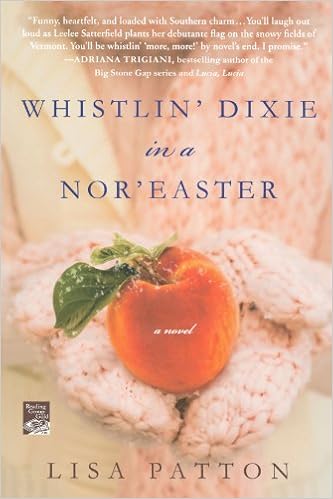
Whistlin' Dixie in a Nor'easter

Image result for whistlin dixie in a nor easterWhistlin' Dixie in a Nor'easter
Lisa Patton
2009

The Summary
"Leelee Satterfield leaves her beloved Memphis to follow her husband's pipe dream:  to manage a quaint Vermont inn.  But when they arrive, young daughters and ancient Yorkie in tow, they discover pretty fast that there's a truckload of things nobody tells you about Vermont until you live there.  When Leelee is left swindled and snowbound, she's forced to confront the true depth of her Southern grit in this foreign town.

"In this moving, comedic debut, Lisa Patton paints a hilarious portrait of a life in Vermont seen through the eyes of a Southern belle.  It's a charming, fish-out-of-water tale of one woman who learns to stand up for herself--in sandals and snow boots--against all odds."

The Good
Whistlin' Dixie in a Nor'easter is a pretty fun novel.

Sweet, humorous, and full of heart, Lisa Patton's novel is a delightful mixture of friendship, misadventure, and love.  It was an interesting blend, bringing together the warm, honeysuckle scented culture of the South and the colder, entirely foreign climate of the North.  When the two come together, it's a minefield fraught with dangers, as Leelee quickly learns.

Overall, it's a heartwarming story.  Whistlin' Dixie in a Nor'easter takes a while to build, takes an even longer time to get to the point that you actually see the Tennessee grit and determination upon which Leelee prides herself; however, it's a good story.  It's short, sweet, and easy to read, and it's worth checking out, especially for any local Tennesseans interested in a fun, romantic debut.

The Bad
Honestly, despite sharing a state with Leelee, I found I couldn't relate to her.  I mean, I understand what it means to be a "people-pleaser." (Sometimes, it's just hard to say "no" to the folks you know and love.)  However, I had hoped Leelee would find that Southern grit and rebellious determination to turn her life around long before she actually did.

It was frustrating to witness Leelee endure problem after problem, before she finally decided to take her life into her own hands.  I hated how Baker--among others--took advantage of her.  I hated that Leelee was left to foot the bill, even when it was her scummy husband's fault.

I hated it for her.  The embarrassment, the desolation, the betrayal and confusion.  It's a bit gut-wrenching.

The Ugly
I really don't like Baker.

We'll just leave it at that, lest I spoil the story.
Tuesday, August 29, 2017

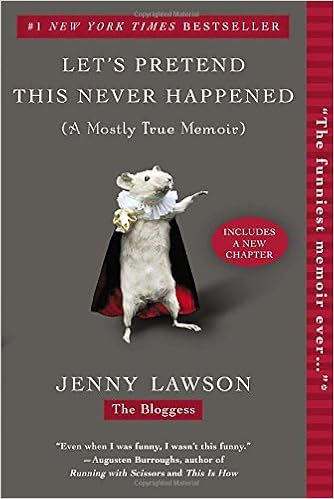
Let's Pretend This Never Happened

Penguin Books
Let's Pretend This Never Happened:  A Mostly True Memoir
Jenny Lawson
2012

The Summary
"When Jenny Lawson was little, all she ever wanted was to fit in.  That dream was cut short by her fantastically unbalanced father and a morbidly eccentric childhood.  It did, however, open up an opportunity for Lawson to find the humor in the strange shame-spiral that is her life, and we are all the better for it.

"In the irreverent Let's Pretend This Never Happened, Lawson's long-suffering husband and sweet daughter help her uncover the surprising discover that the most terribly human moments--the ones we want to pretend never happened--are the very same moments that make us the people we are today.

"For every intellectual misfit who thought they were the only ones to think the things that Lawson dares to say out loud, this is a poignant and hysterical look at the dark, disturbing, yet wonderful moments of our lives."

The Good
Jenny Lawson is hysterically funny.

Even when bad things happen, she's willing to share them with others and laugh about what happened to her, or, at least, convince others to laugh with her as she relives the trauma.  Although she doesn't have a filter, which translates to some rather outlandish statements, Lawson is able to capture a unique voice in her memoir that makes her stories relatable and memorable.

She's a bit absurd, I know, but she's hilarious.  Even when she's faced with traumatic experiences, like Stanley the Magical Squirrel or her high school agriculture class where she lost a turkey baster inside of a cow (don't ask) or wearing a deer sweater (which is more sickening than you imagine), she manages to make these memories funny for her readers.  Moreover, she has the ability to appeal to anyone who has had a non-traditional upbringing or who has ever thought their life is absolute mayhem.

She also captures those feelings of growing up and striking out, what it's like to go back and realize that the home you once knew--the childhood you'd unexpectedly treasured--is gone.  Life changes, life keeps moving forward and you find out quickly that you can't go back.  Lawson perfectly captures that melancholy and she expresses it in a way that feels familiar, bringing out an emotion that pinches at your heartstrings.

Her book, no matter how wild and absurd and occasionally crazy it may seem, is an examination of childhood, mental illness, marriage, friendship, and motherhood.  It is a depiction of life that can seem ludicrous, but it is a full life with family, friends, love and laughter.

The Bad
I will admit that Lawson's work can be an acquired taste.  I love her books, both Let's Pretend This Never Happened and Furiously Happy; however, I think she could rub some people the wrong way.  She's sardonic, witty, sarcastic, but she has a mouth like a sailor and she's not afraid to discuss any subject.

I'm not joking.

No matter how unbearably awkward, excruciatingly personal or heartwrenchingly horrifying, Lawson will tell you all about her experiences.  Sometimes, it's difficult because you feel like a bit of a voyeur; other times, you waffle between feeling relief that you don't have to deal with the absurdity she does or you feel a kinship for the odd and unusual things that happen to her because you endured the same.

The Ugly
Life can be an ugly, ugly business.  Lawson, for the most part, manages to take the sting from tragedy by making her readers laugh at the absurdity.  It still hurts, but, at least, some good does come from the bad.

Friday, May 26, 2017

Unfinished 7

2082136
W.W. Norton Company
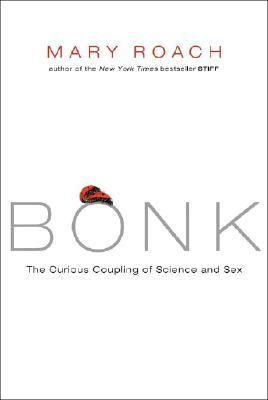
Okay.  So, I started reading Bonk by Mary Roach after I finished reading Packing for Mars.  After reading a review on Goodreads that cracked me up, I decided I would give it a try--and I kind of regret it.

First off, Mary Roach is hilarious.  I liked Packing for Mars, and I think I could have enjoyed Bonk if I just hadn't been traumatized by some of the stories.  I like to think I'm not a prude, but when sex leads to disfigurement, count me out.  I just can't do it.  It gives me this weird squirmy feeling inside, and I just can't cope.

Mary Roach is a great author, but I just don't think I can handle Bonk.

-

25507925
Gallery Books
I picked up Tyler Oakely's Binge out of curiosity.  I'd seen it in the YA section at my local library and I thought it might fit my Read Harder Challenge, so I thought, "Why not?"  It seemed interesting and it would help me mark off one of my challenges.

Wrong.  On both accounts.

Oakley is a pretty funny, I'll give him that; however, I just wasn't taken with his memoir.  I like that he's so very candid about his experiences, even the most embarrassing ones, but I found there is something as too much of a good thing.  Oakley tells me a little more than I would normally like to know about his personal experiences, and I just found myself quietly closing the book and returning it to my library.

-

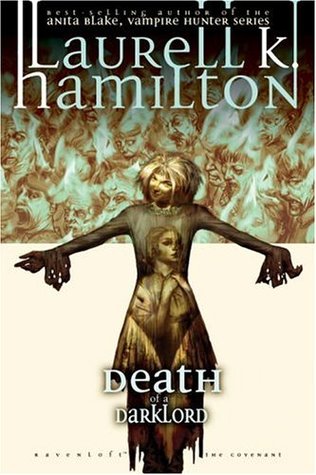
Death of a Darklord by Laurell K. Hamilton had so much potential.  It was beautifully written, it carried intricate characters with interesting talents, it had magic and fantasy and adventure.  It struck all the right notes for me.  I was so excited to read it, especially as I started in on the first couple of chapters.  I was intrigued by the villain and I wanted to see where the story would go.
30229
Wizards of the Coast

And then I made the mistake of looking up the book on Goodreads and discovering, much to my astonishment, that it was part of a series.  I learned Death of a Darklord is a stand-alone novel in a series roughly based in the same world (or something along those lines).  Not necessarily a bad thing, right?

Except it's part of a horror series.

When I picked up Death of a Darklord, I expected a fantasy novel.  I expected magic, mischief, adventure, trials and tribulations, before eventually culminating in a relatively happy ending.  There's always a little tragedy in every fantasy story; however, I always expect to find a satisfying conclusion, if not an outright happily-ever-after.

Death of a Darklord is a horror story.  It's full of tragedies, one after the other--and it literally doesn't get any better.  If I'd gone into this novel with the knowledge I was reading a tragic story, I probably would have been fine with it.  As the cover gave no inclination as to what I would find, I started reading with the expectation of a good ending and I was incredibly disappointed.  I put it aside without ever really finishing it.

-

27833668
Pantheon
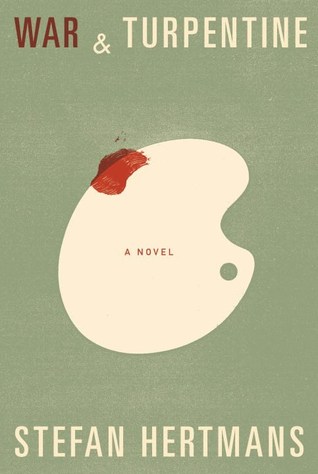
War and Turpentine wasn't a bad novel.  It's based on Stefan Hertsman's grandfather, a would-be painter who lived through and fought in World War II.  Hertsman regales readers with embellished stories of his grandfather, his grandmother, his family, and, ultimately, his legacy.

It's an interesting book that reminds me of The Things They Carried, in that there are some truths buried beneath the fiction; however, it just didn't grip me like Tim O'Brien's earlier novel.  Personally, Hertsman's novel isn't for me.  I didn't care for the style or the feel of the novel, even though I wanted to enjoy it; I didn't like the characters, I didn't like the way they felt or the way they made me feel; moreover, I found myself growing bored with it at regular intervals and casting it aside for more interesting fare.

I'm sure it's a fine book, but it's just not for me.

Wednesday, May 10, 2017

Navel Gazing: True Tales of Bodies, Mostly Mine (But Also My Mom's, Which I Know Sounds Weird)

28637246
Gallery Books
Navel Gazing:  True Tales of Bodies, Mostly Mine (But Also My Mom's, Which I Know Sounds Weird)
Michael Ian Black
2016

The Summary
"You'll laugh, you'll cry, you'll call your mom.

"New York Times bestselling author Michael Ian Black pulls no punches in this hilariously honest memoir, a follow-up to the acclaimed You're Not Doing It Right.  When Michael's mother receives a harrowing medical diagnosis, Michael begins a laugh-out-loud examination of health, happiness, and the human body from the perspective of a settled (and sedentary) husband and father of two.  With trademark wit that has made Michael's other books popular favorites, Navel Gazing is a heartfelt and poignant memoir about coming to terms with growing older and the inevitability of death.  It is also a self-deprecating and deliciously frank remembrance of exercise failures, finding out his is part Neanderthal, and almost throwing down with fellow author Tucker Max.

"Michael Ian Black may not have the perfect body.  Or be the perfect father.  Or husband.  Or son.  But readers will laugh as they recognize themselves in his attempts to do better.  And, inevitably, falling short."

The Good
When I first picked up Navel Gazing, I realized I recognized the author's name.  He was relatively famous, I knew that; I'd seen him on a screen somewhere, even if I couldn't remember exactly where.  However, I'd never recognized him as a writer.  It surprised me, and I couldn't help wondering if this wasn't just another book by a celebrity with a ghost writer.

Except Michael Ian Black isn't just another celebrity writing a book about his career; rather, he's a man writing about the trials of everyday life with a terminally ill parent.

He discusses his family and his life as he grapples with his mother's deteriorating health; he discusses his health and what he's not doing to improve it; he discusses his beliefs, his religion and how it impacts him as his mother grapples with one medical diagnosis after another.  It's a candid account on life in general and full of humorous musings on health, happiness, and faith.

I loved reading Black's memoir for the simple fact that I could relate to him.  When he talks about his health and his worries regarding growing older, yet he doesn't want to schedule another appointment with the doctor, I understood his fear of disease and his subsequent reluctance to do anything about it.  I mean, it sounds exactly like something I would do; in fact, it sounds like something I've done.

Likewise, when Black discussed his floundering attempts to become healthy and, for instance, decided to take up jogging as a healthier alternative to binge watching Netflix, I understood and connected with his experiences.  I understood his struggles with weight and physical exercise (it's exhausting), and I recognized his desperate desire to discover something deeper, more important in his running routine.
"The toughest thing about training for the half marathon was the time commitment:  hours per week, hours that could have been more fruitfully spent not running.  Why did I persist, week after week, through the summer heat and into the chilly days of autumn?  What was my fascination with running?  [...]  What did I want?  The truth is, I knew what I wanted from running, but I couldn't quite bring myself to admit it:  I wanted enlightenment.  And this is where are all my convoluted feelings about my body and Mom's declining health and aging and my own fear of death and praytheism congeal into a goopy sludge.  This is the nexus.  It is a stupid nexus, to be sure, but I could not quite shake the idea that running could save me."

I laughed at his self-deprecating humor, of course, but I enjoyed his candor and I connected on a personal level with his experiences.  I know what it's like to struggle with weight and health concerns (doesn't everyone?), and I know what it's like to hope that you can find something--anything--in physical activity.  You hope to find enlightenment, contentment, peace--you know, something--and it's always a little disappointing if you don't.

Overall, I loved the reading Navel Gazing.  It's fun and humorous, like it's intended to be, but it's also insightful and relatable.  It connects on a deeply human level, exploring our individual foibles and disappointments, our worries and fears and insecurities.  Personally, I came away from Navel Gazing with a familiar, "intense...almost electrical connection" to another human being.

It's a feeling that I'm sure any reader will appreciate after finishing Black's memoir.

The Bad
No complaints.  His humor is sarcastic, slightly odd, so I can see how it might rub people the wrong way; however, I loved his sense of humor and I loved his candor as he talked about his experiences as a child with a terminally ill parent, as a parent with children, and as a human being with health concerns of his own.

If I have one complaint it might be that Black sometimes skips quickly to the next thought without any segue or break between subjects.  It's pretty common through his memoir, but I think it's a pretty easy quirk to overlook.  He might jump to a new subject without warning, which could be construed as confusing or annoying (depending on how you look at it); however, I wouldn't call it a deal breaker.

The Ugly
Cancer.

Friday, May 5, 2017

My Dog: The Paradox: A Lovable Discourse about Man's Best Friend

Title details for My Dog: The Paradox by The Oatmeal - Available
Andrew McMeel Publishing, LLC
My Dog:  The Paradox:  A Lovable Discourse about Man's Best Friend
The Oatmeal (Matthew Inman)
2013

The Summary
"Dogs are funny creatures.  They fear the hair dryer but not the garbage truck.  They gleefully roll in the dirt (and other smelly things), yet they clean their private parts obsessively.  Their lives aren't lengthy, logical, or deliberate but an explosive paradox of fur, teeth, and enthusiasm.  Perhaps that's why we love them."

The Good
I probably laughed way too hard at this book.  As a dog lover and owner, I could certainly relate to the weird and funny and, sometimes, gross things dogs will do.  They are all these things and more--and, as Inman writes, that's precisely why we love them.

The Bad
The Oatmeal is an acquired taste.  If you pick up anything he's written, you'll see what I mean.

The Ugly
Nothing really.  It's a short, rather sweet comic about dogs and our love for them/their love for us, and it's a whole lot of fun to read.  Inman's humor can sometimes be a bit offensive, but his comics are worth reading at least once.

Wednesday, May 3, 2017

Charlie All Night

384458
Mira
Charlie All Night
Jennifer Crusie
1995

The Summary
"Dumped by her boyfriend and demoted from WBBB's prime-time spot, radio producer Allie McGuffey has nowhere to go but up. She plans to make her comeback by turning temporary DJ Charlie Tenniel into a household name. And if he's willing to help cure her breakup blues with a rebound fling, that's an added bonus.

"Charlie just wants to kick back, play good tunes and eat Chinese food. He's not interested in becoming famous. But he is interested in Allie. And after all, what harm is a little chemistry between friends?

"But suddenly their one-night stand has become a four-week addiction. Night after night on the airwaves, his voice seduces her…and all the other women in town. He's a hit. It looks as if Charlie's solved all Allie's problems…except one. What is she going to do when he leaves?"


The Good
I absolutely loved this book.

Charlie All Night is full of humor and heart.  Although I know Allie sets her eyes on Charlie for all the wrong reasons--and, on more than one occasion, I know their romance is set to blow up in their faces--I found their interactions both hilarious and heart-warming.  Allie and Charlie seem to get along well:  they fight and bicker like any couple, but they seem to harbor a genuine affection for one another.

It's wonderful to see how their relationship blossoms.  I mean, yeah, sure, they sort of turn everything into a mess (if it isn't Charlie accidentally publicizing their relationship over the air, then it's Allie saying just the wrong thing to get her boss on her tail), but it's just so funny how they manage to work together and, eventually, fall in love.

Personally, I enjoyed it and I had so much fun reading it.  I devoured it in an evening and I can't wait to read more from Jennifer Crusie.

The Bad
The main reason Charlie is visiting Allie's tiny town is because he's secretly investigating the radio station and everyone in it; however, that plot line sort of gets pushed to the wayside.  Readers aren't left hanging without any resolution, but it's kind of secondary to Allie and Charlie's relationship.  If you're more interested in what's going on in the back ground, I'm afraid the spotlight is only shined on it every once in a while.

The Ugly
Relationships can be ugly.

Between Allie dealing with the nuclear fallout from her last break up and Charlie adamantly insisting he's only staying in town four weeks, you know someone's heart is going to get broken.

Monday, March 20, 2017

Mr. Popper's Penguins

Image result
Open Road
Mr. Popper's Penguins
Richard Atwater
Florence Atwater
1938

The Summary
"It was hard enough for Mr. Popper to support himself, Mrs. Popper, Bill and Janie Popper.  The addition of twelve penguins to the family made it impossible to make both ends meet.  Then Mr. Popper had a splendid idea--the talented penguins would be a sensation on the stage.  And so they were...

"A classic American humor, this story of a gentle house-painter and his high-stepping penguins has delighted children for generations."

The Good
Mr. Popper's Penguins is actually a lot of fun.  It's full of little adventurous:  trying to figure out how to support a house full of penguins, creating such a grand display with 12 penguins in tow, looking for a taxi that would take them all across town--and wouldn't be frightened of the birds.

And, speaking of penguins, I loved those little birds.  Starting with Greta and Captain Cook, it's such a fun journey to see how their little clan grows and flourishes and becomes national performance stars.  They were such characters, and I could see why Mr. Popper loved them so.

Overall, Mr. Popper's Penguins was an amusing little book and easy to read, meaning it's a great book for a young audience.

The Bad
Admittedly, I did find myself feeling a little bored while reading Mr. Popper's Penguins.  I mean, it's a great children's book, but, honestly, I wasn't smitten.  Moreover, as an adult, I found some of the things the Poppers' did to accommodate the penguins made me wince.  Like turning the living room into an ice rink--I mean, do you know what kind of havoc that would wreak on wood floors, not to mention the walls?

And I lamented the debt that poor Mr. Popper accrued for the refrigeration unit in the basement, or the costliness of fresh fish and every day bills for keeping a dozen penguins happy and healthy.  It's a bit difficult to read as an adult, realizing the economic toll, despite suspending disbelief.

The Ugly
Crippling debt.

Thursday, March 9, 2017

Rejected Princesses: Tales of History's Boldest Heroines, Hellions, and Heretics

Dey St.
Rejected Princesses:  Tales of History's Boldest Heroines, Hellions, and Heretics
Jason Porath
2016

The Summary
"Well-behaved women seldom make history...and these women are far from well behaved.

"Let's face it:  the list of historical women we learn about in school is lacking.  It's safe, it's censored, it's short.  And even when we learn about a true legend--say, Harriet Tubman--we get half the story (and it's usually not the half about her as a plantation-torching Union spy-master).  This is just the list of women we know about.  What of the women we don't?

"In place of complex, real-life heroines, we get sparkly, doe-eyed animated damsels who dominate children's minds everywhere.

"Rejected Princesses is here to provide an alternative to all that.

"In this fully illustrated, deeply researched, and totally entertaining collection, Jason Porath offers 100 women too uncompromising, too untoward, or too uncomfortable to fit the modern princess mold.  Gathering together a diverse set of some famous, some infamous, some forgotten, and some virtually unknown figures from history and myth, from all over the globe, this book presents the female role models we never knew we needed.  Yes, there are a few princesses, but there are also pirates, spies, journalists, activists, concubines, empresses, ninjas, pilots, samurais, mathematicians, sword-slingers, and war-lords too.

"These women were rebels and rulers, pioneers in their fields, and fighters for their causes (and sometimes for themselves).  In a time when women are still pushing for equal pay and equal opportunity, shouldn't we be putting brave women like Sybil Luddington, Hatshepshut, Nzinga Mbande, Josephine Baker, Khutulun, Rani Lakshimbai, Harriet Tubman, Emmeline Parkhurst, and Joan of Arc on equal footing with Cinderella or Sleeping Beauty?

"Women have always played a key, kick-ass role in revolutionizing our world.  The girls of today are the latest links in a long chain of geniuses, warriors, and fearless women.  It is the birthright of every woman to have a connection to that history.  Empowering, uproarious, and anything but traditional, Rejected Princesses seeks to provide just that."

The Good
I loved this book.

Yes, loved.

If it's not already apparent, I'm a bit of a history nerd and I love learning about quirky, unconventional history and feisty females who made their mark on history (see:  Bad Girls), so Rejected Princesses was the best of both worlds for me.

I imagine that many of the women featured in this book were too rebellious, too dangerous and, sometimes, too deadly to make it into high school textbooks; in fact, many of the women--whether resigned to the darkest parts of history or lingering at the edges of myth--were a pleasant surprise.  That is, I'd never read about them and I loved learning about them and the impact they made on history.

Here are some of my favorites:
  • Khutulun
  • Noor Inayat Khan
  • Julie d'Aubigny
  • Annie Jump Cannon
  • Iara
  • Mariya Oktyabrskaya
  • Olga of Kiev
  • Ching Shih
  • Sybil Luddington
  • Alfhild
  • Mary Bowser
  • Nanny of the Maroons
  • Tomo Gozen
  • Marjana
All of these women were incredible.  I mean, on this list alone you have fighters and warriors, spies and astronomers, pirates and Vikings, rebels and freedom fighters.  They're incredible.  Granted, I know some of them didn't exist (Marjana is a literary character, whereas Iara and, I think, Alfhild are myths and/or legends), but it was wonderful getting a glimpse into these individual cultures and their perceptions of women--and how these women flaunted conventions.

It was great.

And, of course, I can't forget the Night Witches from my list.  You can hear about me rhapsodize about the Night Witches here, so I won't go into much detail about them, except to say that they are without a doubt the most incredible pilots of World War II (I'm not joking) and, perhaps, some of the most incredible women about which I've had the pleasure to learn.

Overall, Rejected Princesses is a wonderful book.  Full of humor, colorful art, historical facts and, of course, incredible women, it's a great resource for those who wish to dabble in history--and it will show you just what it means to fight like a girl.


The Bad
No complaints.

I seriously want a copy for myself.

The Ugly
History is not always pretty--and, let's be honest here, it hasn't always been kind to women.  Some were burned at the stake because they were different; others were buried alive or faced a firing squad; some were even assassinated for their own violent reactions to society.  Not all these ladies had the luxury to happily retire.

Wednesday, February 22, 2017

Julie & Julia: 365 Days, 524 Recipes, 1 Tiny Apartment Kitchen: How One Girl Risked Her Marriage, Her Job, and Her Sanity to Master the Art of Living

Hatchette Books
Julie & Julia:  365 Days, 524 Recipes, 1 Tiny Apartment Kitchen:  How One Girl Risked Her Marriage, Her Job, and Her Sanity to Master the Art of Living
Julie Powell
2005

The Summary
"Powell needs something to break the monotony of her life.  So, she invents a deranged assignment:  she will take her mother's dog-eared copy of Julia Child's 1961 classic, Mastering the Art of Frech Cooking, and cook all 524 recipes in the span of just one year."

Truthfully, the subtitle says it all.

The Good
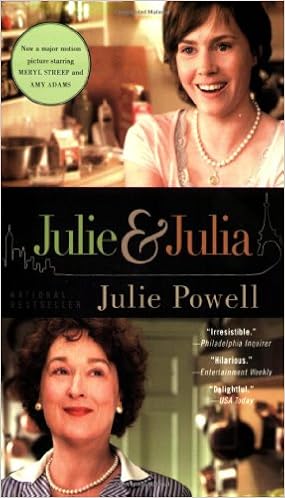
I read Julie and Julia by Julie Powell as part of my Read Harder Challenge for 2016 (which you can read more about here), and I was absolutely delighted with it.

Amusing, candid, and insightful, I really enjoyed listening to Julie Powell's memoir--or food memoir?  I'm not really sure where it falls in the grand scheme of things, but, regardless, I thought it was a wonderful book.  It's riotously funny, yet strangely poignant.  Oddly enough, it reminds me of Jenny Lawson and her memoir, Furiously Happy--yet just a tiny bit less chaotic.

Not by much, considering Julie Powell undertakes to make 524 different recipes, many of which take hours to prepare, in just one year in a crappy little apartment in Queens.  It's astonishing the things she (and her marriage) manages to survive, including:  biological clocks, frozen pipes, disastrous dinner parties, inane dead end secretarial jobs, break downs, Blanche days, and celebrity crushes.

It's really a pretty amusing book, especially if you decide to listen to it as read by the author (which I did--and which I highly recommend); however, it's not quite the food memoir I expected.  In fact, Julie and Julia is more memoir than food.  Julie is hellbent on recreating all of Julia Child's recipes in Mastering the Art of French Cooking, vol. 1 and, in her journey, she learns how to make a variety of dishes and confronts some of the most trying times of her life.

While it features a lot of cooking, Julie and Julia feels like it's more about the experiences of cooking and the results, specifically what happens to the author as she slogs through more than 500 French recipes, than the actual cooking, but I can't say I minded.

Julie and Julia is strangely heartwarming and incredibly amusing.  To me, it strikes just the right balance that makes it a memoir worth reading, especially if you have the chance to listen to the author tell her own story.  It makes Julie and Julia that much more memorable.

The Bad
I will note that while I was listening to the audiobook I discovered I borrowed the abridged version.  I don't know if the audiobook had the full text, but I do know I missed a few things that might otherwise have filled in details or fleshed out the characters involved.  It was my only disappointment in a book that was, otherwise, wonderful.

The Ugly
Okay, I'll be honest:  I liked Julie, but, sometimes, I just couldn't handle very much of her.

I mean, I liked her and I liked her style of writing.  I loved listening to the audiobook, because it has this authenticity to it, this genuine emotion that seeps through every chapter.  However, I could only take so much.  She was very dramatic and she stressed out so easily--and, confidentially, she stressed me out when she went on a rant about how cooking was going to ruin her and so on...and, sometimes, it was just a little too shrill, you know?

Thursday, January 26, 2017

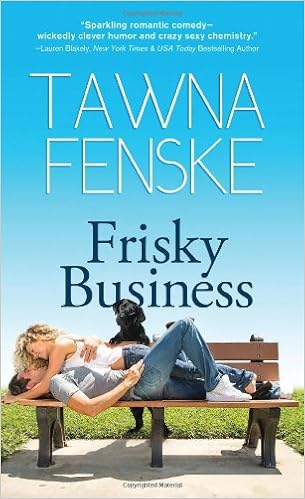
Frisky Business

Sourcebook Casablanca
Frisky Business
Tawna Fenske
2014

The Summary
"No more rich men for Marley Cartman.  Absolutely not.  Thanks to her dad, her ex-fiance, and the overbearing donors she schmoozes for a living, she's had more than her fill.  From now on, she wants blue-collar men with dirt under their fingernails.  But when Marley makes a break to handle donor relations for a wildlife sanctuary, she finds herself drawn to the annoyingly charming--and disturbingly wealthy--chairman of the board.

"Judging by his hipster T-shirts, motley assortment of canine companions, and penchant for shaking up stuffy board meetings, you'd never guess that William Barclay the Fifth is a brilliantly successful businessman.  Will has good reason to be leery of scheming women, and as he and Marley butt heads over the wisdom of bringing grumpy badgers to charity events, he can't help but wonder if his new donor relations coordinator is hiding something other than a perfect figure beneath that designer suit..."

The Good
This book was so much fun.

Frisky Business is absolutely hilarious.  Granted, I found it slightly strange and a touch unrealistic, but, overall, it was enjoyable.  It made me laugh until I couldn't laugh anymore, which allows me to forgive any number of sins, including unrealistic romantic relationships.

Marley is a strangely endearing female character with overbearing parents and a penchant for people pleasing; Will has a dysfunctional family (an aunt who collects phallic rock statues) and trust issues (his ex-wife ran off with his sister).  They're an odd couple, especially after Marley vows never to date a rich man ever again, but they just seem make perfect sense.

I mean, I just love the way they interact.  They're funny characters with unique personalities and respecting baggage.  It's so much fun to watch them flounder through their feelings and combat all the day-to-day calamities involved with relationships and working with a wildlife sanctuary--like overbearing fathers, ex-convict mothers, slobbery canines, ex-wives turned sister's new girlfriend, etc.

It's hilarious.  Almost on par with Fenske's other romantic comedy, Making Waves.

The Bad
Personally, I just didn't care for the conclusion.  It seemed...forced, in my opinion.  But I think that's more of a personal preference than a true reflection of the novel.

The Ugly
Phallic rocks.

You heard me.

Saturday, December 31, 2016

Read Harder Challenge (Part Eight)

This week, I'm just barely eking by with my Read Harder Challenge.  After reading these last books, I have officially finished my list:
  1. Read a book that is set in the Middle East
  2. Read a nonfiction book about feminism or dealing with feminist themes
  3. Read a food memoir
Little, Brown and Co.
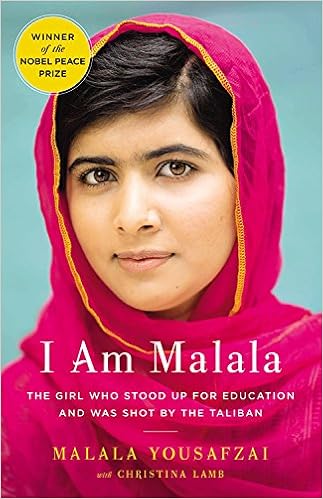
To start off, I finally finished reading I Am Malala by Malala Yousafzai.  It only took my 6 months, but I finished it and, honestly, I'm glad I did.  It's a fascinating story that's both heartbreaking and incredibly informative, offering insight into the various cultures and relations of Afghanistan.  Although her story is grim, it's simultaneously uplifting.  Personally, I enjoyed reading about her and her father's endeavors to bring education to local children--and particularly to the young women of the community.

Malala is a skilled narrator.  She's bright, she's hopeful, she's very detailed and she's very intelligent.  Although her book is a translation, which is sometimes apparent, I felt like I could read and relate to her feelings.  She does a fine job of connecting to her readers, detailing her thoughts and feelings--and making her voice heard.  She makes a compelling argument for education, for giving women equal education opportunities.  Truthfully, you can see why Malala Yousafzai is a Nobel Prize Laureate.

I also had the opportunity to read a short (and rather famous) essay by Virginia Woolf:  A Room of One's Own.  As an avid reader and, ahem, English major in college, you would think I'd have taken the opportunity to read A Room of One's Own, but, until this year, I had yet to make more than a cursory acquaintance with Woolf's work.  Unfortunately, I wasn't enamored by her essay.

Image result
Harcourt Inc.
A Room of One's Own makes some very valid points.  It's important to read and, after reading it, it's something that all young women should have a chance to read at least once in their life.  However, I had a hard time reading Woolf's essay, because I just couldn't seem to focus on one thing before it jumped to another.  For instance, in the first few pages when Woolf described Oxbridge and her experiences at the esteemed university, I thought it took quite a long time to get to the point--and, confidentially, I found myself growing a little bored as I waited for her to come to a conclusion.  Not that her writing is bad, mind you; I just struggled to stay committed given her style of writing, so I'm not sure if that's so much her failing as my own.

The point is, I finished reading A Room of One's Own and I have a new appreciation for Woolf.  She's a talented writer, but, personally, I'm not so sure she's the writer for me.  I appreciate her work and I appreciate the significance of her essay, but I don't think she's the one and only feminist writer for me.

Last but not least, I read Julie and Julia by Julie Powell.  It's riotously funny, yet strangely poignant.  Oddly enough, it reminds me of Jenny Lawson and her memoir, Furiously Happy--yet just a tiny bit less chaotic.  Not by much, considering Julie Powell undertakes to make 524 different recipes, many of which take hours to prepare, in just one year in a crappy little apartment in Queens.  It's astonishing the things she (and her marriage) manages to survive, including:  biological clocks, frozen pipes, disastrous dinner parties, inane dead end secretarial jobs, break downs, Blanche days, and celebrity crushes.

Hatchette Books
It's really a pretty amusing book, especially if you decide to listen to it as read by the author (which I did); however, it's not quite the food memoir I expected.  In fact, Julie and Julia is more memoir than food.  Julie is hellbent on recreating all of Julia Child's recipes in Mastering the Art of French Cooking, vol. 1 and, in her journey, she learns how to make a variety of dishes and confronts some of the most trying times of her life.  While it features a lot of cooking, Julie and Julia feels like it's more about the experiences of cooking and the results, specifically what happens to the author as she slogs through more than 500 French recipes, than the actual cooking, but I can't say I minded.

Julie and Julia is strangely heartwarming and incredibly amusing.  To me, it strikes just the right balance that makes it a memoir worth reading, especially if you have the chance to listen to the author tell her own story.  It makes it memorable.  However, I will note that while I was listening to the audiobook I discovered I borrowed the abridged version.  I don't know if the audiobook had the full text, but I do know I missed a few things that might otherwise have filled in details or fleshed out the characters involved.  It was my only disappointment in an otherwise wonderful book.

Saturday, December 3, 2016

Unfinished, Six

905887
Bantam
I didn't get very far with Them Bones by Carolyn Haines.  I picked it up as an ebook and started reading it on my tablet, but I couldn't stay with the story.  It intrigued me, I won't deny, but I couldn't seem to invest myself in the plot or even enjoy the characters.  For some reason, it just didn't seem right for me and, honestly, I didn't feel like trying to force myself to fall for a book that obviously wasn't for me.

I don't think I even managed to make it past the first chapter, so I don't have much to say about it.

-

I am an avid reader of Jana DeLeon.  I've read almost everything written in the Miss Fortune Mystery series (which includes Louisiana Longshot, Lethal Bayou Beauty, Swamp Sniper, Swamp Team 3, Gator Bait, Soldiers of Fortune, and Hurricane Force) and a handful of other novels; however, I think I'm finished with Fortune Redding.  At least, for the time being.

29915419
Jana DeLeon
I tried to read Fortune Hunter, but after binge reading the Miss Fortune Mystery series, I can't say I was excited to return.  Fortune Hunter, like it's predecessors, is good, mindless fun.  It's a thrill-a-minute joy ride that takes you across the bayous of Louisiana at breakneck speed and it doesn't stop.  It's hilarious, it's fun, and it's packed with interesting--I'm being diplomatic here--characters.

Honestly, I had fun with Louisiana Longshot and I really enjoyed Gator Bait (it's probably my favorite), but I just can't take more of the sheer absurdity.  It's fun and it's funny, but, after a certain point, I just need a break from the insanity of Gertie, Ida Belle, and danger-prone Fortune Redding.

I might come back to the series one day.  For now, I just need some distance--and, maybe, an infusion of something more series.  Like Tolkien.  Or Tolstoy.

-

9591398
Feiwel & Friends
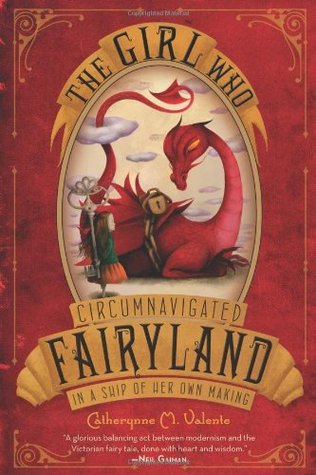
The Girl Who Circumnavigated Fairyland in a Ship of Her Own Making by Catherynne Valente was an interesting book.  September, a very ordinary girl living in Omaha, Nebraska, finds herself transported to a mythical fairy world and throw into a not-so-ordinary adventure.  As I read the book jacket, it struck me as a fascinating story, especially when I heard about the villainous Marquess and the book-loving Wyvern and an array of strange, delightful creatures and characters, like the Green Wind.  I was uncommonly excited to read Valente's novel.

And then, suddenly, I wasn't.

I don't know if it just wasn't the right time for me to read The Girl Who Circumnavigated Fairyland in a Ship of Her Own Making or if I was simply distracted by all the other novels I had in my TBR.  Regardless, I couldn't disappear into the world of Fairy, like September does, and I didn't find myself enchanted by the wondrous things she saw.  I couldn't stay committed to the story, so I simply put it aside to read another day.

-

I started Perfume:  The Story of a Murderer by Patrick Süskind with every intention of finishing it; however, it turned into a bit of a nonstarter, like Them Bones.  I didn't get very deep into Perfume, before I put it aside, but, honestly, I don't know why I did.  I mean, yes, it's a bit grisly at the beginning (and I don't imagine it gets any better), but, for some reason, I thought it had the most beautiful language.

That is, the most beautiful language considering it's about the makings of a homicidal maniac.

343
Penguin
If I hadn't had such a massive TBR (and another book on the back burner that I really wanted to finish) and if I hadn't had a due date, I might have spent a little more time getting to know Perfume.  Something about it enchanted me, something about the language and the dismal streets of eighteenth century Paris that had me hooked; however, I made the mistake of putting it down...and I didn't pick it back up.

It's a bit like Game of Thrones in that respect.  It's wonderfully detailed, it's fascinating, it's well-written, but I just can't seem to keep my attention focused on more than one book at a time.  One always ends up suffering.  In this case, it was Perfume.

I will note that I have every intention of finding Süskind's novel once more, after I finish reading I Am Malala and Julie and Julia and My Grandmother Asked Me to Tell You She's Sorry...among others.

Tuesday, September 20, 2016

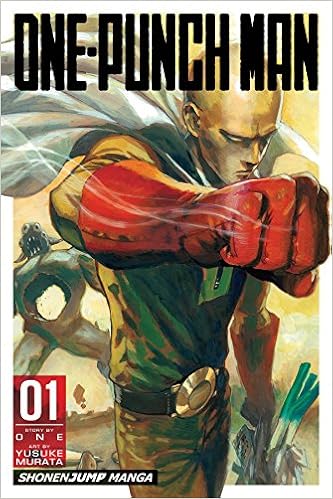
One-Punch Man (Volume 1)

Viz Media
One-Punch Man (Volume 1)
One
Yusuke Murata
2012

The Summary
"Nothing about Saitama passes the eyeball test when it comes to superheroes, from his lifeless expression to his bald head to his unimpressive physique.  However, this average-looking guy has a not-so-average problem--he just can't seem to find an opponent strong enough to take on!  Every time a promising villain appears, he beats the snot out of 'em in one punch!  Can Saitama finally find an opponent who can go toe-to-toe with him and give his life some meaning?  Or is he doomed to a life of superpowered boredom?"

The Good
I read One-Punch Man at the recommendation of my brother, who read and watched the series online.  When I found it in my library, it seemed fated to be and I'm glad I took the opportunity to read it.  It's not a stretch to say One-Punch Man is a wonderfully amusing series that treats readers to great characters, humor, and excellent artwork.

Part drama, part comedy, One-Punch man is absolutely hilarious with its comical villains (who obviously don't know what they're getting into) and it's unassuming--nay, one might even say unimpressive--superhero.  You wouldn't think it would strike all the right notes, but, miraculously, it does.

And, speaking of superheroes, Saitama is not what you'd expect.  Average height, rather skinny, bald with saucer-like eyes that give him a bored look, Saitama is just an average guy.  Who just happens to live in a city infested with monsters, supervillains, and criminals.  You wouldn't think he could defeat every supervillain and/or monster that comes his way, but he can and he can do it with a single punch--and yet he's utterly depressed, because he's not challenged anymore.

He's a superhero for fun--an explanation that's sure to garner, at the very least, a chuckle--but, suddenly, he finds he's no longer having fun.  He's disappointed when a foe falls to one jab, he's sad he's completely undefeated, and, as terrible as this sounds, I found myself outright laughing at his plight.  I mean, he doesn't even have to try, just bam! and done...and back to his dreary old life as the world's strongest man.

Besides which, I got a kick out of the subtle jabs the author takes at the expense of other manga.  He pokes fun at the serious, laughs at the overly dramatic, and yet provides a quality story that's amusing without being crass.  It's a series that doesn't take itself too seriously, which I appreciated after reading Sui Ishida's macabre tragedy, Tokyo Ghoul.

And, as an aside, I cracked up over the fact that none of the cities actually had names.  They were just designated as City A or City G, and it becomes quite apparent that these cities take a beating on a regular basis--and people are, more or less, used to it.  Just another city-destroying monster, no big deal.

Overall, One-Punch Man is a great manga and I highly recommend it to both readers who are unfamiliar with the genre and long-time fans.

The Bad
You can't take this story seriously.  It's absolutely ridiculous, but that's exactly what seems to make it so fun.

The Ugly
Wanton destruction.  Graphic violence.  Bug guts.

Don't worry, you'll see what I mean.

Thursday, July 21, 2016

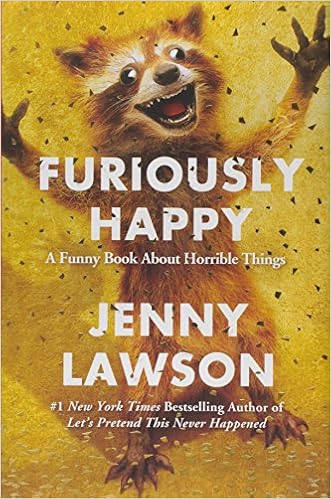
Furiously Happy

Flatiron Books
Furiously Happy:  A Funny Book About Horrible Things
Jenny Lawson
2015

The Summary
"In Furiously Happy, #1 New York Times bestselling author Jenny Lawson explores her lifelong battle with mental illness.  A hysterical, ridiculous book about crippling depression and anxiety?  That sounds like a terrible idea.

"But terrible ideas are what Jenny does best.

"As Jenny says, 'Some people might thing being "furiously happy" is just an excuse to be stupid and irresponsible and invite a herd of kangaroos over to your house without telling your husband first because you suspect he would say no since he's never particularly liked kangaroos.  And that would be ridiculous because no one would invite a herd of kangaroos into their house.  Two is the limit.  I speak from personal experience.  My husband says that "none" is the new limit.  I say he should have been clearer about that before I rented all those kangaroos.

"'Most of my favorite people are dangerously fucked up but you'd never guess because we've learned to bare it so honestly that it becomes the new normal.  Like John Hughes wrote in The Breakfast Club, "We're all pretty bizarre.  Some of us are just better at hiding it."  Except go back and cross out the word "hiding."'

"Furiously Happy is a book about embracing everything that makes us who we are--the beautiful and the flawed--and then using it to find joy in fantastic and outrageous ways.  Because, as Jenny's mom says, 'Maybe "crazy" isn't so bad after all.'  Sometimes crazy is just right."

The Good
Furiously Happy is uproariously funny, brutally honest, completely candid, and absolutely absurd.  Jenny Lawson has a quirky sense of humor that sometimes borders on vulgar--no, rather she cross the line on vulgar and waves at you from the other side--but the shock value in her stories keeps them interesting and her ability to capture an unusual story, a tragic event, or a strange set of circumstances, makes her second book thoroughly hilarious and patently insane.

Lawson has a unique way of telling a story.  She frequently deviates from a set path, skipping merrily along, before she reverts back to the original narrative.  She distracts herself with new stories, but she has ADD, among other disorders, which explains quite a lot--and, I think, tends to make her storytelling interesting.

Her history might be a little fractured by her inability to stay focused, but I think she perfectly conveys herself and her story.  She shows her audience her real self and adequately characterizes her family and friends.  She really brings everyone to life, showing off their unique characteristics and attitudes, and offers extraordinary stories.

Like how her husband bought her a mounted bear head, which is when she learned he really did love her.  Or how her father stumbled across a stuffed giraffe and discovered a tribe of individuals with a love for ethically achieved, taxidermied animals, just like Jenny.  Or her strange penchant for hosting midnight cat rodeos.  Or her unusual encounter with a doctor who removed her gallbladder (an experience which, she claims, proves she's turning into a zombie one organ at a time).

I mean, you can't not laugh at the ridiculous, sometimes terrible things that happen to her and the equally terrible ideas that strike her fancy.  Altogether, it's a hilarious and irreverent romp through mental disorder, family drama, and horrible things that are inadvertently funny.

The Bad
I've already admitted it, Furiously Happy is an odd story.  Sometimes fragmented and just plain weird, it's a strange, scintillating and comically absurd memoir--but I absolutely loved it.  Lawson isn't a perfect author or even a perfect person, but I found her quirks, her struggles, and her unusual conversations with her husband and friends to be appealing.

It's funny, and it's relateable.

The Ugly
Mental illness isn't a pretty thing to witness.  Lawson had a way of making me laugh, which sometimes lessens the impact of witnessing her struggle with mental illness, but, as she points out, it's still "no fucking picnic."

Thursday, July 14, 2016

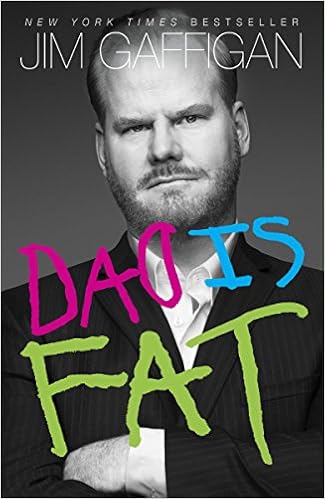
Dad is Fat

Crown Archetype
Dad is Fat
Jim Gaffigan
2013

The Summary
"Have you ever read a book that changed your life?  Well, neither has Jim Gaffigan.  This may be because Mr. Gaffigan is lazy and has poor eyesight, or it may be because he has five very young children and lives in a two-bedroom apartment in New York City.  Yes, five children.  No, he only looks Mormon.  Jim is just like you:  busy, self-consumed, and exhausted.  The only difference that may be that Mr. Gaffigan is a comedian and very, very good-looking.

"I know what you are thinking.  Finally, another book from a comedian!  Finally, a book about parenting from a comedian.  Finally, another self-congratulatory book flap obviously written by the author.  Well, fear not, reluctant but probably book purchaser.  I'm not saying Dad is Fat is the book that will change the world, but there is strong consideration of having this book, the one you are holding, added to the New Testament.  Yes, that's right, the Bible!  All I have to do is get the pope on the phone and it's pretty much a done deal.  Anyone have his number?"

The Good
Full of laugh-out-loud stories that are sure to make parents and prospective parents giggle, Dad is Fat is both fun and funny.  It's cut into small, manageable bites, so you'll be able to read and enjoy his book even if you can't read it in one sitting.  I especially like that Jim Gaffigan manages to make his book sound just like an on-going comedy act.

No, really.

If you've ever listened to one of Gaffigan's shows on Comedy Central or Netflix, you'll recognize his voice in Dad is Fat.  It's a unique blend of sarcasm, storytelling and absolute absurdity that makes his stories hilarious and, in my opinion, gives him a singular narrative voice.

Basically, if you enjoy his brand of stand-up comedy, you'll enjoy his book.

The Bad
While I do think Jim Gaffigan is a funny guy, Dad is Fat felt like one, long stand-up show.  It's funny and, I'll admit, it kept me giggling from beginning to end; however, it has an almost repetitive quality to it.  It doesn't change and, after a while, it's humor starts to grow a little stale.

The Ugly
No complaints.  It's really very mild.  He's a "family-friendly comedian."

Well, more or less.  I'm not really sure if he identifies himself as being family-friendly.  I think he just sort of stumbled into the role.

Tuesday, July 12, 2016

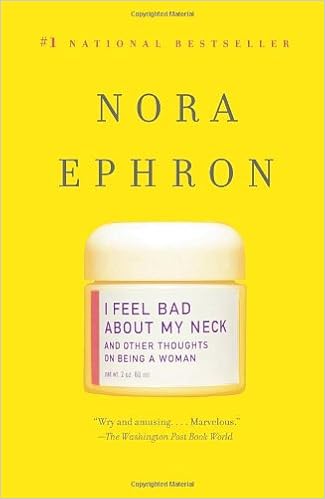
I Feel Bad About My Neck: And Other Thoughts on Being a Woman

Vintage Books
I Feel Bad About My Neck:  And Other Thoughts on Being a Woman
Nora Ephron
2006

The Summary
"With her disarming, intimate, completely accessible voice, and dry sense of humor, Nora Ephron shares with us her ups and downs in I Feel Bad About My Neck, a candid, hilarious look at women who are getting older and dealing with the tribulations of maintenance, menopause, empty nests, and life itself.

"The woman who brought us When Harry Met Sally..., Sleepless in Seattle, You've Got Mail and Bewitched, and the author of best sellers Heartburn, Scribble Scribble, and Crazy Salad, discusses everything--from how much she hates to her purse to how much time she spends attempting to stop the clock:  the hair dye, the treadmill, the lotions and creams that promise to slow the aging process but never do.  Oh, and she can't stand the way her neck looks.  But her dermatologist tells her there's no quick fix for that.

"Ephron chronicles her life as an obsessed cook, passionate city dweller, and hapless parent.  She recounts her anything-but-glamorous days as White House intern during the JFK years ('I am probably the only young woman who ever worked in the Kennedy White House that the President did not make a pass at') and shares how she fell in and out of love with Bill Clinton--from a distance, of course.  But mostly she speaks frankly and uproariously about life as a woman of a certain age.

"Utterly courageous, wickedly funny, and unexpectedly moving in its truth telling, I Feel Bad About My Neck is a book of wisdom, advice, and laugh-out-loud moment, a scrumptious, irresistible treat."

The Good
Nora Ephron's collection of essays is incredibly funny.  Ephron speaks to the universal experiences of all women, pointing out our shared fear of getting older, our worries of wrinkle and our eventual dependence on hair dye, our trouble with large purses (in which it's easy to lose everything, except that random little tic tac that always seems to appear).  It's a short book that's accessible to most, if not all, women who find themselves in similarly hilarious situations.

Overall, I enjoyed I Feel Bad About My Neck.  It's very well-written, incredibly descriptive, and strangely appealing.  I loved her essays because they spoke to me on a personal level, especially where purses are concerned.  (I can certainly see why Ephron dislikes them so, but, like her, I find them a necessary evil for random assortment of things I carry around, such as my books, or candy, or notebooks, or, heaven forbid, something reasonable like a wallet.)

Moreover, Ephron's book is short and it get straight to the point.  Unlike Consider the Lobster by David Foster Wallace, which I attempted to read before I found Ephron, I Feel Bad About My Neck is incredibly appealing, ridiculously funny, and accessible.  It doesn't get stale, because Ephron manages to enchant you with her writing.  She uses short, often funny--and frequently insightful--stories that are sure to appeal to many readers.

The Bad
No complaints.

I enjoyed the entire collection of essays.

The Ugly
Growing older is no picnic, as Ephron makes apparent.

Now, I can't help but wonder what's waiting in store for me.  I suppose I'll just have to find out.  In the mean time, I will learn to better appreciate the neck that I have.

Saturday, June 18, 2016

Read Harder Challenge (Part Five)

This week, I completed three more challenges:
  • Read a collection of essays
  • Read a book under 100 pages
  • Read a book by or about a person that identifies as transgender
Vintage Books
For my first challenge, I had to read a collection of essays.  At first, I picked up Consider the Lobster by David Foster Wallace, but I quickly changed my mind after attempting to read the first essay.  (Way too dense, and way too much porn for my taste.)  So, in my second attempt to finish this challenge, I read I Feel Bad About My Neck:  And Other Stories on Being a Woman by Nora Ephron--and am I glad that I did.

I absolutely loved reading Nora Ephron's essays on what it means to be a woman and, more importantly, what it feels like to have to deal with time, age, facial products, and oversized purses.  I laughed liberally throughout reading this book.  Her experiences are universal and her humor is outrageous.  Even if I couldn't relate to every experience, her essays had a way of picking out the familiar, like frustrations with wrinkles or hair dye, hatred of purses because they have a way of eating change and spitting up tic-tacs, or fighting over directions with a spouse.

It's a short read, but it's an incredibly fun journey.  I enjoyed every story in Ephron's book, but I especially enjoyed her wit and her candor and her humor as she recounted her many, familiar experiences.  She managed to connect with me as a reader and as a woman, and I appreciated her book for that.

Next, I quickly read Young Goodman Brown by Nathaniel Hawthorne.  Although it probably constitutes as a short story rather than a "book," which the challenge calls for, I thought it would be a good place to start.  I don't often read short books or novellas, and I had a dickens of a time trying to find a book under 100 pages.  Even How to Train Your Dragon, which took me part of a day to read, was over 100 pages.

So...short story it is!
Wildside Press

The plot of Young Goodman Brown is simple:  Goodman Brown takes leave of his wife, Faith, for some unknown errand in the forest, whereupon he meets a stranger in the forest carrying a black serpent-shaped staff.  He stumbles across various townspeople who travel the forest with him, until he reaches an altar in the middle of the wood where new acolytes are being brought into the fold--and one of them is his wife, Faith.  Events transpire which test his faith, causing him to live the rest of his life distrustful of his neighbors--and then he dies.

If you were hoping for a surprise, I'm sorry if I ruined the story for you, but I have to say that I didn't understand the point of this story.  On the one hand, Hawthorne sets up the episode as a potential dream, so I have no way of knowing whether or not his entire ordeal is real--which means a dream completely ruined his life.  On the other hand, if it is real, he has the ability to see the hypocrisy and sins of his neighbors, which also ruined his life.

I didn't like it.  I'm fairly certain that Faith was supposed to represent his actual faith and, when he lost her in the dream, he lost her in real life.  And I'm pretty positive that the traveler with the serpent staff is the devil, since all the evil people know him and Goodman--a good man--has the good sense to fear him.  There's so much metaphor and symbolism in, like, 12 pages that it's almost sickening.

Scholastic Press
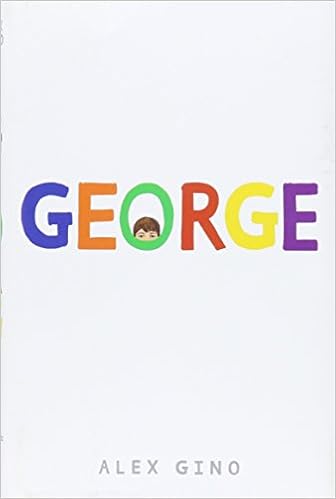
Last, I read George by Alex Gino as part of my reading a book by or about a person who identifies as transgender.  I don't know anything about the author, but I do know that the book is about George, a little boy who would rather be a girl and who desperately wants to play Charlotte in the school play of Charlotte's Web.

One of the things I noticed about this book was how George, who did not describe or identify himself as a boy, is consistently referenced with feminine pronouns.  I thought it was a nice touch, because it seemed to make an impact, seemed to impart the importance of a person who is transgender to identify with the gender they choose.  It's an intriguing and eye-opening concept that, I thought, adequately conveyed some of the struggles that George encounters.

I actually enjoyed reading George more than I thought I would.  I'll admit, I was a little hesitant, because I had my own preconceived notions with which to contend, as well as others.  Given the debate in the media over which bathrooms transgender individuals should and shouldn't use, I really didn't want to read a book that was full of ugly prejudices or a novel that would dwell upon hurtful things.  I was afraid of finding a depressing novel.

Luckily, I didn't.  George is surprisingly upbeat, and I found it was rather fun to follow his journey from George to Charlotte, how he managed to fulfill the slogan on the back cover:  "Be Who You Are."  It has a positive message, and it's appealing because it doesn't get bogged down by hateful language; rather, it focuses on George's journey and her success in embracing her own identity.

Saturday, June 11, 2016

Rat Queens: Sass and Sorcery (Volume 1)

Image
Rat Queens:  Sass and Sorcery (Volume 1)
Kurtis J. Wiebe
Roc Upchurch
2014

The Summary
"Who are the Rat Queens?

"They're a pack of booze guzzling, death dealing, battle maidens-for-hire and they're in the business of kill all the gods' creatures for profit.  Meet Hannah the Rockabilly Elven Mage, Violet the Hipster Dwarven Fighter, Dee the Atheist Human Cleric and Betty the Hippy Smidgen Thief."

The Good
On the back of the first volume, it reads:  "This modern spin on an old school genre is a violent, monster killing epic that is like Buffy meets Tank Girl in a Lord of the Rings world on crack!"  It might leave you wondering, "Is that really a thing?"

Yes.  Yes, it is.

It's a genre bending epic that hearkens to its roots in traditional fantasy, but it doesn't take itself too seriously.  It pokes fun at Lord of the Rings, Dungeons & Dragons, World of Warcraft, and the fantasy genre as a whole.  Rat Queens:  Sass and Sorcery combines fantastic characters, humor, and irreverent, bloody adventures.

Oh, it's possibly one of the weirdest graphic novels I've read, but it's also one of the more interesting volumes I've had the chance to read.  An amalgamation of traditional fantasy epics, role-playing games and quest-based video games, it's possibly one of the quirkiest, oddball adventure stories I've had the pleasure to read.  Throw in a few modern amenities, like enchanted stones serving as cell phones and designer drugs, it's sometimes just plain weird.

And, oddly enough, I really liked the characters.  Betty is strange and flighty (or, more likely, simply fried from the drugs in her system), but she's a mighty fun character who simply goes with the flow; whereas Dee is quieter, more introspective, more prone to commonsense and good decisions among her friends.  Hannah is the wild child, a bawdy battle-maiden with a sharp wit and a foul mouth and a wicked grasp on magic.  And then there's Violet.

I'll be honest, I thought Hannah and Betty were fun, and Dee is the best friend I'd love to have in my life, but, for some reason, I just adored Violet.  All these ladies are setting off on their own, trying to forge their own paths and defy the expectations set out for them; however, Violet struck a cord with me that instantly made her my favorite character.

She's tough, she's strong, she's battle savvy, and she's desperate to prove a point.  Like Hannah, Betty, and Dee who are set on starting new lives, she wants to separate herself from her parents' world, differentiate herself from the dwarven culture she feels has consumed her.  She doesn't want to model armor, she wants to wear it and use it--and she wants to fight.  She wants to be a warrior, regardless of the expectations of her family and culture.

And that's what I like about her:  she's true to herself.  She wants what she wants, and she'll be damned before she fails.

Overall, I enjoyed Rat Queens.  It's fun, it's weird, it's a raucous delight, but it has charming characters and an interesting plot--and I loved the art.  Roc Upchurch does an excellent job of bring Kurtis Wiebe's characters and story to life.  He gives it a gritty, edgy vibe that meshes well with the attitudes of the Rat Queens.

I liked it.  I liked it a lot.

The Bad
Not much to say, honestly.  Strong story, great characters, wonderful art--what's to complain about?

I suppose, if I really want to complain, I will note that I didn't always understand the world in which the Rat Queens lived.  I mean, it pulls heavily from fantasy and RPGs, so it's easy to make connections if you have a basis in the genre or have experience with Dungeons & Dragons.  But it doesn't delve too deeply into the culture or mythology of the world.

It relies on some familiar tropes, but it doesn't give too much depth.  Rather, it gives you just enough information to let you figure it out for yourself.

The Ugly
Violent.  Crude.  Graphic.  And explicit.

It's not for the faint of heart or younger readers.  I wouldn't recommend it if you're easily offended by or vehemently against drugs, crude language, explicit content, sexual innuendo and general misconduct, graphic depictions of violence, blood, gore, murder, and/or all of the above.

Thursday, May 19, 2016

When in Doubt, Add Butter

13051956
St. Martin's Press
When in Doubt, Add Butter
Beth Harbison
2012

The Summary
"As far as Gemma is concerned, her days of dating are over.  In fact, it's her job to cater other people's dates, and that's just fine by her.  At thirty-seven, she has her own business, working as a private chef, and has five steady clients who keep her hands full.

"There's Lex, the fussy but fabulous department store owner who loves oysters Rockefeller and retro party food; Willa, who is morbidly obese and needs to lose weight under doctor's orders but still believes butter makes everything better; a colorful family who may or may not be part of the Russian mob; an überwealthy Georgetown family in which the monstrously spoiled wife is "allergic to everything"; and, finally, a man she calls "Mr. Tuesday," whom she has never met but to whom she feels a magnetic attraction, in part due to his taste for full-on comfort food.

"For Gemma, cooking is predictable.  Recipes are certain.  Use good ingredients, follow the directions, and you are assured success.  Life, on the other hand, is full of variables.  So when Gemma's takes an unexpected turn on a road she always thought was straight and narrow, she must face her past and move on in ways she never would have imagined.  Because sometimes in life, all you need is a little hope, a lot of courage, and--oh, yes--butter."

The Good
I listened to When in Doubt, Add Butter earlier this year, picking it specifically for the evenings I walked my dog.  I originally chose it based on the title--and, if I'm being honest with myself, I probably picked it for the image of cupcakes on the cover--but I was pleasantly surprised by Beth Harbison's novel and Orlagh Cassidy's narration.  Filled with lots of crazy, quirky characters and heart-warming stories, When in Doubt, Add Butter is a truly fabulous novel.

Gemma was an excellent narrator.  Witty and realistic, plagued by all the regular hopes and fears of a normal woman who worries about her professional and/or financial state, she can easily connect with readers on an emotional level--and, more importantly, she's funny.  She's candid and she has a way of recounting her story so that it has an emotional impact and makes you laugh.  Coupled with Orlagh Cassidy's skills, Gemma comes to life in a way that is, simply put, spectacular.

Speaking of Orlagh Cassiday, I absolutely loved the variety and range of characters she could play.  I was suitably impressed by the emotion and changes of tone that signified specific characters, distinguishing particular personalities apart, that allowed her to convey the story to listeners.  When in Doubt, Add Butter seemed to take on a life of its own, and I couldn't wait to return again and again to the story.

Honestly, I can't think of any reason this book isn't appealing.  It features a fun and heart-warming story, oddball characters, food, an excellent narrator and a dash of humor.  I was immediately drawn in from the first chapter--and if I wasn't, I'd certainly have been hooked by the ignominious incident with a peacock in the second.

The Bad
No complaints.

Perhaps the plot was a bit predictable, like I totally called the identity of Gemma's mysterious "Mr. Tuesday," but, otherwise, I enjoyed the entire novel.

The Ugly
Mature themes would probably be the best way to describe some of the uglier aspects of When in Doubt, Add Butter.  It has an underlying seriousness that reflects the doubts and desperation that plague Gemma, and it picks at the financial and professional and emotional uncertainties that all adults face.

Along with the ugly realities of teen pregnancy.

It's a bit heart-wrenching, I'll admit.

Monday, March 21, 2016

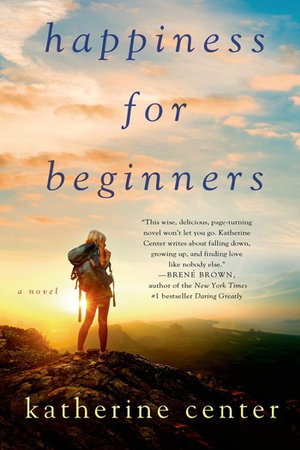
Happiness for Beginners

St. Martin's Press
Happiness for Beginners
St. Martin's Press
2015

The Summary
"It was time, Helen Carpenter knew that.  Thirty-two and divorced for a year, Helen knew it was time--past time--to pull herself together.  She needed to do something wild and adventurous and completely out of character.  Which is why she signed up for a wilderness survival course in Wyoming.

"Thus begins the strangest adventure of Helen Carpenter's well-behaved life:  three weeks in a remote mountain range where she will survive a summer blizzard, a group of sorority girls, rutting season for the elk, and more than one infuriating man.  Yet, despite the hardships and the indignities, the mountains bring their own wisdom to Helen's life, somehow teaching her the very things she needs to learn.  Like how to stand up for yourself.  How being scared can make you brave.  How the things you hold on to become the story of your life.  And, maybe most of all, how sometimes you just have to get really, really lost before you even have a hope of being found."

The Good
I absolutely loved listening to Happiness for Beginners.  After picking it out on a whim, I was pleasantly surprised by how much I enjoyed listening to Marguerite Gavin relate Helen Carpenter's story.  Gavin was an excellent narrator, lending her voice and attitude to Helen, making the story come to life.  It was an exceptional experience:  I found myself laughing in the midst of every chapter, thoroughly enjoying the narrator's company as I walked my dog.

Although I enjoyed the retelling of Katherine Center's novel, I also enjoyed the story and the characters.  Helen Carpenter is a candid narrator and a wonderful character, developing as her story builds and transforming from tentative, broken-hearted grade school teacher to a thoughtful, more knowledgeable woman.  She grows closer to her brother; she gains friends; she learns how to survive in the wilderness.

And it's wonderful to see how she develops, how she accomplishes her goals and, more importantly, manages to surprise herself in the end.

Her adventure is ludicrous--two weeks in the wilderness, surviving on her wits and little else--and her story is full of unintended twists, which even she acknowledges.  She goes in search of a new identity, in search of happiness and a piece of herself that she feels has been missing for years.  And she succeeds, reinventing herself, "rising from the ashes like a phoenix"--one of her many goals for her survival course.

I'm glad I had the opportunity to witness Helen's growth as a character.  Helen is really a wonderful character:  smart, a touch sarcastic, insightful, courageous and thoroughly grounded in reality.  As a recently divorced woman, she's been through the wringer and managed to come out on the other side--and I like that she succeeds in reinventing herself and reevaluating her life, as well as her relationships.

Overall, Happiness for Beginners was the perfect combination of narrator and story.  Something about the way the author wrote and Marguerite Gavin retold the story made me enjoy every minute of it.

The Bad
Some mild language and mature themes, which means it probably isn't for all readers, but it doesn't really detract from the story.  I loved it, nevertheless.

The Ugly
I loved that Katherine created such a candid narrator.  Helen Carpenter is a vivid storyteller, weaving emotion into every fiber of the novel, filling it with personal commentary and detail.  It's a wonderful story; however, her candid account means that she shares absolutely everything--even the most heart-wrenching, embarrassing and mortifying moments.

And, sometimes, it leaves you feeling just the tiniest it awkward for prying into the most personal areas of Helen's life.