"All good books are alike in that they are truer than if they had really happened
and after you are finished reading one you will feel that all that happened to you
and afterwards it all belongs to you; the good and the bad, the ecstasy, the remorse,
and sorrow, the people and the places and how the weather was."
Ernest Hemingway

Tuesday, May 30, 2017

The Governess Affair

13190596
Courtney Milan
The Governess Affair
Courtney Milan
2012

The Summary
"She will not give up...

"Three months ago, governess Serena Barton was let go from her position.  Unable to find new work, she's demanding compensation from the man who got her sacked:  a petty, selfish, swinish duke.  But it's not the duke she fears.  It's his merciless man of business--the man known as the Wolf of Clermont.  The formidable former pugilist has a black reputation for handling all the duke's dirty business, and when the duke turns her case over to him, she doesn't stand a chance.  But she can't stop trying--not with her entire future at stake.

"He cannot give in...

"Hugo Marshall is a man of ruthless ambition--a characteristic that has served him well, elevating the coal miner's son to the right hand man of a duke.  When his employer orders him to get rid of the pestering governess by fair means or foul, it's just another day at the office.  Unfortunately, fair means don't work on Serena, and as he comes to know her, he discovers that he can't bear to use foul ones.  But everything he has worked for depends upon seeing her gone.  He'll have to choose between the life that he needs, and the woman he is coming to love..."

The Good
After hearing so much about Hugo Marshall and Serena in following novels, I felt like I needed to go back and visit their story--and I'm glad I did.  I absolutely loved reading The Governess Affair.  On the one hand, I enjoyed filling in the gaps of my knowledge; on the other, I found The Governess Affair to be a supremely satisfying romance.

Plus, I loved the humor and heart.  I loved how Serena was able to go toe-to-toe with Hugo, who was one of the most feared men in the Duke of Clermont's employ; I loved how Hugo treated her gently, after her ordeal with the Duke of Clermont, and how he was able to gain her trust with even the smallest actions.

And I liked the way that Serena and Hugo's relationship developed.  I mean, at first, he treats her like he would treat any problem; however, as time goes on, he begins to see her as the indisputably tough, incredibly intelligent, and unexpectedly resilient woman she is.  When he grows to admire her--and when she learns to trust him in return--it's so supremely satisfying.

I loved it.  I loved the whole thing.

It's short, yes, but it's incredibly sweet and it's certainly worth reading.

The Bad
No complaints.

The Ugly
The Duke of Clermont.

I hate him.  I knew I would hate him, because I'd read of his exploits in both The Duchess War and The Heiress Effect.  However, the reality is that I hated him even more after reading The Governess Affair.  He deserves every terrible thing to befall him.
Friday, May 26, 2017

Unfinished 7

2082136
W.W. Norton Company
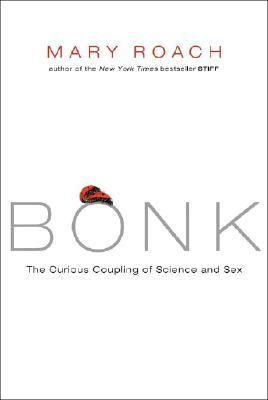
Okay.  So, I started reading Bonk by Mary Roach after I finished reading Packing for Mars.  After reading a review on Goodreads that cracked me up, I decided I would give it a try--and I kind of regret it.

First off, Mary Roach is hilarious.  I liked Packing for Mars, and I think I could have enjoyed Bonk if I just hadn't been traumatized by some of the stories.  I like to think I'm not a prude, but when sex leads to disfigurement, count me out.  I just can't do it.  It gives me this weird squirmy feeling inside, and I just can't cope.

Mary Roach is a great author, but I just don't think I can handle Bonk.

-

25507925
Gallery Books
I picked up Tyler Oakely's Binge out of curiosity.  I'd seen it in the YA section at my local library and I thought it might fit my Read Harder Challenge, so I thought, "Why not?"  It seemed interesting and it would help me mark off one of my challenges.

Wrong.  On both accounts.

Oakley is a pretty funny, I'll give him that; however, I just wasn't taken with his memoir.  I like that he's so very candid about his experiences, even the most embarrassing ones, but I found there is something as too much of a good thing.  Oakley tells me a little more than I would normally like to know about his personal experiences, and I just found myself quietly closing the book and returning it to my library.

-

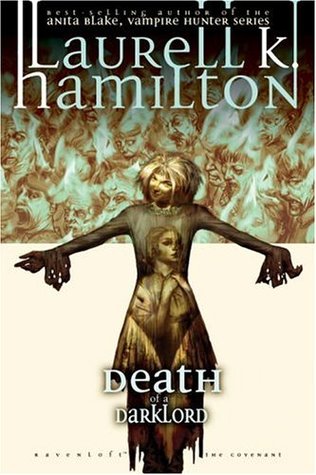
Death of a Darklord by Laurell K. Hamilton had so much potential.  It was beautifully written, it carried intricate characters with interesting talents, it had magic and fantasy and adventure.  It struck all the right notes for me.  I was so excited to read it, especially as I started in on the first couple of chapters.  I was intrigued by the villain and I wanted to see where the story would go.
30229
Wizards of the Coast

And then I made the mistake of looking up the book on Goodreads and discovering, much to my astonishment, that it was part of a series.  I learned Death of a Darklord is a stand-alone novel in a series roughly based in the same world (or something along those lines).  Not necessarily a bad thing, right?

Except it's part of a horror series.

When I picked up Death of a Darklord, I expected a fantasy novel.  I expected magic, mischief, adventure, trials and tribulations, before eventually culminating in a relatively happy ending.  There's always a little tragedy in every fantasy story; however, I always expect to find a satisfying conclusion, if not an outright happily-ever-after.

Death of a Darklord is a horror story.  It's full of tragedies, one after the other--and it literally doesn't get any better.  If I'd gone into this novel with the knowledge I was reading a tragic story, I probably would have been fine with it.  As the cover gave no inclination as to what I would find, I started reading with the expectation of a good ending and I was incredibly disappointed.  I put it aside without ever really finishing it.

-

27833668
Pantheon
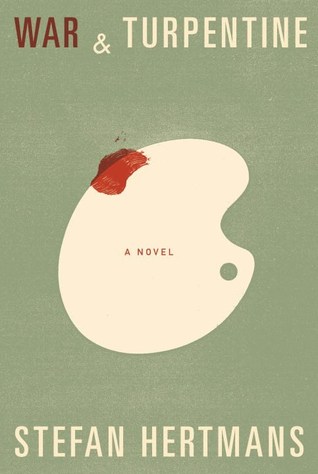
War and Turpentine wasn't a bad novel.  It's based on Stefan Hertsman's grandfather, a would-be painter who lived through and fought in World War II.  Hertsman regales readers with embellished stories of his grandfather, his grandmother, his family, and, ultimately, his legacy.

It's an interesting book that reminds me of The Things They Carried, in that there are some truths buried beneath the fiction; however, it just didn't grip me like Tim O'Brien's earlier novel.  Personally, Hertsman's novel isn't for me.  I didn't care for the style or the feel of the novel, even though I wanted to enjoy it; I didn't like the characters, I didn't like the way they felt or the way they made me feel; moreover, I found myself growing bored with it at regular intervals and casting it aside for more interesting fare.

I'm sure it's a fine book, but it's just not for me.

Wednesday, May 24, 2017

Everything I Need to Know I Learned from a Little Golden Book

17190361
Golden Books
Everything I Need to Know I Learned from a Little Golden Book
Diane Muldrow
2013

The Summary
"Little Golden Books:  not just for children anymore!

"One day, Diane Muldrow, a longtime editor of the iconic Little Golden Books, realized that there is hardly a real-life situation these whimsical books don't address.  In this age of debt, depression, and diabetes, can grown-ups benefit from a Little Golden guide to life?  Yes, we can!

"Muldrow's humorous yet practical tips for getting the most out of life--Don't forget to enjoy your wedding!  Be a hugger!  Sweatpants are bad for morale!--are paired with delightful images from the best-loved children's books of all time.

"Sure to conjure memories and smiles, this book is a perfect gift for anyone who cherishes the sturdy little books with the shiny cardboard covers and gold-foil spines."

The Good
This book was cute, if forgettable.  Personally, I think I liked the pictures the best, which pulled from all the classic Little Golden Books I read as a child with my parents.  I mean, I'd forgotten about The Saggy Baggy ElephantTootle, Nurse Nancy, and Animal Friends.  This book is really just a nostalgic trip through childhood to all the little books you've read as a child and completely forgotten over the years.

It's cute, and it's certainly worth perusing through to recognize some of the characters and book you enjoyed as a child.

The Bad
It's short, and it's not really what I expected.  It's good, it's cute, but it's one of those books at which I shrug a shoulder and simply place it back on the shelf.  It's not really eye-opening or life-changing, just a quick, nostalgic story with inspirational content.

The Ugly
Not a thing.

Monday, May 22, 2017

The Skystone

2399668
Tor
The Skystone
Jack Whyte
1992

The Summary
"We all know the story--how Arthur pulled the sword from the stone, how Camelot came to be, and the power struggles that ultimately destroyed Arthur's dreams.  But what of the time before Arthur?  What were the forces that helped create him?

"And how did the legend come to pass?

"Before the time of Arthur and Camelot, Britain had become a dark and deadly place, savaged by the warring factions of Picts, Celts, and invading Saxons.  The Roman citizens who had lived there for generations were suddenly faced with a deadly choice.  Should they leave and take up residence in a Roman world that was corrupt and utterly foreign?  Or stay and face the madness that would surely ensue when the Roman legions--Britain's last bastion of safety for the civilized--leave?  For two Romans, Publius Varrus and his friend Caius Britannicus, there can be only one answer.  They will stay, try to preserve what is best of Roman life, and create a new culture out of the wreckage.  In doing so, they will plant the seeds of the legend.

"For these two men are Arthur's great-grandfathers and their actions will shape a nation...and forge a sword known as Excalibur."

The Good
I actually picked The Skystone up at my local library.  It, along with several over books in the series, were available for only fifty cents a piece.  Of course, I couldn't simply pass up buying the whole thing and diving into the series.  It was a random purchase that, under normal circumstances, I probably wouldn't have made if I hadn't been prowling through the books one day.

And I'm pretty glad that I picked it up.

I love history.  I've always been a little fascinated by Roman history, and I've always been a fan of British history; however, much of my knowledge was sequestered to a handful of emperors and incidents in Rome.  I knew virtually nothing about England during the fourth and fifth centuries, so The Skystone was as informative as it was fascinating.

I learned a lot about British and Roman history, culture, and everyday life.  Not that I can remember any of it now, of course, but I feel like I learned quite a bit and I enjoyed a pretty great story in the process.  Personally, I really liked listening to Publius Varrus' story.  He was an interesting, capable character who took unexpected adventures that seemed to lead him from one place to another.

I thought he was unexpectedly eloquent for a soldier, but that's probably why I liked him.  He was pretty relatable.  I mean, he was basically just another person trying to survive in a world that (quite literally) wanted him dead; he's just your average soldier in the Roman Empire.  And yet his story was an adventure, and he did a wonderful job of telling me everything that happened.

Granted, I may not have liked his temper--and I certainly didn't like where it eventually led him--but I loved how his story involved a host of historical figures and culminated with the Lady of the Lake.  While there's no magic involved and, honestly, I pretty much expect magic in anything that stems from Arthurian legend, I was enchanted by how Arthur's legacy begins in The Skystone.

Jack Whyte's novel grounds Arthur and Excalibur in reality.  Like I said, there isn't any magic involved, but the way that Whyte carefully crafts a realistic world in which the magic of Arthur can grow--the way he so craftily plants the seeds for the legend throughout his story--is captivating.  I loved it.  I loved being able to find those subtle clues, and I can't wait to learn more about Arthur's heritage.

The Bad
It took me a very long time to get through this book.  Varrus is a thoughtful and engaging narrator, and I found his story fascinating.  I loved learning about the culture and history of Britain during the time of the Roman Empire; I loved the detail and depth of the story; I loved the intricately described places and characters.

However, I often lost myself to other things.  While I liked Varrus, he did have a habit of droning on and on.  More to the point, his story is a long one--and this book is only a tiny piece of his life.  He's writing at the end of his lifetime, but he's only telling us a part of his story from his time as a Roman soldier to the eventual creation of the Colony.  (I don't think I'm ruining anything by saying that; rather, I think it's pretty obvious what happens from reading the cover.)

It's maybe half of his life, and it feels like it takes ages to get through his story.  Like I said, it's a great book, but it does take a while to get through it.  I often found myself distracted by other books and different projects, so it took me many months to finish this book when it probably should have only taken a couple of weeks.

The Ugly
I have to admit, The Skystone is a bit graphic and slightly explicit.  If it's not local Picts and Celts slaughtering invading Roman soldiers, it's some disease or another wiping out a community; if it's not Publius Varrus' memories of war, it's his more tender moments with his lovers, and then his wife.  It's a hard look at what real life might have been like in a particularly tumultuous time in Britain's history.

It's a fascinating and engaging novel, but it might not be for everyone.

Friday, May 19, 2017

Read Harder Challenge 2017: Part 4

This month, I finished a few more challenges, including:
  • Read a book by an immigrant or with a central immigration narrative.
  • Read a book published between 1900 and 1950.
  • Read a collection of poetry in translation on a theme other than love.

American Street
Balzer + Bray
First up, I read American Street by Ibi Zoboi, which follows Fabiola as she adjusts to life in America with her rowdy cousins and her reclusive aunt.  When she arrives in Detroit, she is confronted by a terrible crossroads that will change her life and haunt her as she goes in pursuit of the American Dream.  A fascinating inspection into the immigrant experience, American Street  was made all the more compelling by the fact that the author, like Fabiola, was emigrated from Haiti when she was only a child.

Overall, I liked American Street.  It's a good, solid book with interesting characters, a wonderful narrator, and a heart-wrenching story.  However, I often found myself divided, because I both loved and hated this book.  It inspired a lot of emotions, not all of them good, but it also made me think and it made me feel and it compelled me to read on through Fabiola's story even when I felt my interest waning.

But, most of all, I loved the hints of magical realism seeded throughout the story.  Fabiola has very strong beliefs and she particularly believes in the ilwas of Vodou, which adds a layer of mystery, a thin veil of magic that enriches her story.  You don't really discover if Bad Leg is really Papa Legba, or if he really is just some junkie off the street, like Fabiola's cousins say, but it's that uncertainty that imbues a certain strength in Fabiola's belief and offers uncommon insight into the landscape of Vodou.

John Carter of Mars (Barnes & Noble Collectible Editions): The First Five Novels
Barnes and Noble
Next, I conquered A Princess of Mars by Edgar Rice Burroughs, who also happens to be author of Tarzan of the Apes.  I picked up A Princess of Mars because I had it on my shelf and, more to the point, it seemed like an acceptable escape from reality; however, I wasn't always enchanted with the story.  I mean, it was really just mindless fun.

Originally serialized in 1912, A Princess of Mars is the first of many novels of the Barsoom Chronicles penned by Burroughs.  It follows John Carter, a former military man from Virginia, who finds himself ambushed in Arizona--and transported to a different world.  Mars (known as Barsoom to the native peoples) is a seemingly desolate land populated with dangerous creatures and war-like citizens, and Carter must find a way to survive if he eventually hopes to return to his home world.

For much of the story, it's really just Carter being really impressive with his super-strength and incredible agility and uncanny ability to learn languages--that is, unless he's rescuing the damsel in distress or endearing himself to the local wildlife.  Something interesting or incredible usually happens at the end of every chapter, so it's a bit of a page turner when Carter isn't boring you with facts that are obviously wrong or making you laugh with physics that could obviously never happen.

24601
New Directions
Last, I checked out Paris Spleen by Charles Baudelaire.  Paris Spleen is a short collection of poetry originally written in French in 1896 by Charles Baudelaire--and none of his poems are about love.  I found it exceedingly difficult to find a collection of poetry that didn't talk about love, because everyone likes to talk about love and relationships and affection.  They're warm, fuzzy feelings to which everyone can relate.

But Baudelaire doesn't base his poetry on warm, fuzzy feelings; instead, he examines a darker side of human life.  He looks at the every day pleasures of intoxicating drink, sensuous women, and fine art; however, he also shines a lot on oppression, city squalor, mistreatment, malice.  His work couldn't be farther from warm, fuzzy feelings, like love.

It worked for my Read Harder Challenge, but, I will admit, it's definitely an acquired taste.  Baudelaire is really something else.